


1


Ενημερωμένο Νοέμβριος 2026 · κατάταξη βάσει του σκορ δημοφιλίας μας (αναζητήσεις, επισκέψεις και παραγγελίες για κάθε έργο) · 42 έργα του Edward Brian Seago στον κατάλογό μας
Με σύντομη περιγραφή
Το έργο Drainage Mill on the Bure, Norfolk είναι το ποίτευμα του Edward Brian Seago που τραβάει περισσότερα βλέμματα. Μετά από αυτό, το βλέμμα στρέφεται στο The Dark Canal, Venice, Italy (1940) και στο The Gardens at Anglesey Abbey. Ανάμεσα στα 42 έργα του Edward Brian Seago στον κατάλογό μας, αυτά τα 42 είναι τα πιο διάσημα, το καθένα ένα μοναδικό πρωτότυπο που παρουσιάζεται με την χρονολογία του, το μουσείο του και τον λόγο για τον οποίο παραμένει αιώνιο.


 Lieutenant Colonel G. N. Wood, OBE1940 · The Keep Military Museum
12
 Sunset, Yarmouth, Norfolk1948
13
 Miss Rosamund Le Hunte Cooper1946
14
 The Rainbow1945 · Pallant House Gallery
15
 Moroccan Landscape1950 · Reading Museum - Town Hall
16
 A Stubble Field near Ludham, Norfolk1950
17
 Princess Mary, The Princess Royal (1897–1965), Controller Commandant, WRAC1949
18
 Early Morning, September
19
 Waterlogged Airfield at Malignano, Italy
20
 Winter Landscape, Norfolk
21
 The Anvil Cloud
22
 Swing Bridge over Breydon, Norfolk
23
 The Valley Farm
24
 A Norfolk Village, Aldeby
25
 The Wet RoadGovernment Art Collection
26
 Bacalhoeiros on the Tagus, PortugalGovernment Art Collection
27
 Anglesey Abbey, Spring 1949Εθνική Πινακοθήκη Λονδίνου
28
 The Water GardenGuildhall Art Gallery
29
 Anglesey Abbey by Moonlight, Autumn 1949Εθνική Πινακοθήκη Λονδίνου
30
 Evening Haze, Thurne Dyke, Norfolk
31
 Trees and Pool
32
 Corner of the StackyardGovernment Art Collection
33
 Largo das Ribas, EriceiraGovernment Art Collection
34
 The River at Earlham, Norfolk
35
 The Ramp at EriceiraGovernment Art Collection
36
 The Frozen River, NorwichGovernment Art Collection
37
 Anglesey Abbey by Day, Spring 1949Εθνική Πινακοθήκη Λονδίνου
38
 Anglesey Abbey Gardens, with a Lady in White on a Grass Path, Holding a ParasolΕθνική Πινακοθήκη Λονδίνου
39
 Berkshire ElmsGovernment Art Collection
40
 View of the Gardens at Anglesey Abbey The South Lawn with Elm TreesΕθνική Πινακοθήκη Λονδίνου
41
 North Front of Anglesey Abbey Seen through the TreesΕθνική Πινακοθήκη Λονδίνου
42
 Fishing Boats on the Mud, Honfleur, France
Τα τέσσερα θέματα που εμφανίζονται πιο συχνά σε αυτά τα πρωτότυπα έργα, το καθένα με το εξαιρετικό του παράδειγμα.
Τα 7 μουσεία που φιλοξενούν το μεγαλύτερο μέρος των έργων σε αυτήν τη σελίδα.
| Μουσείο | Πόλη | Έργα του Edward Brian Seago | Πάτρια από αυτή τη λίστα |
|---|---|---|---|
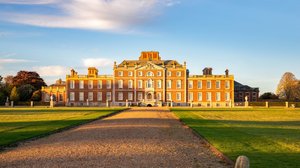 Εθνική Πινακοθήκη Λονδίνου |
Κάμπριοτζη | 7 | The Gardens at Anglesey Abbey, Anglesey Abbey, Spring 1949, Anglesey Abbey by Moonlight, Autumn 1949 |
 Government Art Collection |
Λονδίνο | 7 | The Wet Road, Bacalhoeiros on the Tagus, Portugal, Corner of the Stackyard |
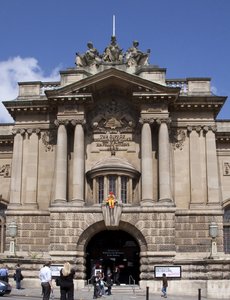 Bristol Museum - Art Gallery |
Μπρίστολ | 1 | The Wild Beast Show |
 The Keep Military Museum |
Dorchester | 1 | Lieutenant Colonel G. N. Wood, OBE |
 Pallant House Gallery |
Chichester | 1 | The Rainbow |
 Reading Museum - Town Hall |
Reading | 1 | Moroccan Landscape |
 Guildhall Art Gallery |
Λονδίνο | 1 | The Water Garden |
Επιλέξτε μια δεκαετία για να δείτε το πρωτότυπο έργο που την χαρακτηρίζει.

Το Drainage Mill on the Bure, Norfolk. Στη συνέχεια ακολουθούν το The Dark Canal, Venice, Italy (1940) και το The Gardens at Anglesey Abbey.
Drainage Mill on the Bure, Norfolk, The Dark Canal, Venice, Italy, The Gardens at Anglesey Abbey, The East Window, The White Kitchen, The Foreshore, The Wild Beast Show, Bernard Clegg, General Lord Gort (1886–1946), VC, at the Headquarters of the British Expeditionary Force και Henry Williamson. Η κατάταξη παραπάνω αναγράφει το έτος και το μουσείο για το κάθε έργο.
Ο κατάλογός μας περιλαμβάνει 42 έργα του Edward Brian Seago, με ημερομηνίες από 1932 έως 1950.
Κυρίως σε Εθνική Πινακοθήκη Λονδίνου (Κάμπριοτζη), Government Art Collection (Λονδίνο) και Bristol Museum - Art Gallery (Μπρίστολ). Ο πίνακας μουσείου παραπάνω τους περιλαμβάνει όλους.
Κατά την περίοδο 1940s: 9 από τα 42 έργα σε αυτήν τη σελίδα δημιουργήθηκαν τότε, με The Dark Canal, Venice, Italy από αυτά να είναι μοναδικά.
Σε αυτήν τη σελίδα, το παλαιότερο είναι The Wild Beast Show (1932) και το νεότερο Moroccan Landscape (1950).
British countryside (2), Landscape (2) και Atmospheric (2), σε συνολικά 42 έργα σε αυτήν τη σελίδα.
Impressionism, όπως προκύπτει από τα πρωτότυπα σε αυτήν τη σελίδα.
The Gardens at Anglesey Abbey, Anglesey Abbey, Spring 1949 και Anglesey Abbey by Moonlight, Autumn 1949: το Εθνική Πινακοθήκη Λονδίνου, Κάμπριοτζη διαθέτει 7 από τα έργα σε αυτήν τη σελίδα.
To wander through the works of Edward Brian Seago is to embark on a journey through the very heart of the British landscape, captured with a luminous clarity that transcends mere representation. Born in 1910 in the historic city of Norwich, Norfolk, Seago was destined for a life shaped by the textures and light of the countryside. His early years were nurtured by a father who recognized the boy's burgeoning creative spirit, providing the foundation for a formal education at the Chelsea School of Art and later the prestigious Slade School of Fine Art in London. It was during these formative years that Seago began to develop his signature approach—a disciplined mastery of technique blended with an almost poetic sensitivity to the atmosphere of the natural world.
The trajectory of Seago’s career was profoundly altered by the shadows of World War II. Serving in the Auxiliary Territorial Service (ATS), he found himself tasked with a unique and vital mission: acting as a camouflage artist. This period of his life, while born of conflict, became a crucible for his artistic vision. Tasked with transforming military structures to blend into their surroundings, Seago developed an unparalleled eye for detail and an intimate understanding of how light, shadow, and color can manipulate the perception of space. His wartime murals, particularly those at RAF Bawtry and RAF Wickham Priory, stand as enduring testaments to his ability to infuse even the most utilitarian settings with a sense of beauty and resilience.
Following the cessation of hostilities, Seago’s artistry underwent a magnificent expansion. No longer confined to the necessity of concealment, he turned his gaze outward toward the vast horizons of Europe and North Africa. His travels became the lifeblood of his oeuvre; he was an artist who sought the essence of place through direct observation. Whether capturing the sun-drenched tranquility of a Moroccan Landscape with cattle grazing in the desert or documenting the quiet, frost-kissed serenity of The River at Earlham, Norfolk, Seago possessed a rare ability to translate the ephemeral qualities of light into permanent oil and watercolor.
His stylistic evolution was deeply informed by the masters of the Post-Impressionist movement. One can detect the structural integrity of Cézanne in his compositions and a profound respect for the interplay of light reminiscent of the Impressionists. Yet, Seago remained quintessentially himself. His work is characterized by:
Seago’s mastery did not merely earn him acclaim within the artistic community; it garnered the admiration of the highest echelons of British society. His ability to capture the dignity of the landscape and the quiet beauty of domestic life—seen in evocative works such as The East Window—endeared him to the Royal Family, establishing him as a painter of significant national importance. He became a bridge between the traditional landscape traditions of Britain and the more modern, expressive sensibilities of the mid-20th century.
Today, the legacy of Edward Brian Seago lives on through his prolific body of work, which continues to resonate with collectors and art lovers worldwide. His paintings are more than mere windows into the past; they are emotional evocations of a world that celebrates the enduring beauty of nature. Through his eyes, we see the Norfolk countryside not just as a location, but as a living, breathing entity, forever preserved in the golden light of his masterful brushstrokes.