Πορτρέτο του Εδουάρδος Μπερν

Τα 54 πιο διάσημα έργα του Εδουάρδος Μπερν, μια επιλογή γκαλερί

Ενημερωμένο Νοέμβριος 2026 · κατάταξη βάσει του σκορ δημοφιλίας μας (αναζητήσεις, επισκέψεις και παραγγελίες για κάθε έργο) · 54 έργα του Εδουάρδος Μπερν στον κατάλογό μας

Με σύντομη περιγραφή

Από όλα τα πρωτότυπα έργα που άφησε ο Εδουάρδος Μπερν, το πιο διάσημο είναι το The Scavengers (1800), το οποίο βρίσκεται στη συλλογή του Musée Cognacq-Jay, Παρίσι. Ακολουθούν στενά η Village Choristers Rehearsing an Anthem for Sunday (1810) και η Mr Ricketts' Return From Shooting. Ο κατάλογός μας περιλαμβάνει 54 έργα του Εδουάρδος Μπερν· η γκαλερί έχει διατηρήσει τα 54 κομμάτια που θαυμάζει ο κόσμος, το καθένα με την ημερομηνία, το μουσείο και την ιστορία του.

1772 – 1819, Γουλβερχάμπτον Περισσότερα έργα: Sunnycroft

Τα 10 κορυφαία έργα του Εδουάρδος Μπερν: η επιλογή της γκαλερί

1
The Scavengers (1800) του Εδουάρδος Μπερν

The Scavengers

1800 · Oil On Canvas · Musée Cognacq-Jay, Παρίσι

Two small figures occupy the center of a shadowed world. They are children, caught in a quiet act of discovery amidst the heavy, dark foliage of a large tree. A strong light descends from the upper left, carving their pale faces out of the gloom and catching the light-colored fabric of a girl's apron. The scene is a study in contrast, where the soft skin of youth meets the rough,…

2
Village Choristers Rehearsing an Anthem for Sunday (1810) του Εδουάρδος Μπερν

Village Choristers Rehearsing an Anthem for Sunday

1810 · Oil On Canvas · Royal Collection, Λονδίνο

The scene unfolds within a crowded, dimly lit room where a group of villagers has assembled for a musical rehearsal. The composition is dense, with figures arranged in a semi-circle around a central wooden table. To the left, seated musicians anchor the group, while standing figures occupy the right side of the frame. Light enters from a window on the far left, casting directional beams that illuminate faces and hands…

3
Mr Ricketts' Return From Shooting του Εδουάρδος Μπερν

Mr Ricketts' Return From Shooting

Oil

The room is heavy with the scent of roasted meat and the warmth of a low fire. At the head of the table, a man sits in a green coat, his yellow waistcoat catching the light as he turns his gaze toward the viewer. He has returned from the field, his presence anchoring the domestic scene. Beside him, a woman in a blue dress looks upward, her posture a silent…

4
The Reading Of The Will Concluded του Εδουάρδος Μπερν

The Reading Of The Will Concluded

Oil On Panel

The air in the room feels heavy, thick with the unspoken expectations of those gathered. A man stands at the center of the composition, his posture firm as he holds a document that holds the power to shift fortunes. He reads aloud, his voice cutting through the stillness of the drawing room. Around him, the figures are frozen in a state of intense observation. Some sit in chairs, their bodies…

5
Proclaiming Joash King του Εδουάρδος Μπερν

Proclaiming Joash King

Oil

Proclaiming Joash King is an oil painting by the English artist Edward Bird. Created about 1815, the work depicts a specific narrative from the Old Testament of the Bible. The scene focuses on the anointing of the young Joash as the king of Judah. This historical and religious subject matter reflects the artist's transition toward large-scale historical and religious themes during this period of his career.

6
Princess Caraboo of Javasu , (1817) του Εδουάρδος Μπερν

Princess Caraboo of Javasu ,

1817 · Oil

Edward Bird painted Princess Caraboo of Javasu , in 1817. The portrait presents Mary Baker in exotic attire, presenting her as the fictional Princess Caraboo of Javasu. This identity was a fabrication used by Baker, an English impostor, to claim royal lineage from a non-existent island in the Indian Ocean.

Η επιλογή του Εδουάρδος Μπερν συνεχίζεται, από τον 11 έως τον 54

Τα διάσημα έργα του Εδουάρδος Μπερν, ανά περίοδο

Τα θέματα που κίνησαν το ενδιαφέρον του Εδουάρδος Μπερν

Τα τέσσερα θέματα που εμφανίζονται πιο συχνά σε αυτά τα πρωτότυπα έργα, το καθένα με το εξαιρετικό του παράδειγμα.

Τα μουσεία που διατηρούν τα πρωτότυπα έργα του Εδουάρδος Μπερν

Τα 4 μουσεία που φιλοξενούν το μεγαλύτερο μέρος των έργων σε αυτήν τη σελίδα.

Μουσείο Πόλη Έργα του Εδουάρδος Μπερν Πάτρια από αυτή τη λίστα
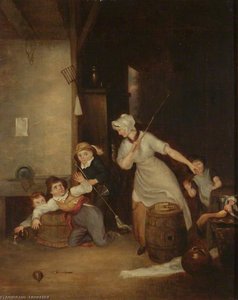
Sunnycroft, WellingtonSunnycroft Wellington 2 A Dame Scolding Naughty Children, The Toy Prisoner Being Shot In The School Room
Musée Cognacq-Jay, ΠαρίσιMusée Cognacq-Jay Παρίσι 1 The Scavengers
Royal Collection, ΛονδίνοRoyal Collection Λονδίνο 1 Village Choristers Rehearsing an Anthem for Sunday
Anglesey AbbeyAnglesey Abbey 1 The Life Guards In A Guardroom

Ο Εδουάρδος Μπερν ανά έτος: τα πρωτότυπα που τον ορίζουν

Από το 1800 έως το 1817, ο/η Εδουάρδος Μπερν δημιούργησε για 18 χρόνια: η επιλογή ακολουθεί αυτή την πολυετή καριέρα πλάγια, μέσα από τα κορυφαία πρωτότυπα έργα της.

Έργα ανά έτος

Επιλέξτε μια χρονιά για να δείτε τα πρωτότυπα έργα της.

Ερωτήσεις συλλεκτών για τα έργα του Εδουάρδος Μπερν

Για ποιο έργο είναι πιο γνωστός ο Εδουάρδος Μπερν;Αποκαλύψτε την απάντηση

The Scavengers (1800), Musée Cognacq-Jay, Παρίσι. Στη συνέχεια ακολουθούν το Village Choristers Rehearsing an Anthem for Sunday (1810) και το Mr Ricketts' Return From Shooting.

Πόσο ηλικία είχε ο/η Εδουάρδος Μπερν όταν δημιουργήθηκε το The Scavengers;Αποκαλύψτε την απάντηση

28 ετών: το έργο The Scavengers είναι του 1800, και ο/η Εδουάρδος Μπερν γεννήθηκε το 1772.

Ποια είναι τα δέκα πιο διάσημα έργα του Εδουάρδος Μπερν;Αποκαλύψτε την απάντηση

The Scavengers, Village Choristers Rehearsing an Anthem for Sunday, Mr Ricketts' Return From Shooting, The Reading Of The Will Concluded, Proclaiming Joash King, Princess Caraboo of Javasu ,, The Arrival of Louis XVIII at Calais, The Birth, The Duet και The Life Guards In A Guardroom. Η κατάταξη παραπάνω αναγράφει το έτος και το μουσείο για το κάθε έργο.

Πόσα έργα δημιούργησε ο/η Εδουάρδος Μπερν;Αποκαλύψτε την απάντηση

Ο κατάλογός μας περιλαμβάνει 54 έργα του Εδουάρδος Μπερν, με ημερομηνίες από 1800 έως 1817.

Σε ποια μουσεία εκτίθενται τα αριστούργημα του Εδουάρδος Μπερν;Αποκαλύψτε την απάντηση

Κυρίως σε Sunnycroft (Wellington), Musée Cognacq-Jay (Παρίσι) και Royal Collection (Λονδίνο). Ο πίνακας μουσείου παραπάνω τους περιλαμβάνει όλους.

Ποια είναι τα πρώτα και τα τελευταία διάσημα πρωτότυπα του Εδουάρδος Μπερν;Αποκαλύψτε την απάντηση

Σε αυτήν τη σελίδα, το παλαιότερο είναι The Scavengers (1800) και το νεότερο Princess Caraboo of Javasu , (1817).

Ποια θέματα επέλεξε πιο συχνά ο Εδουάρδος Μπερν;Αποκαλύψτε την απάντηση

Children (5), Man (3) και Royalty (3), σε συνολικά 54 έργα σε αυτήν τη σελίδα.

Ποια τεχνική χρησιμοποίησε περισσότερο ο Εδουάρδος Μπερν;Αποκαλύψτε την απάντηση

Oil, για 3 από τα 54 έργα σε αυτήν τη σελίδα.

Ποια έργα του Εδουάρδος Μπερν εκτίθενται στο Sunnycroft;Αποκαλύψτε την απάντηση

A Dame Scolding Naughty Children και The Toy Prisoner Being Shot In The School Room: το Sunnycroft, Wellington διαθέτει 2 από τα έργα σε αυτήν τη σελίδα.

Εδουάρδος Μπερν: ζωή και έργο

Edward Bird (1772–1819): A Pioneer of Naturalism in Bristol

Edward Bird, born in Wolverhampton in 1772, stands as a pivotal figure in British art history, particularly celebrated for his contribution to the burgeoning Bristol School. Unlike many artists of his era who pursued grand narratives of historical grandeur, Bird’s artistic vision centered on capturing the essence of everyday life—a remarkable departure that cemented his place among the foremost practitioners of naturalistic painting.
  • Early Life and Training: Bird's formative years were marked by a grounding in craftsmanship inherited from his father, a carpenter. His apprenticeship as a japanning artist instilled within him meticulous attention to detail and an appreciation for decorative artistry—skills that would prove invaluable throughout his career.
  • The Bristol School’s Genesis: Moving to Bristol in 1794, Bird encountered a vibrant artistic community spearheaded by George Cumberland and fellow artists like Edward Villiers Rippingille. This collaborative environment fostered experimentation and encouraged stylistic innovation, resulting in the formation of what would become known as the Bristol School.
  • Influences and Artistic Style: Bird’s aesthetic sensibilities were profoundly shaped by his exposure to Sir David Wilkie's work—a rivalry that nonetheless spurred him toward greater artistic ambition. Cumberland’s extensive library provided access to masterpieces from across Europe, broadening Bird’s understanding of artistic traditions.
  • Genre Painting and Historical Themes: Bird distinguished himself as a genre painter, skillfully blending elements of realism with dramatic narratives inspired by historical events. His celebrated canvases—including ‘Good News,’ ‘The Country Choristers,’ and ‘The Field of Chevy Chase’—demonstrate his mastery of technique and his ability to evoke emotion through vivid depictions of human experience.
  • Legacy and Recognition: Bird's election as an Associate of the Royal Academy in 1812 and Full Member in 1815 solidified his reputation as a leading artist of his time. His retrospective exhibition in Bristol after his death underscored the enduring impact of his work—a testament to his pioneering role in establishing naturalism as a dominant aesthetic within British art.

A Naturalist’s Vision: Techniques and Innovations

Bird's artistic style was characterized by an unwavering commitment to portraying subjects with uncompromising accuracy. He meticulously observed the nuances of light and color, striving to reproduce nature faithfully on canvas—a practice that distinguished him from many of his contemporaries.
  • Color Palette: Bird’s palette favored fresh, luminous hues derived directly from observation—a deliberate rejection of academic conventions favoring muted tones. This bold approach was particularly evident in landscapes like ‘The Country Choristers,’ where he achieved remarkable atmospheric depth.
  • Brushwork and Texture: Bird employed loose, expressive brushstrokes that conveyed movement and dynamism—a technique honed through his apprenticeship and reinforced by the Bristol School’s collaborative spirit. His textured surfaces captured the materiality of his subjects with palpable realism.
  • Compositional Considerations: Bird skillfully arranged elements within his canvases to create compelling narratives—drawing inspiration from classical precedents while prioritizing clarity and emotional resonance. The dramatic staging of ‘The Field of Chevy Chase,’ for instance, exemplifies his masterful command of composition.

Notable Works and Artistic Achievements

Bird’s oeuvre encompasses a diverse range of subjects—from portraits to genre scenes to historical paintings—each imbued with an exceptional level of artistic skill.
  • ‘Good News’: This monumental canvas, acquired by the Prince Regent, exemplifies Bird's ability to convey profound emotion through meticulous detail and masterful composition. Its depiction of a celebratory church scene captivated audiences and established Bird’s reputation as a leading artist.
  • ‘The Country Choristers’: Considered one of Bird’s finest achievements, ‘The Country Choristers’ showcases his unparalleled skill in capturing atmospheric perspective—creating an immersive experience for the viewer that transports them to the serene beauty of rural England.
  • ‘The Field of Chevy Chase’: This dramatic battle scene—commissioned by Queen Charlotte—demonstrates Bird's mastery of theatrical staging and his ability to convey the intensity of conflict with visceral realism. Its enduring popularity testifies to its artistic power.

Influence on Subsequent Artists

Edward Bird’s legacy extends beyond his own lifetime, inspiring generations of artists who embraced naturalism and sought to emulate his stylistic innovations.
  • Francis Danby: Bird's Bristol School affiliation profoundly impacted Francis Danby—who succeeded him as a leader of the movement—solidifying the importance of observation and expressive brushwork in artistic practice.
  • The Bristol School’s Enduring Legacy: The Bristol School continued to flourish after Bird’s death, preserving his stylistic principles and furthering the exploration of naturalistic representation within British art.