Πορτρέτο του Ντιέρिक Μάους

Πάτσαδες του Ντιέρिक Μάους: Τα 37 πιο διάσημα, μέσα από το βλέμμα μιας γκαλερί

Ενημερωμένο Οκτώβριος 2026 · κατάταξη βάσει του σκορ δημοφιλίας μας (αναζητήσεις, επισκέψεις και παραγγελίες για κάθε έργο) · 51 έργα του Ντιέρिक Μάους στον κατάλογό μας

Με σύντομη περιγραφή

Στο μάτι της γκαλερί, το πιο διάσημο έργο του Ντιέρिक Μάους είναι το The Last Supper (1467), το πρωτότυπο του οποίου εκτίθεται στο Sint-Jacobskerk, Λευκέν. Ο Justice of Emperor Otto III: Beheading of the Innocent Count and Ordeal by Fire (1475) και ο The middle panel of The Pearl of Brabant: Adoration of the Magi (1445) ολοκληρώνουν το τρίο που κάθε μάτι αναγνωρίζει. Από τα 51 έργα του Ντιέρिक Μάους στον κατάλογό μας, η γκαλερί παρουσιάζει παρακάτω τα 37 πιο διάσημα, όπου κάθε ένα είναι πρωτότυπο, με την χρονολογία του, το μουσείο του και το τι το κάνει μοναδικό.

1410 – 1475, Χάαρλεμ Northern renaissance Περισσότερα έργα: Museum Boijmans Van Beuningen

Τα 10 κορυφαία έργα του Ντιέρिक Μάους στη γκαλερέι

1
The Last Supper (1467) του Ντιέρिक Μάους

The Last Supper

1467 · Άνθρακα σε πάνελ · Sint-Jacobskerk, Λευκέν

In the quiet, hallowed halls of art history, few images command as much reverence as The Last Supper by the Early Netherlandish master Dieric Bouts. Created around 1467, this profound work serves as a window into a sacred moment, capturing the heavy atmosphere of Christ’s final meal with his apostles. Unlike the dramatic, sweeping gestures found in later Italian Renaissance works, Bouts invites us into a space of subtle solemnity…

2
Justice of Emperor Otto III: Beheading of the Innocent Count and Ordeal by Fire (1475) του Ντιέρिक Μάους

Justice of Emperor Otto III: Beheading of the Innocent Count and Ordeal by Fire

In the quiet, meditative realm of Early Netherlandish painting, few works capture the tension between earthly law and divine truth as poignantly as Dieric Bouts’s masterpiece, Justice of Emperor Otto III: Beheading of the Innocent Count and Ordeal by Fire. Created around 1475, this profound diptych serves as a visceral window into the medieval psyche, where the absolute power of the state meets the tragic vulnerability of the individual. The…

4
The Martyrdom of Saint Erasmus (1463) του Ντιέρिक Μάους

The Martyrdom of Saint Erasmus

1463 · Oil On Panel

The triptych known as The Martyrdom of Saint Erasmus unfolds before the viewer as a heavy, three-paneled narrative. Painted by Dierec Bouts, this work captures a moment of profound religious significance. The scene focuses on the suffering of Saint Erasmus, an early Christian bishop, as he undergoes his final trials. The panels organize a sequence of events that surround his death, presenting a structured view of his sacrifice. It is…

5
The way to Paradise (1468) του Ντιέρिक Μάους

The way to Paradise

1468 · Oil On Panel

The way to Paradise is a large-scale oil painting by Dierec Bouts. Created in 1468, the work captures a complex narrative through a series of figures arranged within a dramatic landscape. The scene unfolds across a rolling hillside under a stormy sky, where the light falls upon a central group of angelic and human figures. This composition draws the eye toward a prominent structure resembling a cathedral or temple.

6
The Entombment (1450) του Ντιέρिक Μάους

The Entombment

1450

The Entombment is a renowned painting by the Flemish artist Dierec Bouts, created in 1450. This tempera on panel artwork is a significant example of Northern Renaissance art and is currently housed at the National Gallery in Greece. Composition and Symbolism The painting depicts a poignant scene from the New Testament, where Jesus is being taken down from the cross by his followers. The group of people surrounding him includes…

7
The Last Supper - from the Winged altar in St. Peter in Leuven (1465) του Ντιέρिक Μάους

The Last Supper - from the Winged altar in St. Peter in Leuven

1465

The Last Supper by Dieric Bouts is a seminal work of the Northern Renaissance, showcasing the artist's mastery of composition, perspective, and emotional depth. Created between 1464 and 1468, this painting is a testament to the artistic innovations of the time. Artistic Innovations Bouts' Last Supper is characterized by its use of linear perspective, which creates a sense of depth and space. The orthogonal lines in the composition converge at…

Πάينτα του Ντιέρिक Μάους, κατάταξη από 11 έως 37

Τα διάσημα έργα του Ντιέρिक Μάους, ανά περίοδο

Τα θέματα που κίνησαν το ενδιαφέρον του Ντιέρिक Μάους

Τα τέσσερα θέματα που εμφανίζονται πιο συχνά σε αυτά τα πρωτότυπα έργα, το καθένα με το εξαιρετικό του παράδειγμα.

Τα μουσεία που διατηρούν τα πρωτότυπα έργα του Ντιέρिक Μάους

Τα 8 μουσεία που φιλοξενούν το μεγαλύτερο μέρος των έργων σε αυτήν τη σελίδα.

Μουσείο Πόλη Έργα του Ντιέρिक Μάους Πάτρια από αυτή τη λίστα
Museum Boijmans Van Beuningen, ΡότερνταμMuseum Boijmans Van Beuningen Ρότερνταμ 2 Saint John the Evangelist on Patmos, Head of Christ
Sint-Jacobskerk, ΛευκένSint-Jacobskerk Λευκέν 1 The Last Supper
Βασιλικά Μουσεία Καλών Τεχνών της Βελγίου, ΒρυξέλλεςΒασιλικά Μουσεία Καλών Τεχνών της Βελγίου Βρυξέλλες 1 Justice of Emperor Otto III: Beheading of the Innocent Count and Ordeal by Fire
Alte Pinakothek, ΜόναχοAlte Pinakothek Μόναχο 1 Ecce Agnus Dei
Cincinnati Art Museum, ΣινσινάτιCincinnati Art Museum Σινσινάτι 1 Virgin and Child
Rijksmuseum Twenthe, EnschedeRijksmuseum Twenthe Enschede 1 Madonna and Child on a grass bench
Städel Museum, ΦρανκφούρτηStädel Museum Φρανκφούρτη 1 Virgin and Child
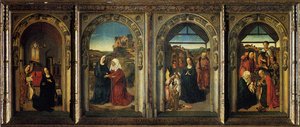
Μουσείο του Πράδο, ΜαδρίτηΜουσείο του Πράδο Μαδρίτη 1 Polyptych Showing The Annunciation, The Visitation, The Adoration Of The Angels And The Adoration Of The Kings

Ντιέρिक Μάους, ένα χαρακτηριστικό έργο ανά δεκαετία

Έργα ανά δεκαετία

Επιλέξτε μια δεκαετία για να δείτε το πρωτότυπο έργο που την χαρακτηρίζει.

Οι πίνακες του Ντιέρिक Μάους: οι απαντήσεις της γκαλερί

Ποιο έργο του Ντιέρिक Μάους είναι το πιο διάσημο από όλα;Αποκαλύψτε την απάντηση

The Last Supper (1467), Sint-Jacobskerk, Λευκέν. Στη συνέχεια ακολουθούν το Justice of Emperor Otto III: Beheading of the Innocent Count and Ordeal by Fire (1475) και το The middle panel of The Pearl of Brabant: Adoration of the Magi (1445).

Πόσο είχε ηλικία ο Ντιέρिक Μάους όταν ολοκλήρωσε το The Last Supper;Αποκαλύψτε την απάντηση

57 ετών: το έργο The Last Supper είναι του 1467, και ο/η Ντιέρिक Μάους γεννήθηκε το 1410.

Ποιες είναι τα 10 κορυφαία έργα του Ντιέρिक Μάους;Αποκαλύψτε την απάντηση

The Last Supper, Justice of Emperor Otto III: Beheading of the Innocent Count and Ordeal by Fire, The middle panel of The Pearl of Brabant: Adoration of the Magi, The Martyrdom of Saint Erasmus, The way to Paradise, The Entombment, The Last Supper - from the Winged altar in St. Peter in Leuven, Mater Dolorosa, The right wing of The Pearl of Brabant: Saint Christopher και The Feast of the Passover (lower left panel from the altarpiece of the Holy Sacrament). Η κατάταξη παραπάνω αναγράφει το έτος και το μουσείο για το κάθε έργο.

Πόσα έργα δημιούργησε ο/η Ντιέρिक Μάους;Αποκαλύψτε την απάντηση

Ο κατάλογός μας περιλαμβάνει 51 έργα του Ντιέρिक Μάους, με ημερομηνίες από 1445 έως 1475.

Πού εκτίθενται τα πιο διάσημα πρωτότυπα του Ντιέρिक Μάους;Αποκαλύψτε την απάντηση

Κυρίως σε Museum Boijmans Van Beuningen (Ρότερνταμ), Sint-Jacobskerk (Λευκέν) και Βασιλικά Μουσεία Καλών Τεχνών της Βελγίου (Βρυξέλλες). Ο πίνακας μουσείου παραπάνω τους περιλαμβάνει όλους.

Πότε δημιούργησε ο/η Ντιέρिक Μάους τα πιο διάσημα έργα του/της;Αποκαλύψτε την απάντηση

Κατά την περίοδο 1460s: 16 από τα 37 έργα σε αυτήν τη σελίδα δημιουργήθηκαν τότε, με The Last Supper από αυτά να είναι μοναδικά.

Ποια είναι τα πρώτα και τα τελευταία διάσημα έργα του Ντιέρिक Μάους;Αποκαλύψτε την απάντηση

Σε αυτήν τη σελίδα, το παλαιότερο είναι The middle panel of The Pearl of Brabant: Adoration of the Magi (1445) και το νεότερο Justice of Emperor Otto III: Beheading of the Innocent Count and Ordeal by Fire (1475).

Ποια θέματα επέλεξε πιο συχνά ο Ντιέρिक Μάους;Αποκαλύψτε την απάντηση

Religious (21), Virgin mary (9) και Saints (8), σε συνολικά 37 έργα σε αυτήν τη σελίδα.

Με ποια τεχνική εργάστηκε περισσότερο ο Ντιέρिक Μάους;Αποκαλύψτε την απάντηση

Oil On Panel, για 4 από τα 37 έργα σε αυτήν τη σελίδα.

Με ποιο καλλιτεχνικό κίνημα σχετίζεται ο/η Ντιέρिक Μάους;Αποκαλύψτε την απάντηση

Northern renaissance και Early netherlandish, όπως προκύπτει από τα πρωτότυπα σε αυτήν τη σελίδα.

Ποια πρωτότυπα έργα του Ντιέρिक Μάους διαθέτει το Museum Boijmans Van Beuningen;Αποκαλύψτε την απάντηση

Saint John the Evangelist on Patmos και Head of Christ: το Museum Boijmans Van Beuningen, Ρότερνταμ διαθέτει 2 από τα έργα σε αυτήν τη σελίδα.

Ντιέρिक Μάους: ο καλλιτέχνης

Dieric Bouts: The Silent Master of Early Netherlandish Painting

In the vibrant, bustling landscape of the fifteenth-century Netherlands, where the works of Jan van Eyck and Rogier van der Weyden dazzled with their dramatic flair and technical virtuosity, there existed a different kind of mastery. Dieric Bouts, often referred to as the "painter of silence," carved out a legacy not through theatrical emotion, but through a profound, meditative stillness. Born in Haarlem around 1415, Bouts emerged from the Northern Netherlands to become one of the most respected figures of the Early Netherlandish period. His life and work represent a unique intersection of technical innovation and spiritual introspection, offering a window into a world where every brushstroke served to deepen the viewer's contemplation of the divine.

The early years of Bouts’s journey are shrouded in the soft mists of history, yet his artistic lineage is clearly etched in the masterpieces he left behind. It is widely believed that he received formative training under the legendary Rogier van der Weyden, an influence that manifests in his meticulous attention to detail and a sophisticated command of color. However, Bouts was far from a mere imitator. While he inherited the Northern Renaissance's obsession with realism, he departed from the overt emotionalism of his peers. Instead, he developed a signature style characterized by a deliberate restraint and an almost architectural approach to composition. He possessed a singular ability to organize space, often utilizing a single vanishing point to create a sense of deep, structured perspective that was revolutionary for his time.

A Vision of Stillness and Sacred Space

Bouts’s career found its most significant expression in the city of Leuven, where he worked from at least 1457 until his death in 1475. His ascent within the local community was marked by great prestige; in 1468, he was appointed the official painter of the town, a testament to his standing among the civic and religious elite. This period saw the creation of some of his most enduring works, which often eschewed narrative chaos in favor of a carefully orchestrated solemnity. In his monumental altarpieces, such as The Last Supper, one does not find frantic gestures or weeping figures, but rather a quiet, heavy atmosphere that emphasizes the gravity of the sacred event through precise spatial relationships and balanced forms.

His technical prowess was particularly evident in his handling of light and texture. Whether working in tempera on panel or the burgeoning medium of oil, Bouts achieved a level of clarity that allowed the viewer to inhabit the scenes he created. His works often feature:

  • Architectural Precision: A masterful use of geometric structures to frame religious narratives.
  • Psychological Depth: Characters who appear lost in thought, inviting the viewer into a shared moment of prayerful reflection.
  • Luminous Detail: An incredible ability to render the subtle textures of medieval clothing and the soft glow of divine light.

Legacy of the Flemish Primitive

The historical significance of Dieric Bouts lies in his role as a bridge between the foundational realism of the early Flemish masters and the more complex spatial explorations of the later Renaissance. By introducing a sense of mathematical order and a singular vanishing point into his compositions, he helped pave the way for future generations of painters to master the illusion of three-dimensional space on a flat surface. His ability to marry the spiritual with the structural ensured that his art was not merely a decoration, but a profound theological tool designed to inspire awe through clarity.

Though he may lack the flamboyant reputation of Van Eyck, Bouts remains an indispensable figure in the study of Northern Renaissance art. He taught us that power does not always require volume or noise; sometimes, the most profound truths are found in the quietest corners of a painting, held within the steady, unblinking gaze of a saint or the silent, structured shadows of a sacred hall. His life, spanning from the Netherlands to the heights of Leuven's artistic circles, remains a testament to the enduring strength of the contemplative spirit.