Πορτρέτο του Cornelis van Spaendonck

Πάτσαδες του Cornelis van Spaendonck: Τα 15 πιο διάσημα, μέσα από το βλέμμα μιας γκαλερί

Ενημερωμένο Νοέμβριος 2026 · κατάταξη βάσει του σκορ δημοφιλίας μας (αναζητήσεις, επισκέψεις και παραγγελίες για κάθε έργο) · 16 έργα του Cornelis van Spaendonck στον κατάλογό μας

Με σύντομη περιγραφή

Στο μάτι της γκαλερί, το πιο διάσημο έργο του Cornelis van Spaendonck είναι το Still Life of Flowers (1793), το πρωτότυπο του οποίου εκτίθεται στο Herbert F. Johnson Museum of Art, Ιθάκη. Ο Still-Life with Fruit on Table (1798) και ο Vase of Roses (1806) ολοκληρώνουν το τρίο που κάθε μάτι αναγνωρίζει. Από τα 16 έργα του Cornelis van Spaendonck στον κατάλογό μας, η γκαλερί παρουσιάζει παρακάτω τα 15 πιο διάσημα, όπου κάθε ένα είναι πρωτότυπο, με την χρονολογία του, το μουσείο του και το τι το κάνει μοναδικό.

1756 – 1839, Tilburg Περισσότερα έργα: Fitzwilliam Museum

Τα 10 κορυφαία έργα του Cornelis van Spaendonck στη γκαλερέι

1
Still Life of Flowers (1793) του Cornelis van Spaendonck

Still Life of Flowers

1793 · Oil · Herbert F. Johnson Museum of Art, Ιθάκη

In this 1793 composition, we find ourselves in the presence of a lush, pyramidal arrangement that speaks to the quiet intensity of the late Baroque tradition. A large, cream-colored vase sits at the center, its ornate surface catching the light as it overflows with a dense collection of blossoms. The arrangement is not merely a display of flora but a carefully constructed study of form and shadow. Soft pink peonies…

2
Still-Life with Fruit on Table (1798) του Cornelis van Spaendonck

Still-Life with Fruit on Table

1798 · Oil On Canvas · Μουσείο του Λούβρου, Παρίσι

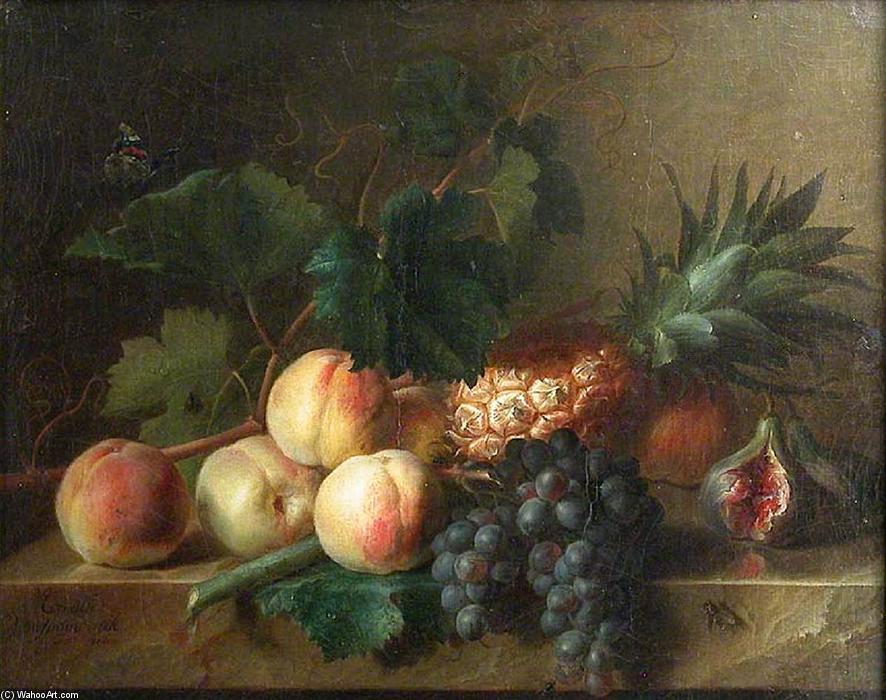
Gaze upon this exquisite vision of abundance, a moment captured in time that speaks volumes through its vibrant arrangement of nature's bounty. This still life, featuring an array of ripe fruit—luscious apples nestled in the foreground, stately pears positioned just behind them, and clusters of deep purple grapes alongside bright oranges—is more than mere depiction; it is a celebration of harvest and earthly pleasure. The composition is further enriched by…

3
Vase of Roses (1806) του Cornelis van Spaendonck

Vase of Roses

1806 · Oil · Museum of Fine Arts, Λιόν

The air in the room feels heavy with the scent of damp earth and velvet petals. A dark-stone vase, heavy and grounded upon a cool marble base, holds a gathering of roses that seems to pulse with life. Crimson and vermilion blooms circle the arrangement, their deep hues pulling the eye into the center of the composition. Amidst this sea of red, a single white rose and a pale centifolia…

Πάينτα του Cornelis van Spaendonck, κατάταξη από 11 έως 15

Τα θέματα που κίνησαν το ενδιαφέρον του Cornelis van Spaendonck

Τα τέσσερα θέματα που εμφανίζονται πιο συχνά σε αυτά τα πρωτότυπα έργα, το καθένα με το εξαιρετικό του παράδειγμα.

Τα μουσεία που διατηρούν τα πρωτότυπα έργα του Cornelis van Spaendonck

Τα 7 μουσεία που φιλοξενούν το μεγαλύτερο μέρος των έργων σε αυτήν τη σελίδα.

Μουσείο Πόλη Έργα του Cornelis van Spaendonck Πάτρια από αυτή τη λίστα
Fitzwilliam MuseumFitzwilliam Museum 3 Open Wicker Basket Of Mixed Flowers, Including Tulip, Roses, Harebell, Hollyhock, Poppy, Larkspur And Auricula On A Marble Ledge, Vase Of Flowers, Open wicker basket of mixed flowers, including iris, roses, poppies, hollyhock, marigold, larkspur and convolvulus on a marble ledge
Noordbrabants Museum, 's-HertogenboschNoordbrabants Museum 's-Hertogenbosch 2 Cabbage rose, Still Life with Flowers in a Vase
Herbert F. Johnson Museum of Art, ΙθάκηHerbert F. Johnson Museum of Art Ιθάκη 1 Still Life of Flowers
Μουσείο του Λούβρου, ΠαρίσιΜουσείο του Λούβρου Παρίσι 1 Still-Life with Fruit on Table
Museum of Fine Arts, ΛιόνMuseum of Fine Arts Λιόν 1 Vase of Roses
Musée des Beaux-Arts, ΚαρκασόνMusée des Beaux-Arts Καρκασόν 1 Cornelis Van Spaendonck - Vase de fleurs avec nid
Ashmolean Museum, ΟξφόρδηAshmolean Museum Οξφόρδη 1 Basket of Flowers

Cornelis van Spaendonck, ένα χαρακτηριστικό έργο ανά δεκαετία

Έργα ανά δεκαετία

Επιλέξτε μια δεκαετία για να δείτε το πρωτότυπο έργο που την χαρακτηρίζει.

Οι πίνακες του Cornelis van Spaendonck: οι απαντήσεις της γκαλερί

Ποιο έργο του Cornelis van Spaendonck είναι το πιο διάσημο από όλα;Αποκαλύψτε την απάντηση

Still Life of Flowers (1793), Herbert F. Johnson Museum of Art, Ιθάκη. Στη συνέχεια ακολουθούν το Still-Life with Fruit on Table (1798) και το Vase of Roses (1806).

Πόσο είχε ηλικία ο Cornelis van Spaendonck όταν ολοκλήρωσε το Still Life of Flowers;Αποκαλύψτε την απάντηση

37 ετών: το έργο Still Life of Flowers είναι του 1793, και ο/η Cornelis van Spaendonck γεννήθηκε το 1756.

Ποιες είναι τα 10 κορυφαία έργα του Cornelis van Spaendonck;Αποκαλύψτε την απάντηση

Still Life of Flowers, Still-Life with Fruit on Table, Vase of Roses, Still Life with Fruit Basket, Vase of Flowers on a Stone Table, with a Nest and a Male Greenfinch, Cornelis Van Spaendonck - Vase de fleurs avec nid, Cabbage rose, Still Life with Flowers in a Vase, Open Wicker Basket Of Mixed Flowers, Including Tulip, Roses, Harebell, Hollyhock, Poppy, Larkspur And Auricula On A Marble Ledge και Basket and Vase of Flowers. Η κατάταξη παραπάνω αναγράφει το έτος και το μουσείο για το κάθε έργο.

Πόσα έργα δημιούργησε ο/η Cornelis van Spaendonck;Αποκαλύψτε την απάντηση

Ο κατάλογός μας περιλαμβάνει 16 έργα του Cornelis van Spaendonck, με ημερομηνίες από 1781 έως 1830.

Πού εκτίθενται τα πιο διάσημα πρωτότυπα του Cornelis van Spaendonck;Αποκαλύψτε την απάντηση

Κυρίως σε Fitzwilliam Museum, Noordbrabants Museum ('s-Hertogenbosch) και Herbert F. Johnson Museum of Art (Ιθάκη). Ο πίνακας μουσείου παραπάνω τους περιλαμβάνει όλους.

Πότε δημιούργησε ο/η Cornelis van Spaendonck τα πιο διάσημα έργα του/της;Αποκαλύψτε την απάντηση

Κατά την περίοδο 1780s: 3 από τα 15 έργα σε αυτήν τη σελίδα δημιουργήθηκαν τότε, με Still Life with Fruit Basket από αυτά να είναι μοναδικά.

Ποια είναι τα πρώτα και τα τελευταία διάσημα έργα του Cornelis van Spaendonck;Αποκαλύψτε την απάντηση

Σε αυτήν τη σελίδα, το παλαιότερο είναι Still Life with Fruit Basket (1781) και το νεότερο Still Life with Flowers in a Vase (1830).

Ποια θέματα επέλεξε πιο συχνά ο Cornelis van Spaendonck;Αποκαλύψτε την απάντηση

Flowers (5), Vase (3) και Roses (2), σε συνολικά 15 έργα σε αυτήν τη σελίδα.

Με ποια τεχνική εργάστηκε περισσότερο ο Cornelis van Spaendonck;Αποκαλύψτε την απάντηση

Oil, για 2 από τα 15 έργα σε αυτήν τη σελίδα.

Ποια πρωτότυπα έργα του Cornelis van Spaendonck διαθέτει το Fitzwilliam Museum;Αποκαλύψτε την απάντηση

Open Wicker Basket Of Mixed Flowers, Including Tulip, Roses, Harebell, Hollyhock, Poppy, Larkspur And Auricula On A Marble Ledge, Vase Of Flowers και Open wicker basket of mixed flowers, including iris, roses, poppies, hollyhock, marigold, larkspur and convolvulus on a marble ledge: το Fitzwilliam Museum διαθέτει 3 από τα έργα σε αυτήν τη σελίδα.

Cornelis van Spaendonck: ο καλλιτέχνης

The Delicate Mastery of Cornelis van Spaendonck

In the grand tapestry of European art history, few threads possess the delicate, luminous quality found in the works of Cornelis van Spaendonck. Born in the Dutch city of Tilburg in 1756, Van Spaendonck emerged from a lineage of profound artistic dedication, beginning his journey under the tutelage of Willem Jacob Herreyns in Antwerp. This early training laid the foundation for a career that would eventually bridge the gap between the meticulous traditions of the Dutch Golden Age and the refined elegance of the French Neoclassical era. In 1773, a pivotal year that redirected the course of his life, he moved to Paris, where he joined his older brother, Gérard van Spaendonck. Together, they became central figures in the Parisian art scene, weaving a legacy of botanical precision and decorative splendor that would captivate the French Academy for decades.

The essence of Van Spaendonck’s artistry lies in his ability to transform the ephemeral into the eternal. While many artists of his era sought the drama of historical epic or the grandeur of portraiture, Cornelis found his muse in the quiet, intimate corners of the natural world. His mastery of oils and gouache allowed him to capture the translucent petals of a rose, the velvety texture of a tulip, and the subtle, dewy moisture on a leaf with an almost scientific accuracy. His compositions often transcend mere botanical documentation; they are poetic meditations on life and decay. In works such as "Open Wicker Basket Of Mixed Flowers," one can sense the artist's profound reverence for each individual bloom, from the sturdy hollyhock to the delicate harebell, all arranged with a grace that feels both spontaneous and perfectly balanced.

A Legacy of Porcelain and Prestige

Van Spaendonck’s influence extended far beyond the canvas, reaching into the very fabric of decorative arts that defined 18th-century luxury. His tenure as the director of the prestigious Sèvres porcelain factory from 1785 to 1800 represents a remarkable intersection of fine art and industrial design. During this period, his botanical sensibilities were translated into exquisite motifs for porcelain, bringing the beauty of the natural world to the tables of the European aristocracy. Even after his administrative departure from Sèvres in 1800, his creative spirit remained tethered to the manufactory, as he continued to design decorative elements that would become hallmarks of French elegance until 1808.

His professional stature was further solidified by his membership in the Académie des Beaux Arts, a distinction he earned in 1789. This prestigious affiliation provided him with a continuous platform to showcase his botanical wonders to the most discerning eyes in Europe. His work often featured more than just flora; he possessed a singular talent for integrating small, living details that breathed life into his still lifes. A wandering bee, a shimmering dragonfly, or a tiny bird's nest tucked among the stems served as subtle reminders of the interconnectedness of nature, adding layers of narrative depth to his compositions.

The historical significance of Cornelis van Spaendonck is found not only in his individual achievements but also in the lineage of talent he helped cultivate. As a mentor to artists like Frédéric Bouchardy, he ensured that the tradition of meticulous botanical illustration would endure into the next century. His life’s work remains a testament to the power of observation and the enduring allure of the natural world, offering a window into an era where beauty was captured with unparalleled precision and profound affection.