Πορτρέτο του Μπα Ντα Σανρεν

Τα 41 πιο διάσημα έργα του Μπα Ντα Σανρεν, μια επιλογή γκαλερί

Ενημερωμένο Νοέμβριος 2026 · κατάταξη βάσει του σκορ δημοφιλίας μας (αναζητήσεις, επισκέψεις και παραγγελίες για κάθε έργο) · 42 έργα του Μπα Ντα Σανρεν στον κατάλογό μας

Με σύντομη περιγραφή

Από όλα τα πρωτότυπα έργα που άφησε ο Μπα Ντα Σανρεν, το πιο διάσημο είναι το Landscape in the style of Wu Zhen, (1280-1354) (1696), το οποίο βρίσκεται στη συλλογή του Εθνική Πινακοθήκη της Βικτώριας, Μελβούρνη. Ακολουθούν στενά η Duck on a Branch (1691) και η Landscape (1698). Ο κατάλογός μας περιλαμβάνει 42 έργα του Μπα Ντα Σανρεν· η γκαλερί έχει διατηρήσει τα 41 κομμάτια που θαυμάζει ο κόσμος, το καθένα με την ημερομηνία, το μουσείο και την ιστορία του.

1626 – 1705, Περιφέρεια Σιντζιάν Περισσότερα έργα: Μετροπολιτικό Μουσείο Τέχνης

Τα 10 κορυφαία έργα του Μπα Ντα Σανρεν: η επιλογή της γκαλερί

1
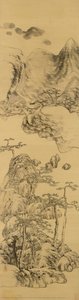
Landscape in the style of Wu Zhen, (1280-1354) (1696) του Μπα Ντα Σανρεν

Landscape in the style of Wu Zhen, (1280-1354)

In this landscape, we encounter a world where the physical and the spiritual are indistinguishable. Painted around 1696, this work reflects a profound engagement with the traditions of the Yuan dynasty, specifically the approach of Wu Zhen. The composition does not seek to document a specific place, but rather to map the interior terrain of the artist. There is a deliberate absence of human presence, leaving the viewer alone with…

2
Duck on a Branch (1691) του Μπα Ντα Σανρεν

Duck on a Branch

1691 · Ink On Paper

In this ink wash painting from 1691, we encounter a solitary bird perched upon a gnarled, curving branch. The composition is defined by a profound sense of emptiness, where the cream-colored paper is not merely a background but an active presence, suggesting a vast, silent void. The bird, likely a duck, is rendered with a decisive, spontaneous brushwork that prioritizes its spirit over anatomical precision. There is a quiet tension…

3
Landscape (1698) του Μπα Ντα Σανρεν

Landscape

1698 · Ink On Paper

In the year about 1698, Bada Shanren produced Landscape, a traditional Chinese landscape painting rendered in monochrome ink. The scene unfolds upon paper, where black ink defines a world of quietude. A tall tree with sparse foliage rises from a small hill, its branches reaching out with calligraphic precision. Beside this tree, a giraffe stands as a singular, unexpected presence within the composition. This unusual animal introduces a surreal quality…

4
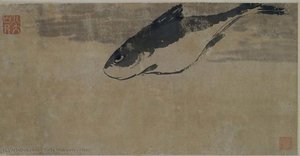
Fish and Rocks (1674) του Μπα Ντα Σανρεν

Fish and Rocks

1674 · Ink On Paper · Μουσείο Τέχνης Κλίβελαντ, Κλίβελαντ

Executed in 1674, this ink wash painting on silk utilizes the principles of the literati tradition to capture a moment of profound stillness. The composition is defined by a deliberate use of negative space, where the unpainted background functions as an active element representing the fluid medium of water or air. A single fish moves through this void, its streamlined form contrasted against the jagged, organic silhouettes of large rocks.…

6
Landscape after Guo Zhongshu (1677) του Μπα Ντα Σανρεν

Landscape after Guo Zhongshu

1677 · Ink · Μουσείο Τέχνης Κλίβελαντ, Κλίβελαντ

In this work, titled Landscape after Guo Zhongshu, we encounter a significant creation by the artist Bada Shanren. This piece was executed about 1677, a period that reflects the artist's mature engagement with the traditions of the past. The painting captures a specific vision of the natural world, filtered through the unique perspective of a man who lived through a time of profound transition in China.

7
Spray of Hibiscus (Spray of Flowering Shrub) (1681) του Μπα Ντα Σανρεν

Spray of Hibiscus (Spray of Flowering Shrub)

1681 · Ink On Paper

In Spray of Hibiscus (Spray of Flowering Shrub), Bada Shanren employs an asymmetrical composition to establish a sense of natural movement. The botanical elements extend from the top and right edges toward the center and bottom left, utilizing the void of the paper to create essential breathing space. This arrangement follows the principles of classic literati painting, prioritizing the transmission of spirit over literal representation.

8
Plant (Bird of Paradise) (1681) του Μπα Ντα Σανρεν

Plant (Bird of Paradise)

1681 · Ink On Paper

In Plant (Bird of Paradise) by Bada Shanren, the arrangement follows an asymmetrical logic. The primary subject, a Bird of Paradise plant, is positioned slightly off-center, breaking the formal symmetry often found in decorative works. This placement creates a tension between the organic form and the surrounding void. Large areas of significant negative space surround the plant, utilizing the light, neutral-toned paper or silk background to define the composition. This…

9
Branch of Hydrangea (1681) του Μπα Ντα Σανρεν

Branch of Hydrangea

1681 · Ink On Paper

This traditional Chinese ink wash painting, dating to 1681, presents a minimalist depiction of a branch of hydrangea flowers on paper. The composition is characterized by an asymmetrical arrangement, featuring a thin, slightly gnarled branch that extends from the lower left toward the center and upper left of the frame. Clusters of hydrangea blossoms and leaves are distributed across the space, utilizing an elegant use of negative space.

10
Spray of Water Weed and Two Insects (1681) του Μπα Ντα Σανρεν

Spray of Water Weed and Two Insects

1681 · Ink On Paper

In Spray of Water Weed and Two Insects by Bada Shanren, an intentional asymmetry governs the space. The main subject matter, consisting of delicate water weeds and two small insects, clings to the right side of the frame. This placement leaves a vast, significant void on the left. This emptiness is not merely a lack of content but a presence in itself. Within this negative space, vertical columns of Chinese…

Η επιλογή του Μπα Ντα Σανρεν συνεχίζεται, από τον 11 έως τον 41

11Flowers and Insects (1683) του Μπα Ντα ΣανρενFlowers and Insects1683 12Spray of Tuberose (Spray of Fuchia) (1681) του Μπα Ντα ΣανρενSpray of Tuberose (Spray of Fuchia)1681 13Two Twigs of Camellia (Two Twigs of Flowering Fruit) (1681) του Μπα Ντα ΣανρενTwo Twigs of Camellia (Two Twigs of Flowering Fruit)1681 14Two Grasshoppers on Lotus Leaves (1681) του Μπα Ντα ΣανρενTwo Grasshoppers on Lotus Leaves1681 15Two Grape Leaves (1681) του Μπα Ντα ΣανρενTwo Grape Leaves1681 16Lotus and Ducks (1696) του Μπα Ντα ΣανρενLotus and Ducks1696 · Freer Gallery of Art 17Two Chicks (1694) του Μπα Ντα ΣανρενTwo Chicks1694 · Minneapolis Institute of Art 18清 八大山人 (朱耷) 蓮塘戲禽圖 卷 Birds in a lotus pond (1690) του Μπα Ντα Σανρεν清 八大山人 (朱耷) 蓮塘戲禽圖 卷 Birds in a lotus pond1690 · Μετροπολιτικό Μουσείο Τέχνης 19清 朱耷 (八大山人) 倣王羲之 蘭亭序 軸 After Wang Xizhi's (303 361 ) Preface to the Orchid Pavilion Gathering (1694) του Μπα Ντα Σανρεν清 朱耷 (八大山人) 倣王羲之 蘭亭序 軸 After Wang Xizhi's (303 361 ) Preface to the Orchid Pavilion Gathering1694 · Μετροπολιτικό Μουσείο Τέχνης 20清 朱耷 (八大山人) 山水圖 冊 Landscape album (1699) του Μπα Ντα Σανρεν清 朱耷 (八大山人) 山水圖 冊 Landscape album1699 · Μετροπολιτικό Μουσείο Τέχνης 21Landscape in the style of Ni Zan, (1301 1374) (1696) του Μπα Ντα ΣανρενLandscape in the style of Ni Zan, (1301 1374)1696 · The Ian Potter Centre - Ngv Australia 22Untitled (D2X7RZ) (1699) του Μπα Ντα ΣανρενUntitled (D2X7RZ)1699 · Μετροπολιτικό Μουσείο Τέχνης 23Landscape in the style of Wu Zhen, (1280 1354) (1696) του Μπα Ντα ΣανρενLandscape in the style of Wu Zhen, (1280 1354)1696 · The Ian Potter Centre - Ngv Australia 24Landscape in the style of Wang Meng, (c. 1309 1385) (1696) του Μπα Ντα ΣανρενLandscape in the style of Wang Meng, (c. 1309 1385)1696 · The Ian Potter Centre - Ngv Australia 25Cedar Tree, Day Lily, and Wagtails (1700) του Μπα Ντα ΣανρενCedar Tree, Day Lily, and Wagtails1700 · Freer Gallery of Art 26Mynah Bird on an Old Tree (1703) του Μπα Ντα ΣανρενMynah Bird on an Old Tree1703 · The Palace Museum 27清 朱耷 (八大山人) 二鷹圖 軸 Two eagles (1702) του Μπα Ντα Σανρεν清 朱耷 (八大山人) 二鷹圖 軸 Two eagles1702 · Μετροπολιτικό Μουσείο Τέχνης 28Fish (601) του Μπα Ντα ΣανρενFish601 29Podróżni na osiołkach του Μπα Ντα ΣανρενPodróżni na osiołkachΕθνικό Μουσείο Βαρσοβίας 30Landscape in the style of Huang Gongwang, (1269-1354) (1664) του Μπα Ντα ΣανρενLandscape in the style of Huang Gongwang, (1269-1354)1664 · Εθνική Πινακοθήκη της Βικτώριας 31Landscape in the style of Ni Zan, (1301-1374) (1696) του Μπα Ντα ΣανρενLandscape in the style of Ni Zan, (1301-1374)1696 · Εθνική Πινακοθήκη της Βικτώριας 32Landscape in the style of Wang Meng, (c. 1309-1385) (1696) του Μπα Ντα ΣανρενLandscape in the style of Wang Meng, (c. 1309-1385)1696 · Εθνική Πινακοθήκη της Βικτώριας 33twelve egrets in marsh grasses του Μπα Ντα Σανρενtwelve egrets in marsh grassesIndianapolis Museum of Art 34SEASCAPE WITH TREE AND BOAT του Μπα Ντα ΣανρενSEASCAPE WITH TREE AND BOATΜουσεία Τέχνης του Χάρβαρντ 35SUMI ALBUM LEAF OF THREE LOTUS FLOWERS του Μπα Ντα ΣανρενSUMI ALBUM LEAF OF THREE LOTUS FLOWERSΜουσεία Τέχνης του Χάρβαρντ 36Birds, in Qing style του Μπα Ντα ΣανρενBirds, in Qing style 37Bird on Rock, in Qing style του Μπα Ντα ΣανρενBird on Rock, in Qing style 38BIRD AND CHRYSANTHEMUM του Μπα Ντα ΣανρενBIRD AND CHRYSANTHEMUM 39Album του Μπα Ντα ΣανρενAlbumΜετροπολιτικό Μουσείο Τέχνης 40PINE TREE AND ROCK του Μπα Ντα ΣανρενPINE TREE AND ROCK 41Lotus and Birds του Μπα Ντα ΣανρενLotus and BirdsChina Modern and Contemporary Art Document Research Center

Τα διάσημα έργα του Μπα Ντα Σανρεν, ανά περίοδο

Τα θέματα που κίνησαν το ενδιαφέρον του Μπα Ντα Σανρεν

Τα τέσσερα θέματα που εμφανίζονται πιο συχνά σε αυτά τα πρωτότυπα έργα, το καθένα με το εξαιρετικό του παράδειγμα.

Τα μουσεία που διατηρούν τα πρωτότυπα έργα του Μπα Ντα Σανρεν

Τα 8 μουσεία που φιλοξενούν το μεγαλύτερο μέρος των έργων σε αυτήν τη σελίδα.

Μουσείο Πόλη Έργα του Μπα Ντα Σανρεν Πάτρια από αυτή τη λίστα
Μετροπολιτικό Μουσείο Τέχνης, Νέα ΥόρκηΜετροπολιτικό Μουσείο Τέχνης Νέα Υόρκη 6 清 八大山人 (朱耷) 蓮塘戲禽圖 卷 Birds in a lotus pond, 清 朱耷 (八大山人) 倣王羲之 蘭亭序 軸 After Wang Xizhi's (303 361 ) Preface to the Orchid Pavilion Gathering, 清 朱耷 (八大山人) 山水圖 冊 Landscape album
Εθνική Πινακοθήκη της Βικτώριας, ΜελβούρνηΕθνική Πινακοθήκη της Βικτώριας Μελβούρνη 4 Landscape in the style of Wu Zhen, (1280-1354), Landscape in the style of Huang Gongwang, (1269-1354), Landscape in the style of Ni Zan, (1301-1374)
The Ian Potter Centre - Ngv Australia, ΜελβόρνηThe Ian Potter Centre - Ngv Australia Μελβόρνη 4 Landscape in the style of Huang Gongwang, (1269 1354), Landscape in the style of Ni Zan, (1301 1374), Landscape in the style of Wu Zhen, (1280 1354)
Μουσείο Τέχνης Κλίβελαντ, ΚλίβελαντΜουσείο Τέχνης Κλίβελαντ Κλίβελαντ 2 Fish and Rocks, Landscape after Guo Zhongshu
Freer Gallery of Art, Ουάσιγκτον, D.C.Freer Gallery of Art Ουάσιγκτον, D.C. 2 Lotus and Ducks, Cedar Tree, Day Lily, and Wagtails
Μουσεία Τέχνης του Χάρβαρντ, ΚέιμπριτζΜουσεία Τέχνης του Χάρβαρντ Κέιμπριτζ 2 SEASCAPE WITH TREE AND BOAT, SUMI ALBUM LEAF OF THREE LOTUS FLOWERS
Minneapolis Institute of Art, MinneapolisMinneapolis Institute of Art Minneapolis 1 Two Chicks
The Palace Museum, ΠεκίνοThe Palace Museum Πεκίνο 1 Mynah Bird on an Old Tree

Ο Μπα Ντα Σανρεν δεκαετία προς δεκαετία: το πρωτότυπο που ορίζει κάθε μία

Έργα ανά δεκαετία

Επιλέξτε μια δεκαετία για να δείτε το πρωτότυπο έργο που την χαρακτηρίζει.

Ερωτήσεις συλλεκτών για τα έργα του Μπα Ντα Σανρεν

Για ποιο έργο είναι πιο γνωστός ο Μπα Ντα Σανρεν;Αποκαλύψτε την απάντηση

Landscape in the style of Wu Zhen, (1280-1354) (1696), Εθνική Πινακοθήκη της Βικτώριας, Μελβούρνη. Στη συνέχεια ακολουθούν το Duck on a Branch (1691) και το Landscape (1698).

Πόσο ηλικία είχε ο/η Μπα Ντα Σανρεν όταν δημιουργήθηκε το Landscape in the style of Wu Zhen, (1280-1354);Αποκαλύψτε την απάντηση

70 ετών: το έργο Landscape in the style of Wu Zhen, (1280-1354) είναι του 1696, και ο/η Μπα Ντα Σανρεν γεννήθηκε το 1626.

Ποια είναι τα δέκα πιο διάσημα έργα του Μπα Ντα Σανρεν;Αποκαλύψτε την απάντηση

Landscape in the style of Wu Zhen, (1280-1354), Duck on a Branch, Landscape, Fish and Rocks, Landscape in the style of Huang Gongwang, (1269 1354), Landscape after Guo Zhongshu, Spray of Hibiscus (Spray of Flowering Shrub), Plant (Bird of Paradise), Branch of Hydrangea και Spray of Water Weed and Two Insects. Η κατάταξη παραπάνω αναγράφει το έτος και το μουσείο για το κάθε έργο.

Πόσα έργα δημιούργησε ο/η Μπα Ντα Σανρεν;Αποκαλύψτε την απάντηση

Ο κατάλογός μας περιλαμβάνει 42 έργα του Μπα Ντα Σανρεν, με ημερομηνίες από 1664 έως 1703.

Σε ποια μουσεία εκτίθενται τα αριστούργημα του Μπα Ντα Σανρεν;Αποκαλύψτε την απάντηση

Κυρίως σε Μετροπολιτικό Μουσείο Τέχνης (Νέα Υόρκη), Εθνική Πινακοθήκη της Βικτώριας (Μελβούρνη) και The Ian Potter Centre - Ngv Australia (Μελβόρνη). Ο πίνακας μουσείου παραπάνω τους περιλαμβάνει όλους.

Σε ποιες χρονιές δημιούργησε ο/η Μπα Ντα Σανρεν τα πιο διάσημα έργα του/της;Αποκαλύψτε την απάντηση

Κατά την περίοδο 1690s: 14 από τα 41 έργα σε αυτήν τη σελίδα δημιουργήθηκαν τότε, με Landscape in the style of Wu Zhen, (1280-1354) από αυτά να είναι μοναδικά.

Ποια είναι τα πρώτα και τα τελευταία διάσημα πρωτότυπα του Μπα Ντα Σανρεν;Αποκαλύψτε την απάντηση

Σε αυτήν τη σελίδα, το παλαιότερο είναι Landscape in the style of Huang Gongwang, (1269 1354) (1664) και το νεότερο Mynah Bird on an Old Tree (1703).

Ποια θέματα επέλεξε πιο συχνά ο Μπα Ντα Σανρεν;Αποκαλύψτε την απάντηση

Black ink (12), Leaves (8) και Mountains (6), σε συνολικά 41 έργα σε αυτήν τη σελίδα.

Ποια τεχνική χρησιμοποίησε περισσότερο ο Μπα Ντα Σανρεν;Αποκαλύψτε την απάντηση

Ink On Paper, για 20 από τα 41 έργα σε αυτήν τη σελίδα.

Ποια έργα του Μπα Ντα Σανρεν εκτίθενται στο Μετροπολιτικό Μουσείο Τέχνης;Αποκαλύψτε την απάντηση

清 八大山人 (朱耷) 蓮塘戲禽圖 卷 Birds in a lotus pond, 清 朱耷 (八大山人) 倣王羲之 蘭亭序 軸 After Wang Xizhi's (303 361 ) Preface to the Orchid Pavilion Gathering και 清 朱耷 (八大山人) 山水圖 冊 Landscape album: το Μετροπολιτικό Μουσείο Τέχνης, Νέα Υόρκη διαθέτει 6 από τα έργα σε αυτήν τη σελίδα.

Μπα Ντα Σανρεν: ζωή και έργο

The Enigmatic Eight Mountain Man: A Legacy of Resilience

Zhu Da, known to history by the evocative pen name Bada Shanren, remains one of the most profound and enigmatic figures in the annals of Chinese art. Born around 1626 during the twilight of the Ming Dynasty, his life was inextricably woven into the violent tapestry of dynastic transition. As a member of the imperial House of Zhu, he lived under the shadow of political upheaval; the fall of the Ming to the Qing forces meant that his very lineage was marked for destruction. This period of profound instability did more than just shape his biography; it forged the very soul of his artistry. To escape the purges that claimed his kin, Zhu Da sought refuge within the quietude of Buddhist monasteries, spending thirty years as a monk. It was in this contemplative isolation, amidst the teachings of Zen Buddhism, that he developed the spiritual depth and the minimalist aesthetic that would later revolutionize Chinese ink wash painting.

A Vision of Minimalist Mastery

The artistry of Bada Shanren is characterized by an unprecedented economy of means, a style that many contemporary scholars view as a precursor to modern minimalism. Unlike the meticulous and often crowded compositions of his predecessors, Barga’s work breathes through vast, intentional voids. He mastered the art of leaving space empty, using the white of the paper not merely as a background, but as an active participant in the composition—representing mist, water, or the infinite silence of the mind. His brushwork was both decisive and deceptively simple, capable of conveying intense emotion through a single, sweeping stroke. Whether depicting a solitary rock or a cluster of reeds, his focus remained steadfastly on capturing the essence rather than the literal form, prioritizing the transmission of mood and atmosphere over decorative detail.

Symbolism and the Silent Protest

Beyond the technical brilliance of his landscapes and calligraphy, Bada Shanren’s work is celebrated for its poignant, often biting, use of metaphor. His most famous subjects—enigmatic birds and fish—are far from mere studies of nature. Many art historians interpret his "mocking birds," with their wide-eyed, almost disdainful stares, as subtle political allegories. These creatures, appearing solitary and defiant amidst a desolate landscape, are believed to reflect the artist's own feelings of displacement and his silent protest against the new Qing regime. This layer of hidden meaning transforms his paintings from simple naturalistic observations into profound psychological portraits of a scholar-artist navigating a world in flux. His later landscapes, which drew inspiration from the great Yuan dynasty masters like Ni Zan, further expanded his repertoire, blending classical reverence with his unique, idiosyncratic spirit.

Historical Significance and Enduring Influence

The historical significance of Bada Shanren lies in his ability to bridge the gap between the classical traditions of the past and a new, more expressive way of seeing. By integrating the spiritual discipline of Zen with the political trauma of his era, he created a visual language that was both deeply personal and universally resonant. His influence can be traced through centuries of Chinese ink painting, where his approach to space, subject, and symbolism continues to inspire artists seeking to express the profound through the minimal. Today, he is remembered not just as a painter of landscapes or birds, but as a master of the "unspoken," an artist who found a way to speak volumes through the quietest of strokes and the most profound of silences.