

1


Ενημερωμένο Νοέμβριος 2026 · κατάταξη βάσει του σκορ δημοφιλίας μας (αναζητήσεις, επισκέψεις και παραγγελίες για κάθε έργο) · 24 έργα του Anthony Hernandez στον κατάλογό μας
Με σύντομη περιγραφή
Στο μάτι της γκαλερί, το πιο διάσημο έργο του Anthony Hernandez είναι το Waikiki, No. 7 (1975). Ο Waikiki, No. 8, from the portfolio Waikiki (1975) και ο Public Transit Areas, 1st and Pine Ave., Looking North, from the Long Beach Documentary Survey Project (1980) ολοκληρώνουν το τρίο που κάθε μάτι αναγνωρίζει. Από τα 24 έργα του Anthony Hernandez στον κατάλογό μας, η γκαλερί παρουσιάζει παρακάτω τα 24 πιο διάσημα, όπου κάθε ένα είναι πρωτότυπο, με την χρονολογία του, το μουσείο του και το τι το κάνει μοναδικό.


 Waikiki, No. 5, from the portfolio Waikiki1975
12
 Untitled (Los Angeles)1974
13
 Waikiki, No. 91975
14
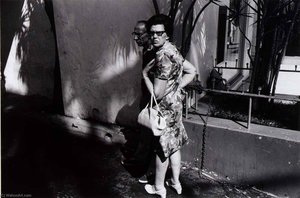 Waikiki, No. 101975
15
 Waikiki, No. 31975
16
 Waikiki, No. 61975
17
 Public Transit Areas, 4th St. and Bonito Ave., Looking North, from the Long Beach Documentary Survey Project1980
18
 Public Transit Areas, 4th St. and Olive, Looking North, from the Long Beach Documentary Survey Project1980
19
 Public Transit Areas, Magnolia Ave. and Anaheim St., Looking North, from the Long Beach Documentary Survey Project1980
20
 Public Transit Areas, 4th St. and Junipero Ave., Looking North, from the Long Beach Documentary Survey Project1980
21
 Public Transit Areas, 10th St. and Long Beach Blvd., Looking East, from the Long Beach Documentary Survey Project1980
22
 Public Transit Areas, Termino Ave. and Pacific Coast Highway, Looking North, from the Long Beach Documentary Survey Project1980
23Shooting Sites, Las Vegas 301990
24
 Angeles National Forest 13, from the series Shooting Sites1989
Τα τέσσερα θέματα που εμφανίζονται πιο συχνά σε αυτά τα πρωτότυπα έργα, το καθένα με το εξαιρετικό του παράδειγμα.
 #3 Public Transit Areas, 1st and Pine Ave., Looking North, from the Long Beach Documentary Survey Project
 #4 Public Transit Areas, California Ave. and Anaheim St., Looking North, from the Long Beach Documentary Survey Project
 #5 Public Transit Areas, Ocean and Pacific Ave., Looking East, from the Long Beach Documentary Survey Project
Επιλέξτε μια δεκαετία για να δείτε το πρωτότυπο έργο που την χαρακτηρίζει.

Το Waikiki, No. 7 (1975). Στη συνέχεια ακολουθούν το Waikiki, No. 8, from the portfolio Waikiki (1975) και το Public Transit Areas, 1st and Pine Ave., Looking North, from the Long Beach Documentary Survey Project (1980).
28 ετών: το έργο Waikiki, No. 7 είναι του 1975, και ο/η Anthony Hernandez γεννήθηκε το 1947.
Waikiki, No. 7, Waikiki, No. 8, from the portfolio Waikiki, Public Transit Areas, 1st and Pine Ave., Looking North, from the Long Beach Documentary Survey Project, Public Transit Areas, California Ave. and Anaheim St., Looking North, from the Long Beach Documentary Survey Project, Public Transit Areas, Ocean and Pacific Ave., Looking East, from the Long Beach Documentary Survey Project, Public Transit Areas, Olive Ave. and 7th St., Looking North, from the Long Beach Documentary Survey Project, Waikiki, No. 2, Waikiki, No. 4, Waikiki, No. 11 και Waikiki, No. 1. Η κατάταξη παραπάνω αναγράφει το έτος και το μουσείο για το κάθε έργο.
Ο κατάλογός μας περιλαμβάνει 24 έργα του Anthony Hernandez, με ημερομηνίες από 1974 έως 1990.
Κατά την περίοδο 1970s: 12 από τα 24 έργα σε αυτήν τη σελίδα δημιουργήθηκαν τότε, με Waikiki, No. 7 από αυτά να είναι μοναδικά.
Σε αυτήν τη σελίδα, το παλαιότερο είναι Untitled (Los Angeles) (1974) και το νεότερο Shooting Sites, Las Vegas 30 (1990).
Urban landscape (3), Solitude (2) και 1980s (2), σε συνολικά 24 έργα σε αυτήν τη σελίδα.
Documentary photography, όπως προκύπτει από τα πρωτότυπα σε αυτήν τη σελίδα.
Anthony Hernandez enters the frame in 1947, born in Aliso Village, an East Los Angeles public housing project. The environment is defined by the immediate realities of urban living. By 1966, he is at East Los Angeles College, enrolling in basic photography courses. He spends 1966 and 1967 studying the mechanics of the medium, learning to see through a lens before the world shifts.
The trajectory breaks in 1967. Hernandez enters the United States Army, a departure from the classroom. The focus shifts from composition to survival. In 1968, he serves as a medic in the Vietnam War. This period of service marks a sharp pivot, a time of witnessing the raw, unvarnished aspects of human existence in a conflict zone. He returns from the service in 1969, carrying the weight of those experiences back to the streets of his native city.
The city is a site of constant friction. Hernandez moves through these spaces, focusing on the essence of urban environments and the specific, often isolated, experiences of public transit. His lens tracks the movement of people through infrastructure, capturing the intersection of human life and the built environment. This focus extends to the physical transformations of the city itself, documenting urban construction and the shifting textures of the landscape.
Economic inequality and the realities of homelessness define much of his visual inquiry. In the series Landscapes for the Homeless (1988–2007), he shifts his gaze away from faces to focus on the objects and makeshift shelters that constitute the living conditions of people in Los Angeles. He examines the debris of survival, turning the attention of the viewer toward the margins of society. His work oscillates between direct street portraiture and a more detached study of architectural details and textures that verge on the abstract.
The camera stays pre-focused. This is the method. Hernandez walks the streets of Los Angeles, his eyes scanning the movement of the crowd. He does not stop to adjust settings or hunt for the right aperture. Instead, he waits. He waits for a subject to step into the pre-set zone of focus, a brief intersection of human presence and technical readiness. The shutter clicks as the moment passes. This strategy allows for a rapid, intuitive capture of life in motion, turning the act of walking into a continuous process of observation.
His prints are stark black and white. He avoids the distractions of color to focus on the architecture of a scene. Through a minimalist approach, he prioritizes composition and the subtle shifts in tonal range. In his more abstract urban work, the focus shifts away from the people and toward the environment itself. He looks at the textures and patterns of the city—the grit of a sidewalk, the geometry of a building, or the decay of urban detritus. The subject is often found in the way light hits a surface or how a shadow cuts across a street.
This technical restraint creates a sense of solitude. Even in crowded transit areas, the emphasis remains on the isolation of the individual within the frame. The work does not seek to decorate; it seeks to document the reality of the urban landscape through a lens of stark, monochrome clarity.
The 1975 "Waikiki" series marks a shift toward a minimalist approach. In Honolulu’s Waikiki Beach, the camera finds quiet beauty through a focus on composition and tonal range. These photographs strip away conventional portraiture, using stark monochrome to distill the atmosphere of the location into its purest form. Textures and shapes emerge from the shadows, inviting a close look at the subtle narratives within the scene.
The lens moves from the beach to the concrete grit of the city. In Long Beach, California, a comprehensive survey project documents public transit areas. These images capture the daily movement of ordinary people navigating urban spaces, highlighting the tension between individual isolation and the surrounding environment. This focus on the social landscape continues through his work in the Angeles National Forest, where he photographed specific locations on the margins of the city. In these areas, people often go for target practice, creating a series of images that explore the intersection of landscape and human activity.
Color enters the narrative in 1984 with the "Rodeo Drive" series. These photographs capture daydreaming shoppers on the famed Beverly Hills street. The work contrasts the polished surface of luxury with the internal, often detached, state of the people moving through it. This period of experimentation with color provides a different perspective on the urban experience, moving away from the strict black and white studies of his earlier transit surveys.
His photographic records exist within major institutional archives. The National Gallery of Art holds his images, including works that examine the textures of urban life. In Los Angeles, the J. Paul Getty Museum maintains his work in its permanent collection. These archives preserve the stark, monochrome views of the city he has documented for decades.
The Smithsonian American Art Museum also features his art, keeping his perspective on the American landscape accessible to researchers and the public. For those seeking digital access, the Guggenheim Museums and Foundation includes his work in its collection online. These institutions act as the primary repositories for his documentation of social landscapes and the quiet, often overlooked corners of urban environments.