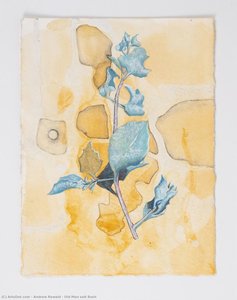
Andrew Rewald: Bridging Culinary Roots and Artistic Exploration
Andrew Rewald’s artistic practice stands apart as a remarkable convergence of seemingly disparate disciplines – food anthropology and culinary arts – resulting in artworks that grapple with complex themes of migration, identity, and ethical responsibility. Born in Murgon, Australia, in 1969, Rewald's formative years instilled within him a profound appreciation for cultural traditions surrounding sustenance and ritualistic practices. This early exposure would prove to be instrumental in shaping his artistic vision—a vision rooted in observation, experimentation, and a deep engagement with the human condition.
Formal Education: Rewald pursued his Bachelor of Fine Arts degree at Queensland College of Art (QCA) in 2006, followed by a Master of Fine Arts from QCA in 2011. These academic pursuits honed his technical skills and provided him with a critical framework for analyzing artistic concepts—a framework that anticipates the challenges posed by an increasingly interconnected world. He approached artmaking not merely as aesthetic creation but as a process of intellectual inquiry, mirroring the meticulous attention to detail characteristic of his culinary background.
Culinary Background: Before dedicating himself entirely to artmaking, Rewald honed his craft as a chef, gaining invaluable experience in understanding the sensory dimensions of food preparation and presentation. This practical knowledge informs his conceptual approach, grounding it in tangible realities—a grounding that distinguishes him from artists focused solely on theoretical abstraction. The careful selection of ingredients, the precise execution of techniques, and the consideration of textural contrasts are all elements that resonate within Rewald’s artistic sensibility.
Rewald’s artistic output centers around performance art pieces that deliberately engage audiences with considerations of “duty of care.” He doesn't merely depict subjects; he actively invites viewers to contemplate ethical dilemmas surrounding cultural exchange and the preservation of traditions—a provocation that aligns seamlessly with his anthropological interests. His work frequently utilizes food as a symbolic element, representing not just nourishment but also memory, heritage, and social connection—concepts central to his worldview.
Notable Exhibitions and Recognition: Rewald’s artistic reputation has steadily grown since graduation, culminating in appearances at prestigious international venues such as Biennale Sydney (2016) and Zk/u Berlin (2018). These exhibitions underscore the breadth of his influence within contemporary art discourse—a testament to his ability to provoke dialogue and challenge conventional perspectives on artistic representation. His presentations are marked by a commitment to exploring profound questions about human experience, mirroring the intellectual rigor that characterizes his artistic endeavors. He has published research on art and artists other than Cézanne, demonstrating a dedication to furthering scholarly understanding of artistic history and practice.
- Biennale Sydney: Rewald’s contribution to Biennale Sydney showcased his ability to provoke dialogue and challenge conventional perspectives on artistic representation.
- Zk/u Berlin: Similarly, Zk/u Berlin provided a platform for Rewald's exploration of migration narratives and the importance of fostering empathy across cultural boundaries.
Historical Significance: Andrew Rewald’s work contributes to an ongoing conversation about how art can illuminate social issues and foster intercultural understanding—a contribution that anticipates the complexities of navigating our increasingly globalized society. By blending culinary anthropology with performance art, he pushes boundaries within the field, prompting viewers to confront uncomfortable truths about globalization and the responsibility of artists—and indeed all individuals—to engage ethically with cultural differences. His commitment to fostering dialogue and challenging assumptions ensures that his artistic legacy will continue to resonate in discussions surrounding contemporary art and its role in shaping our collective consciousness.