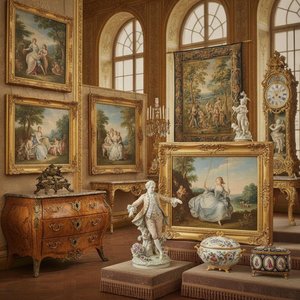
difference between baroque and rococo
The primary distinction lies in scale and structure: Baroque art, flourishing from the early 1600s to the 1750s, utilizes bilateral symmetry, heavy forms, and monumental grandeur to command public spaces. Conversely, Rococo emerged in France in the 1730s, favoring asymmetry, fluid curves, and a smaller, intimate scale for private apartments.
In our workshop, we see the physical weight of these movements through their architectural and decorative choices. Baroque design often relies on solid twisted columns, marble, gold, and bronze to create a sense of permanence and power. This is a style of tension and massive proportions designed to overwhelm the viewer.
Rococo, often regarded as the final expression or Late Baroque, rejects this rigid formality. Instead, it embraces the rocaille motif—inspired by shells and pebbles—alongside arabesques and whimsical curves. We observe this shift in the following ways:
- Baroque: Symmetrical, heavy, and designed for grand public majesty.
- Rococo: Asymmetrical, light, and designed for domestic intimacy and comfort.
- Furniture: Baroque pieces are often large, dark, and gold-framed; Rococo furniture is scaled down to match carved wall panelling, often featuring cabriole legs and serpentine fronts.
how do color palettes and lighting differ in baroque and rococo art
 Pilgrimage to Cythera (detail)
, Jean-Antoine Watteau
Baroque art is defined by chiaroscuro, using intense, high-contrast light and deep shadows to sculpt form and create drama. Rococo art moves away from this tension, utilizing scattered light and a soft, pastel color palette—such as pale blues, pinks, yellows, and creams—to create an airy, luminous atmosphere.
When we examine the technical application of paint, the difference in light handling is striking. Baroque masters used deep shadows to create psychological intensity and depth. A clear example is found in the works of Caravaggio, such as The Rest on the Flight into Egypt, where dramatic illumination is used to highlight figures against dark, shadowy backgrounds.
In contrast, Rococo artists favor a more delicate touch. In the details of Jean-Antoine Watteau’s Pilgrimage to Cythera (detail), we see a shift toward a more luminous, dreamlike quality. The technique often involves sfumato, blurring outlines to soften edges and enhance an ethereal, romantic feeling. In the workshop, we observe how the brushstrokes are applied with a remarkable economy of paint, creating depth through subtle variations in tone rather than heavy impasto. If you wish to bring these textures into your own space, OriginalUniqueArt offers museum-quality, 100 percent hand-painted oil reproductions of these masterpieces, ensuring visible brushstrokes and authentic textures that digital prints cannot replicate.
what are the key themes and emotional tones of baroque versus rococo art
 Jean-Antoine Watteau
Discover Jean-Antoine Watteau (1684-1721), the French Rococo master! Explore his idyllic 'fêtes galantes,' theatrical scenes, & influence on 18th-century art. View masterpieces like 'The Country Dance' & learn about his legacy.
Baroque themes are often deeply intertwined with religious spirituality and political power, aiming to inspire awe and intense emotion through epic narratives. Rococo themes shift toward the secular, focusing on aristocratic leisure, pastoral settings, romance, and whimsical, light-hearted social interactions within a stage-like atmosphere.
The emotional intent of the two periods serves different social functions. The Baroque period was frequently used by the Catholic Church during the Counter-Reformation to project authority and inspire religious fervor. This is evident in the monumental scale of its subjects, which seek to dominate the viewer's senses through grandeur and surprise.
Rococo, however, reflects the "salon culture" of 18th-century France, moving away from the strict regulations of the Louis XIV court toward a sense of ease and playfulness. We see this shift in the subject matter of the works:
- Baroque: Religious subjects, martyrs, heroes, and the projection of state or church power.
- Rococo: Aristocratic leisure, romantic love, nature, and the carefree, often sensual, aspects of social life.
This transition is perfectly captured in the works of Jean-Antoine Watteau. While his work can retain the technical proficiency of the Baroque, his compositions—such as those seen in L'Indifférent—often hint at the emerging Rococo sensibility, moving toward the grace and lightness that would define the era.
Frequently asked questions
When did Rococo emerge?
Rococo emerged in France in the 1730s.
When did Baroque art flourish?
Baroque art flourished from the early 1600s until the 1750s.
What is the date of L'Indifférent by Jean-Antoine Watteau?
L'Indifférent by Jean-Antoine Watteau is dated 1717.
What motifs are used in Rococo architecture?
Rococo architecture uses rocaille motifs like shells and pebbles.
Learn more
- 1684 – 1721Jean-Antoine WatteauExplore the life and delicate brushwork of the master who defined the Rococo era.
- Jean-Antoine Watteau · 1717Pilgrimage to CytheraDiscover how this masterpiece exemplifies the elegance and thematic shifts of the Rococo movement.
Sources
- Encyclopedia entry defining the Rococo style and its characteristics (en.wikipedia.org)
- Encyclopedia entry defining the Baroque movement and its influence (en.wikipedia.org)
- Detailed overview of Rococo architectural ornamentation and history (en.wikipedia.org)