Defining Magic Realism: The Seamless Blend of Mundane and Miraculous
To encounter Magic Realism is to step into a world that feels intimately familiar, yet vibrates with an inexplicable, otherworldly energy. Unlike the jarring disruptions found in pure fantasy, Magic Realism does not seek to transport the viewer to a distant galaxy or a mythical realm; instead, it finds the miraculous hidden within the fabric of our everyday existence. It is an art of subtle enchantment, where a shadow might linger a moment too long, or a landscape might breathe with a sentient, quiet intensity. The movement operates on a plane where the laws of physics and the logic of the mundane are respected, yet they are quietly infused with a sense of wonder that defies rational explanation.
At its core, this aesthetic relies on a profound tension between the recognizable and the impossible. One might observe a meticulously rendered cityscape, much like the vibrant urban textures found in the works of Carlos Almaraz, where the familiar streets of Los Angeles are bathed in a light that feels both nostalgic and supernatural. The beauty of Magic Realism lies in this equilibrium; it does not demand that we abandon our reality, but rather invites us to look closer at it. It suggests that if we observe the texture of a stone or the way light hits a window with enough devotion, we might discover the extraordinary pulse beating beneath the surface of the ordinary.
The Historical Lineage: From Surrealist Roots to Literary Mastery
The genealogy of Magic Realism is a complex tapestry woven from various threads of early 20th-century thought. While it shares a spiritual kinship with Surrealism, the two movements are distinct in their execution and intent. Where Surrealists like Salvador Dalí or Joan Miró sought to unlock the chaotic, often disturbing depths of the subconscious through dream imagery and illogical juxtapositions, Magic Realists prefer to maintain the integrity of the conscious world. They do not wish to shatter reality, but to expand its boundaries. The movement draws heavily from the literary triumphs of Latin American masters, such as Gabriel García Márquez, whose prose treated the supernatural with a matter-of-fact gravity that became the movement's hallmark.
This historical evolution reflects a broader cultural shift toward recognizing the layered nature of truth. As art moved away from the rigid structures of academic realism and the fragmented perspectives of Cubism, artists began to explore a middle ground—a space where history, myth, and contemporary life coexist. This lineage is not merely a chronological progression but a philosophical deepening, moving from the outward exploration of the dream state toward an inward investigation of how we perceive our own lived experiences. It is a movement that honors the weight of history while allowing for the lightness of magic to permeate the narrative.
Visualizing the Unseen: Key Techniques and Stylistic Hallmarks
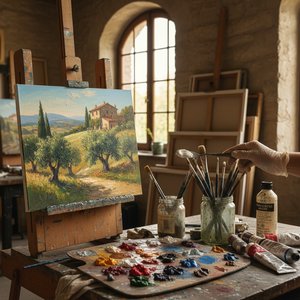
The technical execution of Magic Realism requires a masterful command of traditional painting techniques, as the "magic" can only be effective if the "realism" is beyond reproach. To achieve this, artists often employ a high degree of precision, utilizing clear outlines, sharp focus, and a meticulous attention to detail that mimics the clarity of a photograph. This hyper-clarity serves a vital purpose: by rendering objects with such undeniable physical presence, the artist makes the subsequent introduction of an impossible element feel much more unsettling and profound. When a floating object or a distorted shadow is painted with the same academic rigor as a piece of fruit or a wooden chair, the viewer's skepticism is bypassed.
Light and texture play indispensable roles in this visual language. The use of light can be transformative, creating atmospheres that feel heavy with significance or ethereal and weightless. Artists often manipulate tonal ranges to evoke a sense of timelessness, using shadows not just as absences of light, but as active participants in the composition. Furthermore, the tactile quality of the medium—the visible brushstrokes of an impasto technique or the smooth, glass-like finish of a glaze—can ground the fantastical elements in a tangible reality. It is through this careful manipulation of the physical properties of paint that the artist bridges the gap between what we see and what we feel.
Masters of the Enigmatic: Iconic Artists and Their Contributions
The pantheon of Magic Realism is populated by visionaries who have each contributed a unique dialect to this visual language. While René Magritte is often categorized under the umbrella of Surrealism, his work frequently serves as a gateway to Magic Realist thought; his ability to take a common object, such as an apple or a bowler hat, and place it in a context that challenges our perception of identity and presence, provides the essential groundwork for the movement. Similarly, the works of artists like Colunga Marín demonstrate how the movement can capture the profound stillness of a moment, turning a simple landscape into a stage for silent, epic drama.
In the realm of modern interpretations, we see the influence of this movement in the vibrant, urban landscapes of Chicano art, where the grit of the city is elevated by a sense of mythic importance. These artists use the language of Magic Realism to reclaim and reimagine their environments, imbuing the streets and figures of their communities with a timeless, almost legendary quality. Each master, whether working in the geometric precision of early Latin American abstraction or the lush, atmospheric landscapes of the late 20th century, contributes to a collective effort to document the unseen dimensions of our world.
Magic Realism in the Modern Era: Contemporary Interpretations and Legacy
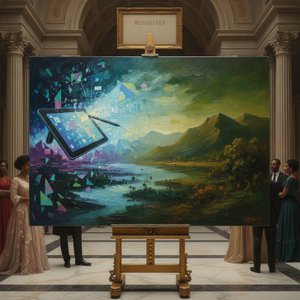
Today, the legacy of Magic Realism continues to resonate within contemporary art and even within our digital landscapes. The movement has moved beyond its initial geographical associations to become a global aesthetic strategy used by artists to navigate the complexities of modern life. In an era defined by rapid technological change and a blurring of the lines between the physical and the virtual, the core tenets of Magic Realism—the search for wonder within the known—are more relevant than ever. We see its echoes in digital art that manipulates reality with unprecedented precision, and in contemporary photography that captures the uncanny stillness of abandoned spaces.
For the dedicated collector, the enduring appeal of Magic Realism lies in its ability to provide a sense of profound contemplation. Owning a piece that embodies this style is not merely about decorating a space; it is about introducing a window into a deeper reality. Whether through a meticulously crafted oil reproduction of a historical masterpiece or a custom commission that reimagines a personal memory through a magical lens, these works serve as permanent reminders that the extraordinary is never truly far away. They challenge us to remain perpetually curious, ensuring that the dialogue between the real and the remarkable continues for generations to come.
At OriginalUniqueArt.com, we celebrate this enduring legacy by offering museum-quality reproductions of the world's most significant works. Our master artists specialize in the very techniques—from precise realism to evocative textures—that define the Magic Realist tradition. Whether you seek to adorn your home with a classic masterpiece or wish to transform a personal photograph into a hand-painted work of enchantment through our custom services, we provide the craftsmanship necessary to bring the extraordinary into your everyday life.