The Enigma of Twombly: Beyond Surface Scribbles
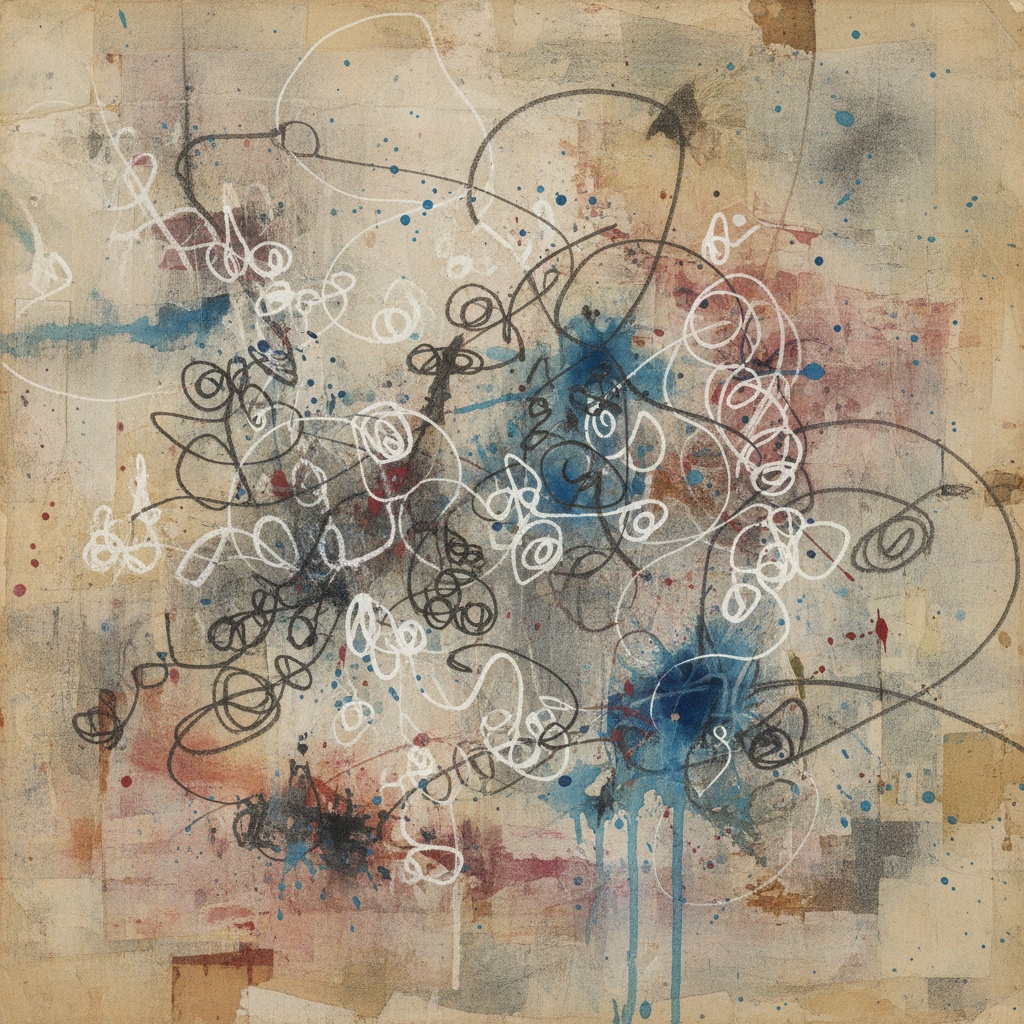
 Leaving Paphos Ringed With Waves III
Cy Twombly’s work often provokes a visceral reaction – sometimes admiration, frequently confusion, and occasionally outright dismissal. To perceive his canvases as mere “scribbles” is to fundamentally misunderstand the profound intellectual and emotional rigor underpinning each mark. Twombly wasn't simply *writing* on canvas; he was excavating a primal language of feeling, memory, and history, translating it into a visual lexicon that defied easy categorization. His art isn’t about what is depicted, but rather how it is felt – the energy of creation, the weight of time, and the fragility of human experience. He invites us not to *read* his paintings in the conventional sense, but to inhabit them, allowing their ambiguous forms to resonate with our own subconscious associations. The initial impression of chaos belies a carefully constructed order, a deliberate orchestration of gesture, color, and texture that rewards sustained contemplation.
Post-War Context & The Birth of an Abstract Language
To understand Twombly’s artistic trajectory, one must consider the tumultuous landscape of post-World War II Europe and America. The devastation of war had shattered traditional modes of representation, leaving artists grappling with a sense of existential uncertainty. Abstract Expressionism emerged as a dominant force, prioritizing subjective experience and spontaneous expression. However, Twombly diverged from the heroic scale and dramatic intensity of Pollock or Rothko. Instead, he sought a more intimate, vulnerable form of abstraction – one rooted in personal history and classical tradition. His extended sojourns in North Africa, Spain, and Italy profoundly shaped his aesthetic sensibility, exposing him to ancient ruins, sun-drenched landscapes, and the rich cultural heritage of the Mediterranean world. This influence is palpable in his early works, which often evoke a sense of faded grandeur and melancholic beauty. He wasn’t interested in replicating reality but in capturing its *essence*, its emotional residue.
Calligraphy as Gesture: Bridging Text, Image, and Emotion
Twombly's unique contribution lies in his masterful fusion of calligraphy and abstract expressionism. He didn’t employ calligraphy for its legibility or communicative function; rather, he exploited its inherent visual qualities – the rhythmic flow of lines, the expressive weight of brushstrokes, and the evocative power of fragmented words. His canvases are often populated with seemingly random inscriptions—names, numbers, poetic fragments—that hover between meaning and illegibility. These textual elements aren’t meant to be deciphered but felt; they function as visual echoes of memory, loss, and desire. Leaving Paphos Ringed With Waves III, for example, exemplifies this approach, its swirling lines and fragmented script suggesting a half-remembered dream or a faded inscription on an ancient monument. The act of writing itself became paramount—a performative gesture that revealed the artist’s inner state. He often worked with chalk, allowing his marks to be easily erased, further emphasizing the ephemeral nature of memory and experience.
Mythology, Memory, and the Poetic Subtext in Twombly’s Work
Throughout his career, Twombly repeatedly turned to mythology, history, and poetry for inspiration. Classical themes—such as Apollo, Leda, and the Argonauts—appear frequently in his paintings, not as literal depictions but as evocative symbols of human longing, tragedy, and transformation. He wasn’t interested in illustrating these myths; rather, he sought to capture their underlying emotional resonance. Olympia, painted in 1957, demonstrates this beautifully – the abstract forms and handwritten script evoke a sense of classical beauty tinged with melancholy. His titles often provide subtle clues to his poetic intentions, offering glimpses into the literary sources that informed his work. Twombly’s engagement with poets like Stéphane Mallarmé and Rainer Maria Rilke further underscores his interest in language as a vehicle for emotional expression. He wasn't simply referencing these sources; he was engaging in a dialogue with them, translating their poetic sensibilities into a visual idiom.
Twombly's Influence: A Legacy of Expressive Abstraction
Cy Twombly’s impact on contemporary art is undeniable. He paved the way for a new generation of artists who embraced ambiguity, gesture, and personal expression. His work directly influenced figures such as Anselm Kiefer, whose monumental paintings explore themes of history and memory with similar emotional intensity; Francesco Clemente, known for his lyrical figuration and poetic sensibility; and Jean-Michel Basquiat, whose graffiti-inspired works share Twombly’s raw energy and expressive power. Twombly challenged conventional notions of beauty and representation, demonstrating that art could be profoundly meaningful even without recognizable forms or narrative content. His legacy lies in his ability to evoke a sense of emotional depth and intellectual complexity through the simplest of means—a single line, a fragmented word, a subtle shift in color.
Collecting Twombly: Considerations for the Discerning Eye
Acquiring a work by Cy Twombly is not merely purchasing an object; it’s investing in a profound artistic vision. Given his significant influence and limited output, his paintings command considerable prices on the art market. For collectors, understanding Twombly's stylistic evolution is crucial. Early works often exhibit a greater degree of gestural abstraction, while later pieces are characterized by more refined color palettes and poetic symbolism. Authenticity is paramount; thorough provenance research is essential. Consider the scale and materiality of the work—Twombly’s use of chalk, paint, and canvas significantly impacts the overall emotional effect. Ultimately, collecting Twombly requires a willingness to embrace ambiguity and engage with his art on a deeply personal level. OriginalUniqueArt.com offers a curated selection of high-quality reproductions, allowing collectors to experience the beauty and complexity of Twombly’s work firsthand. We provide expert consultation to help you select the perfect piece for your collection, ensuring that it resonates with your individual aesthetic sensibilities and investment goals.