Introduction
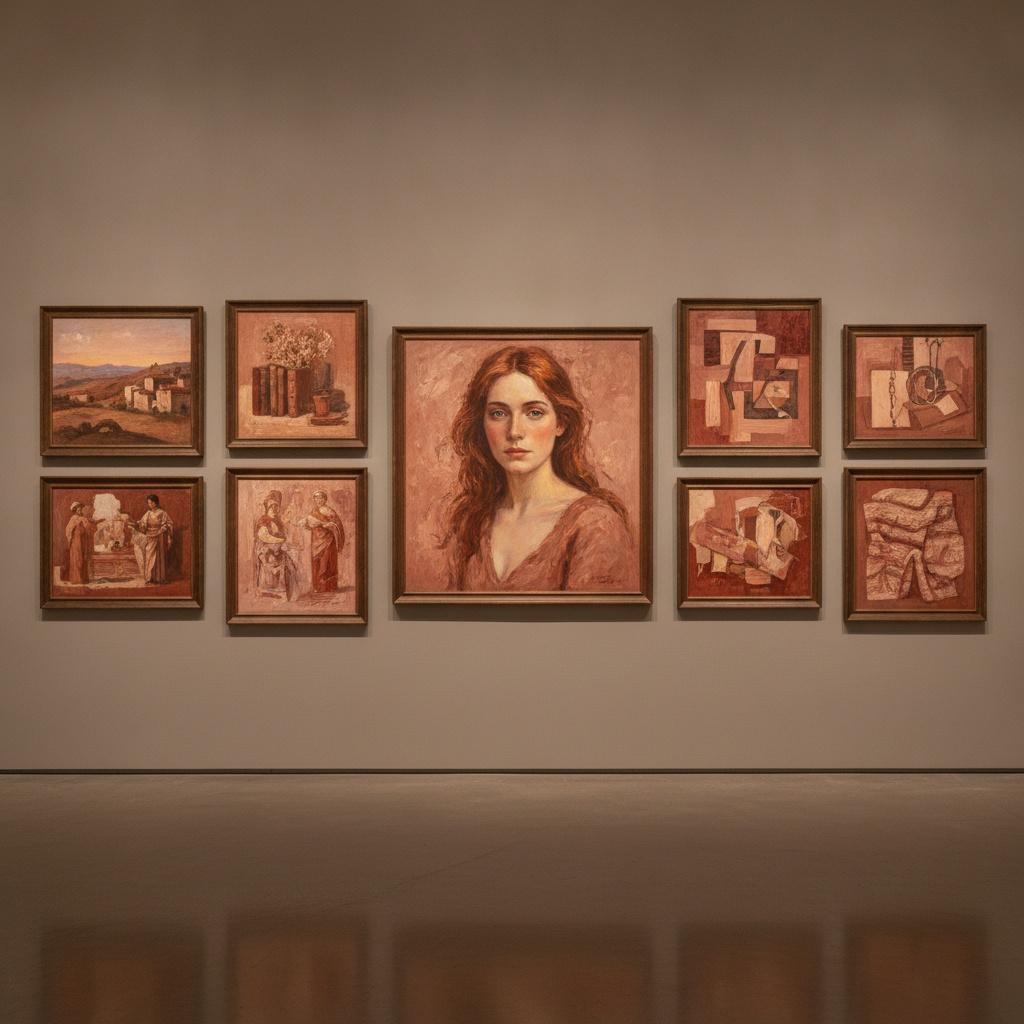
There is a profound, quiet warmth found within the depths of a rosy brown palette—a color story that speaks of twilight shadows, sun-drenched earth, and the soft, nostalgic glow of memory. To step into a gallery dominated by these tones is to enter a space of grounded elegance, where the heavy, comforting weight of umber meets the delicate, blushing light of a fading afternoon. These are not merely colors; they are the hues of stability, intimacy, and the enduring passage of time.
Throughout art history, the mastery of rosy brown tones has allowed painters to bridge the gap between the physical world and the emotional landscape. From the dramatic chiaroscuro of the Old Masters to the textured, emotive brushstrokes of the Impressionists, this specific chromatic range has been used to evoke a sense of permanence. Historically, these pigments were often tied to the very earth itself, grounding even the most celestial subjects in a tangible, human reality. Culturally, they represent a period of artistic refinement where light was not just observed, but felt.
<Today, these masterpieces remain deeply meaningful because they offer a visual sanctuary. In an era of rapid digital shifts and high-contrast brightness, the muted, sophisticated warmth of rosy brown provides a sense of continuity and calm. They remind us of the beauty in subtlety and the strength found in shadows. As we journey through this curated selection, you will encounter ten iconic works that utilize this palette to command attention not through brilliance, but through a soulful, resonant depth that lingers long after you have left the room.
The kiss - Gustav Klimt
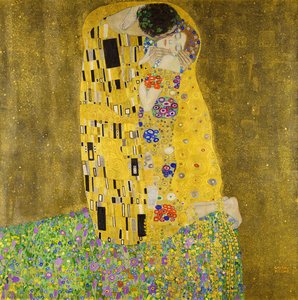 The kiss - Gustav Klimt
Imagine a moment where time dissolves, leaving only the warmth of a profound, spiritual embrace. In Gustav Klimt’s The Kiss , we are not merely observing a romantic encounter; we are witnessing a transcendence of the physical realm into something sacred. As part of our selection of paintings dominated by rosy brown and earthy tones, this masterpiece utilizes a rich, warm palette to ground its celestial gold leaf.
Klimt’s 'Golden Phase' masterfully weaves together deep, chocolatey umbers and soft, rosy ochres within the floral meadow, creating a sense of organic stability beneath the shimmering, gilded cloak. This interplay of heavy, earth-toned textures and luminous light is why this work remains a cornerstone of the Art Nouveau movement. It belongs in this collection because it demonstrates how warm, muted browns can provide the essential depth needed to make gold appear truly divine. Bringing a high-quality oil reproduction of this piece into a professional or residential space introduces an atmosphere of timeless luxury and emotional serenity, turning a modern wall into a window to a gilded, eternal sanctuary.
Olympia - Édouard Manet
 Olympia - Édouard Manet
What if I told you that Olympia by Édouard Manet was born from a moment of rebellion—a stroke of defiance against the ordinary? This masterpiece does not merely sit within our selection; it demands presence. As one of the most significant works dominated by rosy brown tones , it utilizes a sophisticated palette of warm, earthy ochres and deep, fleshy pinks to ground its scandalous subject matter in a startling, modern realism.
Manet’s use of light and shadow creates a tactile depth where the warmth of the skin meets the heavy, shadowed textures of the linens. Its inclusion in this collection highlights how these specific tonal harmonies can anchor a room, providing a sense of historical weight and grounded elegance. At OriginalUniqueArt.com, we believe such a manifesto should not be confined to museum walls. Imagine this provocative composition hanging in your professional suite or private study, turning every glance into a reminder: your space is not just a room; it is a statement of strength and uncompromising character.
American Gothic - Grant Wood
 American Gothic - Grant Wood
In Grant Wood’s 1930 masterpiece, American Gothic , the heavy presence of rosy brown and muted earth tones anchors the composition with an unmistakable sense of stoicism and grounded permanence. This palette does more than depict a rural landscape; it establishes a somber, dignified mood that reflects the resilience of the American spirit during the Great Depression. The way these warm, dusky browns interact with the stark whites of the farmhouse creates a visual weight that is essential to its status among the top 10 famous paintings dominated by rosy brown tones .
For the discerning decorator or procurement manager, integrating this specific color scheme into a modern hospitality space—such as a corporate lounge or a traditional dining room—offers a way to evoke quiet strength and historical depth. The earthy, reddish-brown undertones provide an ideal foundation for creating a sophisticated atmosphere of stability. By utilizing these tones in large-scale reproductions, you can curate an environment that feels both timeless and emotionally resonant, using the painting's natural warmth to balance contemporary architectural lighting.
The Blue Boy (Jonathan Buttall) - Thomas Gainsborough
 The Blue Boy (Jonathan Buttall) - Thomas Gainsborough
There is a profound, quiet intimacy in Thomas Gainsborough’s The Blue Boy , a work that captures the fleeting essence of youth with an almost breathless elegance. While the striking azure silk immediately commands the eye, it is the underlying warmth of the composition that anchors the piece within our selection of masterpieces dominated by rosy brown tones. The earthy, sepia-toned landscape and the rich, shadowed textures of the background provide a grounded, organic contrast to the vibrant blue, creating a balanced palette of light and shadow.
This portrait stands as a pinnacle of 18th-century artistry, blending the fluid brushwork of the Rococo style with an emotional depth that feels remarkably modern. The way the soft, warm tones of the terrain meet the luminous highlights on the sitter's skin evokes a sense of timelessness and nostalgia. At OriginalUniqueArt.com, we specialize in preserving this exact tactile magic. Our handmade oil reproductions utilize thick impasto and authentic layering to ensure that the soulful depth, visible brushstrokes, and the delicate interplay of rosy earth tones are faithfully brought into your professional or private space.
Mandola - Georges Braque
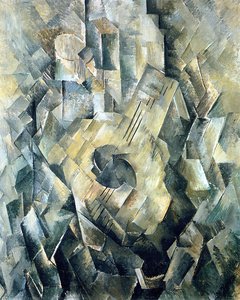 Mandola - Georges Braque
In Georges Braque’s 1910 masterpiece, Mandola , the concept of color is stripped of its decorative impulse and repurposed for structural analysis. As a cornerstone of Analytical Cubism, this work moves beyond mere depiction to explore the very essence of form through a sophisticated palette of rosy brown , ochre, and muted earth tones. Braque deconstructs the lute-like instrument into a complex architecture of interlocking geometric planes, where the warmth of the brownish hues provides a grounding stability amidst the fractured, overlapping surfaces.
The painting does not simply show an object; it invites a sensory investigation of light and shadow through textured brushstrokes that catch the eye. Owning Mandola by Georges Braque isn’t just a purchase; it is an inheritance of the Cubist revolution. It represents a lineage of taste that brings the intellectual rigor of the early 20th-century avant-garde directly to your walls, allowing you to experience the profound, rhythmic deconstruction of space and sound within your own professional or private collection.
Gilles - Jean-Antoine Watteau
 Gilles - Jean-Antoine Watteau
In Jean-Antoine Watteau’s Gilles , the eye is immediately drawn to the masterful, layered application of oil on canvas, where the artist’s loose, fluid brushwork breathes life into the theatrical costume of Pierrot. The painting is a masterclass in the use of warm, earthy undertones; subtle rosy brown tones and sepia-like shadows ground the figure against a hazy, atmospheric landscape, creating a sense of profound emotional depth. This delicate interplay of light and shadow defines its place among the most significant works of the Rococo era, moving away from Baroque rigidity toward a more naturalistic, emotive texture.
At OriginalUniqueArt.com, we specialize in capturing this exact tactile, three-dimensional quality . Our handmade oil reproductions are meticulously crafted to preserve the visible brushstrokes and the rich, tonal range of Watteau’s original palette. For the discerning collector or decorator, our process ensures that the soft transitions and the luminous, fleshy tones of the masterpiece are translated onto canvas with absolute fidelity, bringing the sophisticated charm of 18th-century France into a modern architectural space.
Anthropometry of the blue period - Yves Klein
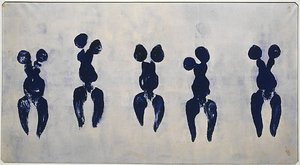 Anthropometry of the blue period - Yves Klein
The eternal aura of Anthropometry of the blue period by Yves Klein resides in its ability to freeze a primal ritual within a single, breathless moment of color and gesture. While this piece is celebrated for its revolutionary use of International Klein Blue, it earns its place among the top 10 famous paintings dominated by rosy brown tones through the striking, textured contrast of its background. The pale, earthy, almost sepia-toned substrate provides a warm, organic counterpoint to the deep ultramarine silhouettes, creating a visual tension that feels both ancient and avant-garde.
The work breathes with a raw, tactile energy; you can almost sense the movement of the models as they imprinted their forms onto the canvas. This interplay of cool blue and muted, warm neutrals offers a sophisticated palette for modern architectural spaces. In contemporary interiors, the rhythmic procession of these spectral figures introduces a sense of profound calm and historical depth, making it an unparalleled statement piece for those seeking to blend minimalist precision with soulful, emotive storytelling.
Great Scene of Agony - Max Beckmann
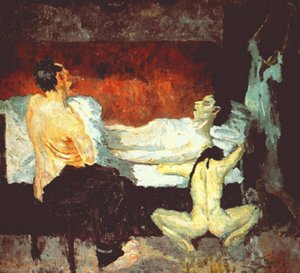 Great Scene of Agony - Max Beckmann
In the haunting depths of Great Scene of Agony by Max Beckmann, a profound silence is frozen in time, capturing a visceral moment of human vulnerability. This masterpiece earns its place among the top 10 famous paintings dominated by rosy brown tones through its masterful use of an earthy, somber palette that breathes life into an atmosphere of existential tension. The canvas is a symphony of textured shadows, where deep ochres and warm, bruised browns merge with muted reds to create a sense of heavy, palpable emotion.
Beckmann’s thick impasto technique allows the light to catch on visible brushstrokes, making the figures feel as though they are emerging from a dreamlike, psychological landscape. The interplay of rosy undertones and dark, organic shapes provides a sophisticated depth that transcends mere depiction. For the modern collector, integrating such a powerful work into a professional or residential space offers more than just decoration; it introduces a layer of historical gravity and intellectual intrigue, where the warmth of the brown tones provides a grounding, sophisticated anchor to contemporary architectural interiors.
Impression, Sunrise - Claude Monet
 Impression, Sunrise - Claude Monet
In Claude Monet’s 1873 masterpiece, Impression, Sunrise , the lines of the Le Havre harbor aren’t merely drawn; they are choreographed . This is not a static composition; it is a dance frozen in time, where the hazy atmosphere and the rhythmic interplay of light create a sense of movement across the water. As one of the most significant works in our collection of paintings dominated by rosy brown tones, it utilizes a sophisticated palette of muted earth tones, deep blues, and sudden, brilliant bursts of orange.
The way the warm, sun-drenched hues bleed into the shadowy, brownish silhouettes of the distant masts creates a profound visual harmony. The brushstrokes are loose and expressive, capturing the fleeting transition of dawn with an emotional depth that transcends the canvas. Imagine your professional or residential space holding this same balance—where walls do not just enclose a room, but breathe rhythm through the soft, atmospheric glow of Monet’s legendary light.
Rocky Mountains - Albert Bierstadt
 Rocky Mountains - Albert Bierstadt
In Albert Bierstadt’s 1863 masterpiece, Rocky Mountains , the 'rosy brown' palette serves as more than just a color scheme; it is the very breath of the American West. This work stands as a cornerstone in our selection of paintings dominated by warm, earthy tones, where deep umbers and rich sienna earth meet the ethereal glow of a sunset sky. The composition captures a profound sense of the sublime, with jagged peaks bathed in hues of copper and rose, reflecting into a tranquil lake that anchors the scene.
The interplay of light and shadow—a hallmark of the Luminism style—creates a textured, atmospheric depth that feels almost tactile. As you observe the delicate deer grazing near the shoreline, the warmth of the brown tones provides a grounding, organic contrast to the dramatic, sun-drenched summits. Owning this piece is not merely a purchase; it is an inheritance of a legacy of taste. Through our hand-painted reproductions, this lineage of grandeur is brought from the museum galleries directly to your walls, allowing you to inhabit the majestic warmth of Bierstadt’s vision every single day.
Conclusion
As the light fades on our journey through these warm, earthen hues, we are reminded that these masterpieces are far more than mere relics of a bygone era or static subjects in a museum gallery. They are living presences, breathing with the soft warmth of rosy browns and the deep, resonant shadows of history. To encounter these works is to touch the pulse of human emotion—to feel the same quiet reverence and creative fire that moved the hands of the masters centuries ago.
These paintings do not belong solely to the halls of the past; they find their truest purpose when they enter our daily lives, transforming the walls of our homes and the atmosphere of our sanctuaries. By bringing these textures, light, and tones into your own space, you invite a timeless grace to reside with you, turning a simple room into a place of reflection and profound inspiration. We invite you to continue this exploration and find the piece that speaks to your soul within our full collection , allowing the enduring beauty of human creativity to become a permanent part of your world.