
 Προεπισκόπηση
 Αποστολή
 Κοινοποίηση
 Λεπτομέρειες
 Οδηγός

 Λήψη
Λήψη
 Παρόμοια αντικείμενα συλλογής
 Ακτινογραφία
 Παρουσίαση
 Στατιστικά
Η Εποχή της Κρίσεως
 Ακρυλικά σε καμβά
- Εκθέσιμα Έργα Τέχνης
- Renaissance
 1572
1572 Καθεδρικός Ναός της Φλωρεντίας (Duomo di Firenze)
 Περισσότερα λεπτομέρεια
Χειροποίητη Αναπαραγωγή σε Έλαιο
Χειροποίητη ελαιογραφία σε καμβά στο δικό σας μέγεθος και πλαίσιο, κατά παραγγελία από τους καλλιτέχνες μας. ( Μετάβαση σε Εκτυπώσεις Μετάβαση σε Ψηφιακή Εικόνα)




P118B $10

P118H $10

P118W $10

P438Z $10

P508JH $12

P508YH $12

P805H $10

P805Z $10

P919BZ $10

P919G $10

P919XJ $10

P959ZH $10

P968JZ $12

W106C $8

W218G $10

W218JH $8

W218Y $10

W307PJ $10

W316G $10

W316PJ $8

W316Y $10

W398PJ $8

W4111J $10

W500HY $15

W500JH $15

W692G $12

W849H $8

W940BG $15

W953PJ $8




Επιλέξτε από τις προκαθορισμένες διαστάσεις μας που διατηρούν τις αρχικές αναλογίες του έργου τέχνης.

Μπορείτε να ορίσετε δικές σας διαστάσεις ώστε το έργο να ταιριάζει σε ένα συγκεκριμένο πλαίσιο ή χώρο. Εάν το επιλεγμένο μέγεθος δεν συμπίπτει με τις αναλογίες της αρχικής εικόνας, θα περικοψούμε το έργο ή θα επεκτείνουμε τη ζωγραφιά με πρόσθετα χειρόγραφα στοιχεία. Ένα ψηφιακό προσχέδιο θα σας αποσταλεί για έγκριση πριν την έναρξη της παραγωγής.
Παρακαλούμε σημειώστε ότι η προεπισκόπηση στην οθόνη δεν αντικατοπτρίζει την πραγματική περικοπή ή επέκταση. Μόνο το προσχέδιο θα δείξει με ακρίβεια την τελική σύνθεση.
Παρόλο που είναι διαθέσιμα προσαρμοσμένα μεγέθη, συνιστούμε να επιλέξετε μια διάσταση από τη λίστα των προκαθορισμένων μεγεθών για τη διατήρηση των αρχικών αναλογιών.
Μετά την παραγγελία, η ομάδα του OriginalUniqueArt.com θα στείλει email στον πελάτη με οδηγίες και θα παρέχει μια προεπισκόπηση προσχεδίου
Παγκόσμια Αποστολή () σε 3-4 εβδομάδες αντί για τις συνήθεις 5 εβδομάδες. (25 Σεπτέμβριος). Χωρίς συμβιβασμούς στην ποιότητα.

Δωρεάν γρήγορη διεθνής αποστολή

Κάμβας από Λινό Υψηλής Ποιότητας

Πλήρης ασφάλιση μεταφοράς

Εγγύηση επιστροφής δασμών και φόρων εισαγωγής

Εγγύηση Απόλυτης Ομοιότητας Χρωμάτων

Πολιτική Επιστροφής 100 Ημερών (Μόνο σε περίπτωση ελαττωμάτων)

Εγγύηση επιστροφής 100% των χρημάτων

Έκπτωση για πολλαπλές παραγγελίες
 Η επιλογή με γυαλί είναι διαθέσιμη μόνο για μεγέθη κάτω από 110 εκ.

Η Εποχή της Κρίσεως
Τεχνική Αναπαραγωγής
Διαστάσεις Αναπαραγωγής
-


Συνολικό Κόστος
$ 300
Η Γέννηση ενός Θρύλου: Η Τελευταία Κρίση του Βασαρί
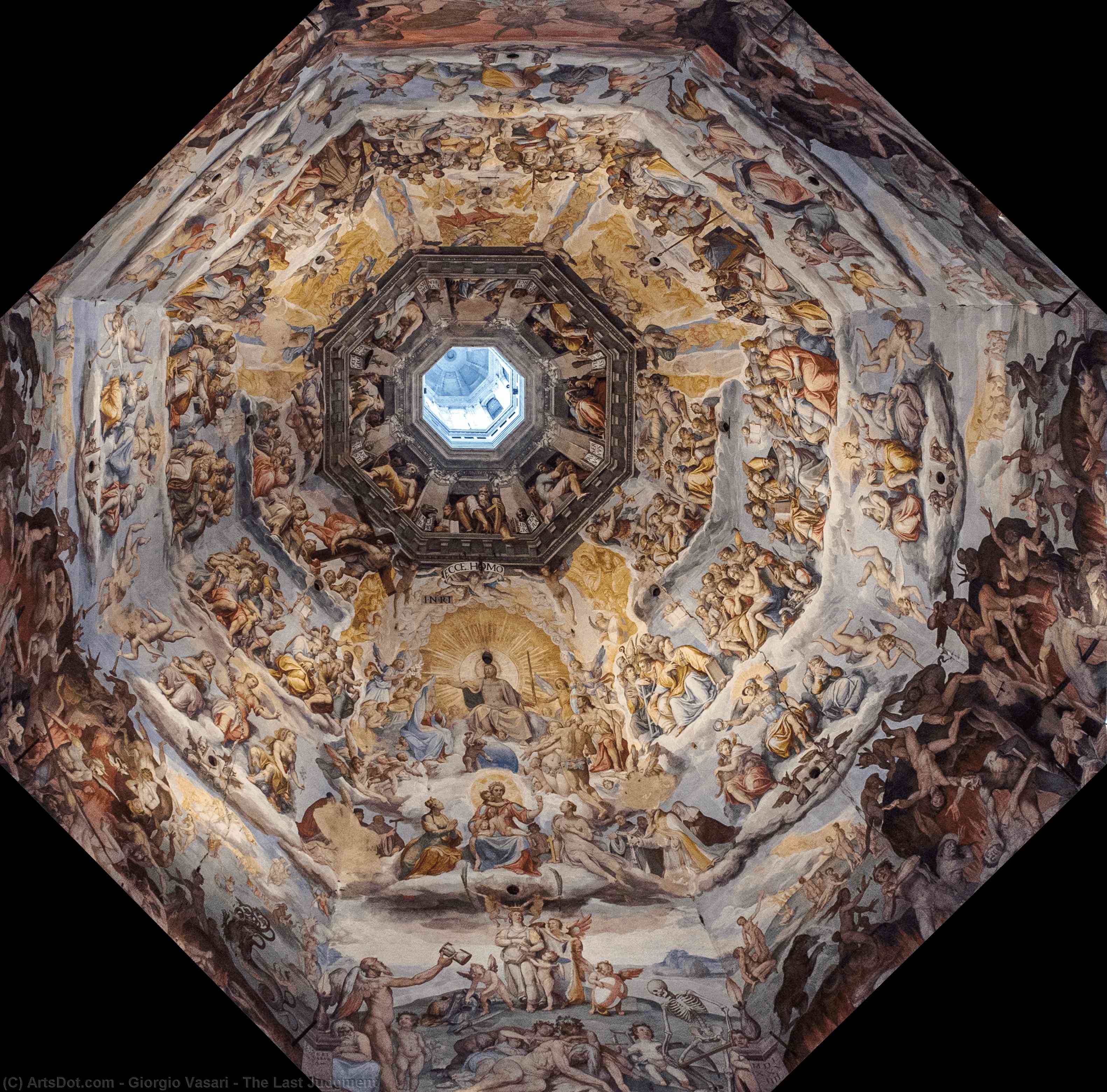
Στην καρδιά της Φλωρεντίας, στον καθεδρικό ναό Santa Maria del Fiore, βρίσκεται ένα από τα πιο εντυπωσιακά και συγκλονιστικά έργα τέχνης της Αναγέννησης: η Τελευταία Κρίση του Βασαρί. Αυτή η φρεσκόγραφη, που διακοσμεί την οροφή του καθεδρικού ναού, δεν είναι απλώς ένα έργο τέχνης – είναι μια μεταφορά για την ανθρώπινη κατάσταση, μια απεικόνιση της θρησκευτικής πίστης και ένα μνημείο της καλλιτεχνικής δεινότητας. Η δημιουργία της ξεκίνησε το 1572 από τον ίδιο τον Βασαρί, αλλά ολοκληρώθηκε με την συμβολή του Φερδινάνδου Ζουκάρι μετά τον θάνατό του, προσφέροντας μια μοναδική συνένωση δύο διαφορετικών καλλιτεχνικών στυλ.
Η ιστορία της φρεσκόγραφης είναι άρρηκτα συνδεδεμένη με την ιστορία της Φλωρεντίας και της Μεδίτσι. Ο Μεγάλος Δούκας Κόσιμος Α’ ο Μέδικο, επιθυμώντας να ενισχύσει τη θέση του ως ένας προσταστής της χριστιανικής πίστης και να διαφημίσει την ευημερία της πόλης, έθεσε σε κίνηση αυτή την φιλόδοξη προσπάθεια. Η φρεσκόγραφη αποτελεί μια εντυπωσιακή έκφραση του Μεδικοϊκού πολιτισμού και της αναγέννησης της τέχνης στην Φλωρεντία.
Μια Συμβολική Αποκάλυψη: Το Σύνολο των Εικόνων
Η οροφή του καθεδρικού ναού φιλοξενεί ένα τεράστιο σύνολο εικόνων, που διατάσσονται σε μια περίπλοκη και συμβολική διάταξη. Στο κέντρο της, ένας μεγάλος κυκλικός θόλος επιτρέπει στο φως να εισχωρήσει, φωτίζοντας τις σκηνές που απεικονίζονται κάτω από αυτόν. Οι φιγούρες, χιλιάδες σε αριθμό, είναι οργανωμένες σε στρώματα, από τους αγγέλους και τους άγιους μέχρι τους καταδωσμένους, δημιουργώντας μια δυναμική και έντονη εικόνα της κρίσης. Η φρεσκόγραφη δεν απεικονίζει απλώς την Τελευταία Κρίση, αλλά και την ιστορία της ανθρωπότητας από την πτώση του Πατέρα έως την ανάσταση του Χριστού.
Στην κορυφή, η σκηνή της Κρίσης παρουσιάζει τον ίδιο τον Χριστό ως δικαστή, περιτριγυρισμένο από τους 24 Αρχάγγελοι. Ανάμεσα σε αυτούς, εμφανίζονται οι άγιες και οι δίκαιοι, ενώ στην κάτω σειρά απεικονίζεται η κόλαση με τις φρικτές σκηνές της τιμωρίας των ψυχών. Η χρήση του φωτός και της σκιάδας δημιουργεί μια ατμόσφαιρα έντασης και μυστηρίου, ενώ οι εκφράσεις των προσώπων υποδηλώνουν την αγωνία και την ελπίδα.
Τεχνική και Στυλ: Η Συνεργασία Βασαρί-Ζουκάρι
Η δημιουργία της φρεσκόγραφης ήταν μια συνεργασία μεταξύ δύο μεγάλων καλλιτεχνών. Ο Βασαρί, με την ιδιαίτερη δεξιοτεχνία του και την προτίμησή του για τον ρεαλισμό, ξεκίνησε το έργο, ενώ ο Ζουκάρι, γνωστός για το δραματικό του στυλ και την ικανότητά του να δημιουργεί εντυπωσιακές σκηνές, ολοκλήρωσε την εργασία μετά τον θάνατο του Βασαρί. Η συνεισφορά του Ζουκάρι έδωσε στην φρεσκόγραφη μια πιο δραματική και θεατρική διάσταση, ενώ η τεχνική του ήταν ιδιαίτερα κατάλληλη για την δημιουργία μεγάλων επιφανειών.
Η φρεσκόγραφη είναι ένα μοναδικό παράδειγμα της Αναγέννησης, που συνδυάζει την ακρίβεια και τον ρεαλισμό του Βασαρί με την δραματικότητα και το πάθος του Ζουκάρι. Είναι μια μαρτυρία για την καλλιτεχνική δεινότητα των δύο καλλιτεχνών και για την δύναμη της τέχνης να εκφράζει τις βαθύτερες ανθρώπινες αξίες.
Ανακαλύψτε την ομορφιά και την ιστορία της Τελευταίας Κρίσης του Βασαρί με τις υψηλής ποιότητας αναπαραστάσεις μας. Επιτρέψτε στην τέχνη να εμπνεύσει τον χώρο σας!
Βιογραφικό Καλλιτέχνη
A Life Woven into the Renaissance Fabric
Giorgio Vasari, born in Arezzo, Tuscany, on July 30, 1511, was more than simply a painter; he was a quintessential embodiment of the Italian Renaissance spirit. His life unfolded as a vibrant tapestry woven with threads of artistic creation, architectural innovation, insightful historical writing, and an unwavering dedication to celebrating the masters who came before him. From his earliest training under Guglielmo da Marsiglia, a skilled artisan in stained glass, young Giorgio’s path was steered towards visual artistry. However, it was his move to Florence at sixteen that truly ignited his potential. Immersing himself within the dynamic circle of Andrea del Sarto and absorbing the influences of Rosso Fiorentino and Jacopo Pontormo, Vasari began a journey that would see him become one of the most influential figures of his era. His formative years were also deeply marked by the patronage and friendship of the powerful Medici family, a relationship that would shape both his career and his perspective on art’s role in society.The Artist's Hand and Eye
Vasari’s artistic style is often categorized as Mannerist, reflecting the prevailing aesthetic trends of the mid-16th century. His paintings are characterized by elongated figures, dynamic compositions, and a sophisticated use of color—qualities highly admired during his lifetime. While perhaps not achieving the same level of enduring fame as some of the artists he chronicled, Vasari’s skill was undeniable. Notable works such as *The Studio of the Painter*, a fresco housed in Casa Vasari in Arezzo, offer a fascinating glimpse into the artistic practices of the time. The sheer scale and ambition of his frescoes for the Palazzo Vecchio in Florence, undertaken between 1555 and 1572, demonstrate his mastery of large-scale decorative schemes. His final monumental undertaking, *The Last Judgement*, adorning the cupola of Florence Cathedral—completed after his death by Federico Zuccari—stands as a testament to his unwavering commitment to grand artistic visions. Beyond painting, Vasari’s architectural contributions were equally significant. He designed the elegant loggia of the Palazzo degli Uffizi, transforming it into a public piazza and creating a vital link within Florence's urban landscape. Perhaps most famously, he conceived and oversaw the construction of the Vasari Corridor, a secret passageway connecting the Uffizi Gallery with the Palazzo Pitti—a feat of engineering and architectural ingenuity that continues to captivate visitors today.A Historian Forging a Legacy
However, it is arguably as an art historian that Giorgio Vasari secured his most lasting legacy. His monumental work, *Lives of the Most Excellent Painters, Sculptors, and Architects*, published in 1550 (with a revised edition in 1568), revolutionized the way art was understood and appreciated. This groundbreaking text wasn’t merely a collection of biographies; it established a narrative framework for the development of Italian Renaissance art, tracing its evolution from the early masters like Cimabue and Giotto to his contemporaries Michelangelo and Raphael. Vasari's work introduced the very concept of the “Renaissance” – a rebirth of classical ideals—and laid the foundation for modern art history as a discipline. While acknowledging that Vasari’s accounts are not without their biases and inaccuracies, particularly concerning artists predating his own time, the impact of *Lives* remains profound. It provided a crucial historical context for artistic creation, elevating the status of artists from skilled craftsmen to intellectual figures worthy of scholarly attention.Influences and Enduring Significance
Vasari’s artistic development was profoundly shaped by his exposure to the works of Renaissance masters. His visit to Rome in 1529, where he studied the art of Raphael and other High Renaissance artists, proved pivotal. He absorbed their principles of composition, anatomical accuracy, and idealized beauty, incorporating them into his own style. Michelangelo, whom Vasari greatly admired, exerted a particularly strong influence on both his painting and architecture. The grandeur and dynamism characteristic of Michelangelo’s work are evident in many of Vasari’s projects. Beyond specific artists, the broader intellectual currents of the Renaissance—humanism, classical learning, and a renewed interest in empirical observation—also informed Vasari's approach to art and history. Giorgio Vasari died on June 27, 1574, in Florence, leaving behind a multifaceted legacy that continues to resonate today. He was not only a talented artist and architect but also a pioneering historian whose writings shaped our understanding of one of the most transformative periods in Western art history. His work remains essential for anyone seeking to explore the rich cultural heritage of the Italian Renaissance.Major Achievements
- The Studio of the Painter (1563): A groundbreaking fresco within his own home, offering a detailed depiction of an artist’s studio and serving as a visual treatise on artistic practice.
- Frescoes for the Palazzo Vecchio (1555-1572): Monumental decorative cycles illustrating Florentine history and civic virtues, showcasing Vasari's mastery of large-scale fresco painting.
- Design of the Uffizi Gallery (1560): A transformative redesign of a former arsenal into a magnificent public space, integrating art and architecture seamlessly.
- The Last Judgement (1573-1579): The colossal fresco adorning the cupola of Florence Cathedral, a testament to Vasari’s ambition and artistic skill.
- Lives of the Most Excellent Painters, Sculptors, and Architects (1550, 1568): A seminal work of art history that established a framework for understanding the development of Renaissance art.
The Vasari Corridor
A remarkable architectural achievement, the Vasari Corridor is a secret passageway connecting the Uffizi Gallery with the Palazzo Pitti, commissioned by Cosimo I de’ Medici to facilitate discreet travel and communication within Florence. It represents not only a feat of engineering but also a symbol of Medici power and influence.
Γιώργος Βασαρί
1511 - 1574 , Ιταλία
Στοιχεία καλλιτέχνη
- Artistic Movement Or Style: Μανιερισμός
- Artists Or Movements Influenced By This Artist: ['Ρενεσάνς']
- Artists Who Influenced This Artist:
- Ανδρέα ντελ Σαρτό
- Μιχαήλ Άγγελος
- Date Of Birth: 30 Ιουλίου 1511
- Date Of Death: 27 Ιουνίου 1574
- Full Name: Giorgio Vasari
- Nationality: Ιταλός
- Notable Artworks:
- Στούντιο ζωγράφου
- Τελευταία Κρίση
- Place Of Birth: Aρέτσο, Ιταλία
Σχετικά άρθρα

OriginalUniqueArt.com F.A.Q.: Elevating Interiors with Bespoke Wall Murals & Masterpiece Frescoes
Discover the pinnacle of bespoke interior transformation with OriginalUniqueArt.com. Our master fresco artists create exquisite, hand-painted wall murals and ceiling masterpieces tailored to your estate. Elevate your architectural space with timeless, museum-quality artistry.


