Impressionism · 1931
Peterhof (Πιοτρ Κοντσαλόβσκι, 1931)
Ο/Η Πιοτρ Κοντσαλόβσκι (1876–1956) δημιούργησε το Peterhof. Χρονολογείται στο 1931. Ανήκει στο κίνημα Impressionism. Είναι φτιαγμένο σε Watercolor. Οι διαστάσεις είναι 39 × 52 cm.
- 1931
- Watercolor
- 39 × 52 cm

 Προεπισκόπηση σε πραγματική κλίμακα

 Ελαιογραφικό Χειροποίητο Έργο
 Αποστολή
 Κοινοποίηση
 Πληροφοριακό φύλλο


 Λήψη
 Παρόμοια αντικείμενα συλλογής
 Ακτινογραφία
 Παρουσίαση
 Ερωτήσεις & Απαντήσεις

 Στατιστικά
Peterhof, εν συντομία
- Τίτλος
- Peterhof
- Καλλιτέχνης
- Πιοτρ Κοντσαλόβσκι (1876–1956)
- Γεννημένος/η το
- Σλοβιάνσκ, Ουκρανία
- Ημερομηνία
- 1931
- Μέσο
- Watercolor
- Διαστάσεις
- 39 × 52 cm
- Κίνηση
- Impressionism
- Εποχή
- Modern
- Θέμα
- russian architecture, park landscape”, “watercolor painting”, “historic palace”, “impressionist style”, “peterhof gardens”
Τι απεικονίζει το Peterhof;
Identification of the Artwork and Artist
In this watercolor, we encounter Peterhof, a work created by Pyotr Konchalovsky around 1931. The piece offers a quiet study of the intersection between architecture and nature, focusing on a large red brick building situated within a park-like setting. It captures a specific sense of place through a lens that balances the structured lines of the facade with the organic, fluid forms of the surrounding trees.
Pyotr Konchalovsky was a significant figure in the Russian and Soviet art scenes, moving through various stylistic movements throughout his career. This particular work reflects a period in his development where his approach to form and color had become increasingly grounded. The composition relies on a sense of distance between the viewer and the building, using perspective to establish a tranquil atmosphere within the landscape.
Visual Composition and Subject Matter
In this watercolor, the viewer is presented with an exterior view of a large red brick building, positioned within a quiet, park-like setting. The composition is anchored by the building’s facade, which is framed and softened by the surrounding trees. Through a careful use of perspective, the artist creates a sense of depth, drawing the eye into the space between the architectural forms and the organic lines of the foliage. It is a subtle blending of urban and natural elements, where the geometry of the structure meets the fluid, irregular shapes of the landscape.
The subject matter suggests a moment of stillness. There is a certain tranquility in the way the building sits amidst the greenery, offering a nostalgic view of a historic setting. The interplay between the man-made brickwork and the natural environment creates a balanced, quiet atmosphere. Rather than focusing on sharp, rigid details, the work emphasizes the relationship between the architecture and the light of an overcast day, capturing the essence of the site through soft transitions and a sense of distance.
Artistic Technique and Materials
In this watercolor, the artist utilizes a wet-on-wet application to achieve soft transitions and blended colors. This method allows the pigments to bleed into one another, creating a sense of atmosphere that suggests a diffused, overcast light. The texture is built through a layered effect, where visible brushstrokes interact with various washes of color to establish depth within the park-like setting.
The approach is reminiscent of impressionistic or post-impressionistic sensibilities. Rather than focusing on precise architectural detail, the work relies on fluid and expressive lines to define the building's facade and the organic forms of the surrounding trees. These lines provide a sense of movement to the branches and the structural elements of the red brick building. The medium of watercolor on paper allows for a certain transparency, capturing the interplay between the architecture and the natural elements through light and subtle tonal shifts.
Related Works by Pyotr Konchalovsky
To understand the breadth of Konchalovsky’s development, one might look toward his earlier explorations of form and color. In 1912, he painted Family Portrait (Siena), a work that offers a striking portrayal of domesticity. This large-scale oil painting transcends a simple depiction of a family, employing a flattened perspective and simplified forms characteristic of early 20th-century Modernism. The scene centers on a mother, child, and an older man seated around a table within an interior setting.
His output during the 1930s demonstrates a transition toward a more monumental style. He produced Bakhchisaray in 1930 and View on Beshtau place duel with Lermontov in 1938. These works align with the evolving aesthetic of the era, moving away from the fragmented planes of his youth toward a more solid, grounded representation of life. Even his still life compositions, such as Still Life with a Coffeepot from 1919, reveal a consistent interest in the physical presence of his subjects and the weight of their forms.
Εικόνες υψηλής ανάλυσης του Peterhof

Δημόσιος τομέας: ο καλλιτέχνης απεβίωσε το 1956.
Άλλες διαστάσεις, καρέττες και αναφορά →Πιοτρ Κοντσαλόβσκι, Peterhof (1931). Δημόσιο περιουσιακό δικαίωμα
Ερωτήσεις για το Peterhof, απαντημένες
Πότε δημιουργήθηκε το "Peterhof";
Το έργο "Peterhof" χρονολογείται από το 1931. Η ημερομηνία αυτό το έργο το τοποθετεί μέσα στην καριέρα του/της Πιοτρ Κοντσαλόβσκι και την εποχή του/της.
Με ποια τεχνική δημιουργήθηκε το "Peterhof" του Πιοτρ Κοντσαλόβσκι;
Το έργο "Peterhof" εκτελέστηκε με τη χρήση του/της Watercolor.
Ποια είναι οι πραγματικές διαστάσεις του έργου "Peterhof" του Πιοτρ Κοντσαλόβσκι;
Το έργο "Peterhof" έχει διαστάσεις 39 x 52 cm στην αρχική του μορφή. Οι αρχικές διαστάσεις αποτελούν μια χρήσιμη αναφορά κατά την επιλογή μεγέθους για μια αναπαραγωγή.
Τι απεικονίζει το "Peterhof" του Πιοτρ Κοντσαλόβσκι;
Το έργο "Peterhof" του Πιοτρ Κοντσαλόβσκι απεικονίζει: russian architecture, park landscape”, “watercolor painting”, “historic palace”, “impressionist style”, “peterhof gardens”, “1930s art”.
Το έργο "Peterhof" του Πιοτρ Κοντσαλόβσκι ανήκει στο δημόσιο περιουσιακό αγαθό;
Όσον αφορά τα πνευματικά δικαιώματα, το "Peterhof" ανήκει στο δημόσιο κτήμα - τα δικαιώματα αυτορության έχουν λήξει.
Ποιον καλλιτέχνη αποδίδεται το "Peterhof";
Το έργο "Peterhof" δημιουργήθηκε από τον/την Πιοτρ Κοντσαλόβσκι. Οι πληροφορίες σε αυτή τη σελίδα περιγράφουν το πρωτότυπο έργο του/της Πιοτρ Κοντσαλόβσκι.
Σε ποιο καλλιτεχνικό ρεύμα ανήκει το "Peterhof";
Το έργο "Peterhof" ανήκει στο καλλιτεχνικό ρεύμα Impressionism, το οποίο ορίζει την καλλιτεχνική παράδοση στην οποία εντάσσεται.
Ποια φάση της καριέρας του Πιοτρ Κοντσαλόβσκι αντιπροσωπεύει το "Peterhof";
Στο πλαίσιο της καριέρας του/της Πιοτρ Κοντσαλόβσκι, το έργο "Peterhof" ανήκει στην περίοδο Mature Period. Αυτή η φάση διευκολύνει τη σύγκρισή του με άλλα έργα του/της καλλιτέχνη/της.
Πόσο είχε ηλικία ο/η Πιοτρ Κοντσαλόβσκι όταν δημιούργησε το "Peterhof" το 1931;
Ο/Η Πιοτρ Κοντσαλόβσκι ήταν 55 ετών όταν δημιούργησε το "Peterhof" το 1931. Η ηλικία υπολογίζεται με βάση το έτος γέννησης του καλλιτέχνη, 1876.
Σχετικά με τον καλλιτέχνη, Πιοτρ Κοντσαλόβσκι
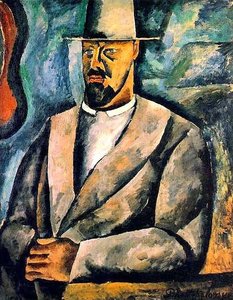
1876–1956, Ουκρανία
Πιοτρ Κοντσαλόβσκι
Early Life, Family and Artistic Training The story of Pyotr Konchalovsky begins in the village of Slavianka, located within the Kharkov Governorate of the Russian Empire. Born on 21 February 1876, he entered a world where the boundaries of art and intellect were already being drawn by those around him. His father, Pyotr Petrovich Konchalovsky, was a man of letters and a publisher of art, a profession that ensured the household was steeped in the visual and literary currents of the era. This environment provided a natural, if quiet, introduction to the life of a creator, as the family eventually moved to Moscow, where the home became a gathering place for many significant figures of the Russian art scene.
Σχετικά με τον Πιοτρ Κοντσαλόβσκι Σημαντικά έργα του Πιοτρ Κοντσαλόβσκι
Εργασίες του Πιοτρ Κοντσαλόβσκι
 Πορτραίτο στην Αβραμτσέβο1911
 Matador Manuel Gartha1910
 Piazza della Signoria in Siena1912
 San Gimignano1912
Μελέτες γύρω από το Peterhof
 Unveiling Emotion: The Top 25 Masterpieces by Alexej von JawlenskyImmerse yourself in the vibrant world of Alexej von Jawlensky. Explore 25 iconic Expressionist masterpieces, from emotive portraits to bold…
 Ukrainian artworks of the 1910sUkrainian artworks from the 1910s featuring Kazimir Malevich, Ilya Repin, and Zinaida Serebryakova. View the full collection at OriginalUni…
 Russian artworks of the 1890s1890s Russian art by Ivan Shishkin, Viktor Vasnetsov, and Konstantin Makovsky captures the nation's soul. View the full collection at Origi…