1868
Memorial Stones (Erik Bodom, 1868)
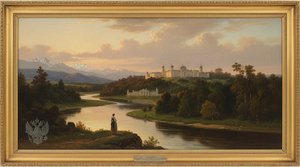
Ο/Η Erik Bodom (1829–1879) δημιούργησε το Memorial Stones. Χρονολογείται στο 1868. Οι διαστάσεις είναι 84 × 118 cm.
- 1868
- 84 × 118 cm

 Προεπισκόπηση σε πραγματική κλίμακα

 Ελαιογραφικό Χειροποίητο Έργο
 Αποστολή
 Κοινοποίηση
 Πληροφοριακό φύλλο


 Λήψη
 Παρόμοια αντικείμενα συλλογής
 Ακτινογραφία
 Παρουσίαση
 Ερωτήσεις & Απαντήσεις

 Στατιστικά
Memorial Stones, εν συντομία
- Τίτλος
- Memorial Stones
- Καλλιτέχνης
- Erik Bodom (1829–1879)
- Γεννημένος/η το
- Vestby Municipality, Norway
- Ημερομηνία
- 1868
- Διαστάσεις
- 84 × 118 cm
Τι απεικονίζει το Memorial Stones;
The Painting's Composition
The painting features two towers in the foreground, set against a dramatic sky with clouds that add depth and emotion to the scene. Three people are visible in the painting, each lost in their own thoughts, while an animal is present in the bottom of the scene, adding a sense of tranquility. The mountains in the background rise majestically, their peaks reaching high into the sky, creating a sense of awe and wonder.Artistic Style and Influences
Erik Bodom's style is reminiscent of the Romantic era, with its emphasis on emotion, imagination, and individualism. His use of color and light creates a sense of atmosphere and mood, drawing the viewer into the world of the painting. The Memorial Stones painting is a prime example of Bodom's ability to balance composition, color, and light to create a captivating and thought-provoking work of art.- The painting is available for purchase as a handmade oil painting reproduction on OriginalUniqueArt.com
- More information about the artist and his works can be found on Wikipedia
- The Pinacoteca Malaspina museum in Pavia, Italy, is home to an impressive collection of artworks, including paintings by Erik Bodom
The Memorial Stones painting by Erik Bodom is a must-see for anyone who appreciates fine art and nature. Its captivating composition, beautiful colors, and sense of atmosphere make it a true masterpiece that will leave you in awe. Visit OriginalUniqueArt.com to learn more about this painting and to explore the world of handmade oil painting reproductions.
Εικόνες υψηλής ανάλυσης του Memorial Stones

Δημόσιος τομέας: ο καλλιτέχνης απεβίωσε το 1879.
Άλλες διαστάσεις, καρέττες και αναφορά →Erik Bodom, Memorial Stones (1868). Δημόσιο περιουσιακό δικαίωμα
Ερωτήσεις για το Memorial Stones, απαντημένες
Σε ποια χρονιά δημιουργήθηκε το "Memorial Stones" του Erik Bodom;
Το έργο "Memorial Stones" του Erik Bodom δημιουργήθηκε το έτος 1868.
Ποια είναι οι διαστάσεις του πρωτότυπου "Memorial Stones";
Το έργο "Memorial Stones" έχει διαστάσεις 84 x 118 cm στην αρχική του μορφή. Οι αρχικές διαστάσεις αποτελούν μια χρήσιμη αναφορά κατά την επιλογή μεγέθους για μια αναπαραγωγή.
Το έργο "Memorial Stones" ανήκει στο δημόσιο περιουσιακό αγαθό;
Όσον αφορά τα πνευματικά δικαιώματα, το "Memorial Stones" ανήκει στο δημόσιο κτήμα - τα δικαιώματα αυτορության έχουν λήξει.
Ποιος είναι ο καλλιτέχνης πίσω από το "Memorial Stones";
Ο καλλιτέχνης πίσω από το "Memorial Stones" είναι ο/η Erik Bodom. Το έργο καταχωρείται υπό το όνομα του/της Erik Bodom.
Πόσο είχε ηλικία ο/η Erik Bodom όταν δημιούργησε το "Memorial Stones" το 1868;
Ο/Η Erik Bodom δημιούργησε το έργο "Memorial Stones" στην ηλικία των 39 ετών. Ο/Η καλλιτέχνης γεννήθηκε το 1829 και το έργο χρονολογείται στο 1868.
Γιατί η κατάσταση των πνευματικών δικαιωμάτων του "Memorial Stones" είναι αυτή που είναι;
Η κατάσταση των πνευματικών δικαιωμάτων για το "Memorial Stones" - δημόσιο κτήμα - τα δικαιώματα αυτορության έχουν λήξει - ορίζεται από τον θάνατο του καλλιτέχνη το έτος 1879.
Σχετικά με τον καλλιτέχνη, Erik Bodom

1829–1879, Norway
Erik Bodom
The Soul of the Norwegian Wild: The Life and Art of Erik Bodom In the annals of Scandinavian art, few names evoke the haunting beauty of the northern wilderness as poignantly as Erik Bodom. Born on September 28, 1829, in the quiet village of Vestby, Akershus, Bodom was a painter who did not merely observe nature but sought to translate its very heartbeat onto canvas. His journey was one of profound self-dedication; though he attended the Oslo Cathedral School, he famously chose to leave formal education behind to pursue the rigorous, solitary path of a self-taught master. This early commitment to his craft allowed him to develop a vision that was uniquely his own, unburdened by rigid academic dogma yet deeply rooted in the technical excellence of the great traditions.
Εργασίες του Erik Bodom
 German Norwegische Sommerlandschaft1854
 Decaying Trunk. Copy after Cappelen, NG.M.00289-51851
 Norwegian mountain landscape with a wanderer1860
 Moonlight1861

Μελέτες γύρω από το Memorial Stones
 Alexei Harlamoff: A Study in Russian Romantic Landscape Painting & Imperial PatronageExplore the captivating world of Alexei Harlamoff, a master of Russian Romantic painting. Discover his life, Imperial patronage, signature …
 Top 25 Masterpieces by David Moreau: A Journey Through Texture and LightExplore 25 iconic David Moreau textured masterpieces. Discover museum-quality reproductions on OriginalUniqueArt.com.
 Whispers in the Sky: Capturing the Ethereal Beauty of Impressionist CloudscapesDiscover the ethereal beauty of Impressionist cloudscapes. Explore how masters like Monet captured fleeting light and atmosphere through so…