Μετάβαση σε Εκτυπώσεις
 Περισσότερα







































 Για έργα τέχνης ή αναπαραγωγές με πλευρά υπερβαίνουσα των 105 εκ. (περίπου 41 ίντσες), το πλαίσιο θα αποσταλεί αποσυναρμολογημένο, σε μορφή κιτ. Η μέθοδος αυτή διασφαλίζει την ασφαλή παράδοση και προλαμβάνει τυχόν ζημιές κατά τη μεταφορά.


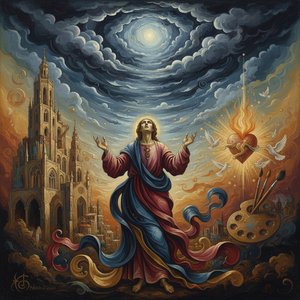
St. Jacobus: A Vision of Faith Embodied
Doménikos Theotokópoulos, universally known as El Greco – “the Greek” – stands apart from his contemporaries not merely as a painter but as an artist who wrestled with the very essence of spirituality and translated it into visual form. Born in Crete in 1541, under Venetian rule, his artistic journey took him through Venice and Rome before anchoring him firmly in Toledo, Spain—a city steeped in religious fervor that profoundly shaped his oeuvre. El Greco’s genius wasn't simply about mastering technique; he fundamentally reimagined representation itself, anticipating the expressive distortions of Expressionism and the fragmented perspectives of Cubism centuries ahead of their time. His formative years spent studying Byzantine iconography instilled within him a meticulous attention to detail and an unwavering commitment to conveying religious narratives with palpable emotion. Yet, El Greco refused to be confined by tradition; he boldly adopted stylistic innovations that distinguished him from his peers, signing his works in Greek – “Krḗs” – as a defiant assertion of Cretan identity amidst the burgeoning artistic currents of Europe.- Subject Matter: The painting depicts St. Jacobus, a prominent figure within Christian iconography, portraying him with serene dignity and contemplative posture.
- Style: El Greco’s distinctive Mannerist style is characterized by elongated figures—a hallmark of his artistic vision—creating an otherworldly atmosphere that transcends realism.
- Technique: Employing oil paint on canvas, El Greco utilized a glazing technique—layer upon layer of translucent pigments—to achieve luminous colors and textural depth, capturing the subtle nuances of light and shadow.
Historical Context & Artistic Influences
El Greco’s artistic output flourished during the Counter-Reformation, a period marked by intense religious piety and papal decrees aimed at reaffirming Catholic dogma following the Protestant Reformation. This context fueled his preoccupation with spiritual themes—particularly depictions of saints—and informed his stylistic choices. However, El Greco's influence extended beyond immediate religious concerns. He drew inspiration from Byzantine art, particularly its stylized figures and symbolic use of color, adapting these elements to create a uniquely expressive visual language. Furthermore, he absorbed influences from Italian Renaissance artists like Michelangelo and Raphael, albeit transforming them into something radically different—a testament to his artistic independence.Symbolism & Emotional Resonance
The painting’s muted earthy tones – predominantly ochre and umber – contribute to its contemplative mood, mirroring the saint's inner state of prayerfulness. The artist skillfully utilizes chiaroscuro—the dramatic interplay between light and dark—to heighten emotional impact, emphasizing Jacobus’s face and hands as focal points of attention. These gestures convey humility and devotion, inviting viewers into a realm of spiritual contemplation. El Greco’s elongated figures aren't merely stylistic devices; they symbolize transcendence—a striving for divine grace beyond the confines of earthly existence. The painting speaks to themes of faith, serenity, and inner peace—qualities that resonate powerfully with audiences even today.A Legacy Beyond Imitation
El Greco’s artistic innovations continue to inspire artists and collectors alike. His rejection of conventional realism paved the way for Expressionist explorations of emotion and psychological depth, demonstrating his enduring relevance in the history of art. Reproductions of ‘St. Jacobus,’ available at OriginalUniqueArt.com, allow enthusiasts to experience this masterpiece's luminous beauty and profound spiritual message—a timeless testament to El Greco’s singular vision.Ερωτήσεις και Απαντήσεις
Είναι το "Άγιος Ιάκωβος" ένα από τα πιο δημοφιλή έργα του/της Ελ Γκρέκο;
Το επίπεδο δημοσιότητας που καταγράφεται για το "Άγιος Ιάκωβος" του Ελ Γκρέκο είναι Εμβληματικά.
Είναι νόμιμη η αναπαραγωγή του έργου "Άγιος Ιάκωβος" του Ελ Γκρέκο, το οποίο βρίσκεται στο Μουσείο του Πράδο;
Το πρωτότυπο έργο "Άγιος Ιάκωβος" βρίσκεται στο Μουσείο του Πράδο και ανήκει στο δημόσιο κτήμα - τα δικαιώματα αυτορության έχουν λήξει.
Με τι υλικά είναι φτιαγμένο το "Άγιος Ιάκωβος" και σε ποιο στυλ;
Στο "Άγιος Ιάκωβος", η τεχνική του Ακρυλικά πάνω σε καμβά συναντά το έργο της καλλιτεχνικής κίνησης Μανιερής της Τέτατης Αναγέννησης.
 Προεπισκόπηση σε πραγματική κλίμακα
 Αποστολή
 Κοινοποίηση
 Λεπτομέρειες
 Οδηγός

 Λήψη
Λήψη
 Παρόμοια αντικείμενα συλλογής
 Ακτινογραφία
 Παρουσίαση
 Ερωτήσεις & Απαντήσεις
 Στατιστικά