Πορτρέτο του Ιωσήφ Κριεχούμπερ

Πάτσαδες του Ιωσήφ Κριεχούμπερ: Τα 100 πιο διάσημα, μέσα από το βλέμμα μιας γκαλερί

Ενημερωμένο Νοέμβριος 2026 · κατάταξη βάσει του σκορ δημοφιλίας μας (αναζητήσεις, επισκέψεις και παραγγελίες για κάθε έργο) · 134 έργα του Ιωσήφ Κριεχούμπερ στον κατάλογό μας

Με σύντομη περιγραφή

Στο μάτι της γκαλερί, το πιο διάσημο έργο του Ιωσήφ Κριεχούμπερ είναι το Karoline Auguste. Ο Fanny Elssler, Austrian ballerina (1830) και ο Prince Friedrich of Schwarzenberg (1847) ολοκληρώνουν το τρίο που κάθε μάτι αναγνωρίζει. Από τα 134 έργα του Ιωσήφ Κριεχούμπερ στον κατάλογό μας, η γκαλερί παρουσιάζει παρακάτω τα 100 πιο διάσημα, όπου κάθε ένα είναι πρωτότυπο, με την χρονολογία του, το μουσείο του και το τι το κάνει μοναδικό.

1800 – 1876, Βιέννη Biedermeier Περισσότερα έργα: National Portrait Gallery of Sweden

Τα 10 κορυφαία έργα του Ιωσήφ Κριεχούμπερ στη γκαλερέι

1
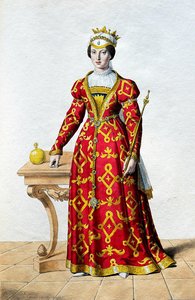
Karoline Auguste του Ιωσήφ Κριεχούμπερ

Karoline Auguste

Lithograph

In this portrait of Karoline Auguste, we encounter a formal depiction of a woman whose attire and crown suggest a position of significant status. Josef Kriehuber, an Austrian lithographer and painter, captured the subject with a focus on the dignity inherent in her pose. The work presents a quiet, composed presence, emphasizing the details of her clothing and the subtle features of her face. It is a study of character…

2
Fanny Elssler, Austrian ballerina (1830) του Ιωσήφ Κριεχούμπερ

Fanny Elssler, Austrian ballerina

1830 · Lithography

The lithograph captures a moment of stillness in a life of movement. Fanny Elssler sits in a three-quarter view, her gaze drifting slightly away from the viewer toward an unseen point. She is an Austrian ballerina, frozen in a monochromatic world of silver and charcoal. Her posture is upright, a column of poise that suggests the quiet discipline behind the public spectacle of dance. The light is diffused, washing over…

3
Prince Friedrich of Schwarzenberg (1847) του Ιωσήφ Κριεχούμπερ

Prince Friedrich of Schwarzenberg

1847 · Lithograph · Μετροπολιτικό Μουσείο Τέχνης, Νέα Υόρκη

This striking portrait captures Prince Friedrich of Schwarzenberg in the charged atmosphere of 1847. The subject is presented not merely as an individual, but as an embodiment of military bearing and societal importance during a pivotal era in European history. Clad in the formal accoutrements of his station—the crisp lines of his uniform, the authoritative gleam of the sword held at hand—he commands attention. The monochrome quality of the piece…

4
Josef Lanner, Austrian Composer (1825) του Ιωσήφ Κριεχούμπερ

Josef Lanner, Austrian Composer

1825 · Lithograph

This monochrome portrait, titled Josef Lanner, Austrian Composer, was created by the artist Josef Kriehuber. The work depicts the Austrian composer Josef Lanner in a bust-length composition. The subject is presented as a gentleman of the era, shown from the chest up and facing slightly toward the viewer's left. The image is rendered in grayscale, utilizing varying shades of gray to define the form of the figure against a simple,…

5
Anton Bernhard Fürstenau, German flutist and composer (1830) του Ιωσήφ Κριεχούμπερ

Anton Bernhard Fürstenau, German flutist and composer

1830 · Engraving

This monochrome engraving presents a bust-length portrait of Johann Baptist Forster, identified as the First Royal Magistrate of Saxony. The subject is positioned centrally against a dark, undifferentiated background, which focuses attention on the facial features and the formal attire. The composition follows a Neoclassical structure, emphasizing a realistic depiction of the man's physical presence. Light originates from above and slightly in front, casting highlights onto the forehead and the…

7
Karl von Rothkirch-Panthen, Bohemian-Austrian politician (1828) του Ιωσήφ Κριεχούμπερ

Karl von Rothkirch-Panthen, Bohemian-Austrian politician

1828 · Lithography

The gaze of Karl von Rothkirch-Panthen, Bohemian-Austrian politician, meets the viewer through this striking lithograph. Josef Kriehuber captures the man in a moment of quiet dignity, presenting a figure of significant social and political weight. This portrait offers a window into the life of a man who navigated the complex corridors of power, eventually serving as a member of the Chamber of Deputies of the Imperial Council of Austria. Even…

8
Joseph Böhm, Hungarian Violinist and a director of the Vienna Conservatory (1830) του Ιωσήφ Κριεχούμπερ

Joseph Böhm, Hungarian Violinist and a director of the Vienna Conservatory

1830 · Lithograph

This lithograph, titled "Joseph Böhm, Hungarian Violinist and a director of the Vienna Conservatory" by Josef Kriehuber, depicts the subject in a formal bust-length view. The portrait captures Joseph Böhm, a Hungarian violinist who held the position of professor at the Vienna Conservatory from 1819 to 1848. The image is rendered in a monochrome grayscale palette, utilizing fine lines to define the contours of the subject's face and attire. He…

9
Bulcs (1828) του Ιωσήφ Κριεχούμπερ

Bulcs

1828 · Lithograph

A man stands centered against a muted, mountainous landscape, his gaze fixed and stern. He is a figure of history, or perhaps a memory of one, draped in the heavy textures of a warrior's attire. The light falls evenly across his face, revealing the fine, etched lines of his features and the sharp edges of his weaponry. He holds an axe, a bow, and arrows, tools of a life defined…

10
Ferdinand III (1828) του Ιωσήφ Κριεχούμπερ

Ferdinand III

1828 · Lithograph

This portrait of Ferdinand III, executed by Josef Kriehuber, offers a quiet study of authority from the early nineteenth century. Created in 1828, the work captures the subject in a moment of formal repose. Kriehuber focuses on the dignity of the sitter, presenting him in full regal attire that signals his high status. The portrait provides a clear, direct encounter with a figure of historical significance.

Πάينτα του Ιωσήφ Κριεχούμπερ, κατάταξη από 11 έως 100

11Vladislav II (1828) του Ιωσήφ ΚριεχούμπερVladislav II1828 12Leopold I (1828) του Ιωσήφ ΚριεχούμπερLeopold I1828 13Joseph II (1828) του Ιωσήφ ΚριεχούμπερJoseph II1828 14Karl VI (1828) του Ιωσήφ ΚριεχούμπερKarl VI1828 15Koloman (1828) του Ιωσήφ ΚριεχούμπερKoloman1828 16Ferdinand I of Austria (1828) του Ιωσήφ ΚριεχούμπερFerdinand I of Austria1828 17Taksony (1828) του Ιωσήφ ΚριεχούμπερTaksony1828 18Lehel (1828) του Ιωσήφ ΚριεχούμπερLehel1828 19Bela III (1828) του Ιωσήφ ΚριεχούμπερBela III1828 20Ludwig I (1828) του Ιωσήφ ΚριεχούμπερLudwig I1828 21Geza (1828) του Ιωσήφ ΚριεχούμπερGeza1828 22Franz II (1828) του Ιωσήφ ΚριεχούμπερFranz II1828 23Johann Zapolya (1828) του Ιωσήφ ΚριεχούμπερJohann Zapolya1828 24Keve, legendary Hungarian military leader (1828) του Ιωσήφ ΚριεχούμπερKeve, legendary Hungarian military leader1828 25Geza I (1828) του Ιωσήφ ΚριεχούμπερGeza I1828 26Austrian Family, The Mother (1827) του Ιωσήφ ΚριεχούμπερAustrian Family, The Mother1827 27Austrian Family, the Father (1827) του Ιωσήφ ΚριεχούμπερAustrian Family, the Father1827 28Stephan V (1828) του Ιωσήφ ΚριεχούμπερStephan V1828 29Ladislaus IV (1828) του Ιωσήφ ΚριεχούμπερLadislaus IV1828 30Stephan II (1828) του Ιωσήφ ΚριεχούμπερStephan II1828 31Matthias Corvinus (1828) του Ιωσήφ ΚριεχούμπερMatthias Corvinus1828 32Ladislaus (1828) του Ιωσήφ ΚριεχούμπερLadislaus1828 33Austrian Family, The Son (1827) του Ιωσήφ ΚριεχούμπερAustrian Family, The Son1827 34Stephan IV (1828) του Ιωσήφ ΚριεχούμπερStephan IV1828 35Emmerich (1828) του Ιωσήφ ΚριεχούμπερEmmerich1828 36Stephan III (1828) του Ιωσήφ ΚριεχούμπερStephan III1828 37Ladislaus V (1828) του Ιωσήφ ΚριεχούμπερLadislaus V1828 38Ladislaus III (1828) του Ιωσήφ ΚριεχούμπερLadislaus III1828 39Karl I (1828) του Ιωσήφ ΚριεχούμπερKarl I1828 40Austrian Family, The Daughters (1827) του Ιωσήφ ΚριεχούμπερAustrian Family, The Daughters1827 41Ladislaus II (1828) του Ιωσήφ ΚριεχούμπερLadislaus II1828 42Andreas II (c.1177-1235), King on Hungary from 1205 to 1235 (1828) του Ιωσήφ ΚριεχούμπερAndreas II (c.1177-1235), King on Hungary from 1205 to 12351828 43Keme, legendary Hungarian military leader (1828) του Ιωσήφ ΚριεχούμπερKeme, legendary Hungarian military leader1828 44Attila, King of the Huns (1828) του Ιωσήφ ΚριεχούμπερAttila, King of the Huns1828 45Wenzel III (1828) του Ιωσήφ ΚριεχούμπερWenzel III1828 46Sabolch, legendary Hungarian military leader (1828) του Ιωσήφ ΚριεχούμπερSabolch, legendary Hungarian military leader1828 47Kadicha, legendary Hungarian military leader (1828) του Ιωσήφ ΚριεχούμπερKadicha, legendary Hungarian military leader1828 48Andreas I (c.1015-1060), King on Hungary from 1046 to 1060 (1828) του Ιωσήφ ΚριεχούμπερAndreas I (c.1015-1060), King on Hungary from 1046 to 10601828 49Wladislaw I (1828) του Ιωσήφ ΚριεχούμπερWladislaw I1828 50Elizabeth of Luxembourg (1828) του Ιωσήφ ΚριεχούμπερElizabeth of Luxembourg1828 51Samuel Aba (1828) του Ιωσήφ ΚριεχούμπερSamuel Aba1828 52Buda, legendary Hungarian military leader, namesake of Budapest (1828) του Ιωσήφ ΚριεχούμπερBuda, legendary Hungarian military leader, namesake of Budapest1828 53Andreas III (c.1265-1301), King on Hungary from 1290 to 1301 (1828) του Ιωσήφ ΚριεχούμπερAndreas III (c.1265-1301), King on Hungary from 1290 to 13011828 54Maria I (1828) του Ιωσήφ ΚριεχούμπερMaria I1828 55Arpad, Grand Prince of the Hungarians (1828) του Ιωσήφ ΚριεχούμπερArpad, Grand Prince of the Hungarians1828 56Karl Gustav Löwenhielm (1790-1858), count, lieutenant general, governor, married to 1. countess Gustava Charlotta Jacobina Aurora Gyldenstolpe 2. countess Natalie Alexandra von Buxhoeweden (1836) του Ιωσήφ ΚριεχούμπερKarl Gustav Löwenhielm (1790-1858), count, lieutenant general, governor, married to 1. countess Gustava Charlotta Jacobina Aurora Gyldenstolpe 2. countess Natalie Alexandra von Buxhoeweden1836 · National Portrait Gallery of Sweden 57Natalie Alexandra von Buxhoeweden (1814-1867), countess, maid of honour of Alexandra Fjodorovna of Russia, married to count Karl Gustav Löwenhielm (1839) του Ιωσήφ ΚριεχούμπερNatalie Alexandra von Buxhoeweden (1814-1867), countess, maid of honour of Alexandra Fjodorovna of Russia, married to count Karl Gustav Löwenhielm1839 · National Portrait Gallery of Sweden 58Josef Zinner Forstmeister, Matthias Zinner Hofjäger, Ferdinand Zinner Hofjäger (1835) του Ιωσήφ ΚριεχούμπερJosef Zinner Forstmeister, Matthias Zinner Hofjäger, Ferdinand Zinner Hofjäger1835 59Robert Schumann, Austrian Composer (1839) του Ιωσήφ ΚριεχούμπερRobert Schumann, Austrian Composer1839 60Christoph Graf Cavriani with his son Franz (1836) του Ιωσήφ ΚριεχούμπερChristoph Graf Cavriani with his son Franz1836 61Karl Josef Lipinsky, Polish music composer and virtuoso violinist (1837) του Ιωσήφ ΚριεχούμπερKarl Josef Lipinsky, Polish music composer and virtuoso violinist1837 62Countess Ludmilla Csaky, née Lazansky Von Bukowa with her son Ladislaus Csaky Graf Von Körösszegh U. Adorjan, politician (1839) του Ιωσήφ ΚριεχούμπερCountess Ludmilla Csaky, née Lazansky Von Bukowa with her son Ladislaus Csaky Graf Von Körösszegh U. Adorjan, politician1839 63Le Comte Guillaume Isidore De Montbel (1836) του Ιωσήφ ΚριεχούμπερLe Comte Guillaume Isidore De Montbel1836 64Children (1836) του Ιωσήφ ΚριεχούμπερChildren1836 65Gentleman in riding costume (1838) του Ιωσήφ ΚριεχούμπερGentleman in riding costume1838 66A Morning with Liszt (Hungarian Composer) (1846) του Ιωσήφ ΚριεχούμπερA Morning with Liszt (Hungarian Composer)1846 67Giorgio Ronconi, Italian Baritone (1840) του Ιωσήφ ΚριεχούμπερGiorgio Ronconi, Italian Baritone1840 68Thomas Lederer, Doctor and homeopath (1846) του Ιωσήφ ΚριεχούμπερThomas Lederer, Doctor and homeopath1846 69Filippo Coletti, Italian Baritone (1841) του Ιωσήφ ΚριεχούμπερFilippo Coletti, Italian Baritone1841 70Aloius Rubana, civil servant and councilor (1841) του Ιωσήφ ΚριεχούμπερAloius Rubana, civil servant and councilor1841 71Aloisia Eleonore Schönburg-Hartstein With children (1841) του Ιωσήφ ΚριεχούμπερAloisia Eleonore Schönburg-Hartstein With children1841 72Maria, née Czernin, and her daughter Wilhelmine Kinsky. Countess. (1844) του Ιωσήφ ΚριεχούμπερMaria, née Czernin, and her daughter Wilhelmine Kinsky. Countess.1844 73The Counts Jaromir, Rudolf, Herrmann and Humbert Czernin (1847) του Ιωσήφ ΚριεχούμπερThe Counts Jaromir, Rudolf, Herrmann and Humbert Czernin1847 74Eduard Woyna (1840) του Ιωσήφ ΚριεχούμπερEduard Woyna1840 75Franz Schubert, Austrian Composer (Posthumous Lithography) (1846) του Ιωσήφ ΚριεχούμπερFranz Schubert, Austrian Composer (Posthumous Lithography)1846 76Count Georg Esterházy Von Galántha (1840) του Ιωσήφ ΚριεχούμπερCount Georg Esterházy Von Galántha1840 77The Archdukes Franz Joseph, Ferdinand Max and Carl Ludwig (1844) του Ιωσήφ ΚριεχούμπερThe Archdukes Franz Joseph, Ferdinand Max and Carl Ludwig1844 78Portrait of Emperor Franz Joseph I at 23 Years of Age (1853) του Ιωσήφ ΚριεχούμπερPortrait of Emperor Franz Joseph I at 23 Years of Age1853 79Baron Heinrich von Hess, Austrian General (Field Marshal) (1854) του Ιωσήφ ΚριεχούμπερBaron Heinrich von Hess, Austrian General (Field Marshal)1854 80Brothers Kleins (1849) του Ιωσήφ ΚριεχούμπερBrothers Kleins1849 81Baron Carl von Ghega, Austrian railway engineer (1851) του Ιωσήφ ΚριεχούμπερBaron Carl von Ghega, Austrian railway engineer1851 82Antonie Countess Batthyany, bourn Zichy. Wife of Ludwig Graf Batthyany (1849) του Ιωσήφ ΚριεχούμπερAntonie Countess Batthyany, bourn Zichy. Wife of Ludwig Graf Batthyany1849 83Josef Kriehuber, Austrian Lithographer and Artist (Self-Portrait) (1852) του Ιωσήφ ΚριεχούμπερJosef Kriehuber, Austrian Lithographer and Artist (Self-Portrait)1852 84Karl Von Giskra, Austrian Politician (1861) του Ιωσήφ ΚριεχούμπερKarl Von Giskra, Austrian Politician1861 85Ludwig Gabillon, German actor of the Burgtheater and theatre director (1860) του Ιωσήφ ΚριεχούμπερLudwig Gabillon, German actor of the Burgtheater and theatre director1860 86Josef Unger, Austrian jurist and statesman (1861) του Ιωσήφ ΚριεχούμπερJosef Unger, Austrian jurist and statesman1861 87Franz Joseph I of Austria, Emperor of Austria (1860) του Ιωσήφ ΚριεχούμπερFranz Joseph I of Austria, Emperor of Austria1860 88Max Von Gomperz, Austrian industrialist and banker (1860) του Ιωσήφ ΚριεχούμπερMax Von Gomperz, Austrian industrialist and banker1860 89Josef Kriehuber, Austrian Lithographer (Self-portrait) (1860) του Ιωσήφ ΚριεχούμπερJosef Kriehuber, Austrian Lithographer (Self-portrait)1860 90Gabriele Saaint-Genois, b. Countess Stolberg with her daughter Anna (1858) του Ιωσήφ ΚριεχούμπερGabriele Saaint-Genois, b. Countess Stolberg with her daughter Anna1858 91Sir Julius Benedict, German-born composer and conductor (1861) του Ιωσήφ ΚριεχούμπερSir Julius Benedict, German-born composer and conductor1861 92Duchess Elisabeth of Bavaria, Empress of Austria (Sisi / Sissi) (1863) του Ιωσήφ ΚριεχούμπερDuchess Elisabeth of Bavaria, Empress of Austria (Sisi / Sissi)1863 93August Förster, German actor and theatre director (1863) του Ιωσήφ ΚριεχούμπερAugust Förster, German actor and theatre director1863 94Johann Emanuel Veith, Bohemian, Roman Catholic preacher (1860) του Ιωσήφ ΚριεχούμπερJohann Emanuel Veith, Bohemian, Roman Catholic preacher1860 95Portrait of a young woman with a rose (1859) του Ιωσήφ ΚριεχούμπερPortrait of a young woman with a rose1859 96Empress Elisabeth of Austria with her children Rudolf and Gisela (1858) του Ιωσήφ ΚριεχούμπερEmpress Elisabeth of Austria with her children Rudolf and Gisela1858 97Portrait of a gentleman with a top hat (1863) του Ιωσήφ ΚριεχούμπερPortrait of a gentleman with a top hat1863 98Portrait of a lady in a blue dress (1856) του Ιωσήφ ΚριεχούμπερPortrait of a lady in a blue dress1856 99Portrait of a country lady in a brown dress (1862) του Ιωσήφ ΚριεχούμπερPortrait of a country lady in a brown dress1862 100Vuk Karadžić, Serbian philologist, linguist and one of the most important reformers of the modern Serbian language (1865) του Ιωσήφ ΚριεχούμπερVuk Karadžić, Serbian philologist, linguist and one of the most important reformers of the modern Serbian language1865

Τα διάσημα έργα του Ιωσήφ Κριεχούμπερ, ανά περίοδο

Τα θέματα που κίνησαν το ενδιαφέρον του Ιωσήφ Κριεχούμπερ

Τα τέσσερα θέματα που εμφανίζονται πιο συχνά σε αυτά τα πρωτότυπα έργα, το καθένα με το εξαιρετικό του παράδειγμα.

Τα μουσεία που διατηρούν τα πρωτότυπα έργα του Ιωσήφ Κριεχούμπερ

Τα 2 μουσεία που φιλοξενούν το μεγαλύτερο μέρος των έργων σε αυτήν τη σελίδα.

Μουσείο Πόλη Έργα του Ιωσήφ Κριεχούμπερ Πάτρια από αυτή τη λίστα
National Portrait Gallery of Sweden, SträngnäsNational Portrait Gallery of Sweden Strängnäs 2 Karl Gustav Löwenhielm (1790-1858), count, lieutenant general, governor, married to 1. countess Gustava Charlotta Jacobina Aurora Gyldenstolpe 2. countess Natalie Alexandra von Buxhoeweden, Natalie Alexandra von Buxhoeweden (1814-1867), countess, maid of honour of Alexandra Fjodorovna of Russia, married to count Karl Gustav Löwenhielm
Μετροπολιτικό Μουσείο Τέχνης, Νέα ΥόρκηΜετροπολιτικό Μουσείο Τέχνης Νέα Υόρκη 1 Prince Friedrich of Schwarzenberg

Ιωσήφ Κριεχούμπερ, ένα χαρακτηριστικό έργο ανά δεκαετία

Έργα ανά δεκαετία

Επιλέξτε μια δεκαετία για να δείτε το πρωτότυπο έργο που την χαρακτηρίζει.

Οι πίνακες του Ιωσήφ Κριεχούμπερ: οι απαντήσεις της γκαλερί

Ποιο έργο του Ιωσήφ Κριεχούμπερ είναι το πιο διάσημο από όλα;Αποκαλύψτε την απάντηση

Το Karoline Auguste. Στη συνέχεια ακολουθούν το Fanny Elssler, Austrian ballerina (1830) και το Prince Friedrich of Schwarzenberg (1847).

Ποιες είναι τα 10 κορυφαία έργα του Ιωσήφ Κριεχούμπερ;Αποκαλύψτε την απάντηση

Karoline Auguste, Fanny Elssler, Austrian ballerina, Prince Friedrich of Schwarzenberg, Josef Lanner, Austrian Composer, Anton Bernhard Fürstenau, German flutist and composer, Ernst and Eduard Eichhorn, violin prodigies, Karl von Rothkirch-Panthen, Bohemian-Austrian politician, Joseph Böhm, Hungarian Violinist and a director of the Vienna Conservatory, Bulcs και Ferdinand III. Η κατάταξη παραπάνω αναγράφει το έτος και το μουσείο για το κάθε έργο.

Πόσα έργα δημιούργησε ο/η Ιωσήφ Κριεχούμπερ;Αποκαλύψτε την απάντηση

Ο κατάλογός μας περιλαμβάνει 134 έργα του Ιωσήφ Κριεχούμπερ, με ημερομηνίες από 1825 έως 1865.

Πού εκτίθενται τα πιο διάσημα πρωτότυπα του Ιωσήφ Κριεχούμπερ;Αποκαλύψτε την απάντηση

Κυρίως σε National Portrait Gallery of Sweden (Strängnäs) και Μετροπολιτικό Μουσείο Τέχνης (Νέα Υόρκη). Ο πίνακας μουσείου παραπάνω τους περιλαμβάνει όλους.

Πότε δημιούργησε ο/η Ιωσήφ Κριεχούμπερ τα πιο διάσημα έργα του/της;Αποκαλύψτε την απάντηση

Κατά την περίοδο 1820s: 49 από τα 100 έργα σε αυτήν τη σελίδα δημιουργήθηκαν τότε, με Josef Lanner, Austrian Composer από αυτά να είναι μοναδικά.

Ποια είναι τα πρώτα και τα τελευταία διάσημα έργα του Ιωσήφ Κριεχούμπερ;Αποκαλύψτε την απάντηση

Σε αυτήν τη σελίδα, το παλαιότερο είναι Josef Lanner, Austrian Composer (1825) και το νεότερο Vuk Karadžić, Serbian philologist, linguist and one of the most important reformers of the modern Serbian language (1865).

Ποια θέματα επέλεξε πιο συχνά ο Ιωσήφ Κριεχούμπερ;Αποκαλύψτε την απάντηση

Man (62), Portrait (31) και Crown (25), σε συνολικά 100 έργα σε αυτήν τη σελίδα.

Με ποια τεχνική εργάστηκε περισσότερο ο Ιωσήφ Κριεχούμπερ;Αποκαλύψτε την απάντηση

Lithograph, για 56 από τα 100 έργα σε αυτήν τη σελίδα.

Με ποιο καλλιτεχνικό κίνημα σχετίζεται ο/η Ιωσήφ Κριεχούμπερ;Αποκαλύψτε την απάντηση

Biedermeier, όπως προκύπτει από τα πρωτότυπα σε αυτήν τη σελίδα.

Ποια πρωτότυπα έργα του Ιωσήφ Κριεχούμπερ διαθέτει το National Portrait Gallery of Sweden;Αποκαλύψτε την απάντηση

Karl Gustav Löwenhielm (1790-1858), count, lieutenant general, governor, married to 1. countess Gustava Charlotta Jacobina Aurora Gyldenstolpe 2. countess Natalie Alexandra von Buxhoeweden και Natalie Alexandra von Buxhoeweden (1814-1867), countess, maid of honour of Alexandra Fjodorovna of Russia, married to count Karl Gustav Löwenhielm: το National Portrait Gallery of Sweden, Strängnäs διαθέτει 2 από τα έργα σε αυτήν τη σελίδα.

Ιωσήφ Κριεχούμπερ: ο καλλιτέχνης

A Chronicler of Viennese Society: The Life and Art of Josef Kriehuber

Josef Kriehuber, born in Vienna on December 14th, 1800, wasn’t merely a painter or lithographer; he was a meticulous observer, a visual historian who dedicated his life to capturing the essence of Viennese society during the Biedermeier era. His legacy isn't defined by grand historical narratives or sweeping landscapes, but rather by an astonishingly detailed collection of over 3000 lithographs – portraits, scenes from daily life, and glimpses into the vibrant cultural landscape of his time. Kriehuber’s art offers a remarkably intimate window into the heart of 19th-century Vienna, revealing the nuances of social status, personal character, and the spirit of an age defined by domesticity and quiet observation.

The Biedermeier Portraitist: A Window into an Era

The Biedermeier period, following the tumultuous years of Napoleon’s reign, fostered a profound shift in artistic sensibilities – a move away from theatrical grandeur towards a celebration of the everyday. This movement deeply resonated with Kriehuber's artistic vision. Initially exploring landscape lithography, he quickly recognized the immense potential of portraiture to document and preserve the individuals who shaped Viennese society. He wasn’t simply reproducing likenesses; he was crafting visual records, meticulously capturing not just physical appearance but also the subtle expressions that revealed personality and social standing. His clientele was remarkably diverse – from members of the aristocracy and government officials to merchants and ordinary citizens seeking a lasting image of themselves or their loved ones. Kriehuber’s portraits weren't idealized fantasies; they were strikingly accurate representations, imbued with a sense of character and authenticity. He possessed an uncanny ability to discern the inner life of his subjects, translating it onto the lithographic stone with remarkable sensitivity.

Technical Mastery and the Art of Lithography

Kriehuber’s artistic development was inextricably linked to his mastery of lithography – a relatively new medium at the time that allowed for rapid and affordable reproduction of images. This innovation democratized portraiture, making it accessible to a wider audience than ever before. Unlike oil painting, which required considerable skill and expense, lithography offered a more democratic means of creating lasting images. Kriehuber’s technical expertise was truly exceptional; he pushed the boundaries of what was possible with this medium, achieving an astonishing level of detail, tonal range, and precision. His meticulous draftsmanship, combined with his deep understanding of light and shadow, created portraits that were both visually stunning and psychologically revealing. The process itself demanded patience and a keen eye – each line carefully etched onto the stone, building up layers of tone to create depth and texture.

Beyond Portraits: Capturing Vienna’s Cultural Fabric

While celebrated for his portraits, Kriehuber's artistic vision extended beyond individual representation. He recognized the importance of documenting the urban landscape itself, particularly the vibrant atmosphere of Vienna’s Prater park – a popular destination for leisure and entertainment. His lithographs depicting scenes from the Prater offer invaluable insights into 19th-century Viennese life and culture. These weren't simply picturesque views; they were snapshots of a society at ease, revealing details about fashion, social interactions, and the recreational habits of the time. He captured the energy and excitement of the Prater, showcasing its diverse attractions – from carousel rides to fortune tellers – and the people who flocked to enjoy them. Through these studies, Kriehuber transformed himself into a visual historian, preserving for posterity the sights and sounds of a rapidly changing city.

Influences and Legacy: A Lasting Impression

Pinpointing specific artistic influences on Kriehuber proves challenging; he wasn’t overtly imitating a particular master or adhering to a strict stylistic school. However, his dedication to realism aligns with broader artistic trends of the time, reflecting a growing desire for accurate representation in art. He was a contemporary of other portrait artists, but distinguished himself through the sheer volume and consistency of his output, as well as his unparalleled mastery of lithography. His style is characterized by meticulous detail, precise draftsmanship, and an ability to convey both physical likeness and psychological depth. He wasn’t interested in grand gestures or dramatic compositions; instead, he focused on capturing the subtle nuances of expression and personality. This understated approach, combined with his technical skill, made his portraits highly sought after by those seeking a flattering yet truthful representation of themselves. Kriehuber's legacy lies not only in the sheer number of portraits he created but also in their historical significance as a visual record of 19th-century Central European society – a testament to the power of observation and the enduring appeal of capturing the human spirit. His works are now housed in prestigious collections, ensuring that his unique perspective on Viennese life continues to be appreciated for generations to come.