San Francesco a Ripa: Eine Reise durch das Barock Rom
Nestled within the vibrant Trastevere district of Rome, San Francesco a Ripa is more than just a church; it’s a poignant and profoundly beautiful repository of art history, faith, and human drama. This unassuming yet magnificent structure offers an immersive experience, transporting visitors through centuries of Roman life, from ancient foundations to the dramatic narratives of the 17th and 18th centuries. The building itself is a testament to layered architectural styles – a harmonious blend of Romanesque simplicity, Gothic influence, and, most notably, the exuberant grandeur of the Baroque period. Its walls whisper tales of Franciscan monks, exiled nobles, and even the chilling echoes of executions, creating an atmosphere unlike any other museum in Rome.
The church’s origins trace back to a modest chapel dedicated to Saint Blaise, established in 1231 within a small Franciscan convent. This humble beginning quickly evolved into the sprawling complex we see today, shaped by successive generations of architects and artists. The core structure was significantly expanded during the 17th century under the direction of Onorio Longhi, culminating in the façade’s completion in 1701. However, it's the interior that truly captivates – a carefully orchestrated symphony of frescoes, sculptures, and architectural details, each element contributing to a powerful narrative of devotion and remembrance. The church’s location near the Aurelianian Wall further adds to its historical significance, reminding visitors of Rome’s enduring legacy as a fortified city.
The collection within San Francesco a Ripa is remarkably focused, yet profoundly rich in its thematic coherence. At its heart lies Neapolitan Baroque art, a style renowned for its dramatic intensity, theatrical lighting, and emotional expressiveness. Visitors are immediately drawn to the workshop of Gian Lorenzo Bernini, where fragments – including sculpted elements and preparatory studies – provide tantalizing glimpses into his creative process. These pieces reveal Bernini’s masterful understanding of anatomy, drapery, and emotional expression. The subtle curves, dynamic poses, and dramatic lighting evident in these fragments are hallmarks of his distinctive style, demonstrating his ability to infuse even the smallest sculpture with a sense of movement and life. The presence of these remnants serves as a powerful reminder of Bernini’s unparalleled genius and his enduring impact on the art world. Alongside this, one finds exquisite examples of Neapolitan painting, characterized by rich colors, dramatic compositions, and a deep emotional resonance – a direct reflection of the region's artistic heritage.
Die Chapel of Xavier: A Masterclass in Baroque Frescoes
Within the chapel dedicated to Saint Francis Xavier, one is immediately struck by the sheer scale and emotional power of the frescoes. These aren’t merely decorative elements; they are meticulously crafted narratives designed to evoke a profound sense of piety and spiritual yearning. The artist, largely unknown, demonstrates an exceptional command of color, composition, and chiaroscuro – the dramatic interplay of light and shadow that is so characteristic of Baroque art. Observe how figures are rendered with intense emotion, their gestures conveying a palpable sense of suffering and devotion. The use of vibrant reds, blues, and golds creates a dazzling spectacle, while subtle gradations of tone add depth and realism to the scenes. The frescoes depict key moments in Saint Francis Xavier’s life – his conversion, his missionary journeys, and his final encounter with God – each scene rendered with breathtaking detail and dramatic flair.
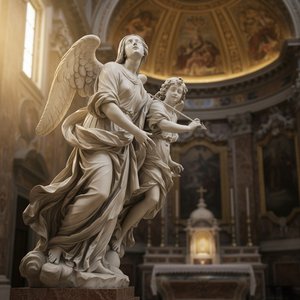
The chapel also houses a remarkable sculpture by Bernini, “Beata Ludovica Albertoni,” depicting the saint's ecstatic vision. This piece, though small in scale, exemplifies Bernini’s signature style—a masterful blend of realism and theatricality. The delicate folds of her drapery, the subtle expression of serenity on her face, and the overall dynamism of the composition are all hallmarks of his genius. The sculpture serves as a poignant reminder of the enduring power of faith and devotion.
Bernini’s Legacy: Fragments of Genius
San Francesco a Ripa offers rare opportunities to witness the influence of Gian Lorenzo Bernini, one of Rome’s most celebrated sculptors. While no complete works by Bernini reside within the church, fragments – including sculpted elements and preparatory studies – provide tantalizing glimpses into his creative process. These pieces reveal Bernini’s masterful understanding of anatomy, drapery, and emotional expression. The subtle curves, dynamic poses, and dramatic lighting evident in these fragments are hallmarks of his distinctive style, demonstrating his ability to infuse even the smallest sculpture with a sense of movement and life.
The presence of these remnants is particularly significant given Bernini’s close ties to Rome and his prolific output. They offer a unique opportunity for art enthusiasts to appreciate the evolution of his artistic vision and to understand how his ideas were translated into tangible form. The fragments serve as a powerful testament to Bernini's unparalleled genius and his enduring impact on the art world.
A Sanctuary of Remembrance: The Chapel of Beatrice Cenci
Perhaps the most haunting aspect of San Francesco a Ripa is its association with the tragic story of Beatrice Cenci. This chapel, dedicated to her memory, serves as a poignant reminder of the social injustices and political intrigues that plagued 18th-century Rome. The chapel’s walls are adorned with grisly artifacts – including a basket believed to have held the head of Beatrice Cenci – offering a stark contrast to the church's overall beauty. These objects, once symbols of despair and suffering, now stand as testaments to the enduring power of memory and the importance of confronting difficult truths. The chapel’s atmosphere is undeniably somber, yet it also possesses a strange sense of dignity—a space for reflection on themes of justice, mercy, and the human condition.
The story of Beatrice Cenci – a noblewoman whose family was subjected to relentless persecution by powerful enemies – has become inextricably linked with San Francesco a Ripa. Her tragic fate served as inspiration for numerous works of art and literature, solidifying her place in Roman history and folklore. Visiting the chapel is not merely an act of artistic appreciation; it’s an encounter with a profound human drama.
Beyond the Art: A Unique Historical Tapestry
San Francesco a Ripa is not simply a museum; it's a living testament to Rome’s complex and often contradictory history. The church’s evolution over centuries reflects the changing fortunes of the city, from its Roman roots to its Baroque splendor. Its association with St. Francis of Assisi, the Archconfraternity, and even the tragic fate of Beatrice Cenci adds layers of historical significance that are rarely found in other museums. The building itself—a carefully preserved example of layered architectural styles – is a work of art in its own right. Visiting San Francesco a Ripa is an opportunity to step back in time, to encounter remarkable works of art, and to contemplate the enduring mysteries of human existence.