Porträt von William Dyce

Die 69 berühmtesten Gemälde von William Dyce, jedes ein Unikat

Aktualisiert im Oktober 2026 · sortiert nach unserem Popularitätsindex (Suchanfragen, Aufrufe und Bestellungen für jedes Werk) · 69 Werke von William Dyce in unserem Katalog

Kurz gesagt

Frömmigkeit: Die Ritter der Tafelrunde kurz vor dem Aufbruch auf der Suche nach dem Heiligen Gral (1849) ist das von William Dyce geschaffene Gemälde, das die meiste Aufmerksamkeit auf sich zieht; das Original befindet sich im Scottish National Gallery, Edinburgh. Danach wandert der Blick zu James Hamilton, 1749 - 1835. Arzt (1832) und The meeting of Jacob and Rachel (1853). Von den 69 Werken von William Dyce in unserem Katalog sind diese 69 die bekanntesten – jedes ein einzigartiges Original, präsentiert mit seinem Entstehungsjahr, dem Museum und dem Grund für seine zeitlose Bedeutung.

1806 – 1864, Aberdeen Meiste Werke: Scottish National Gallery

Die 10 besten Gemälde von William Dyce, aus der Sicht der Galerie

1
Frömmigkeit: Die Ritter der Tafelrunde kurz vor dem Aufbruch auf der Suche nach dem Heiligen Gral (1849) von William Dyce

Frömmigkeit: Die Ritter der Tafelrunde kurz vor dem Aufbruch auf der Suche nach dem Heiligen Gral

1849 · Öl auf Leinwand · Scottish National Gallery, Edinburgh

Im prachtvollen Geflecht der viktorianischen Romantik fangen nur wenige Werke die Schnittstelle von Mythos und Moral so tiefgreifend ein wie William Dyces Meisterwerk aus dem Jahr 1849, Frömmigkeit: Die Ritter der Tafelrunde kurz vor dem Aufbruch auf der Suche nach dem Heiligen Gral. Diese monumentale Leinwand ist weit mehr als nur ein historisches Tableau; sie ist eine evokative Meditation über das spirituelle Verlangen, das durch das Herz des neunzehnten Jahrhunderts…

2
James Hamilton, 1749 - 1835. Arzt (1832) von William Dyce

James Hamilton, 1749 - 1835. Arzt

1832 · Öl auf Leinwand · Scottish National Portrait Gallery, Edinburgh

Eine einzelne Gestalt füllt die vertikale Komposition dieses Ölgemäldes auf Leinwand aus, das in einem formellen, akademischen Stil des 19. Jahrhunderts gehalten ist. James Hamilton steht leicht versetzt zur Mitte, den Körper dem Betrachter zugewandt. Er trägt die Kleidung seiner Zeit: einen dunklen, texturierten Gehrock, Kniebundhosen und einen dunklen Dreispitz. Ein helles, cremefarbenes Halstuch bildet einen scharfen tonalen Kontrast zu den dunkleren Elementen seiner Kleidung und den Hauttönen seines Gesichts.…

8
Die Jungfrau mit dem Kind (1845) von William Dyce

Die Jungfrau mit dem Kind

1845 · Öl auf Leinwand · Royal Collection, London

Dieses evokative Gemälde, das die Jungfrau mit dem Kind darstellt, zieht den Betrachter sofort in einen Moment tiefer Intimität. Im Zentrum steht die zärtliche Verbindung zwischen Mutter und Sohn; Maria wiegt ihren kleinen Jungen mit spürbarer Liebe und höchster Sorgfalt. Ihr Gesicht, gehüllt in zarten Stoff, spricht Bände von Reinheit und Bescheidenheit und verleiht dem heiligen Sujet eine Aura zeitloser Anmut. Die Komposition ist meisterhaft ausbalanciert; sie lenkt das Auge…

Berühmte Gemälde von William Dyce, Nummer 11 bis 69

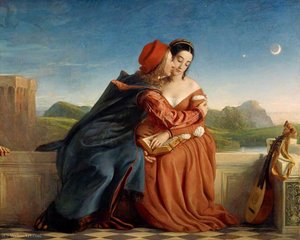
11Westburn (1827) von William DyceWestburn1827 12Portrait of Alexander Jardine (1834) von William DycePortrait of Alexander Jardine1834 13The Descent of Venus (2nd Version) von William DyceThe Descent of Venus (2nd Version) 14Life study von William DyceLife study 15The Judgement of Solomon von William DyceThe Judgement of SolomonScottish National Gallery 16Nicholson bain von William DyceNicholson bain 17Saint catherine von William DyceSaint catherineScottish National Gallery 18The honourable charlotte noel von William DyceThe honourable charlotte noel 19The Descent of Venus von William DyceThe Descent of Venus 20Beatrice von William DyceBeatrice 21Head of a Man von William DyceHead of a ManBirmingham Museum und Kunstgalerie 22Bacchus Nursed by the Nymphs of Nyssa von William DyceBacchus Nursed by the Nymphs of Nyssa 23Miss hannah carnegie von William DyceMiss hannah carnegie 24King Lear and the Fool in the Storm von William DyceKing Lear and the Fool in the StormScottish National Gallery 25Hl. Josef (1847) von William DyceHl. Josef1847 · Royal Collection 26Rosslyn Chapel, South Aisle von William DyceRosslyn Chapel, South AisleScottish National Gallery 27Westburn von William DyceWestburn 28Recollection of Pegwell Bay von William DyceRecollection of Pegwell Bay 29Isabella cay von William DyceIsabella cay 30View of Loch Lomond von William DyceView of Loch LomondScottish National Gallery 31Madonna and Child von William DyceMadonna and Child 32Motherhood von William DyceMotherhood 33John Small and His Son von William DyceJohn Small and His Son 34The Woman of Samaria von William DyceThe Woman of SamariaBirmingham Museum und Kunstgalerie 35The highland ferryman von William DyceThe highland ferryman 36Christ Enthroned with Saints von William DyceChrist Enthroned with Saints 37Pegwell Bay, Kent - a Recollection of October 5th (1858) von William DycePegwell Bay, Kent - a Recollection of October 5th (1858) 38Mrs william crombie von William DyceMrs william crombie 39Welsh Landscape with Two Women Knitting von William DyceWelsh Landscape with Two Women Knitting 40Virgin and Child von William DyceVirgin and Child 41The Garden of Gethsemane von William DyceThe Garden of Gethsemane 42Man of Sorrows von William DyceMan of SorrowsScottish National Gallery 43Christabel von William DyceChristabel 44Dante and Beatrice von William DyceDante and Beatrice 45Francis humberston von William DyceFrancis humberston 46Henry VI at Towton, North Yorkshire von William DyceHenry VI at Towton, North Yorkshire 47Alexander webster von William DyceAlexander webster 48Study for 'Cain' von William DyceStudy for 'Cain' 49The Daughters of Jethro Defended by Moses von William DyceThe Daughters of Jethro Defended by Moses 50Lowry william frederick dyce von William DyceLowry william frederick dyce 51Mrs John Clerk Maxwell and Her Son, James von William DyceMrs John Clerk Maxwell and Her Son, JamesBirmingham Museum und Kunstgalerie 52Sir James McGrigor von William DyceSir James McGrigor 53Omnia vanitas von William DyceOmnia vanitas 54John Knox Dispensing the Sacrament von William DyceJohn Knox Dispensing the Sacrament 55Francesca da Rimini von William DyceFrancesca da RiminiScottish National Gallery 56The goatherd von William DyceThe goatherd 57Christ's Entry into Jerusalem von William DyceChrist's Entry into Jerusalem 58Lamentation over the Dead Christ von William DyceLamentation over the Dead Christ 59Titian Preparing to Make His First Essay in Colouring von William DyceTitian Preparing to Make His First Essay in Colouring 60James chalmers von William DyceJames chalmers 61George Herbert at Bemerton, Salisbury von William DyceGeorge Herbert at Bemerton, Salisbury 62Portrait of a Lady von William DycePortrait of a Lady 63The Meeting of Jacob and Rachel von William DyceThe Meeting of Jacob and Rachel 64The infant hercules von William DyceThe infant herculesScottish National Gallery 65Sir galbraith lowry cole von William DyceSir galbraith lowry coleNational Portrait Gallery 66Titian's first painting von William DyceTitian's first painting 67Sketch of a Doorway with a Water Barrel von William DyceSketch of a Doorway with a Water Barrel 68Amongst the Trees von William DyceAmongst the Trees 69Pegwell Bay, Kent – eine Erinnerung an den 5. Oktober 1858 (1858) von William DycePegwell Bay, Kent – eine Erinnerung an den 5. Oktober 18581858 · Tate Britain

Die berühmten Gemälde von William Dyce, Epoche für Epoche

Die Motive, die William Dyce faszinierten

Die vier Motive, die in diesen Originalen am häufigsten vorkommen, jeweils mit ihrem herausragendsten Beispiel.

Die Museen, die die Originale von William Dyce beherbergen

Die 8 Museen, in denen sich die meisten der auf dieser Seite aufgeführten Gemälde befinden.

Museum Stadt Werke von William Dyce Gemälde aus dieser Liste
Scottish National Gallery, EdinburghScottish National Gallery Edinburgh 10 Frömmigkeit: Die Ritter der Tafelrunde kurz vor dem Aufbruch auf der Suche nach dem Heiligen Gral, David in the Wilderness, The Judgement of Solomon
Birmingham Museum und Kunstgalerie, BirminghamBirmingham Museum und Kunstgalerie Birmingham 3 Head of a Man, The Woman of Samaria, Mrs John Clerk Maxwell and Her Son, James
Royal Collection, LondonRoyal Collection London 2 Die Jungfrau mit dem Kind, Hl. Josef
Scottish National Portrait Gallery, EdinburghScottish National Portrait Gallery Edinburgh 1 James Hamilton, 1749 - 1835. Arzt
New Walk Museum - Kunstgalerie, LeicesterNew Walk Museum - Kunstgalerie Leicester 1 The meeting of Jacob and Rachel
Minneapolis Institute of Art, MinneapolisMinneapolis Institute of Art Minneapolis 1 Eliezer of Damascus
Aberdeen Art GalleryAberdeen Art Gallery 1 Portrait of a Lady (The Artist's Wife)
National Portrait Gallery, LondonNational Portrait Gallery London 1 Sir galbraith lowry cole

William Dyce über die Jahrzehnte hinweg: ein einzigartiges Original für jedes

Werke nach Jahrzehnten

Wählen Sie ein Jahrzehnt aus, um das Original zu sehen, das es definiert.

Gemälde von William Dyce: Fragen an die Galerie

Was ist das bekannteste Werk von William Dyce?Die Antwort enthüllen

Frömmigkeit: Die Ritter der Tafelrunde kurz vor dem Aufbruch auf der Suche nach dem Heiligen Gral (1849), Scottish National Gallery, Edinburgh. Als Nächstes folgen James Hamilton, 1749 - 1835. Arzt (1832) und The meeting of Jacob and Rachel (1853).

In welchem Alter hat William Dyce Frömmigkeit: Die Ritter der Tafelrunde kurz vor dem Aufbruch auf der Suche nach dem Heiligen Gral geschaffen?Die Antwort enthüllen

43 Jahre alt: Frömmigkeit: Die Ritter der Tafelrunde kurz vor dem Aufbruch auf der Suche nach dem Heiligen Gral stammt aus dem Jahr 1849, und William Dyce wurde in 1806 geboren.

Welche zehn Gemälde von William Dyce sind die bekanntesten?Die Antwort enthüllen

Frömmigkeit: Die Ritter der Tafelrunde kurz vor dem Aufbruch auf der Suche nach dem Heiligen Gral, James Hamilton, 1749 - 1835. Arzt, The meeting of Jacob and Rachel, Eliezer of Damascus, Portrait of a Lady (The Artist's Wife), Design For A Stained Glass Window In Ely Cathedral by William Dyce - William Dyce, Scene in Arran, Die Jungfrau mit dem Kind, Saint john leading home his adopted mother und David in the Wilderness. Die obige Rangliste gibt das jeweilige Jahr und das Museum an.

Wie viele Werke von William Dyce sind bekannt?Die Antwort enthüllen

Unser Katalog umfasst 69 Werke von William Dyce, datiert von 1827 bis 1860.

Wo kann man die berühmtesten Originale von William Dyce sehen?Die Antwort enthüllen

Meistens in Scottish National Gallery (Edinburgh), Birmingham Museum und Kunstgalerie (Birmingham) und Royal Collection (London). Die obige Museumstabelle listet alle auf.

In welcher Zeitspanne schuf William Dyce seine bekanntesten Gemälde?Die Antwort enthüllen

In 1850s: 5 der 69 Werke auf dieser Seite wurden damals geschaffen, darunter The meeting of Jacob and Rachel.

Welches berühmte Gemälde von William Dyce ist das früheste und welches das jüngste?Die Antwort enthüllen

Auf dieser Seite ist das früheste Werk aus Westburn (1827) und das neueste aus Eliezer of Damascus (1860).

Welche Motive bevorzugte William Dyce?Die Antwort enthüllen

Women (6), Portrait (4) und Victorian era (4), verteilt auf die 69 Werke auf dieser Seite.

Mit welchen Materialien hat William Dyce am häufigsten gemalt?Die Antwort enthüllen

Öl auf Leinwand, für 5 von insgesamt 69 Werken auf dieser Seite.

Welche Originale von William Dyce kann ich im Scottish National Gallery sehen?Die Antwort enthüllen

Frömmigkeit: Die Ritter der Tafelrunde kurz vor dem Aufbruch auf der Suche nach dem Heiligen Gral, David in the Wilderness und The Judgement of Solomon: Das Scottish National Gallery, Edinburgh beherbergt 10 der Werke auf dieser Seite.

William Dyce: ein Porträt des Künstlers

Early Life and Artistic Training

William Dyce (1806–1864) was born in Aberdeen, Scotland, the son of Dr William Dyce FRSE, a physician and fellow of the Royal Society, and Margaret Chalmers, daughter of a wealthy banker. His family fostered an appreciation for learning and culture, equipping him with a strong foundation for his future artistic pursuits. He attended Marischal College, Aberdeen’s university, where he earned a Master's degree at just sixteen years old—a remarkable achievement for the time. Recognizing his talent for design, Dyce pursued formal training at the Royal Academy Schools in Edinburgh and London, immersing himself in the study of classical art and mastering techniques vital to his later career. His formative years were marked by exposure to influential artistic ideas circulating within Scotland and England, shaping his aesthetic sensibilities and establishing him as a student deeply committed to artistic excellence.

Italian Influences and Artistic Development

Dyce’s first major journey abroad occurred in 1825 when he travelled to Rome—a pivotal moment that irrevocably altered the trajectory of his artistic life. Inspired by the grandeur of Renaissance art and captivated by the spirit of the Nazarene painters, Dyce spent nine months diligently studying the works of Titian and Poussin, absorbing their compositional principles and mastering their masterful use of colour. This immersion in Italian artistic tradition profoundly impacted his style, fostering a preference for detailed observation and conveying profound spiritual contemplation—characteristics that would become hallmarks of his oeuvre. He returned to Aberdeen in 1826, continuing to hone his skills as a painter and producing several notable works, including Bacchus Nursed by the Nymphs of Nysa, which garnered considerable acclaim.

Edinburgh Years and Portraiture

Dyce established himself in Edinburgh as a portraitist during the mid-1830s, securing commissions from prominent figures of Scottish society. His meticulous attention to detail—particularly his ability to capture subtle expressions and psychological nuances—earned him considerable renown. He skillfully blended classical influences with Romantic sensibilities, producing portraits that were both aesthetically refined and emotionally resonant. Simultaneously, he championed the cause of art education, advocating for the establishment of a school of design in Edinburgh—a position he held until 1843, where he oversaw its expansion and modernization.

London Engagement and Architectural Patronage

In 1837 Dyce moved to London, accepting the role of Master of the School of Design at Somerset House. This marked a significant turning point in his career, propelling him into the heart of Victorian artistic discourse and securing him access to influential patrons—most notably Prince Albert. He undertook extensive research into art education practices abroad, informing the creation of the “South Kensington System,” which would dominate English art instruction for decades to come. Dyce’s involvement extended beyond pedagogical endeavors; he served as a consultant on architectural projects, including the design of the new Houses of Parliament—a project that showcased his mastery of fresco painting and cemented his reputation as one of Britain's foremost artists. ## Major Achievements and Legacy Dyce’s artistic legacy rests primarily upon two monumental undertakings: the decoration of Westminster Abbey and the creation of the Houses of Parliament. His frescoes in Westminster Abbey—particularly Neptune Resigning to Britannia—represent a triumph of Victorian ambition and artistic vision, embodying the grandeur of imperial Britain and demonstrating Dyce's unparalleled skill in fresco technique. However, his most celebrated work remains Pegwell Bay, Kent—a landscape painting that exemplifies Dyce’s meticulous observation of nature and his ability to convey profound emotional depth. Furthermore, Dyce’s contributions to art education—the establishment of the Royal College of Art and his advocacy for innovative pedagogical approaches—have endured as a testament to his unwavering belief in the transformative power of artistic training. William Dyce remains an artist whose work embodies the spirit of Victorian Britain—characterized by intellectual curiosity, moral earnestness, and a fervent devotion to elevating human culture.