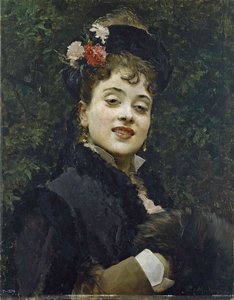
Ein Vermächtnis der Eleganz: Das Leben und die Kunst von Raimundo de Madrazo
Raimundo de Madrazo y Garreta, geboren 1841 in Rom, trat in eine Welt ein, die bereits tief in künstlerischen Traditionen verwurzelt war. Seine Abstammung war von beträchtlichem Prestige geprägt; sein Großvater, José de Madrazo, bekleidete das angesehene Amt des Direktors des Museo del Prado, während sein Vater, Federico de Madrazo, selbst ein gefeierter Porträtist war. Dieses familiäre Fundament bedeutete weit mehr als nur ein Erbe – es vermittelte dem jungen Raimundo nicht nur technische Meisterschaft, sondern auch ein tiefes Verständnis für die Macht und das soziale Ansehen, die mit der künstlerischen Schöpfung verbunden sind. Seine frühe Ausbildung entfaltete sich im intimen Rahmen der Ateliers seiner Familie, wo er die Prinzipien klassischer Techniken von Vater und Großvanc lernte. Formale Studien an der Real Academia de Bellas Artes de San Fernando in Madrid, unter Carlos Luis de Ribera und Carlos de Haes, verfeinerten seine Fähigkeiten weiter und setzten ihn zeitgenössischen künstlerischen Strömungen aus. Doch es war ein entscheidender Aufenthalt in Paris im Jahr 1860, der seine Laufbahn wahrhaft transformierte. Das Studium bei Léon Cogniet und das Knüpfen von Kontakten in der Pariser Kunstwelt sollten seine ästhetische Sensibilität für Jahrzehnte prägen. Der Einfluss von Alfred Stevens während dieser Zeit erwies sich als besonders bedeutsam, da er seinen Ansatz subtil hin zu einer raffinierteren und dekorativeren Sensibilität verschob – eine Abkehr vom strengen Akademismus hin zu einem Stil, der von Anmut und Verführungskraft durchdrungen war.Realismus durchdrungen von Raffinesse: Künstlerischer Stil und Einflüsse
Madrazos künstlerischer Stil ist fundamental im Realismus verwurzelt, doch er transzendiert die bloße Nachahmung durch eine Infusion von Eleganz und Raffinesse. Obwohl er der präzisen Darstellung verpflichtet blieb, besitzen seine Gemälde eine zarte Anmut, die sie von den strengeren Strömungen der Bewegung unterscheidet. Diese Verfeinerung entwickelte sich im Laufe der Zeit und integrierte subtil Elemente, die an das Rokoko erinnerten – eine Vorliebe für ornamentale Details und spielerische Kompositionen – sowie den *Japonismus*, die aufstrebende westliche Faszination für die japanische Kunst, insbesondere in ihrer Betonung flacher Perspektiven und dekorativer Muster. Er wurde berühmt für seine Porträts, mit denen er nicht nur die physische Ähnlichkeit, sondern auch das innere Wesen seiner Motive mit bemerkenswerter Geschicklichkeit einfing. Der Einfluss von Mariano Fortuny ist in Madrazos kleineren *Tableautin*-Szenen spürbar – intime Einblickt in das bürgerliche Leben – sowie in seiner Fähigkeit, eine Welt luxuriöser Texturen und subtiler Emotionen darzustellen. Die akademische Strenge Cogniets, kombiniert mit Stevens’ dekorativem Flair, schuf das Fundament für Madrazos einzigartige künstlerische Stimme. Er hielt die Realität nicht einfach nur fest; er erschuf eine idealisierte Vision von ihr, die den Geschmack einer anspruchsvollen Klientel ansprach, welche Schönheit und Kultiviertheit in der Kunst suchte. Diese Fähigkeit, Realismus mit einem Hauch von Fantasie zu verbinden, ermöglichte es ihm, Werke zu schaffen, die sowohl fesselnd als auch sehnsuchtsweckend waren.Porträts einer Ära: Hauptwerke und Themen
Madrazos Œuvre ist erfüllt von fesselnden Porträts und Genreszenen, die ein Fenster zur sozialen Welt des späten 19. Jahrhunderts öffnen. Sein *Porträt seines malenden Vaters* steht als Zeugnis sowohl der väterlichen Zuneigung als auch des künstlerischen Könnens; es zeigt nicht nur eine Ähnlichkeit, sondern den Akt des Erschaffens selbst – ein Maler, der einen Maler darstellt, ein Meta-Kommentar auf den künstlerischen Prozess. Werke wie *Schöne Erinnerungen* demonstrieren sein Talent, Nostalgie zu wecken und intime Momente mit bewegender Sensibilität einzufangen. Doch es waren seine Genrebilder, oft mit Aline Masson als Modell, die ihm weltweiten Ruhm einbrachten. *Die widerwillige Geliebte*, *Nach dem Bad* und das *Porträt der Aline Masson in einer Mantilla* sind Paradebeispiele – sinnliche, akribisch ausgearbeitete Szenen, die weibliche Schönheit und Anmut feiern. Die Präsenz von Aline Masson ist zentral für das Verständnis von Madrazos künstlerischem Schaffen; sie diente ihm viele Jahre lang als Muse und verkörperte das Ideal raffinierter Eleganz, das seine Gemälde durchdrang. Diese Werke waren nicht bloß Darstellungen der modischen Gesellschaft; sie waren sorgfältig konstruierte Fantasien, geschaffen, um eine Klientel anzusprechen, die danach strebte, Bilder von Schönheit und Luxus zu besitzen. Das wiederkehrende Motiv weiblicher Verführung, oft gehüllt in eine Atmosphäre sanfter Mystik, wurde zum Markenzeichen seines Stils.Internationale Anerkennung und bleibende Wirkung
Raimundo de Madrazos Karriere entfaltete sich auf einer internationalen Bühne. Seine Debütausstellung in Paris im Jahr 1860 markierte den Beginn seiner beruflichen Reise, gefolgt von häufigen Reisen nach New York, wo er einen treuen Kundenstamm unter prominenten Familien wie den Vanderbilts und Alexander Turney Stewart gewann. Trotz dieses Erfolges im Ausland blieb er hinsichtlich der Ausstellungen in Spanien relativ zurückhaltend. Ein Zeugnis seines Engagements für den künstlerischen Austausch war die Mitbegründung einer „Internationalen Gemäldeausstellung“ in Paris im Jahr 1882, gemeinsam mit Alfred Stevens, de Nittis und Petit – eine Initiative zur Förderung ausländischer Künstler. Er stellte regelmäßig im prestigeträchtigen Pariser Salon aus und erhielt 1889 eine bedeutende Medaille auf der Exposition Universelle, was seinen Ruf als führender Künstler seiner Zeit festigte. Über seine künstlerischen Leistungen hinaus bewies Madrazo sein Engagement für die kulturelle Bewahrung durch seine großzügige Schenkung von Werken Francisco de Goyas an das Museo del Prado im Jahr 1894 und seine Mitgliedschaft in der Royal Academy of London. Raimundo de Madrazo verstarb 1920 und hinterließ ein Vermächtnis als einer der bedeutendsten realistischen Maler Spaniens – ein Meisterporträtist, der den Geist einer Ära mit Eleganz, Geschick und zeitloser Anziehungskraft einfing. Sein Werk findet auch heute noch Resonanz und bietet einen Einblick in die opulente Welt des Gilded Age und die künstlerischen Empfindungen, die sie prägten. Sein Sohn, Federico de Madrazo y Ochoa („Coco“), führte die Familientradition fort und stellte sicher, dass der Name Madrazo über Generationen hinweg ein Synonym für künstlerische Exzellenz blieb. Madrazos Gemälde bleiben ein Zeugnis seiner Fähigkeit, akademische Traditionen mit aufkommenden modernen Stilen zu verbinden und hinterließen einen unauslöschlichen Eindruck in der spanischen Kunst des 19. Jahrhunderts.Fragen & Antworten
Welche Stimmungen drücken die Kunstwerke von Raimundo de Madrazo y Garreta aus?
Die Werke von Raimundo de Madrazo y Garreta können auf der Stimmungswelten-Seite des Künstlers nach Stimmung durchstöbert werden, auf der die Kunstwerke nach ihrer jeweiligen Stimmung sortiert sind.
Wie hat sich die Kunst von Raimundo de Madrazo y Garreta im Laufe der Zeit entwickelt?
Die Werdegang von Raimundo de Madrazo y Garreta ist eine scrollbare Zeitachse, die die Werke des Künstlers in chronologischer Reihenfolge präsentiert, unterteilt in Kapitel nach Schaffensperioden.
Kann ich die Werke von Raimundo de Madrazo y Garreta nach Farben sortiert entdecken?
Auf der Seite Farbindex sind die Kunstwerke von Raimundo de Madrazo y Garreta nach Farben sortiert.