Ein entfaltetes Leben: Die botanische Brillanz der Maria Sibylla Merian
Maria Sibylla Merian, geboren 1647 in Frankfurt, war eine Persönlichkeit, die ihrer Zeit weit voraus war – eine Naturforscherin, wissenschaftliche Illustratorin und Künstlerin, deren Hingabe zur akribischen Beobachtung unser Verständnis der Insektenwelt grundlegend transformierte. Ihre Geschichte ist nicht bloß eine Erzähling von künstlerischem Talent; sie ist ein Zeugnis unerschütterlicher Neugier, mutiger Erkundung und einer tiefen Verbundenheit mit der natürlichen Welt, die den Konventionen der Gesellschaft des 17. und frühen 18. Jahrhunderts trotzte. Aufgewachsen inmitten des geschäftigen Handels und der intellektuellen Strömungen Frankfurts, fand Merians erste Begegnung mit der Kunst durch ihre Familie. Ihr Vater, Matthäus Merian der Ältere, war ein renommierter Kupferstecher und Verleger, der ihr ein Fundament in der visuellen Darstellung vermittelte. Doch es war ihr Stiefvater, Jacob Marrel, ein geschickter Stilllebenmaler, der ihre künstlerischen Neigungen aktiv förderte und ihre Fähigkeiten im Zeichnen und Malen von klein auf stärkte. Diese frühe Förderung beschränkte sich nicht nur auf die Technik; Merian entwickelte eine intensive Faszination für Insekten, die sie akribisch sammelte und studierte – ein Streben, das für eine Frau jener Ära als ungewöhnlich, wenn nicht gar exzentrisch galt. Schon als Kind stellte sie nicht einfach nur Schmetterlinge und Raupen dar; sie suchte nach dem Verständnis ihrer vollständigen Lebenszyklen – ein revolutionärer Ansatz in einer Zeit, in der die vorherrschende Lehre der spontanen Generation folgte – der Vorstellung, dass Insekten einfach aus Schlamm oder verrottendem Material hervorgingen.Von europäischen Gärten zu den Regenwäldern Surinams
Merians künstlerische Karriere entfaltete sich parallel zu ihren wissenschaftlichen Untersuchungen. Sie erhielt eine formale Ausbildung bei Marrel und dessen Schüler Abraham Mignon, wodurch sie ihre Fähigkeiten verfeinerte, botanische Details mit exquisiter Präzision wiederzugeben. Ihre frühen Werke konzentrierten sich auf die Flora Europas und gipfelten in Publikationen wie dem Neues Blumenbuch, das ihr Talent für die florale Illustration unter Beweis stellte. Doch es war ihre bahnbrechende Arbeit über die Metamorphose von Insekten, die sie wahrhaft heraushob. Veröffentlicht in den Jahren 1679 und 1683, dokumentierte Der Raupen wunderbare Verwandelung und sonderbare Blumennahrung die Lebenszyklen europäischer Insekten mit einer nie dagewesenen Genauigkeit. Jede Tafel war nicht nur ein schönes Bild; sie war ein sorgfältig erforschtes Protokoll der Entwicklung eines Insekts, seiner Wirtspflanze und seiner Interaktionen innerhalb seiner Umwelt. Doch Merian hegte eine tiefere Ambition: Insekten in ihrem natürlichen Lebensraum zu studieren, frei von den Einschränkungen europäblichen Gartens. Dies führte zu einem außergewöhnlichen Unterfangen – einer selbst finanzierten Expedition nach Niederländisch-Guayana (dem heutigen Suriname) im Jahr 1699, begleitet von ihrer Tochter Dorothea. Zwei Jahre lang tauchte sie in die Regenwälder ein und dokumentierte die exotischen Insekten, Pflanzen und Tiere mit unerschütterlicher Hingabe, trotz harter Bedingungen und erheblicher persönlicher Risiken.Metamorphosis Surinamensis: Ein Vermächtnis der Beobachtung
Der Höhepunkt von Merians Südamerikareise war Metamorphosis Insectorum Surinamensium (1705), ein monumentales Werk, das ihr Erbe als wegweisende Naturforscherin und Illustratorin festigte. Diese zweibändige Publikation präsentierte detaillierte Darstellungen der Insekten Surinams, ihrer Lebenszyklen und ihrer Beziehungen zur umgebenden Flora. Im Gegensatz zu früheren naturhistorischen Illustrationen, die sich oft auf isolierte Exemplare konzentrierten, zeigten Merians Tafeln Insekten in Interaktion mit ihren Wirtspflanzen und demonstrierten so ein ganzheitliches Verständnis ökologischer Zusammenhänge. Ihre Illustrationen waren nicht bloß wissenschaftliche Aufzeichnungen; sie waren lebendige Kunstwerke, durchdrungen von einem Gefühl des Staunens und der Wertschätzung für die Schönheit der natürlichen Welt. Das Werk war nicht nur wegen seiner künstlerischen Qualität revolutionär, sondern auch wegen seiner wissenschaftlichen Genauigkeit. Merian stellte bestehende Überzeugungen über das Verhalten und die Entwicklung von Insekten infrage und lieferte überzeugende Beweise gegen die spontane Generation. Sie dokumentierte akribisch zuvor unbekannte Arten und trug so maßgeblich zum Feld der Entomologie bei. Metamorphosis Insectorum Surinamensium wurde zu einer Meilenstein-Publikation, die Generationen von naturkundlichen Illustratoren und Wissenschaftlern beeinflusste.Ein bleibender Einfluss auf Kunst und Wissenschaft
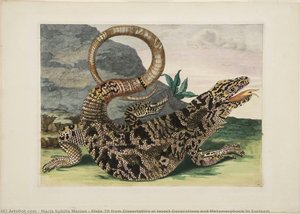
Maria Sibylla Merians Einfluss reicht weit über den Bereich der naturhistorischen Illustration hinaus. Ihr Werk schlug eine Brücke zwischen Kunst und Wissenschaft und bewies, dass akribische Beobachtung und künstlerisches Geschick mächtige Werkzeuge für wissenschaftliche Entdeckungen sein können. Sie forderte gesellschaftliche Normen heraus, indem sie ihre Leidenschaft für die Naturgeschichte mit unerschütterlicher Entschlossenheit verfolgte und so den Weg für zukünftige Wissenschaftlerinnen und Künstlerinnen ebnete. David Attenborough hat Merian zu Recht als eine zentrale Figur der Entomologie anerkannt und ihren bahnbrechenden Beitrag zu unserem Verständnis der Lebenszyklen von Insekten gewürdigt. Ihr Vermächtnis inspiriert bis heute Künstler, Wissenschaftler und Naturliebhaber gleichermaßen. Heute sind ihre Originalillustrationen hochgeschätzte Besitztümer von Museen und Privatsammlern weltweit. Reproduktionen ihres Werkes – wie die „Tafel 70 aus der Dissertation über Insektengenerationen und Metamorphose in Surinam“ oder die exquisite Detailtreue in „Erucarum Ortus, Alimentum Et Paradoxa Metamorphosis“ – erlauben es uns, ihr künstlerisches Können und ihre wissenschaftliche Einsicht zu bewundern. Das Leben von Maria Sibylla Merian war ein Zeugnis für die Kraft der Neugier, der Beobachtung und einer tiefen Ehrfurcht vor der natürlichen Welt – ein Vermächtnis, das Jahrhunderte nach ihrem Tod noch immer nachhallt.- Wichtige Beiträge: Veröffentlichung ihres ersten Buches mit Naturillustrationen im Jahr 1675; Dokumentation von Beweisen zum Prozess der Metamorphose und den Wirtspflanzen von 186 europäischen Insektenarten; Reise nach Niederländisch-Guayana im Jahr 1699 zur Untersuchung tropischer Insekten; Veröffentlichung von Metamorphosis Insectorum Surinamensium im Jahr 1705.
- Bemerkenswerte Werke: Metamorphosis Insectorum Surinamensium (1705), Erucarum Ortus, Alimentum Et Paradoxa Metamorphosis, „Fenchel“ und „Tafel 70 aus der Dissertation über Insektengenerationen und Metamorphose in Surinam“.
- Einflüsse: Ihr Stiefvater Jacob Marrel, ein Stilllebenmaler; die wissenschaftliche Neugier ihrer Ära.
Fragen & Antworten
Woher kommt Maria Sybilla Merian?
Maria Sybilla Merian wurde in Deutschland geboren.
Wie finde ich Werke von Maria Sybilla Merian nach einer bestimmten Farbpalette sortiert?
Auf der Nach Farbpaletten-Seite von Maria Sybilla Merian können die Werke nach Farbpaletten durchsucht werden.
Wo kann ich alle Kunstwerke von Maria Sybilla Merian entdecken?
Alle Werke von Maria Sybilla Merian auf diese Webseite können auf der Alle Kunstwerke-Seite des Künstlers durchstöbert werden.