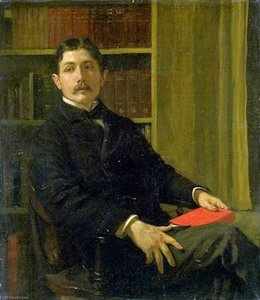
Porträt von Kenyon Cox

Die 71 berühmtesten Gemälde von Kenyon Cox, jedes ein Unikat

Aktualisiert im November 2026 · sortiert nach unserem Popularitätsindex (Suchanfragen, Aufrufe und Bestellungen für jedes Werk) · 76 Werke von Kenyon Cox in unserem Katalog

Kurz gesagt

Der Fortschritt der Zivilisation: Die Schmiede, der Handel und die Bildung (Wandmalerei-Studie, State Capitol, Des Moines, Iowa) (1906) ist das von Kenyon Cox geschaffene Gemälde, das die meiste Aufmerksamkeit auf sich zieht; das Original befindet sich im Smithsonian American Art Museum, Washington, D.C.. Danach wandert der Blick zu Landscape at Grez (1879) und Henry L. Fry (1883). Von den 76 Werken von Kenyon Cox in unserem Katalog sind diese 71 die bekanntesten – jedes ein einzigartiges Original, präsentiert mit seinem Entstehungsjahr, dem Museum und dem Grund für seine zeitlose Bedeutung.

1856 – 1919, Warren Classical realism Meiste Werke: Smithsonian American Art Museum

Die 10 besten Gemälde von Kenyon Cox, aus der Sicht der Galerie

1
Der Fortschritt der Zivilisation: Die Schmiede, der Handel und die Bildung (Wandmalerei-Studie, State Capitol, Des Moines, Iowa) (1906) von Kenyon Cox

Der Fortschritt der Zivilisation: Die Schmiede, der Handel und die Bildung (Wandmalerei-Studie, State Capitol, Des Moines, Iowa)

1906 · Öl auf Leinwand · Smithsonian American Art Museum, Washington, D.C.

Der Fortschritt der Zivilisation: Die Schmiede, der Handel und die Bildung (Wandmalerei-Studie, State Capitol, Des Moines, Iowa) ist ein Ölgemälde auf Leinwand von Kenyon Cox. Dieses um 1905–1906 entstandene Werk dient als vorbereitende Studie für ein größeres Wandgemälde, das für das State Capitol in Des Moines, Iowa, vorgesehen war. Der Künstler, Kenyon Cox, suchte danach, die Dynamik des menschlichen Fortschritts durch diese spezifischen, segmentierten Szenen einzufangen.

2
Landscape at Grez (1879) von Kenyon Cox

Landscape at Grez

1879 · Black and White Photography · Cincinnati Art Museum, Cincinnati

In Landscape at Grez, Kenyon Cox organizes a formal indoor setting through a centered composition. The subject, a man seated in a decorative wooden chair, is positioned slightly to the right of the vertical axis. This slight offset breaks the symmetry of the room, providing a sense of depth against the structured background. The perspective is a straight-on eye-level shot, placing the viewer directly in front of the subject within…

3
Henry L. Fry (1883) von Kenyon Cox

Henry L. Fry

1883 · Oil On Canvas · Cincinnati Art Museum, Cincinnati

This oil on canvas portrait by Kenyon Cox depicts Henry L. Fry. Created in 1883, the work presents the subject in a full-length view. The man is positioned slightly off-center against a background of draped fabric. He is shown with a white beard and wears a dark overcoat. The composition is vertical, focusing on the single figure within the frame.

4
The Approach of Love (1890) von Kenyon Cox

The Approach of Love

1890 · Oil · Cincinnati Art Museum, Cincinnati

In "The Approach of Love" by Kenyon Cox, the horizontal plane is anchored by a massive, curved marble bench. This white sarcophagus occupies the center of the scene, acting as a heavy, pale foundation for the figures. On the left, a nude woman with long reddish-brown hair reclines against the stone. A voluminous, golden-yellow fabric spills over the edge of the marble, its bright weight contrasting against the cool, white…

5
Diana (1890) von Kenyon Cox

Diana

1890 · Oil On Canvas · Chazen Museum of Art, Madison

In "Diana" by Kenyon Cox, the Roman goddess Artemis emerges from the shadows of a lush, wooded landscape. Created about 1890, the work places the deity at the center of a quiet, natural world. She is rendered as a full-length nude figure, her form poised against the deep greens and browns of the surrounding foliage. The goddess occupies the heart of the scene, a singular presence amidst the organic textures…

6
The Harp Player (A Solo) (1888) von Kenyon Cox

The Harp Player (A Solo)

1888 · Oil On Canvas · Metropolitan Museum of Art, New York

The Harp Player (A Solo) is an oil painting by the American artist Kenyon Cox. Created about 1888, the work emerged during a period when Cox was establishing his reputation within the academic traditions of the late 19th century. His practice emphasized careful drawing and a commitment to classical ideals, often focusing on genre studies and idealized forms.

7
The Fall (1892) von Kenyon Cox

The Fall

1892 · Oil On Canvas

In this 1892 oil painting, Kenyon Cox captures a moment of profound transition within a lush, wooded landscape. The work, titled The Fall, presents the biblical narrative of Adam and Eve at the precise instant of their temptation. A serpent coils around the trunk of a tree, embodying the presence of evil, while Eve reaches out to offer the fruit to Adam. This central action transforms the garden into a…

8
Head of the Queen of Egypt (1888) von Kenyon Cox

Head of the Queen of Egypt

1888 · Oil · Smithsonian American Art Museum, Washington, D.C.

In this work, titled Head of the Queen of Egypt, the artist Kenyon Cox presents a focused study of a historical figure. The painting depicts the head of Nefertiti, the Egyptian queen who belonged to the Eighteenth Dynasty. It is a quiet, measured representation that captures the likeness of the sculpted bust rather than a living person.

9
Bird Song (1896) von Kenyon Cox

Bird Song

1896 · Oil

In "Bird Song" by Kenyon Cox, a seated female figure occupies the center of the frame. She is positioned vertically, a steady pillar of quietude amidst a soft-focus world. Her white chemise-style top is patterned with small green leaf motifs, a delicate detail against the pale fabric. Below, a heavy, draped skirt of greyish-purple pools around her feet in thick, weighted folds. She holds a long, slender wooden flute in…

10
Christ (1905) von Kenyon Cox

Christ

1905 · Oil On Canvas · Cleveland Museum of Art, Cleveland

In the painting Christ by Kenyon Cox, the composition is centered and symmetrical. The subject is presented in a full-length view, standing as a single male figure against a landscape background. This figure is depicted with long brown hair and a beard. He wears voluminous, flowing red robes that drape heavily around the body. His arms are slightly extended to his sides, with the palms facing upward in a gesture…

Berühmte Gemälde von Kenyon Cox, Nummer 11 bis 71

11(Iowa State Capitol Rotunda) (Manufactures, study for panel) (1905) von Kenyon Cox(Iowa State Capitol Rotunda) (Manufactures, study for panel)1905 12(Iowa State Capitol Rotunda) (Manufactures, study for panel) (1905) von Kenyon Cox(Iowa State Capitol Rotunda) (Manufactures, study for panel)1905 · Smithsonian American Art Museum 13Maxfield Parrish (1905) von Kenyon CoxMaxfield Parrish1905 14Tradition (1916) von Kenyon CoxTradition1916 · Cleveland Museum of Art 15The Education of Cupid (1917) von Kenyon CoxThe Education of Cupid1917 16Sketch for the Mural at Oberlin College, The Spirit of Self Sacrificing Love (1914) von Kenyon CoxSketch for the Mural at Oberlin College, The Spirit of Self Sacrificing Love1914 · Smithsonian American Art Museum 17Augustus Saint-Gaudens (1908) von Kenyon CoxAugustus Saint-Gaudens1908 · Metropolitan Museum of Art 18(Study for Labor ) (1870) von Kenyon Cox(Study for Labor )1870 19Study for Mosaic, Wisconsin State Capitol, (1912) von Kenyon CoxStudy for Mosaic, Wisconsin State Capitol,1912 · Oklahoma City Museum of Art 20(Untitled) (Greco Roman Discus Thrower) (1873) von Kenyon Cox(Untitled) (Greco Roman Discus Thrower)1873 21(Untitled) (Study of Standing Male Nude) (1876) von Kenyon Cox(Untitled) (Study of Standing Male Nude)1876 22(Untitled) (Studies of Male Nudes) (1876) von Kenyon Cox(Untitled) (Studies of Male Nudes)1876 23Flying Shadows (1883) von Kenyon CoxFlying Shadows1883 24Landscape (1883) von Kenyon CoxLandscape1883 · Metropolitan Museum of Art 25Flying Shadows (1883) von Kenyon CoxFlying Shadows1883 · National Gallery of Art 26A Lady in Black (1880) von Kenyon CoxA Lady in Black1880 · Smithsonian American Art Museum 27Study for Evening (1883) von Kenyon CoxStudy for Evening1883 · Smithsonian American Art Museum 28After Titian's Madonna of the Rabbit (1882) von Kenyon CoxAfter Titian's Madonna of the Rabbit1882 · Smithsonian American Art Museum 29After Boltraffio, Sacra Conversazione (1882) von Kenyon CoxAfter Boltraffio, Sacra Conversazione1882 · Smithsonian American Art Museum 30May (1890) von Kenyon CoxMay1890 31Indian Summer (1887) von Kenyon CoxIndian Summer1887 · Smithsonian American Art Museum 32Louise Howland King (Mrs. Kenyon Cox) (1892) von Kenyon CoxLouise Howland King (Mrs. Kenyon Cox)1892 · Smithsonian American Art Museum 33Study for Drapery of Pursuit of the Ideal (1891) von Kenyon CoxStudy for Drapery of Pursuit of the Ideal1891 · Smithsonian American Art Museum 34Echo (1892) von Kenyon CoxEcho1892 · Smithsonian American Art Museum 35An Eclogue (1890) von Kenyon CoxAn Eclogue1890 · Smithsonian American Art Museum 36Sketches for a Decoration of a Private Library B (1894) von Kenyon CoxSketches for a Decoration of a Private Library B1894 · Smithsonian American Art Museum 37Sketches for the Decoration of a Private Library A (1894) von Kenyon CoxSketches for the Decoration of a Private Library A1894 · Smithsonian American Art Museum 38Portrait of Mr. Wiley (1894) von Kenyon CoxPortrait of Mr. Wiley1894 39Study for Science Instructing Industry (1898) von Kenyon CoxStudy for Science Instructing Industry1898 · Smithsonian American Art Museum 40(Iowa State Capitol Rotunda) (Hunting, study for panel) (1905) von Kenyon Cox(Iowa State Capitol Rotunda) (Hunting, study for panel)1905 41Hope and memory (1900) von Kenyon CoxHope and memory1900 42Study for Mural at Hotel Manhattan, Peace and Plenty (1901) von Kenyon CoxStudy for Mural at Hotel Manhattan, Peace and Plenty1901 · Smithsonian American Art Museum 43Untitled, Portrait of a Young Girl (1900) von Kenyon CoxUntitled, Portrait of a Young Girl1900 44Study for mural, Union Trust Company Building, The Sources of Wealth (1903) von Kenyon CoxStudy for mural, Union Trust Company Building, The Sources of Wealth1903 · Smithsonian American Art Museum 45(Iowa State Capitol Rotunda) (study for Six Lunettes) (1905) von Kenyon Cox(Iowa State Capitol Rotunda) (study for Six Lunettes)1905 46Study for Christ (1905) von Kenyon CoxStudy for Christ1905 · Smithsonian American Art Museum 47Study for Mural for Appellate Court Building, New York Statute Law , Helmet for Figure of Force (1899) von Kenyon CoxStudy for Mural for Appellate Court Building, New York Statute Law , Helmet for Figure of Force1899 · Smithsonian American Art Museum 48Approach of Love von Kenyon CoxApproach of LoveCincinnati Art Museum 49Augustus Saint Gaudens (1908) von Kenyon CoxAugustus Saint Gaudens1908 50Plenty (1910) von Kenyon CoxPlenty1910 · Smithsonian American Art Museum 51The Silver Hand Glass (1907) von Kenyon CoxThe Silver Hand Glass1907 · Smithsonian American Art Museum 52The Progress of Civilization Science and Art (mural study, State Capitol, Des Moines, Iowa) (1906) von Kenyon CoxThe Progress of Civilization Science and Art (mural study, State Capitol, Des Moines, Iowa)1906 · Smithsonian American Art Museum 53The Progress of Civilization Hunting, Herding, Agriculture (mural study, State Capitol, Des Moines, Iowa) (1906) von Kenyon CoxThe Progress of Civilization Hunting, Herding, Agriculture (mural study, State Capitol, Des Moines, Iowa)1906 · Smithsonian American Art Museum 54Study for Mural at U.S. Custom House, Cleveland, OH, Passing Commerce Pays Tribute to the Port of Cleveland (1909) von Kenyon CoxStudy for Mural at U.S. Custom House, Cleveland, OH, Passing Commerce Pays Tribute to the Port of Cleveland1909 · Smithsonian American Art Museum 55Study for Mosaic, Wisconsin State Capital, Legislation (1913) von Kenyon CoxStudy for Mosaic, Wisconsin State Capital, Legislation1913 · Smithsonian American Art Museum 56Book of Pictures (1917) von Kenyon CoxBook of Pictures1917 · Smithsonian American Art Museum 57Study for Mosaic, Wisconsin State Capital, Justice (1913) von Kenyon CoxStudy for Mosaic, Wisconsin State Capital, Justice1913 · Smithsonian American Art Museum 58Study for mosaic in the Wisconsin State Capital Government and Liberty (1912) von Kenyon CoxStudy for mosaic in the Wisconsin State Capital Government and Liberty1912 · Smithsonian American Art Museum 59Sketch for Mosaic, Wisconsin State Capital, Justice (1912) von Kenyon CoxSketch for Mosaic, Wisconsin State Capital, Justice1912 · Smithsonian American Art Museum 60Nude Study for Mosaic, Wisconsin State Capitol, (1912) von Kenyon CoxNude Study for Mosaic, Wisconsin State Capitol,1912 · Oklahoma City Museum of Art 61Nude Study for Mosaic, Wisconsin State Capitol, (1912) von Kenyon CoxNude Study for Mosaic, Wisconsin State Capitol,1912 · Oklahoma City Museum of Art 62Nude Study for Mosaic, Wisconsin State Capitol, (1912) von Kenyon CoxNude Study for Mosaic, Wisconsin State Capitol,1912 · Oklahoma City Museum of Art 63Nude Study for Mosaic, Wisconsin State Capitol, (1912) von Kenyon CoxNude Study for Mosaic, Wisconsin State Capitol,1912 · Oklahoma City Museum of Art 64Study for Mosaic, Wisconsin State Capitol, (1912) von Kenyon CoxStudy for Mosaic, Wisconsin State Capitol,1912 · Oklahoma City Museum of Art 65Study for Mosaic, Wisconsin State Capitol, (1912) von Kenyon CoxStudy for Mosaic, Wisconsin State Capitol,1912 · Oklahoma City Museum of Art 66Nude Study for Mosaic, Wisconsin State Capitol, (1912) von Kenyon CoxNude Study for Mosaic, Wisconsin State Capitol,1912 · Oklahoma City Museum of Art 67Fields (1885) von Kenyon CoxFields1885 68Study for Mosaic, Wisconsin State Capitol, (1912) von Kenyon CoxStudy for Mosaic, Wisconsin State Capitol,1912 · Oklahoma City Museum of Art 69Nude Study for Mosaic, Wisconsin State Capitol, (1912) von Kenyon CoxNude Study for Mosaic, Wisconsin State Capitol,1912 · Oklahoma City Museum of Art 70Cartoon for mural of Minnesota State Capital, Institute of Justice von Kenyon CoxCartoon for mural of Minnesota State Capital, Institute of JusticeSmithsonian American Art Museum 71Lengthening Shadows (1888) von Kenyon CoxLengthening Shadows1888 · Smithsonian American Art Museum

Die Motive, die Kenyon Cox faszinierten

Die vier Motive, die in diesen Originalen am häufigsten vorkommen, jeweils mit ihrem herausragendsten Beispiel.

Die Museen, die die Originale von Kenyon Cox beherbergen

Die 7 Museen, in denen sich die meisten der auf dieser Seite aufgeführten Gemälde befinden.

Museum Stadt Werke von Kenyon Cox Gemälde aus dieser Liste
Smithsonian American Art Museum, Washington, D.C.Smithsonian American Art Museum Washington, D.C. 32 Der Fortschritt der Zivilisation: Die Schmiede, der Handel und die Bildung (Wandmalerei-Studie, State Capitol, Des Moines, Iowa), Head of the Queen of Egypt, (Iowa State Capitol Rotunda) (Manufactures, study for panel)
Oklahoma City Museum of Art, Oklahoma CityOklahoma City Museum of Art Oklahoma City 10 Study for Mosaic, Wisconsin State Capitol,, Nude Study for Mosaic, Wisconsin State Capitol,, Nude Study for Mosaic, Wisconsin State Capitol,
Cincinnati Art Museum, CincinnatiCincinnati Art Museum Cincinnati 4 Landscape at Grez, Henry L. Fry, The Approach of Love
Metropolitan Museum of Art, New YorkMetropolitan Museum of Art New York 3 The Harp Player (A Solo), Augustus Saint-Gaudens, Landscape
Cleveland Museum of Art, ClevelandCleveland Museum of Art Cleveland 2 Christ, Tradition
Chazen Museum of Art, MadisonChazen Museum of Art Madison 1 Diana
National Gallery of Art, WashingtonNational Gallery of Art Washington 1 Flying Shadows

Kenyon Cox über die Jahrzehnte hinweg: ein einzigartiges Original für jedes

Werke nach Jahrzehnten

Wählen Sie ein Jahrzehnt aus, um das Original zu sehen, das es definiert.

Gemälde von Kenyon Cox: Fragen an die Galerie

Was ist das bekannteste Werk von Kenyon Cox?Die Antwort enthüllen

Der Fortschritt der Zivilisation: Die Schmiede, der Handel und die Bildung (Wandmalerei-Studie, State Capitol, Des Moines, Iowa) (1906), Smithsonian American Art Museum, Washington, D.C.. Als Nächstes folgen Landscape at Grez (1879) und Henry L. Fry (1883).

In welchem Alter hat Kenyon Cox Der Fortschritt der Zivilisation: Die Schmiede, der Handel und die Bildung (Wandmalerei-Studie, State Capitol, Des Moines, Iowa) geschaffen?Die Antwort enthüllen

50 Jahre alt: Der Fortschritt der Zivilisation: Die Schmiede, der Handel und die Bildung (Wandmalerei-Studie, State Capitol, Des Moines, Iowa) stammt aus dem Jahr 1906, und Kenyon Cox wurde in 1856 geboren.

Welche zehn Gemälde von Kenyon Cox sind die bekanntesten?Die Antwort enthüllen

Der Fortschritt der Zivilisation: Die Schmiede, der Handel und die Bildung (Wandmalerei-Studie, State Capitol, Des Moines, Iowa), Landscape at Grez, Henry L. Fry, The Approach of Love, Diana, The Harp Player (A Solo), The Fall, Head of the Queen of Egypt, Bird Song und Christ. Die obige Rangliste gibt das jeweilige Jahr und das Museum an.

Wie viele Werke von Kenyon Cox sind bekannt?Die Antwort enthüllen

Unser Katalog umfasst 76 Werke von Kenyon Cox, datiert von 1870 bis 1917.

Wo kann man die berühmtesten Originale von Kenyon Cox sehen?Die Antwort enthüllen

Meistens in Smithsonian American Art Museum (Washington, D.C.), Oklahoma City Museum of Art (Oklahoma City) und Cincinnati Art Museum (Cincinnati). Die obige Museumstabelle listet alle auf.

In welcher Zeitspanne schuf Kenyon Cox seine bekanntesten Gemälde?Die Antwort enthüllen

In 1910s: 19 der 71 Werke auf dieser Seite wurden damals geschaffen, darunter Tradition.

Welches berühmte Gemälde von Kenyon Cox ist das früheste und welches das jüngste?Die Antwort enthüllen

Auf dieser Seite ist das früheste Werk aus (Study for Labor ) (1870) und das neueste aus The Education of Cupid (1917).

Welche Motive bevorzugte Kenyon Cox?Die Antwort enthüllen

Woman (8), Pencil sketch (5) und Man (4), verteilt auf die 71 Werke auf dieser Seite.

Mit welchen Materialien hat Kenyon Cox am häufigsten gemalt?Die Antwort enthüllen

Oil On Canvas, für 9 von insgesamt 71 Werken auf dieser Seite.

Welcher Stilrichtung gehört das Werk von Kenyon Cox an?Die Antwort enthüllen

Classical realism, wenn man die Originale auf dieser Seite beurteilt.

Welche Originale von Kenyon Cox kann ich im Smithsonian American Art Museum sehen?Die Antwort enthüllen

Der Fortschritt der Zivilisation: Die Schmiede, der Handel und die Bildung (Wandmalerei-Studie, State Capitol, Des Moines, Iowa), Head of the Queen of Egypt und (Iowa State Capitol Rotunda) (Manufactures, study for panel): Das Smithsonian American Art Museum, Washington, D.C. beherbergt 32 der Werke auf dieser Seite.

Kenyon Cox: ein Porträt des Künstlers

Kenyon Cox: Leben und Vermächtnis

Kenyon Cox (1856–1919) war ein amerikanischer Maler und Kunstkritiker, der für seine Wandmalereien und dekorative Arbeit bekannt ist. Er wurde in Warren, Ohio geboren und studierte zunächst an der Kunstakademie Cincinnati, bevor er sich später für ein Studium an der Pennsylvania Academy of Fine Arts entschied. Seine künstlerische Reise führte ihn nach Paris, wo er eine bedeutende Rolle im amerikanischen Kunstleben spielte und einen tiefgreifenden Einfluss auf die Entwicklung des amerikanischen Klassizismus hatte.

Frühes Leben und Ausbildung

Coxs frühe Jahre waren geprägt von einem starken Interesse an Kunst und einer frühen Erkennung der Bedeutung eines umfassenden künstlerischen Bildungsprogramms. Nach seinem Besuch der Weltausstellung in Philadelphia entwickelte er eine besondere Vorliebe für die französische Kunstszene und ihre Traditionen, insbesondere für die École des Beaux-Arts und ihre führenden Künstler wie Carolus Duran und Jean-Léon Gérôme. Diese Begegnungen mit klassischen Meisterwerken prägten seine künstlerische Vision nachhaltig und inspirierten ihn zu einem Leben langem Engagement für die Förderung traditioneller Werte in der Kunst.

Pariser Ausbildung und Einflüsse

Cox zog im Jahr 1877 nach Paris, wo er sich einer großen Welle amerikanischer Künstler anschloss, die nach künstlerischem Wissen und Inspiration suchten. Er glaubte fest daran, dass Paris eine „zweite Renaissance“ in der Kunst erlebt und ließ sich von den Ideen und Methoden seiner Lehrer inspirieren. Besonders intensiv beeinflusst war er von Carolus Duran, dessen Stil jedoch Cox als zu vulgär empfand und dessen konservative Ästhetik ihm nicht zusprach. Seine Reisen durch Frankreich und Italien ermöglichten ihm die Begegnung mit Werken der italienischen Renaissance und erweiterten sein künstlerisches Verständnis um neue Perspektiven und Ausdrucksformen.

Karriere in New York und Künstlerischer Stil

Nach Abschluss seines Studiums kehrte Cox im Jahr 1882 nach New York City zurück, wo er sich schnell einen Namen als Maler und Illustrator machte und eine erfolgreiche Karriere aufbaute. Er arbeitete für verschiedene Magazinillustrationen und schrieb regelmäßig Kunstkritiken für den renommierten New York Evening Post, wobei er stets seine Überzeugung von der Bedeutung klassischer Prinzipien und einer sorgfältigen künstlerischen Ausbildung zum Ausdruck brachte. Sein künstlerischer Stil zeichnete sich durch eine hohe technische Präzision aus und konzentrierte sich auf die Darstellung von Landschaften, Porträts und Genre-Studien – insbesondere auf idealisierte Nackte und Figuren in klassischen Gewändern. Er war ein Verteidiger der klassischen Kunsttradition und setzte sich für eine Ausbildung, die auf Beobachtungsgabe und künstlerischem Können basiert.

Lehre und Institutionelle Beteiligung

Cox gründete die Art Students League of New York und engagierte sich aktiv im amerikanischen Kunstleben. Dort prägte er Generationen von Künstlern mit seinem Unterricht und seinen Ideen über die Rolle der Kunst in der Gesellschaft und Kultur. Er wurde zu einem wichtigen Förderer des klassischen Bildungsansatzes und setzte sich für eine künstlerische Ausbildung ein, die auf Tradition und wissenschaftlicher Beobachtung basiert. Seine Mitgliedschaften in verschiedenen angesehenen Kunstorganisationen bestätigten sein Engagement für die Förderung künstlerischer Werte und seine Rolle als Einflussnehmer im amerikanischen Kunstbetrieb. Er wurde zudem zum Associate Academician der National Academy of Design gewählt und erhielt damit einen wichtigen Titel innerhalb der amerikanischen Kunstwelt.

Wichtige Werke und Vermächtnis

Coxs künstlerisches Werk umfasst eine beeindruckende Sammlung von Gemälden, darunter „Louise Howland King (Mrs. Kenyon Cox)“, „Felds“ und „Lengthening Shadows“. Seine Wandmalereien für öffentliche Gebäude und Galerien sind besonders hervorzuheben und repräsentieren ein außergewöhnliches Meisterwerk klassischer Kunst und dekorativer Gestaltung. Er gilt als einer der wichtigsten Vertreter des amerikanischen Klassizismus und dessen Einfluss auf die Entwicklung der amerikanischen Kunst wird bis heute gewürdigt. Sein Leben und Werk erinnern daran, dass künstlerische Kreativität und Bildung eine kontinuierliche Verbindung haben und dass Tradition und wissenschaftliche Beobachtung für die Förderung eines umfassenden künstlerischen Verständnisses unerlässlich sind.