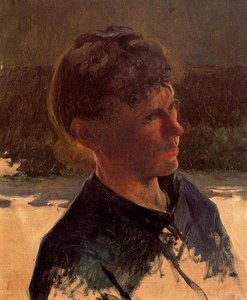
Porträt von José Jiménez Aranda

Die 76 berühmtesten Gemälde von José Jiménez Aranda, jedes ein Unikat

Aktualisiert im November 2026 · sortiert nach unserem Popularitätsindex (Suchanfragen, Aufrufe und Bestellungen für jedes Werk) · 76 Werke von José Jiménez Aranda in unserem Katalog

Kurz gesagt

Ein Unglück (1890) ist das Gemälde von José Jiménez Aranda, das die meiste Aufmerksamkeit auf sich zieht. Danach wandert der Blick zu Don Quijote 4 und Kleine Naturforscher. Von den 76 Werken von José Jiménez Aranda in unserem Katalog sind diese 76 die bekanntesten – jedes ein einzigartiges Original, präsentiert mit seinem Entstehungsjahr, dem Museum und dem Grund für seine zeitlose Bedeutung.

1837 – 1903, Sevilla Costumbrista Meiste Werke: Museo del Prado

Die 10 besten Gemälde von José Jiménez Aranda, aus der Sicht der Galerie

1
Ein Unglück (1890) von José Jiménez Aranda

Ein Unglück

1890 · Ölfarbe

Wir betrachten Ein Unglück, ein Werk aus dem Jahr 1890 des spanischen Malers José Jiménez Aranda. Dieses Stück stellt einen bedeutenden Moment in der Karriere des Künstlers dar und markiert eine Hinwendung zum Costumbrismo-Stil, der einen Großteil seines späteren Schaffens prägen sollte. Es handelt sich um eine düstere, Schwarz-Weiß-Darstellung einer Gruppe von Menschen, die sich vor einem im Bau befindlichen Gebäude versammelt haben. Die Szene, angesiedelt im 19. Jahrhundert, fängt…

2
Don Quijote 4 von José Jiménez Aranda

Don Quijote 4

Ölfarbe

Das Kunstwerk mit dem Titel Don Quijote 4 ist ein Werk des spanischen Malers José Jiménez Aranda. Es fängt einen spezifischen, rastlosen Moment ein, der der literarischen Welt von Miguel de Cervantes entnommen ist. Innerhalb des Rahmens sind der Ritter Don Quijote und sein Gefährte Sancho Panza auf ihren Pferden zu sehen. Sie bewegen sich durch eine Landschaft plötzlicher Dynamik, gefangen inmitten einer Begegnung oder eines Scharmützels, an dem mehrere…

3
Kleine Naturforscher von José Jiménez Aranda

Kleine Naturforscher

Öl auf Leinwand

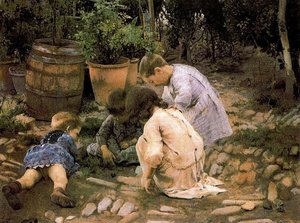
Drei Kinder kauern auf der Erde, ihre Körper bilden ein sanftes Dreieck der Neugier. Sie sind tief gebeugt, die Augen starr auf die kleinen, beweglichen Leben gerichtet, die sich zwischen Steinen und Erde verbergen. Ein großes Fass und mehrere Terrakotta-Töpfe stehen im Hintergrund und verankern die Szene in einem bewohnten, naturbelassenen Raum. Das Licht ist diffus, als würde es durch einen schweren, bedeckten Himmel gefiltert, und wirft keine harten Schatten…

4
Figaro's Shop (1875) von José Jiménez Aranda

Figaro's Shop

1875 · Oil On Canvas · Walters Kunstmuseum, Baltimore

The afternoon sun spills across a dusty street, casting soft shadows that dance against the weathered plaster of a building. In front of a doorway, life unfolds in a quiet, rhythmic pulse. A man sits with a guitar, his fingers coaxing melodies from the strings, while others gather around a table, lost in the easy gravity of conversation. There is a sense of a world caught in mid-breath. A woman’s…

5
The old naturalist (1880) von José Jiménez Aranda

The old naturalist

1880 · Oil

A single man stands amidst a silent assembly of taxidermied birds. He is dressed in the heavy, structured attire of the 18th century, wearing a tricorne hat and a long frock coat that anchors him to the floorboards. His mouth is open, caught in a sudden gasp or a sharp intake of breath. Around him, the stillness of the museum room is broken only by the presence of these preserved…

6
The Hato (1896) von José Jiménez Aranda

The Hato

1896 · Oil On Canvas

The Hato emerges from the brush of José Jiménez Aranda, a painter who carries the spirit of Seville, Spain, within his work. Born in 1837, Aranda brings a deep understanding of light and shadow to this scene. The painting, created about 1896, captures a quiet, suspended moment in a sun-dappled woodland. It is a scene of rest where a large, reclining hunting dog and a sleeping infant share a peaceful…

7
Spring in Seville (1903) von José Jiménez Aranda

Spring in Seville

1903 · Oil On Canvas · Fundación Banco Santander, Madrid

Spring in Seville by José Jiménez Aranda presents a large-scale oil on canvas composition created about 1903. The subject matter focuses on the various festivities and traditions associated with the season in Seville, Spain. The painting incorporates specific cultural references, including elements of bullfighting, known as corridas de toros. These elements are integrated into a dense arrangement of figures and objects that characterize the local customs of the period.

Berühmte Gemälde von José Jiménez Aranda, Nummer 11 bis 76

11Un lance en la Plaza de Toros (1880) von José Jiménez ArandaUn lance en la Plaza de Toros1880 12Holy Week in Seville (1879) von José Jiménez ArandaHoly Week in Seville1879 · Fine Arts Museums of San Francisco 13The Dancing Lesson (1888) von José Jiménez ArandaThe Dancing Lesson1888 14The painter's family von José Jiménez ArandaThe painter's family 15Couple von José Jiménez ArandaCouple 16Study for ''La murga'' von José Jiménez ArandaStudy for ''La murga'' 17Sketch illustration for''Captain Montoya von José Jiménez ArandaSketch illustration for''Captain Montoya 18Study for ''Un sermón en el patio de los naranjos'' von José Jiménez ArandaStudy for ''Un sermón en el patio de los naranjos'' 19El Quijote von José Jiménez ArandaEl Quijote 20Academical study 1 von José Jiménez ArandaAcademical study 1 21the drunk von José Jiménez Arandathe drunk 22El Quijote 1 von José Jiménez ArandaEl Quijote 1 23El Quijote 6 von José Jiménez ArandaEl Quijote 6 24Preparatory drawing for a painting von José Jiménez ArandaPreparatory drawing for a painting 25The jump of the bull von José Jiménez ArandaThe jump of the bull 26El Quijote 7 von José Jiménez ArandaEl Quijote 7 27Figure von José Jiménez ArandaFigure 28El Quijote 9 von José Jiménez ArandaEl Quijote 9 29Study for ''Los dulces del santo'' von José Jiménez ArandaStudy for ''Los dulces del santo'' 30Portrait of the artist's father von José Jiménez ArandaPortrait of the artist's father 31Study of dogs von José Jiménez ArandaStudy of dogs 32El Quijote 5 von José Jiménez ArandaEl Quijote 5 33Fruit seller von José Jiménez ArandaFruit seller 34Study for ''Tartarín sur les Alpes'' von José Jiménez ArandaStudy for ''Tartarín sur les Alpes'' 35El Quijote 3 von José Jiménez ArandaEl Quijote 3 36Study of a soldier von José Jiménez ArandaStudy of a soldier 37Nude von José Jiménez ArandaNude 38Study of a soldier 1 von José Jiménez ArandaStudy of a soldier 1 39Study for ''Galanterías'' von José Jiménez ArandaStudy for ''Galanterías'' 40small talk von José Jiménez Arandasmall talk 41El Quijote 2 von José Jiménez ArandaEl Quijote 2 42Retrato de Emilio Sala von José Jiménez ArandaRetrato de Emilio Sala 43El Quijote 8 von José Jiménez ArandaEl Quijote 8 44Retrato de Mujer von José Jiménez ArandaRetrato de Mujer 45Juez von José Jiménez ArandaJuez 46Good night von José Jiménez ArandaGood night 47Fugure studies von José Jiménez ArandaFugure studies 48The old canary von José Jiménez ArandaThe old canary 49Study von José Jiménez ArandaStudy 50The sweet saint von José Jiménez ArandaThe sweet saint 51Portrait (Studio) von José Jiménez ArandaPortrait (Studio) 52A gourmet von José Jiménez ArandaA gourmet 53Retrato von José Jiménez ArandaRetrato 54Portrait of the artists mother von José Jiménez ArandaPortrait of the artists mother 55Tocando das Geige von José Jiménez ArandaTocando das Geige 56Study of horses von José Jiménez ArandaStudy of horses 57Study of horses 1 von José Jiménez ArandaStudy of horses 1 58Paisaje boscoso von José Jiménez ArandaPaisaje boscoso 59Study of a horse von José Jiménez ArandaStudy of a horse 60Paisaje von José Jiménez ArandaPaisaje 61Landscape in Alcalá de Guadaira von José Jiménez ArandaLandscape in Alcalá de Guadaira 62Academical study von José Jiménez ArandaAcademical study 63Landscape with rocks von José Jiménez ArandaLandscape with rocks 64En la iglesia von José Jiménez ArandaEn la iglesiaMuseo del Prado 65Birds Corner von José Jiménez ArandaBirds Corner 66Hombre de color von José Jiménez ArandaHombre de color 67Hombre Sentado von José Jiménez ArandaHombre Sentado 68Woman turning off the light (Good Night) von José Jiménez ArandaWoman turning off the light (Good Night) 69Study for ''Un concierto ante su Eminencia'' von José Jiménez ArandaStudy for ''Un concierto ante su Eminencia'' 70Dos Mujeres von José Jiménez ArandaDos Mujeres 71Retrato de Sorolla von José Jiménez ArandaRetrato de SorollaMuseo del Prado 72The morning in Alcalá de Guadaira von José Jiménez ArandaThe morning in Alcalá de Guadaira 73The departure of Christ's Passion during Holy Week in Seville von José Jiménez ArandaThe departure of Christ's Passion during Holy Week in Seville 74El violinista von José Jiménez ArandaEl violinista 75Pine-trees at Alcalá de Guadaira von José Jiménez ArandaPine-trees at Alcalá de Guadaira 76La esclava von José Jiménez ArandaLa esclavaMuseo del Prado

Die berühmten Gemälde von José Jiménez Aranda, Epoche für Epoche

Die Motive, die José Jiménez Aranda faszinierten

Die vier Motive, die in diesen Originalen am häufigsten vorkommen, jeweils mit ihrem herausragendsten Beispiel.

Die Museen, die die Originale von José Jiménez Aranda beherbergen

Die 5 Museen, in denen sich die meisten der auf dieser Seite aufgeführten Gemälde befinden.

Museum Stadt Werke von José Jiménez Aranda Gemälde aus dieser Liste
Museo del Prado, MadridMuseo del Prado Madrid 3 En la iglesia, Retrato de Sorolla, La esclava
Walters Kunstmuseum, BaltimoreWalters Kunstmuseum Baltimore 1 Figaro's Shop
Fundación Banco Santander, MadridFundación Banco Santander Madrid 1 Spring in Seville
Museo Carmen Thyssen Málaga, MálagaMuseo Carmen Thyssen Málaga Málaga 1 A Pass in the Bullring
Fine Arts Museums of San Francisco, San FranciscoFine Arts Museums of San Francisco San Francisco 1 Holy Week in Seville

José Jiménez Aranda über die Jahrzehnte hinweg: ein einzigartiges Original für jedes

Werke nach Jahrzehnten

Wählen Sie ein Jahrzehnt aus, um das Original zu sehen, das es definiert.

Gemälde von José Jiménez Aranda: Fragen an die Galerie

Was ist das bekannteste Werk von José Jiménez Aranda?Die Antwort enthüllen

Ein Unglück (1890). Als Nächstes folgen Don Quijote 4 und Kleine Naturforscher.

In welchem Alter hat José Jiménez Aranda Ein Unglück geschaffen?Die Antwort enthüllen

53 Jahre alt: Ein Unglück stammt aus dem Jahr 1890, und José Jiménez Aranda wurde in 1837 geboren.

Welche zehn Gemälde von José Jiménez Aranda sind die bekanntesten?Die Antwort enthüllen

Ein Unglück, Don Quijote 4, Kleine Naturforscher, Figaro's Shop, The old naturalist, The Hato, Spring in Seville, The first child, Don Quixote and Sancho Panza und A Pass in the Bullring. Die obige Rangliste gibt das jeweilige Jahr und das Museum an.

Wie viele Werke von José Jiménez Aranda sind bekannt?Die Antwort enthüllen

Unser Katalog umfasst 76 Werke von José Jiménez Aranda, datiert von 1870 bis 1903.

Wo kann man die berühmtesten Originale von José Jiménez Aranda sehen?Die Antwort enthüllen

Meistens in Museo del Prado (Madrid), Walters Kunstmuseum (Baltimore) und Fundación Banco Santander (Madrid). Die obige Museumstabelle listet alle auf.

In welcher Zeitspanne schuf José Jiménez Aranda seine bekanntesten Gemälde?Die Antwort enthüllen

In 1870s: 3 der 76 Werke auf dieser Seite wurden damals geschaffen, darunter Figaro's Shop.

Welches berühmte Gemälde von José Jiménez Aranda ist das früheste und welches das jüngste?Die Antwort enthüllen

Auf dieser Seite ist das früheste Werk aus A Pass in the Bullring (1870) und das neueste aus Spring in Seville (1903).

Welche Motive bevorzugte José Jiménez Aranda?Die Antwort enthüllen

Portrait (5), Melancholy (4) und Woman (3), verteilt auf die 76 Werke auf dieser Seite.

Mit welchen Materialien hat José Jiménez Aranda am häufigsten gemalt?Die Antwort enthüllen

Oil On Canvas, für 3 von insgesamt 76 Werken auf dieser Seite.

Welcher Stilrichtung gehört das Werk von José Jiménez Aranda an?Die Antwort enthüllen

Costumbrista und Contemporary realism, wenn man die Originale auf dieser Seite beurteilt.

Welche Originale von José Jiménez Aranda kann ich im Museo del Prado sehen?Die Antwort enthüllen

En la iglesia, Retrato de Sorolla und La esclava: Das Museo del Prado, Madrid beherbergt 3 der Werke auf dieser Seite.

José Jiménez Aranda: ein Porträt des Künstlers

José Jiménez Aranda (1837–1903): A Painter's Journey Through Light and Shadow

José Jiménez Aranda, born in Seville in 1837, was a painter who navigated the complex currents of 19th-century Spanish art with remarkable versatility. His life spanned just over six decades, coinciding with an era of profound transformation—socially, politically, and artistically—and his work serves as a compelling reflection of this dynamic period. From rigorous academic training to embracing the influence of masters like Goya and Velázquez, and later finding inspiration in the luminous scenes championed by Mariano Fortuny, Aranda’s artistic journey was one of continuous evolution. He wasn't merely a recorder of his time; he was an interpreter, capturing both the grandeur of historical moments and the quiet intimacy of everyday life with equal skill. The tragic loss of his wife and daughter in 1892 cast a long shadow over his later years, prompting a return to Seville where he dedicated himself to teaching and continued to refine his distinctive style, leaving behind a legacy that continues to resonate within Spanish art history.

Formative Years and Artistic Pilgrimages

Aranda’s artistic inclinations were nurtured from an early age, receiving initial instruction from Manuel Cabral and Eduardo Cano de la Peña. This foundational training proved crucial when, in 1851, he entered the Real Academia de Bellas Artes de Santa Isabel de Hungría in Seville. The Academy provided a rigorous grounding in classical techniques, but it was his subsequent travels that truly ignited his artistic vision. A pivotal moment came during an extended stay in Rome between 1871 and 1878, where he encountered the work of Mariano Fortuny. Fortuny’s influence is palpable in Aranda’s paintings from this period—a shared fascination with luminous color, meticulous detail, and a penchant for depicting elegant scenes often set in historical contexts. This wasn't simply imitation; Aranda absorbed Fortuny’s techniques and adapted them to his own sensibilities. Before Rome, however, he immersed himself in the masterpieces of Spanish art at the Museo del Prado in Madrid, studying the works of Goya and Velázquez with a discerning eye. These masters instilled in him an appreciation for dramatic lighting, psychological depth, and the power of observation—qualities that would become hallmarks of his own style. He also spent time as a restorer and designer of stained glass in Jerez de la Frontera, further honing his technical skills and developing a keen understanding of color and composition.

Parisian Refinement and Costumbrista Visions

The years Aranda spent in Paris (1881–1890) were arguably the most commercially successful of his career. He specialized in what became known as “tableautin” painting—small-scale genre scenes, often depicting 18th-century life with a refined elegance reminiscent of Fortuny. These works found favor among collectors and established Aranda’s reputation as a skilled and sophisticated painter. Yet upon returning to Madrid, his artistic focus shifted. He began to explore *costumbrismo*, a distinctly Spanish genre that focused on depicting the customs, traditions, and everyday life of the people. Paintings like “Una Desgracia” (A Disaster) from 1890 demonstrate this new direction—a poignant portrayal of human suffering rendered with both realism and emotional depth. This work earned him a first medal at the Nacional exhibition, solidifying his position as a leading figure in Spanish art. It was a move away from the purely decorative towards a more socially conscious form of representation, reflecting a growing engagement with the realities of contemporary Spain.

Don Quijote Illustrations: A Monumental Achievement

Perhaps Aranda’s most ambitious and enduring achievement lay in his illustrations for a tercentenary edition of *Don Quijote*. He created an astonishing 689 highlighted drawings for this project, a monumental undertaking that showcased not only his technical virtuosity but also his deep understanding of Cervantes’ masterpiece. These illustrations are more than mere accompaniments to the text; they are interpretations—vivid, expressive renderings of iconic scenes and characters that capture the spirit of the novel. He meticulously studied Cervantes' prose and visual references, translating the narrative into a series of stunning images that conveyed both the humor and pathos inherent in Don Quijote’s quest for chivalry. The resulting artwork cemented Aranda’s place as one of Spain’s foremost artists and continues to inspire admiration for its artistic merit.

Legacy and Influence

José Jiménez Aranda died in Madrid on January 8, 1903. His influence extended beyond his own artistic output, shaping the course of Spanish painting for years to come. He became a pivotal figure in the Alcala de Guadaíra circle of landscape painters—a group known for its dedication to capturing the beauty and spirit of the Spanish countryside with unwavering sincerity. Aranda’s ability to blend technical skill with emotional depth ensures that his work will continue to captivate viewers and inspire artists alike, securing his place as a cornerstone of 19th-century Spanish art history. His legacy resides in the enduring power of his paintings—testaments to a life devoted to artistic excellence and a profound engagement with the human condition.