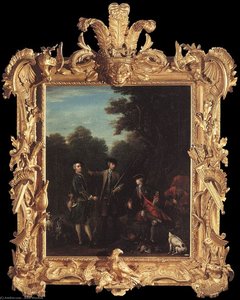
Porträt von John Wootton

Gemälde von John Wootton: Die 91 berühmtesten Werke, aus der Sicht einer Galerie

Aktualisiert im Oktober 2026 · sortiert nach unserem Popularitätsindex (Suchanfragen, Aufrufe und Bestellungen für jedes Werk) · 91 Werke von John Wootton in unserem Katalog

Kurz gesagt

Aus Sicht der Galerie ist John Woottons berühmtestes Gemälde Der Tod des Hasen (1735), dessen Original im Yale Center for British Art in New Haven hängt. Porträt eines Mannes zu Pferd (1720) und The Meet of a Hunt with Henry II Hoare (1705 - 1785) (1729) vervollständigen das Trio, das jedes Auge sofort wiederkennt. Von den 91 Werken von John Wootton in unserem Katalog präsentiert die Galerie unten die 91 berühmtesten; jedes Original mit seinem Entstehungsjahr, seinem Museum und dem, was es so einzigartig macht.

1682 – 1764, Snitterfield Baroque Meiste Werke: Yale Center for British Art

Die 10 besten Gemälde von John Wootton in der Galerie

1
Der Tod des Hasen (1735) von John Wootton

Der Tod des Hasen

1735 · Öl auf Leinwand · Yale Center for British Art, New Haven

In diesem Ölgemälde auf Leinwand finden wir uns in der stillen, schweren Atmosphäre einer Landschaft nach der Jagd wieder. Die Szene spielt im sanften, diffusen Licht des späten Nachmittags, während der Himmel blasse Blautöne und die warmen, cremigen Nuancen einer untergehenden Sonne in sich trägt. Große, dunkle Bäume rahmen die Komposition zu beiden Seiten ein und schaffen eine natürliche Vignette, die den Blick unaufhaltsam auf das zentrale Drama lenkt. Es…

2
Porträt eines Mannes zu Pferd (1720) von John Wootton

Porträt eines Mannes zu Pferd

1720 · Öl auf Leinwand · Yale Center for British Art, New Haven

In „Porträt eines Mannes zu Pferd“ von John Wootton thront ein Edelmann auf einem dunkelbraunen Pferd. Die Komposition ist vertikal und zentriert angelegt, wodurch der Blick des Betrachters unmittelbar auf den Reiter gelenkt wird. Er ist in königliche Reitkleidung gehüllt, wobei seine Präsenz maßgeblich durch einen gesättigten, roten Mantel definiert wird. Diese kühne Farbe durchbricht die gedämpften, erdigen Töne des Hintergrunds. Das Sujet begegnet dem Betrachter auf Augenhöhe und strahlt…

3
The Meet of a Hunt with Henry II Hoare (1705 - 1785) (1729) von John Wootton

The Meet of a Hunt with Henry II Hoare (1705 - 1785)

1729 · Oil On Canvas

The composition centers on a group of horsemen and hounds assembled in a wide, rolling landscape. On the left, a tall stone obelisk rises vertically, providing a fixed point against the horizontal expanse of the countryside. The scene depicts a specific social gathering, identified by inscriptions as involving Henry Hoare and Benjamin Hoare. Henry Hoare is mounted on a horse, wearing a grey coat, while a groom leads a second…

4
The Hampton Court Chestnut Arabian (1726) von John Wootton

The Hampton Court Chestnut Arabian

1726 · Oil On Canvas · Royal Collection, London

The air feels heavy with the quiet dignity of the 18th century as a chestnut Arabian horse commands the center of the scene. Its sleek, muscular form catches the light from the upper left, casting soft shadows that define every curve of its powerful body. This is a portrait of poise and breeding. To the left, a man in classical attire holds the reins with a steady hand, his presence…

5
The Duke of Hamilton's Grey Racehorse, 'Victorious,' at Newmarket (1725) von John Wootton

The Duke of Hamilton's Grey Racehorse, 'Victorious,' at Newmarket

1725 · Oil On Canvas · Yale Center for British Art, New Haven

We are looking at The Duke of Hamilton's Grey Racehorse, 'Victorious,' at Newmarket, a significant work by the English painter John Wootton. Created about 1725, this oil painting captures a grey racehorse positioned within a vast, open landscape. The subject is presented with a sense of quiet dignity, set against an expansive backdrop that emphasizes the scale of the environment.

6
Lamprey at Newmarket, with a Group of Figures Including Sir William Morgan and Girolamo Bardoletti (1723) von John Wootton

Lamprey at Newmarket, with a Group of Figures Including Sir William Morgan and Girolamo Bardoletti

1723 · Oil · Yale Center for British Art, New Haven

In this oil painting from about 1723, the viewer enters a moment of high social ritual. Lamprey at Newmarket, with a Group of Figures Including Sir William Morgan and Girolamo Bardoletti presents a formal presentation of a grey horse to a gathering of gentlemen. The scene unfolds in an outdoor setting, where the quiet tension of the assembly meets the presence of the animal. The artist, John Wootton, captures a…

7
Two Stallions Fighting (1734) von John Wootton

Two Stallions Fighting

1734 · Oil

A white stallion and a black stallion collide in a moment of intense physical struggle. The composition relies on a sharp diagonal tension, driving the eye from the bright, muscular form of the white horse on the left toward the deep, dark tones of its opponent on the right. Arched necks and outstretched limbs create a sense of chaotic movement, framed by the intervention of handlers and the sharp line…

8
The Shooting Party: Frederick, Prince of Wales with John Spencer and Charles Douglas, 3rd Duke of Queensberry (1740) von John Wootton

The Shooting Party: Frederick, Prince of Wales with John Spencer and Charles Douglas, 3rd Duke of Queensberry

1740 · Oil On Canvas · Royal Collection, London

The Shooting Party: Frederick, Prince of Wales with John Spencer and Charles Douglas, 3rd Duke of Queensberry is an oil on canvas executed by the English painter John Wootton. Dated 1740, the work belongs to the genre of Georgian Sporting Art. It captures a specific moment of aristocratic leisure, centering on a group of prominent figures engaged in a hunting scene.

9
The Death of the Stag (1737) von John Wootton

The Death of the Stag

1737 · Oil On Canvas · Royal Collection, London

The scene unfolds across a wide, panoramic landscape under a vast sky of blue and white. In the foreground, the immediate focus is a fallen stag, its body positioned amidst a group of hunting dogs that scatter around the carcass. Some of these animals actively engage with the animal, their forms creating a sense of movement against the earth. Beyond this central action, the midground contains a group of hunters,…

10
The Return from the Chase (1737) von John Wootton

The Return from the Chase

1737 · Oil On Canvas · Royal Collection, London

An expansive 18th-century landscape captures a group of aristocratic figures and their horses returning from a hunt. The composition utilizes a wide format to emphasize the scale of the estate, leading the eye from a detailed foreground of riders and attendants toward a distant, imposing stone manor situated on a slight rise. To the right, a dense cluster of mature trees provides verticality, framing the scene and adding depth to…

John Wootton-Gemälde, Platzierung 11 bis 91

11The Siege of Tournay (1742) von John WoottonThe Siege of Tournay1742 · Royal Collection 12William Augustus, Duke of Cumberland (1721-65) at the Battle of Dettingen (1744) von John WoottonWilliam Augustus, Duke of Cumberland (1721-65) at the Battle of Dettingen1744 · Royal Collection 13Frederick, Prince of Wales (1707-1751) in the Hunting Field (1734) von John WoottonFrederick, Prince of Wales (1707-1751) in the Hunting Field1734 · Royal Collection 14A Fox Hunt (1735) von John WoottonA Fox Hunt1735 · Yale Center for British Art 15Lord Portmore Watching Racehorses at Exercise on Newmarket Heath (1735) von John WoottonLord Portmore Watching Racehorses at Exercise on Newmarket Heath1735 · Yale Center for British Art 16William Augustus, Duke of Cumberland (1721-1765) (1745) von John WoottonWilliam Augustus, Duke of Cumberland (1721-1765)1745 · Royal Collection 17Haycart Passing a Ruined Abbey (1745) von John WoottonHaycart Passing a Ruined Abbey1745 · Yale Center for British Art 18Vorbereitung auf die Jagd (1745) von John WoottonVorbereitung auf die Jagd1745 · Yale Center for British Art 19Rievaulx-Abtei (1745) von John WoottonRievaulx-Abtei1745 · Yale Center for British Art 20Klassische Landschaft: Morgen (1740) von John WoottonKlassische Landschaft: Morgen1740 · Yale Center for British Art 21Klassische Landschaft (1725) von John WoottonKlassische Landschaft1725 · Yale Center for British Art 22The Battle of Blenheim, 13 August (1704) von John WoottonThe Battle of Blenheim, 13 August (1704) 23Horse Race at Newmarket von John WoottonHorse Race at NewmarketPetworth House 24Battle Scene on Bridge (1706) von John WoottonBattle Scene on Bridge1706 · Antony House 25George I at Newmarket, 4 or 5 October, 1717 (1717) von John WoottonGeorge I at Newmarket, 4 or 5 October, 17171717 · Yale Center for British Art 26Der Herzog von Rutland (1715) von John WoottonDer Herzog von Rutland1715 · Yale Center for British Art 27Sketch for ‘A prospect of Dover Castle’, Warmer Castle (1727) von John WoottonSketch for ‘A prospect of Dover Castle’, Warmer Castle1727 28Park Place, Henley (1742) von John WoottonPark Place, Henley1742 · Royal Collection 29A Distant View of Henley-on-Thames (1742) von John WoottonA Distant View of Henley-on-Thames1742 · Royal Collection 30The Siege of Lille (1742) von John WoottonThe Siege of Lille1742 · Royal Collection 31A Grey Spotted Hound (1738) von John WoottonA Grey Spotted Hound1738 · Yale Center for British Art 32Two of the Duchess of Marlborough's Dogs (1736) von John WoottonTwo of the Duchess of Marlborough's Dogs1736 33Classical Landscape (1754) von John WoottonClassical Landscape1754 · Yale Center for British Art 34Classical Landscape with Figures and Animals: Sunset (1754) von John WoottonClassical Landscape with Figures and Animals: Sunset1754 · Yale Center for British Art 35Releasing the Hound (1745) von John WoottonReleasing the Hound1745 · Yale Center for British Art 36Racing Scene at Newmarket (1750) von John WoottonRacing Scene at Newmarket1750 · Minneapolis Institute of Art 37Die Jagdgesellschaft (1740) von John WoottonDie Jagdgesellschaft1740 · Royal Collection 38Hunde und eine Elster (1740) von John WoottonHunde und eine Elster1740 · Eremitage 39Classical Landscape von John WoottonClassical LandscapeSzépművészeti Múzeum 40Klassische Landschaft: Abend (1740) von John WoottonKlassische Landschaft: Abend1740 · Yale Center for British Art 41A Dark Bay Stallion, Possibly the Byerley Turk von John WoottonA Dark Bay Stallion, Possibly the Byerley Turk 42Bowater Vernon (1683–1735), with Hanbury Hall and Its Formal Garden von John WoottonBowater Vernon (1683–1735), with Hanbury Hall and Its Formal GardenHanbury Hall 43The Beauchamp-Proctor Family and Friends at Langley Park, Norfolk von John WoottonThe Beauchamp-Proctor Family and Friends at Langley Park, Norfolk 44The Bloody-Shouldered Arabian von John WoottonThe Bloody-Shouldered Arabian 45Viscount Weymouth's Hunt The Hon. John Spencer beside a Hunter held by a Young Boy von John WoottonViscount Weymouth's Hunt The Hon. John Spencer beside a Hunter held by a Young Boy 46Landscape with Angelica and Medoro von John WoottonLandscape with Angelica and Medoro 47The Duke of Rutland von John WoottonThe Duke of Rutland 48Classical Landscape with a Grecian Temple von John WoottonClassical Landscape with a Grecian Temple 49Before the hunt von John WoottonBefore the hunt 50Klassische Landschaft mit Zigeunern (1748) von John WoottonKlassische Landschaft mit Zigeunern1748 · Metropolitan Museum of Art 51Porträt von Coplestone Warre Bampfylde (1720-96) vor dem Hestercombe House mit seinem Jagdaufseher um 1740 von John WoottonPorträt von Coplestone Warre Bampfylde (1720-96) vor dem Hestercombe House mit seinem Jagdaufseher um 1740Hestercombe House – Gärten 52Rome from the Aventine Hill von John WoottonRome from the Aventine HillBirmingham Museum und Kunstgalerie 53Classical landscape von John WoottonClassical landscapeFitzwilliam Museum 54Stag hunt von John WoottonStag hunt 55Horses Exercising on Newmarket Heath von John WoottonHorses Exercising on Newmarket Heath 56'Lamprey' (A Racehorse) von John Wootton'Lamprey' (A Racehorse) 57A Race on the Round Course at Newmarket von John WoottonA Race on the Round Course at NewmarketFitzwilliam Museum 58Life-Size Horse with Huntsman Blowing a Horn von John WoottonLife-Size Horse with Huntsman Blowing a Horn 59Landscape with Cattle von John WoottonLandscape with Cattle 60Lady Mary Churchill at the Death of the Hare von John WoottonLady Mary Churchill at the Death of the Hare 61A View of Cassiobury Park von John WoottonA View of Cassiobury Park 62Coastal Scene with Shipping at Dawn von John WoottonCoastal Scene with Shipping at DawnHartwell House 63Muff, a Black and White Dog von John WoottonMuff, a Black and White Dog 64A Turkey in a Landscape von John WoottonA Turkey in a Landscape 65Drovers at a Harbour von John WoottonDrovers at a Harbour 66A Stag Hunt in Full Cry von John WoottonA Stag Hunt in Full CryWimpole Hall 67George II (1683–1760), on Horseback von John WoottonGeorge II (1683–1760), on HorsebackBlickling Hall 68View of the Severn Valley with Haymaking and Figures von John WoottonView of the Severn Valley with Haymaking and Figures 69Landscape of a River Valley at Sunset von John WoottonLandscape of a River Valley at SunsetHartwell House 70Landscape with Fishermen von John WoottonLandscape with Fishermen 71A Stag Hunt at Chirk von John WoottonA Stag Hunt at Chirk 72A Grey Horse and Jockey in Red Colours, before a Stable von John WoottonA Grey Horse and Jockey in Red Colours, before a StableClandon Park 73Lionel Sackville, 1st Duke of Dorset, Lord Warden of the Cinque Ports, Returning in Procession to Dover Castle von John WoottonLionel Sackville, 1st Duke of Dorset, Lord Warden of the Cinque Ports, Returning in Procession to Dover CastleKnole 74Italianate landscape von John WoottonItalianate landscape 75Equestrian Portrait of Sir Richard Hoare II (1709–1754), as Lord Mayor of London, at Temple Bar von John WoottonEquestrian Portrait of Sir Richard Hoare II (1709–1754), as Lord Mayor of London, at Temple Bar 76William tregonwell frampton von John WoottonWilliam tregonwell frampton 77Wooded Landscape and Coastal Town von John WoottonWooded Landscape and Coastal Town 78A Bay Racehorse and Attendants von John WoottonA Bay Racehorse and Attendants 79Sir Robert Walpole, 1st Earl of Orford, as a Ranger of Richmond Park von John WoottonSir Robert Walpole, 1st Earl of Orford, as a Ranger of Richmond Park 80George II at the Battle of Dettingen, with the Duke of Cumberland and Robert, 4th Earl of Holderness, 27 June (1743) von John WoottonGeorge II at the Battle of Dettingen, with the Duke of Cumberland and Robert, 4th Earl of Holderness, 27 June (1743) 81Henry Hoare II (1705–1785), on Horseback von John WoottonHenry Hoare II (1705–1785), on Horseback 82George Henry Lee, 3rd Earl of Litchfield, and his Uncle the Hon. Robert Lee, Subsequently 4th Earl of Litchfield, Shooting in 'True Blue' Frock Coats von John WoottonGeorge Henry Lee, 3rd Earl of Litchfield, and his Uncle the Hon. Robert Lee, Subsequently 4th Earl of Litchfield, Shooting in 'True Blue' Frock Coats 83A Classical Landscape with Animals von John WoottonA Classical Landscape with AnimalsUpton House 84Dancing Dogs 'Lusette', 'Madore', 'Rosette' and 'Moucheby' von John WoottonDancing Dogs 'Lusette', 'Madore', 'Rosette' and 'Moucheby'Wallington Hall 85Viscount Weymouth's Hunt A Groom holding a Saddled Grey Hunter with Hounds and Terriers von John WoottonViscount Weymouth's Hunt A Groom holding a Saddled Grey Hunter with Hounds and Terriers 86Viscount Weymouth's Hunt Two Hunt Servants on Hunters beside a Cottage von John WoottonViscount Weymouth's Hunt Two Hunt Servants on Hunters beside a Cottage 87Gilbert Coventry (c.1688–1719), 4th Earl of Coventry, with Two Huntsmen in a Landscape von John WoottonGilbert Coventry (c.1688–1719), 4th Earl of Coventry, with Two Huntsmen in a LandscapeAntony House 88A favorite poodle and monkey belonging to thomas osborn von John WoottonA favorite poodle and monkey belonging to thomas osborn 89Viscount Weymouth's Hunt Mr Jackson, the Hon. Henry Villiers and the Hon. Thomas Villiers, with Hunters and Hounds von John WoottonViscount Weymouth's Hunt Mr Jackson, the Hon. Henry Villiers and the Hon. Thomas Villiers, with Hunters and Hounds 90Viscount Weymouth's Hunt Thomas, 2nd Viscount Weymouth, with a Black Page and other Huntsmen at the Kill von John WoottonViscount Weymouth's Hunt Thomas, 2nd Viscount Weymouth, with a Black Page and other Huntsmen at the Kill 91A View of Henley-on-Thames (1742) von John WoottonA View of Henley-on-Thames1742 · Royal Collection

Die berühmten Gemälde von John Wootton, Epoche für Epoche

Die Motive, die John Wootton faszinierten

Die vier Motive, die in diesen Originalen am häufigsten vorkommen, jeweils mit ihrem herausragendsten Beispiel.

Die Museen, die die Originale von John Wootton beherbergen

Die 8 Museen, in denen sich die meisten der auf dieser Seite aufgeführten Gemälde befinden.

Museum Stadt Werke von John Wootton Gemälde aus dieser Liste
Yale Center for British Art, New HavenYale Center for British Art New Haven 18 Der Tod des Hasen, Porträt eines Mannes zu Pferd, The Duke of Hamilton's Grey Racehorse, 'Victorious,' at Newmarket
Royal Collection, LondonRoyal Collection London 13 The Hampton Court Chestnut Arabian, The Shooting Party: Frederick, Prince of Wales with John Spencer and Charles Douglas, 3rd Duke of Queensberry, The Death of the Stag
Antony HouseAntony House 2 Battle Scene on Bridge, Gilbert Coventry (c.1688–1719), 4th Earl of Coventry, with Two Huntsmen in a Landscape
Fitzwilliam MuseumFitzwilliam Museum 2 Classical landscape, A Race on the Round Course at Newmarket
Hartwell House, AylesburyHartwell House Aylesbury 2 Coastal Scene with Shipping at Dawn, Landscape of a River Valley at Sunset
Petworth House, PetworthPetworth House Petworth 1 Horse Race at Newmarket
Minneapolis Institute of Art, MinneapolisMinneapolis Institute of Art Minneapolis 1 Racing Scene at Newmarket
Eremitage, Sankt PetersburgEremitage Sankt Petersburg 1 Hunde und eine Elster

John Wootton, ein charakteristisches Gemälde pro Jahrzehnt

Werke nach Jahrzehnten

Wählen Sie ein Jahrzehnt aus, um das Original zu sehen, das es definiert.

Gemälde von John Wootton: die Galerie antwortet

Welches Gemälde von John Wootton ist das berühmteste von allen?Die Antwort enthüllen

Der Tod des Hasen (1735), Yale Center for British Art, New Haven. Als Nächstes folgen Porträt eines Mannes zu Pferd (1720) und The Meet of a Hunt with Henry II Hoare (1705 - 1785) (1729).

Wie alt war John Wootton, als Der Tod des Hasen vollendet wurde?Die Antwort enthüllen

53 Jahre alt: Der Tod des Hasen stammt aus dem Jahr 1735, und John Wootton wurde in 1682 geboren.

Was sind die 10 besten Gemälde von John Wootton?Die Antwort enthüllen

Der Tod des Hasen, Porträt eines Mannes zu Pferd, The Meet of a Hunt with Henry II Hoare (1705 - 1785), The Hampton Court Chestnut Arabian, The Duke of Hamilton's Grey Racehorse, 'Victorious,' at Newmarket, Lamprey at Newmarket, with a Group of Figures Including Sir William Morgan and Girolamo Bardoletti, Two Stallions Fighting, The Shooting Party: Frederick, Prince of Wales with John Spencer and Charles Douglas, 3rd Duke of Queensberry, The Death of the Stag und The Return from the Chase. Die obige Rangliste gibt das jeweilige Jahr und das Museum an.

Wie viele Werke hat John Wootton geschaffen?Die Antwort enthüllen

Unser Katalog umfasst 91 Werke von John Wootton, datiert von 1706 bis 1754.

Wo hängen die berühmtesten Originale von John Wootton?Die Antwort enthüllen

Meistens in Yale Center for British Art (New Haven), Royal Collection (London) und Antony House. Die obige Museumstabelle listet alle auf.

Wann schuf John Wootton seine berühmtesten Gemälde?Die Antwort enthüllen

In 1740s: 17 der 91 Werke auf dieser Seite wurden damals geschaffen, darunter The Shooting Party: Frederick, Prince of Wales with John Spencer and Charles Douglas, 3rd Duke of Queensberry.

Was sind die frühesten und spätesten berühmten Werke von John Wootton?Die Antwort enthüllen

Auf dieser Seite ist das früheste Werk aus Battle Scene on Bridge (1706) und das neueste aus Classical Landscape (1754).

Welchen Motiven hat John Wootton sich am häufigsten gewidmet?Die Antwort enthüllen

Landscape (24), Horse (10) und Hunting (10), verteilt auf die 91 Werke auf dieser Seite.

In welchem Medium war John Wootton am meisten tätig?Die Antwort enthüllen

Oil On Canvas, für 13 von insgesamt 91 Werken auf dieser Seite.

Welcher Stilrichtung wird John Wootton zugeordnet?Die Antwort enthüllen

Baroque, wenn man die Originale auf dieser Seite beurteilt.

Welche Originalwerke von John Wootton befinden sich in der Sammlung des Yale Center for British Art?Die Antwort enthüllen

Der Tod des Hasen, Porträt eines Mannes zu Pferd und The Duke of Hamilton's Grey Racehorse, 'Victorious,' at Newmarket: Das Yale Center for British Art, New Haven beherbergt 18 der Werke auf dieser Seite.

John Wootton: der Künstler

John Wootton: Ein Pionier der Sportkunst

  • Geboren: ca. 1686, Snitterfield, Warwickshire, Großbritannien
  • Gestorben: 13. November 1764, London, England
  • Bekannt für: Pferdegemälde, Landschaften, Jagdszenen, Illustrationen

Frühes Leben und Ausbildung

  • John Wootton wurde in Snitterfield, nahe Stratford-upon-Avon, Warwickshire geboren. Es wird vermutet, dass er bereits in jungen Jahren als Page bei der Familie Beaufort diente.
  • Er erhielt wahrscheinlich seine anfängliche künstlerische Ausbildung unter Jan Wyck während der 1690er Jahre. Diese grundlegende Unterweisung vermittelte ihm wesentliche Fähigkeiten im Zeichnen und Malen.
  • Sein früheste bekanntes datiertes Werk, "Bonny Black" (1711), demonstriert ein frühes Talent für das Pferdeporträt und zeigt eine sich entwickelnde Fähigkeit, das Aussehen und den Charakter von Pferden einzufangen.

Karriere und künstlerische Entwicklung

  • Wootton etablierte sich 1706 in London und erlangte schnell Anerkennung für seine Darstellungen von Pferden, insbesondere solche im Zusammenhang mit der Rennszene von Newmarket.
  • Er wurde zu einer prominenten Figur innerhalb der Künstlerkreise seiner Zeit, trat 1711 der ersten englischen Akademie des Malens und Zeichnens bei und diente später ab 1717 als Verwalter des Virtuosi Club of St Lukes.
  • Seine Spezialisierung auf Pferdethemen brachte ihm beträchtlichen Erfolg und die Unterstützung hochrangiger Mitglieder der britischen Gesellschaft, darunter George II. und Friedrich, Prinz von Wales.
  • Neben Pferdeporträts leistete Wootton einen bedeutenden Beitrag zur britischen Malerei durch die Einführung der idealen Landschaft. Beeinflusst von Künstlern wie Gaspard Dughet (auch bekannt als Gaspar van Wittel), integrierte er klassische Elemente in seine Landschaften und bot eine Alternative zu vorherrschenden niederländischen und flämischen Stilen. Dieser Einfluss wirkte sich auch auf spätere britische Künstler wie Thomas Gainsborough aus.

Hauptwerke und künstlerischer Stil

  • Pferdeporträts: Wootton wird am besten für seine detaillierten und ausdrucksstarken Porträts von Pferden erinnert, die ihre individuellen Persönlichkeiten und körperlichen Eigenschaften mit bemerkenswerter Genauigkeit einfangen. "Bonny Black" ist ein Beispiel für diese Fähigkeit.
  • Jagdszenen: Seine Gemälde stellten oft Jagdszenen und Reitaktivitäten dar und spiegeln die Beliebtheit dieser Aktivitäten innerhalb der britischen Aristokratie wider. Diese Werke enthielten häufig Gesprächsstücke mit Reitern und Hunden in malerischer Umgebung.
  • Landschaften: Woottons Landschaften, die manchmal von seinen Tiergemälden überschattet werden, demonstrieren ein raffiniertes Verständnis für Perspektive und Komposition und integrieren klassische Elemente und atmosphärische Effekte.
  • Stil: Sein Stil zeichnet sich durch akribische Details, realistische Darstellung von Tieren und eine harmonische Mischung aus Landschafts- und Figurenmale aus. Er kombinierte Beobachtung mit idealisierter Darstellung und schuf Werke, die sowohl ästhetisch ansprechend als auch repräsentativ für die Sportkultur seiner Zeit waren.

Vermächtnis und historische Bedeutung

  • Obwohl er später in der Popularität von George Stubbs überschattet wurde, der eine größere technische Beherrschung in der Tieranatomie besaß, bleibt John Wootton eine bedeutende Figur in der britischen Kunstgeschichte.
  • Er gilt als Pionier der Sportkunst und begründete ein Genre, das von späteren Künstlern weiterentwickelt wurde.
  • Seine Einführung des idealen Landschaftsstils hatte einen nachhaltigen Einfluss auf die britische Malerei und beeinflusste Generationen von Künstlern und trug zur Entwicklung einer unverwechselbar britischen Ästhetik bei.
  • Woottons Werke befinden sich in renommierten Sammlungen weltweit, darunter der Tate Gallery (London), dem Virginia Museum of Fine Arts (Richmond) und dem Yale Center for British Art, wodurch sichergestellt wird, dass sein Vermächtnis auch heute von Kunstliebhabern geschätzt wird.