Giovanni Battista Crosato: Venetian Elegance Amidst Baroque Grandeur
Giovanni Battista Crosato (1686 – July 15, 1758) stands as a pivotal figure in the late Baroque and Rococo artistic landscape of Venice. Born into a family steeped in artistic tradition—his uncle Francesco Pittoni was himself a respected painter—Crosato’s formative years instilled within him an appreciation for both monumental grandeur and refined ornamentation, influences that would shape his distinctive oeuvre. While biographical details remain somewhat sparse, scholarly research confirms he studied under Antonio Balestra, though the precise nature of their collaboration continues to be debated by art historians.
Early Life & Training
Crosato’s upbringing fostered a connection with artistic excellence from an early age. His uncle Francesco Pittoni served as a mentor, imparting invaluable knowledge regarding Baroque painting techniques and stylistic considerations. This familial legacy undoubtedly instilled in him a deep understanding of the aesthetic principles that dominated Venetian art during his youth—a foundation upon which he would later build his own groundbreaking style.
The Rococo Transformation
Around 1720, Crosato underwent a significant stylistic shift—a move away from the heavy formalism of the Baroque towards the airy lightness and pastel hues characteristic of Rococo art. This transformation wasn’t merely an adoption of fashionable trends; it represented a profound reimagining of artistic expression, mirroring broader cultural changes in Venice at the time. Venetian society embraced a new ethos of pleasure and refinement, prioritizing beauty and grace over solemn grandeur—a shift that Crosato skillfully captured in his paintings, elevating them to levels of exquisite delicacy.
Guild Membership & Academic Recognition
Crosato joined the Fraglia dei Pittori Veneziani guild in 1716 and subsequently held positions within the Collegio dei Pittori, demonstrating his commitment to Venetian artistic institutions. His election to the Accademia Clementina of Bologna cemented his reputation as a respected artist and intellectual—a testament to his scholarly pursuits and recognition by one of Italy’s foremost artistic academies. This affiliation underscored Crosato's dedication to fostering artistic dialogue and upholding Venetian cultural standards.
Establishing Venice’s Artistic Future
Notably, Crosato played an instrumental role in establishing the Veneto Pubblica Accademia di Pittura, Scultura e Architettura (later Accademia di Belle Arti di Venezia) alongside fellow luminaries like Tiepolo, solidifying Venice’s position as a center for artistic innovation. Serving as president of the academy from 1758 to 1760 and again in 1763–64 ensured that Venetian artistic traditions would continue to flourish into the future—a legacy that extends far beyond his lifetime.
Notable Works & Artistic Legacy
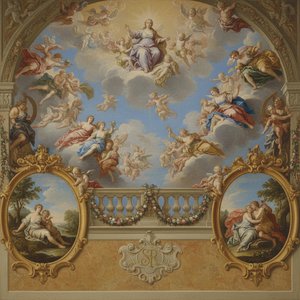
Crosato’s prolific output encompassed portraits, religious scenes, and decorative frescoes—works that exemplify the elegance and sophistication of Rococo style. Among his most celebrated paintings is “The Finding of Moses,” a dramatic depiction imbued with emotional intensity and masterful use of chiaroscuro. Similarly impressive is "Apollo's Carriage," showcasing meticulous attention to detail and conveying a sense of serene beauty. His monumental frescoes, particularly those adorning Palazzo Rezzonico in Venice—including the breathtaking ceiling depicting Apollo’s chariot—remain enduring symbols of Venetian artistic achievement. Giovanni Battista Crosato’s contribution to Venetian art history is undeniable; he stands as an exemplar of Rococo artistry and a champion of Venetian cultural heritage.
Entdecken Sie das Werk des venezianischen Barockmeisters Sebastiano Ricci! Erfahren Sie mehr über seinen Stil, seine Fresken und sein Vermächtnis. Kunstberatung & hochwertige Reproduktionen bei OriginalUniqueArt.
Entdecken Sie die 25 Meisterwerke von Jacopo Tintoretto! Tauchen Sie ein in die dramatische Welt der venezianischen Renaissance. Hochwertige Kunst-Reproduktionen & Inspiration für Ihr Zuhause – jetzt auf OriginalUniqueArt.com.
Explore the dramatic world of Baroque art! Discover iconic artists like Caravaggio & Rubens, defining techniques, and its lasting impact on art history. Expert insights for collectors & enthusiasts at OriginalUniqueArt.
OStudio-AssistentOnline · antwortet innerhalb einer Minute
Hallo! Ich kann Ihnen dabei helfen, ein Kunstwerk auszuwählen, eine Bestellung zu verfolgen oder Fragen zur Garantie zu beantworten. Wie kann ich Ihnen heute behilflich sein?