Der Mailänder Meister von Licht und Linie
In der lebendigen, spirituell aufgeladenen Atmosphäre des Mailands des späten sechzehnten Jahrhunderts – einer Epoche, die durch die tiefe Frömmigkeit der Gegenreformation geprägt war – trat Giovanni Ambrogio Figino als eine entscheidende Stimme der lombardischen Schule hervor. Geboren um 1553 in Mailand, war Figino ein Kind einer Ära, in der die Kunst sowohl als Fenster zum Göttlichen als auch als Spiegel des aufstrebenden Humanismus der Renaissance diente. Seine künstlerische Reise begann unter der strengen Anleitung von Gian Paolo Lomazzo, einem Meister, dessen Einfluss in Figino eine tiefe Ehrfurcht vor anatomischer Präzision und den klassischen Kompositionsprinzipien verankerte. Diese fundierte Ausbildung ermöglichte es ihm, sich sicher in den Komplexitäten des Geistlichen wie auch des Weltlichen zu bewegen, was ihn zu einer vielseitigen Kraft in der Mailänder Kunstszene machte.
Während sich viele seiner Zeitgenossen ausschließlich auf die monumentale Größe von Altarbildern konzentrierten, besaß Figino eine einzigartige Dualität in seinem Talent. Er wurde ebenso sehr für seine feine, meisterhafte Zeichnungstechnik gefeiert wie für seine Fähigkeit, Ölgemälden Leben einzuhauchen. Seine Zeichnungen, von denen über vierhundert Werke bekannt sind, offenbaren einen Künstler, der von den Nuancen der Form und dem subtilen Zusammenspiel von Licht und Schatten besessen war. Diese Präzision fand ihren tiefgründigsten Ausdruck in seinen monumentalen Aufträgen, wie etwa den atemberaubenden Orgeldeckeln des Mailänder Doms. In Zusammenarbeit mit versierten Zeitgenossen wie Camillo Procaccini und Giuseppe Meda half Figino dabei, einen visuellen Teppich biblischer Pracht zu weben, indem er die epische Durchquerung des Roten Meeres und die himmlische Himmelfahrt Christi mit einer Dynamik und Dramatik darstellte, die die Gläubigen in ihren Bann zog.
Psychologische Tiefe und die Kunst des Porträts
Jenseits der großen Erzählungen der Kirche lag Figinos wahres Genie oft in den intimen Räumen der Porträtkunst. Er besaß die unheimliche FähMTAB, nicht nur das physische Ebenbild seiner Subjekte einzufangen, sondern deren eigentliches Wesen – die stille Würde, die unterschwellige Spannung oder das intellektuelle Gewicht derer, die vor ihm Platz nahmen. Sein Porträt von Lucio Foppa steht als Zeugnis dieser psychologischen Einsicht. In diesem Werk begegnet dem Betrachter ein Motiv, das mit einer so bemerkenswerten Realität dargestellt ist, dass sich die Textur seiner Kleidung und die Schwere seines Blicks fast greifbar anfühlen. Durch eine gedämpfte Palette aus Erdtönen und den strategischen Einsatz von Licht lenkte Figino die Aufmerksamkeit des Betrachters auf den Charakter des Mannes und erhob das Porträt von einer bloßen Abbildung der Erscheinung zu einer tiefgreifenden Studie menschlicher Identität.
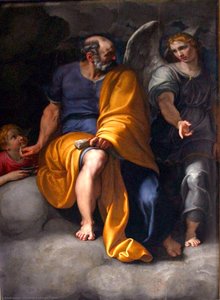
Diese Meisterschaft erstreckte sich auch auf seine religiösen Kompositionen, in denen er versuchte, durch Klarheit und Anmut Frömmigkeit zu evozieren. Seine Darstellungen des Heiligen Ambrosius und der Madonna mit Kind, die heute in der prestigeträchtigen Brera-Galerie aufbewahrt werden, demonstrieren eine Beherrschung von Farbe und Komposition, welche die stilistische Eleganung der lombardischen Tradition widerspiegelt. In diesen Werken wird das Göttliche zugänglich gemacht, dargestellt mit einer taktilen Schönheit, die zur Kontemplation einlädt. Selbst bei der Erkundung der engeren Grenzen seiner Ära, wie dem aufstrebenden Genre des Stilllebens, bewies Figino einen abenteuerlichen Geist. Sein Stillleben mit Pfirsichen und Feigenblättern zeigt eine ungewöhnliche Neugier und beweist, dass er das Wunderbare im Alltäglichen finden konnte, indem er die üppigen Texturen der Natur mit derselben Ehrfurcht einfing, die er den Heiligen entgegenbrachte.
Ein bleibendes Erbe in der lombardischen Tradition
Die historische Bedeutung von Giovanni Ambrogio Figino liegt in seiner Fähigkeit, die Kluft zwischen den strengen Traditionen der Vergangenheit und den expressiven Innovationen des kommenden Jahrhunderts zu überbrücken. Er war ein Künstler, der sich innerhalb der Grenzen religiöser Dogmen bewegen konnte, während er gleichzeitig den aufstrebenden Realismus der Porträtmalerei und die zarte Schönheit der Natur erforschte. Sein Leben, das 1608 endete, markierte das Ende eines glanzvollen Kapitels der Mailänder Kunst, doch sein Einfluss überdauerte durch die Akribie seiner Zeichnungen und die beständige Kraft seiner gemalten Visionen.
Heute dienen die Werke Figinos als wesentliche Bezugspunkte für das Verständnis der künstlerischen Seele der Lombardei. Sein Erbe findet sich in:
- Der Meisterschaft der Zeichnung: Er lieferte eine Blaupause für anatomische Genauigkeit und zeichnerische Exzellenz in der Spätrenaissance.
- Der Entwicklung der Porträtkunst: Der Übergang von der einfachen Darstellung hin zu einem tiefen psychologischen Realismus.
- Genre-Innovation: Die Einführung eines Niveaus an Raffinesse in der Stilllebenmalerei, das unter seinen italienischen Zeitgenossen selten war.
- Religiöser Erzählkunst: Der Beitrag zur visuellen Sprache der Gegenreformation durch monumentale und intime sakrale Kunst.