Franceschino Zavattari (1414–1453): A Venetian Master of Fresco
Franceschino Zavattari, born around 1414 in Monza, Lombardy, was a prolific Renaissance painter whose career spanned roughly three decades and cemented his place as one of the foremost fresco artists working in Venice during the early fifteenth century. While biographical details remain scarce – largely due to the fragmentary nature of surviving documentation – scholarly consensus points to Zavattari’s formative years spent under the tutelage of Giovanni Battista Falcone, a prominent artist active in Milanese and Venetian circles. This mentorship instilled in him a profound understanding of Gothic Revival style and established a foundation for his distinctive artistic vision.
- Early Career & Patronage: Zavattari’s initial commissions primarily focused on ecclesiastical projects within Monza Cathedral, where he undertook the ambitious undertaking of decorating several chapels dedicated to saints—most notably the Chapel of Saint Ludovico Gonzaga and Saint Alessandro Volta. These frescoes exemplify his mastery of perspective and spatial illusionism, techniques honed during his Milanese apprenticeship.
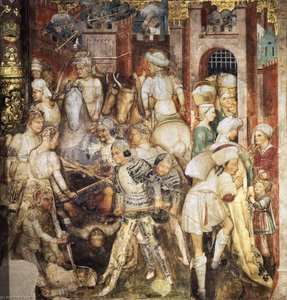
- The Tomb Chapel of Queen Theodolinda: Arguably Zavattari’s magnum opus is the monumental Tomb Chapel of Queen Theodolinda, commissioned by Bishop Giovanni Mocchetti in 1430. This chapel stands as a testament to Zavattari's artistic prowess and represents one of Venice’s most celebrated achievements of Gothic Revival style. The scene depicts Saint Ludovico Gonzaga and Saint Alessandro Volta, highlighting Zavattari’s meticulous attention to detail and his ability to convey profound spiritual emotion through color and composition.
- Venetian Style & Influences: Zavattari's Venetian period witnessed a shift towards a more refined aesthetic sensibility, influenced by the burgeoning humanist movement and the artistic innovations emanating from Florence. He embraced techniques developed by Filippo Brunelleschi and Donatello, incorporating geometric precision and sculptural modeling into his fresco cycles.
- Notable Works Beyond Monza: Although primarily associated with Monza Cathedral, Zavattari’s artistic endeavors extended beyond Lombardy. Evidence suggests he contributed to decorating churches in Verona and Brescia, demonstrating his versatility as a painter and furthering the dissemination of Venetian artistic ideals throughout Northern Italy.
Sources:
- Grove Art Online (2003-2008) accessed 13 October 2004
Further Research: