Porträt von Aelbert Jacobsz. Cuyp

Die 100 berühmtesten Gemälde von Aelbert Jacobsz. Cuyp, jedes ein Unikat

Aktualisiert im Oktober 2026 · sortiert nach unserem Popularitätsindex (Suchanfragen, Aufrufe und Bestellungen für jedes Werk) · 225 Werke von Aelbert Jacobsz. Cuyp in unserem Katalog

Kurz gesagt

Blick auf Arnhem von Süden, ca. 1642-1646 (1646) ist das von Aelbert Jacobsz. Cuyp geschaffene Gemälde, das die meiste Aufmerksamkeit auf sich zieht; das Original befindet sich im Albertina, Wien. Danach wandert der Blick zu Landschaft mit Vieh (1649) und Portrait of Christina Pyll (1650). Von den 225 Werken von Aelbert Jacobsz. Cuyp in unserem Katalog sind diese 100 die bekanntesten – jedes ein einzigartiges Original, präsentiert mit seinem Entstehungsjahr, dem Museum und dem Grund für seine zeitlose Bedeutung.

1620 – 1691, Dordrecht Niederländisches goldenes zeitalter Meiste Werke: Dordrechts Museum

Die 10 besten Gemälde von Aelbert Jacobsz. Cuyp, aus der Sicht der Galerie

1
Blick auf Arnhem von Süden, ca. 1642-1646 (1646) von Aelbert Jacobsz. Cuyp

Blick auf Arnhem von Süden, ca. 1642-1646

1646 · Aquarell · Albertina, Wien

Den Blick auf Aelbert Jacobsz Cuyp's „Blick auf Arnhem von Süden“ zu richten, bedeutet, direkt in die leuchtende Umarmung des Goldenen Zeitalters der Niederlande einzutauchen. Dieses Gemälde, das etwa zwischen 1642 und 1646 entstand, ist nicht bloß die Darstellung einer Stadtlandschaft; es ist ein orchestrierter Moment tiefster Heiterkeit. Die Komposition entfaltet sich in einem sanften, horizontalen Schwung und lädt den Betrachter auf eine kontemplative Reise über die pastorale Weite einzuladen,…
2
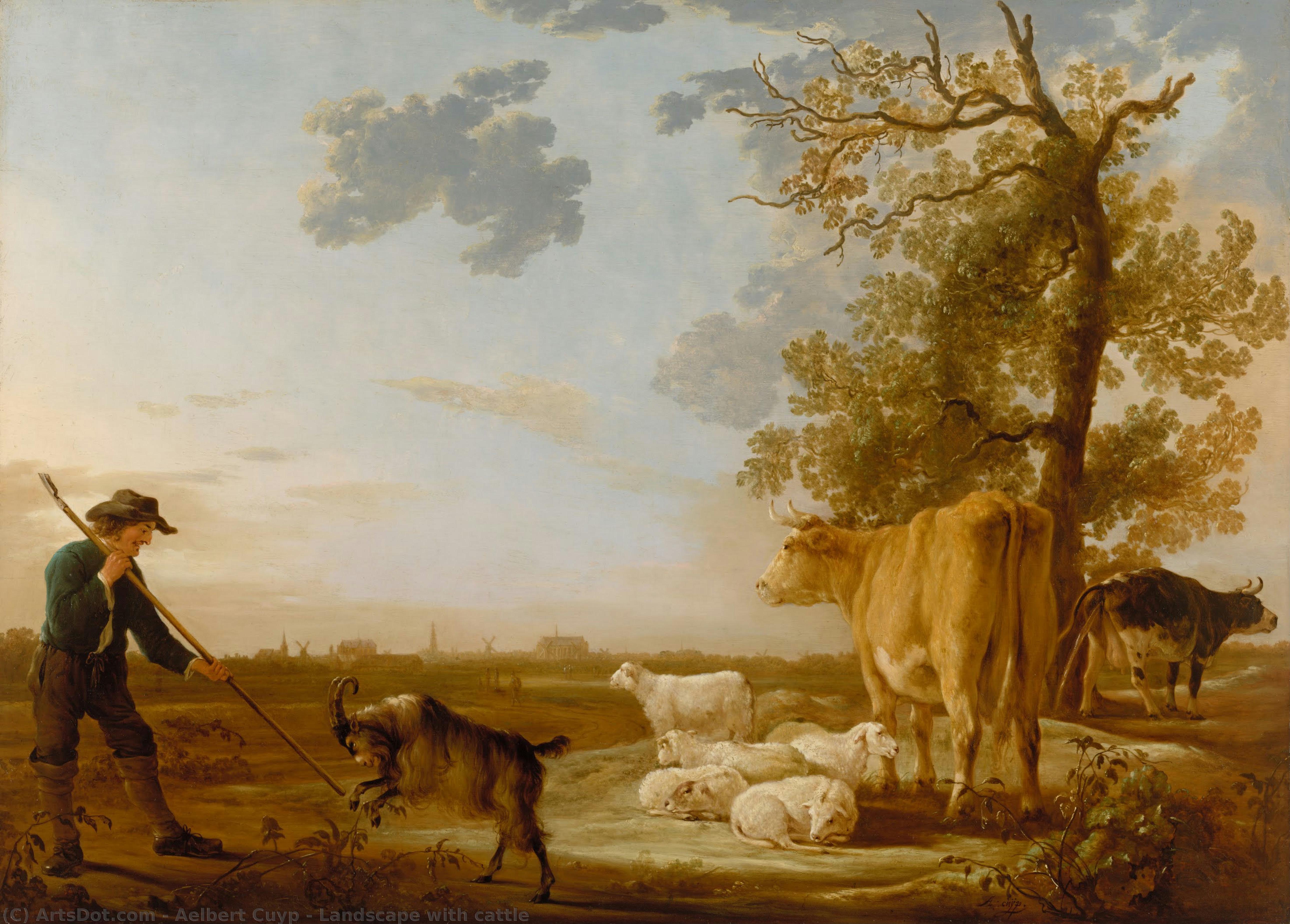
Landschaft mit Vieh (1649) von Aelbert Jacobsz. Cuyp

Landschaft mit Vieh

1649 · Öl auf Leinwand · National Gallery of Victoria, Melbourne

Im Herzen des siebzehnten Jahrhunderts, als die Niederländische Republik zu beispielloser maritimer Macht und wirtschaftlichem Wohlstand aufstieg, entstand in den Ateliers von Dordrecht eine neue Art visueller Poesie. Aelbert Jacobsz Cuyp, ein Titan des Goldenen Zeitalters der Niederlande, hielt diese Ära nicht durch monumentale historische Schlachten oder königliche Porträts fest, sondern durch die stille, atmende Erhabenheit der Landschaft. Sein Meisterwerk, Landschaft mit Vieh, dient als leuchtendes Fenster in eine Welt,…

3
Portrait of Christina Pyll (1650) von Aelbert Jacobsz. Cuyp

Portrait of Christina Pyll

1650 · Oil On Canvas · Slowakische Nationalgalerie, Bratislava

Christina Pyll sits before us, her gaze meeting the observer with a directness that feels startlingly immediate. She is a woman of substance, the wife of the mayor of Dordrecht, and her posture reflects a quiet, dignified authority. The light catches the curve of her face and the delicate texture of her skin, pulling her forward from a dark, indeterminate background. There is a stillness in her expression, a moment…

4
Porträt der Familie Sam (1653) von Aelbert Jacobsz. Cuyp

Porträt der Familie Sam

1653 · Öl auf Leinwand · Szépművészeti Múzeum, Budapest

Im gewaltigen Wandteppich des Goldenen Zeitalters der Niederlande fangen nur wenige Werke die stille Würde und den aufstrebenden Wohlstand des siebzehnten Jahrhunderts so intim ein wie Aelbert Jacobszoon Cuyp’s „Porträt der Familie Sam“. Dieses im Jahr 1653 entstandene großformatige Ölgemälde ist weit mehr als nur ein bloßes Zeugnis einer Abstammungslinie; es ist ein Fenster in eine Welt, in der familiäre Bindungen und nationale Identität untrennbar miteinander verwoben waren. Beim Betrachten…

5
Mädchen mit Strohhut und einem Korb mit Weintrauben (1663) von Aelbert Jacobsz. Cuyp

Mädchen mit Strohhut und einem Korb mit Weintrauben

1663 · Öl auf Leinwand · Museum Boijmans Van Beuningen, Rotterdam

Das Gemälde „Mädchen mit Strohhut und einem Korb mit Weintrauben“ ist ein Ölgemälde von Aelbert Cuyp. Das im Jahr 1663 entstandene Werk ist ein herausragendes Beispiel für das Goldene Zeitalter der Niederlande. Es repräsentiert eine Ära des bedeutenden kulturellen Aufschwungs in den Niederlanden, die durch eine Vorliebe für die realistische Darstellung alltäglicher Motive und die meisterhafte Beherrschung des Lichts geprägt war.

6
Reiter in einer Landschaft (1675) von Aelbert Jacobsz. Cuyp

Reiter in einer Landschaft

1675 · Öl auf Leinwand · Wallace Collection, London

Eine serene Landschaft entfaltet sich in einer ausgewogenen Komposition, in der das Gewicht dichter, belaubter Bäume auf der rechten Seite durch einen weiten Himmel und ferne Architektur auf der linken Seite ausgeglichen wird. Zwei Reiter zu Pferd nehmen den Vordergrund ein, deren Gestalten mit großer Aufmerksamkeit für die Muskulatur der Tiere und die schweren Faltenwürfe der Kleidung dargestellt sind. Eine Figur steht da und zeigt zum Horizont – eine Geste,…

Berühmte Gemälde von Aelbert Jacobsz. Cuyp, Nummer 11 bis 100

11Four cows and herders below a cliff (1640) von Aelbert Jacobsz. CuypFour cows and herders below a cliff1640 12Shepherds in a Landscape (1640) von Aelbert Jacobsz. CuypShepherds in a Landscape1640 · Musée Ingres 13A musician as Orpheus, possibly a Self-portrait (1647) von Aelbert Jacobsz. CuypA musician as Orpheus, possibly a Self-portrait1647 · Scottish National Gallery 14Landscape with Cattle (1639) von Aelbert Jacobsz. CuypLandscape with Cattle1639 · Musée des Beaux-Arts et d’Archéologie 15Landscape with Two Herders and Cattle (1640) von Aelbert Jacobsz. CuypLandscape with Two Herders and Cattle1640 16A One-year-old Boy with a Sheep (1639) von Aelbert Jacobsz. CuypA One-year-old Boy with a Sheep1639 · Polesden Lacey 17Two Shepherds in a Hilly Landscape (1646) von Aelbert Jacobsz. CuypTwo Shepherds in a Hilly Landscape1646 18Conversion of Paul (1646) von Aelbert Jacobsz. CuypConversion of Paul1646 19Landscape with Shepherds and Shepherdesses (1644) von Aelbert Jacobsz. CuypLandscape with Shepherds and Shepherdesses1644 20Landscape with Milkmaid and Cattle (1646) von Aelbert Jacobsz. CuypLandscape with Milkmaid and Cattle1646 · John und Mable Ringling Museum der Kunst 21Milking Cows (1640) von Aelbert Jacobsz. CuypMilking Cows1640 · National Gallery of Ireland 22Family Portrait with a View of Rhenen (1641) von Aelbert Jacobsz. CuypFamily Portrait with a View of Rhenen1641 · National Museum of Decorative Arts 23Portrait of a Family in a Landscape (1641) von Aelbert Jacobsz. CuypPortrait of a Family in a Landscape1641 · Israel Museum 24An Evening Ride near a River (1640) von Aelbert Jacobsz. CuypAn Evening Ride near a River1640 · Dulwich Picture Gallery 25Landscape with Cattle and Figure (1640) von Aelbert Jacobsz. CuypLandscape with Cattle and Figure1640 · Dulwich Picture Gallery 26Kicking Horse (1648) von Aelbert Jacobsz. CuypKicking Horse1648 · Philadelphia Museum of Art 27landscape with horse - man and cattle (1645) von Aelbert Jacobsz. Cuyplandscape with horse - man and cattle1645 28the watering-place (1645) von Aelbert Jacobsz. Cuypthe watering-place1645 29landscape with two shepherds (1645) von Aelbert Jacobsz. Cuyplandscape with two shepherds1645 30landscape with 2 riders + shepherd (1645) von Aelbert Jacobsz. Cuyplandscape with 2 riders + shepherd1645 31A drover and milkmaid standing beside cattle, a view to a town in the distance (1650) von Aelbert Jacobsz. CuypA drover and milkmaid standing beside cattle, a view to a town in the distance1650 32Young lady in a straw hat holding a cockerel and a basket of eggs (1650) von Aelbert Jacobsz. CuypYoung lady in a straw hat holding a cockerel and a basket of eggs1650 33Interior of the Grote Kerk, Dordrecht (1650) von Aelbert Jacobsz. CuypInterior of the Grote Kerk, Dordrecht1650 · Suermondt-Ludwig-Museum 34Piping Shepherds, with a view of Leiden (1650) von Aelbert Jacobsz. CuypPiping Shepherds, with a view of Leiden1650 35Halt at an inn, with two horses tied to a tree (1650) von Aelbert Jacobsz. CuypHalt at an inn, with two horses tied to a tree1650 36Two Shepherds with Bucking Goat (1650) von Aelbert Jacobsz. CuypTwo Shepherds with Bucking Goat1650 37Evening in the Meadows (1650) von Aelbert Jacobsz. CuypEvening in the Meadows1650 · Norton Simon Museum 38Conversion of Paul on the Road to Damascus (1650) von Aelbert Jacobsz. CuypConversion of Paul on the Road to Damascus1650 · Musée de Picardie 39Portrait of a girl with a sprig of flowers (1655) von Aelbert Jacobsz. CuypPortrait of a girl with a sprig of flowers1655 40A Cock and Two Hens (1650) von Aelbert Jacobsz. CuypA Cock and Two Hens1650 41River Landscape with Bagpipe Player (1650) von Aelbert Jacobsz. CuypRiver Landscape with Bagpipe Player1650 · Cincinnati Art Museum 42An artist sketching, near Elten (1655) von Aelbert Jacobsz. CuypAn artist sketching, near Elten1655 · Woburn Abbey 43Officer with his Horse (1650) von Aelbert Jacobsz. CuypOfficer with his Horse1650 · Kunstmuseum Basel 44Two Cows with a Shepherd and Shepherdess (1650) von Aelbert Jacobsz. CuypTwo Cows with a Shepherd and Shepherdess1650 · Wallraf-Richartz-Museum 45Orpheus and the Animals (1650) von Aelbert Jacobsz. CuypOrpheus and the Animals1650 46Landscape with Frederick Henry at the 1637 Siege of Breda (1650) von Aelbert Jacobsz. CuypLandscape with Frederick Henry at the 1637 Siege of Breda1650 47Cows and Figures in a Hilly Landscape (1660) von Aelbert Jacobsz. CuypCows and Figures in a Hilly Landscape1660 48Horsemen Watering Their Horses (1660) von Aelbert Jacobsz. CuypHorsemen Watering Their Horses1660 49Landscape with Cattle and Milkmaid (1650) von Aelbert Jacobsz. CuypLandscape with Cattle and Milkmaid1650 · Mildred Lane Kemper Art Museum 50Travellers Halting at an Inn (1660) von Aelbert Jacobsz. CuypTravellers Halting at an Inn1660 51Man Eating Mussels (1650) von Aelbert Jacobsz. CuypMan Eating Mussels1650 52Cows at Pasture, with a Milkmaid and a Sleeping Herdsman (1660) von Aelbert Jacobsz. CuypCows at Pasture, with a Milkmaid and a Sleeping Herdsman1660 53Portrait of a Sportsman (1660) von Aelbert Jacobsz. CuypPortrait of a Sportsman1660 54Portrait of a girl from the Van der Burch family (1655) von Aelbert Jacobsz. CuypPortrait of a girl from the Van der Burch family1655 55Riders at Rest by Burg Ubbergen (1660) von Aelbert Jacobsz. CuypRiders at Rest by Burg Ubbergen1660 56A Landscape with a Herdsman and Bull (1654) von Aelbert Jacobsz. CuypA Landscape with a Herdsman and Bull1654 · Polesden Lacey 57Portrait of a Woman Aged Twenty-one as a Hunter (1651) von Aelbert Jacobsz. CuypPortrait of a Woman Aged Twenty-one as a Hunter1651 58Saint Philip Baptising the Ethiopian Eunuch (1655) von Aelbert Jacobsz. CuypSaint Philip Baptising the Ethiopian Eunuch1655 · Anglesey Abbey 59Landscape with a Horseman, Figures, and Cattle (1655) von Aelbert Jacobsz. CuypLandscape with a Horseman, Figures, and Cattle1655 · National Trust 60Three girls with sheep in a landscape (1650) von Aelbert Jacobsz. CuypThree girls with sheep in a landscape1650 61Three Little Shepherdesses with Sheep (1650) von Aelbert Jacobsz. CuypThree Little Shepherdesses with Sheep1650 62Huntsmen Halted (1653) von Aelbert Jacobsz. CuypHuntsmen Halted1653 · Barber-Institut für Bildende Kunst 63Boy Holding a Goose and a Basket (1650) von Aelbert Jacobsz. CuypBoy Holding a Goose and a Basket1650 · Worcester Art Museum 64Portrait of Twins (1655) von Aelbert Jacobsz. CuypPortrait of Twins1655 · Bayerische Staatsgemäldesammlungen 65A Young Gentleman on Horseback (1655) von Aelbert Jacobsz. CuypA Young Gentleman on Horseback1655 · Bayerische Staatsgemäldesammlungen 66Landscape with fishermen and shepherds with their cattle (1650) von Aelbert Jacobsz. CuypLandscape with fishermen and shepherds with their cattle1650 · Bayerische Staatsgemäldesammlungen 67Cattle by a River (1650) von Aelbert Jacobsz. CuypCattle by a River1650 · Mauritshuis 68Two Cavalry Troopers Talking to a Peasant (1650) von Aelbert Jacobsz. CuypTwo Cavalry Troopers Talking to a Peasant1650 · Royal Collection 69A Cavalry Trooper Decorating his Dappled Grey Horse with a Reclining Spaniel at his Feet (1651) von Aelbert Jacobsz. CuypA Cavalry Trooper Decorating his Dappled Grey Horse with a Reclining Spaniel at his Feet1651 · Royal Collection 70The Passage Boat (1650) von Aelbert Jacobsz. CuypThe Passage Boat1650 · Buckingham Palace 71A Woman holding Oliebol Treats (1652) von Aelbert Jacobsz. CuypA Woman holding Oliebol Treats1652 · Dordrechts Museum 72Horsemen resting in a landscape (1657) von Aelbert Jacobsz. CuypHorsemen resting in a landscape1657 · Dordrechts Museum 73Interior of a Stable (1650) von Aelbert Jacobsz. CuypInterior of a Stable1650 · Dordrechts Museum 74A Man holding a Platter of Fish (1652) von Aelbert Jacobsz. CuypA Man holding a Platter of Fish1652 · Dordrechts Museum 75Portrait of Anna Blocken (1649) von Aelbert Jacobsz. CuypPortrait of Anna Blocken1649 · Minneapolis Institute of Art 76The Flight into Egypt (1655) von Aelbert Jacobsz. CuypThe Flight into Egypt1655 · Los Angeles County Museum of Art 77Interior of the Groote Kerk, Dordrecht (1660) von Aelbert Jacobsz. CuypInterior of the Groote Kerk, Dordrecht1660 · Philadelphia Museum of Art 78Groom with Three Horses and Two Dogs (1660) von Aelbert Jacobsz. CuypGroom with Three Horses and Two Dogs1660 · Philadelphia Museum of Art 79Landscape with Herdsmen (1650) von Aelbert Jacobsz. CuypLandscape with Herdsmen1650 · National Gallery of Art 80The Milkmaid (1655) von Aelbert Jacobsz. CuypThe Milkmaid1655 · Museum Boijmans Van Beuningen 81Portrait of Margaretha de Veer (?-1688) (1653) von Aelbert Jacobsz. CuypPortrait of Margaretha de Veer (?-1688)1653 82Portrait of a Youth as a Huntsman (1650) von Aelbert Jacobsz. CuypPortrait of a Youth as a Huntsman1650 83Portrait of a Man (1650) von Aelbert Jacobsz. CuypPortrait of a Man1650 · Nationalmuseum Gdańsk 84Portrait of a family. (1650) von Aelbert Jacobsz. CuypPortrait of a family.1650 · Museum in Nysa 85Landscape with Cattle and Figures (1670) von Aelbert Jacobsz. CuypLandscape with Cattle and Figures1670 · Kelvingrove Kunstgalerie und Museum 86Cows and Herdsman by a River (1663) von Aelbert Jacobsz. CuypCows and Herdsman by a River1663 · The Frick Collection 87A Herd of Cows with a Herdsman and a Rider (1667) von Aelbert Jacobsz. CuypA Herd of Cows with a Herdsman and a Rider1667 · National Gallery of Canada 88Landscape with three Horsemen (1665) von Aelbert Jacobsz. CuypLandscape with three Horsemen1665 89Rocky Landscape with the Rest on the Flight into Egypt (1664) von Aelbert Jacobsz. CuypRocky Landscape with the Rest on the Flight into Egypt1664 90Mountainous landscape with herdmen and cattle (1664) von Aelbert Jacobsz. CuypMountainous landscape with herdmen and cattle1664 · Limburg Museum 91Landscape with flute-playing herder and cattle (1663) von Aelbert Jacobsz. CuypLandscape with flute-playing herder and cattle1663 · Dordrechts Museum 92The Little Girl with the Goat (1663) von Aelbert Jacobsz. CuypThe Little Girl with the Goat1663 · Statens Museum for Kunst 93Landscape with Three Cows and Shepherds (1663) von Aelbert Jacobsz. CuypLandscape with Three Cows and Shepherds1663 · Statens Museum for Kunst 94A Shepherd with His Flock (1675) von Aelbert Jacobsz. CuypA Shepherd with His Flock1675 · Wallace Collection 95Travellers in a Landscape (1689) von Aelbert Jacobsz. CuypTravellers in a Landscape1689 · Museum of Fine Arts 96The mussel eater (1650) von Aelbert Jacobsz. CuypThe mussel eater1650 · Museum Boijmans Van Beuningen 97Portrait of a young girl (1653) von Aelbert Jacobsz. CuypPortrait of a young girl1653 · Nationalmuseum Warschau 98Interior of a Cowshed (1663) von Aelbert Jacobsz. CuypInterior of a Cowshed1663 · Nationalmuseum 99Holzplatz bei Dordrecht von Aelbert Jacobsz. CuypHolzplatz bei DordrechtDie Kremer Sammlung 100Bauern und Vieh am Fluss Merwede (1660) von Aelbert Jacobsz. CuypBauern und Vieh am Fluss Merwede1660 · Mauritshuis

Die Motive, die Aelbert Jacobsz. Cuyp faszinierten

Die vier Motive, die in diesen Originalen am häufigsten vorkommen, jeweils mit ihrem herausragendsten Beispiel.

Die Museen, die die Originale von Aelbert Jacobsz. Cuyp beherbergen

Die 8 Museen, in denen sich die meisten der auf dieser Seite aufgeführten Gemälde befinden.

Museum Stadt Werke von Aelbert Jacobsz. Cuyp Gemälde aus dieser Liste
Dordrechts Museum, DordrechtDordrechts Museum Dordrecht 9 Five Cows with Herdsmen, A Woman holding Oliebol Treats, Horsemen resting in a landscape
Museum Boijmans Van Beuningen, RotterdamMuseum Boijmans Van Beuningen Rotterdam 7 Mädchen mit Strohhut und einem Korb mit Weintrauben, The Milkmaid, The mussel eater
Philadelphia Museum of Art, PhiladelphiaPhiladelphia Museum of Art Philadelphia 6 Kicking Horse, Interior of the Groote Kerk, Dordrecht, Groom with Three Horses and Two Dogs
Bayerische Staatsgemäldesammlungen, MünchenBayerische Staatsgemäldesammlungen München 5 Portrait of Twins, A Young Gentleman on Horseback, Landscape with fishermen and shepherds with their cattle
Wallace Collection, LondonWallace Collection London 4 Reiter in einer Landschaft, A Shepherd with His Flock
Dulwich Picture Gallery, LondonDulwich Picture Gallery London 4 An Evening Ride near a River, Landscape with Cattle and Figure
Statens Museum for Kunst, KopenhagenStatens Museum for Kunst Kopenhagen 3 The Little Girl with the Goat, Landscape with Three Cows and Shepherds
Polesden LaceyPolesden Lacey 2 A One-year-old Boy with a Sheep, A Landscape with a Herdsman and Bull

Aelbert Jacobsz. Cuyp über die Jahrzehnte hinweg: ein einzigartiges Original für jedes

Werke nach Jahrzehnten

Wählen Sie ein Jahrzehnt aus, um das Original zu sehen, das es definiert.

Gemälde von Aelbert Jacobsz. Cuyp: Fragen an die Galerie

Was ist das bekannteste Werk von Aelbert Jacobsz. Cuyp?Die Antwort enthüllen

Blick auf Arnhem von Süden, ca. 1642-1646 (1646), Albertina, Wien. Als Nächstes folgen Landschaft mit Vieh (1649) und Portrait of Christina Pyll (1650).

In welchem Alter hat Aelbert Jacobsz. Cuyp Blick auf Arnhem von Süden, ca. 1642-1646 geschaffen?Die Antwort enthüllen

26 Jahre alt: Blick auf Arnhem von Süden, ca. 1642-1646 stammt aus dem Jahr 1646, und Aelbert Jacobsz. Cuyp wurde in 1620 geboren.

Welche zehn Gemälde von Aelbert Jacobsz. Cuyp sind die bekanntesten?Die Antwort enthüllen

Blick auf Arnhem von Süden, ca. 1642-1646, Landschaft mit Vieh, Portrait of Christina Pyll, Porträt der Familie Sam, Mädchen mit Strohhut und einem Korb mit Weintrauben, Reiter in einer Landschaft, Sheep in a Stable, Five Cows with Herdsmen, Four children as shepherds, with two sheep und Herdsman and Two Cows. Die obige Rangliste gibt das jeweilige Jahr und das Museum an.

Wie viele Werke von Aelbert Jacobsz. Cuyp sind bekannt?Die Antwort enthüllen

Unser Katalog umfasst 225 Werke von Aelbert Jacobsz. Cuyp, datiert von 1639 bis 1689.

Wo kann man die berühmtesten Originale von Aelbert Jacobsz. Cuyp sehen?Die Antwort enthüllen

Meistens in Dordrechts Museum (Dordrecht), Museum Boijmans Van Beuningen (Rotterdam) und Philadelphia Museum of Art (Philadelphia). Die obige Museumstabelle listet alle auf.

In welcher Zeitspanne schuf Aelbert Jacobsz. Cuyp seine bekanntesten Gemälde?Die Antwort enthüllen

In 1650s: 49 der 100 Werke auf dieser Seite wurden damals geschaffen, darunter Portrait of Christina Pyll.

Welches berühmte Gemälde von Aelbert Jacobsz. Cuyp ist das früheste und welches das jüngste?Die Antwort enthüllen

Auf dieser Seite ist das früheste Werk aus Landscape with Cattle (1639) und das neueste aus Travellers in a Landscape (1689).

Welche Motive bevorzugte Aelbert Jacobsz. Cuyp?Die Antwort enthüllen

Landschaft (3), Stadtansicht (2) und Vieh (2), verteilt auf die 100 Werke auf dieser Seite.

Mit welchen Materialien hat Aelbert Jacobsz. Cuyp am häufigsten gemalt?Die Antwort enthüllen

Öl auf Leinwand, für 5 von insgesamt 100 Werken auf dieser Seite.

Welcher Stilrichtung gehört das Werk von Aelbert Jacobsz. Cuyp an?Die Antwort enthüllen

Niederländisches goldenes zeitalter, wenn man die Originale auf dieser Seite beurteilt.

Welche Originale von Aelbert Jacobsz. Cuyp kann ich im Dordrechts Museum sehen?Die Antwort enthüllen

Five Cows with Herdsmen, A Woman holding Oliebol Treats und Horsemen resting in a landscape: Das Dordrechts Museum, Dordrecht beherbergt 6 der Werke auf dieser Seite.

Aelbert Jacobsz. Cuyp: ein Porträt des Künstlers

Aelbert Jacobszoon Cuyp (1620 – 1695): The Poet of Light

Aelbert Jacobszoon Cuyp, a cornerstone of the Dutch Golden Age, stands as one of the most celebrated landscape painters of his era. Born in Dordrecht, Netherlands, on October 20, 1620, he descended from a family steeped in artistic tradition—his father, Jacob Gerritszoon Cuyp, was himself a respected portraitist—a lineage that profoundly shaped his formative years and instilled within him an unwavering dedication to capturing the sublime beauty of the natural world. His early training under his father’s guidance established a bedrock of technical skill and fostered a distinctive artistic sensibility that would define his entire oeuvre.

A Style Born of Convergence

Cuyp's artistic style is remarkably complex, reflecting the confluence of influences from several prominent artists. Like Jan van Goyen—whose mastery of atmospheric perspective profoundly impacted Cuyp’s approach—he prioritized conveying the ethereal quality of dawn and dusk. Simultaneously, Jacob Gerritsz Cuyp (his father) instilled in him a meticulous attention to form and detail, mirroring the stylistic rigor championed by Rembrandt van Rijn. This harmonious blend resulted in Cuyp's signature landscapes: expansive vistas bathed in golden light, imbued with an almost palpable sense of serenity and tranquility. These scenes weren’t merely depictions of scenery; they were meditations on light itself—a cornerstone of Baroque painting—and a testament to Cuyp’s profound understanding of visual perception.

Notable Works and Artistic Evolution

Cuyp's artistic journey unfolded across three distinct phases, each characterized by subtle stylistic refinements. His initial works showcased the influence of Jan van Goyen, prioritizing luminous hues and hazy atmospheric effects. As he matured, however, he embraced the more sculptural approach advocated by Jacob Gerritsz Cuyp, emphasizing precise delineation of contours and textural detail. Finally, around 1663, he moved into a house in Dordwijck where he spent his remaining years, absorbing inspiration from Jan Both—whose masterful use of color and chiaroscuro elevated Cuyp’s artistic ambitions. Among his most enduring masterpieces are *Cows in a River* (circa 1655-60), a quintessential example of his early style, and *A Herdsman with Five Cows*, which exemplifies the meticulous form and atmospheric depth characteristic of his later period. These paintings continue to captivate viewers today with their evocative portrayal of rural life and Cuyp’s unparalleled ability to translate light into emotion.

Legacy and Historical Significance

Cuyp's contribution to Dutch art history transcends mere stylistic innovation; he embodies the spirit of the Golden Age itself—a period marked by intellectual curiosity, artistic experimentation, and a fervent appreciation for beauty. Unlike many of his contemporaries who pursued grand narratives or mythological themes, Cuyp focused on capturing the quiet grandeur of the Netherlands’ landscapes, offering viewers a glimpse into a world untouched by turbulent political upheaval. His unwavering devotion to Calvinist principles—evident in his modest home furnishings—further underscores his humanist values and distinguishes him as an artist deeply rooted in moral contemplation. Aelbert Jacobszoon Cuyp remains not only a celebrated painter but also a symbol of artistic integrity and the enduring power of observation—a legacy that continues to inspire artists and scholars alike.