The Rebellion of Truth: Breaking from Academic Perfection Beyond the Surface: The Raw Power and Grit of Russian Realism The Rebellion of Truth: Breaking Away from Academic Perfection Russian Realism: The Soulful Power of Truth and the Unyielding Spir...
To understand the weight of a Russian landscape, one must first look at the rigid structures it sought to dismantle. In the mid-19th century, the Imperial Academy of Arts in Saint Petersburg operated under a strict hierarchy that favored the ethereal and the idealized. Art was often expected to serve classical mythology or sanitized historical triumphs, creating a distance between the canvas and the lived reality of the Russian people. This academic perfectionism sought to elevate subjects above the mundane, yet it failed to capture the heavy, transformative air of a nation in transition.
The emergence of Russian Realism was not merely a change in style; it was an unyielding pursuit of truth. Artists began to reject the polished, artificial grandeur of their predecessors in favor of a visceral connection to the soil. They turned their gaze toward the actual, often somber, textures of their surroundings. This movement functioned as a mirror, reflecting both the triumphs and the tragedies of a population through a palette that mirrored the earthy, muted tones of the countryside. It was an art form rooted in the very ground it depicted, seeking to find the essence of human existence within the landscape itself.
The Peredvizhniki: A Rebellion of Truth and Tradition
Peredvizhniki (Russian: передви́жники, IPA: [pʲɪrʲɪˈdvʲiʐnʲɪkʲɪ]), often called The Wanderers or The Itinerants in English, were a group of Russian realist artists who formed an artists' cooperative in protest of academic restrictions; it evolved int...
In 1863, a profound moment of artistic insurrection occurred when fourteen students decided to break away from the constraints of the Academy. Finding the conservative teachings too limiting, they formed an independent cooperative known as the Peredvizhniki, or The Wanderers. This group of rebels sought to bring art directly to the people, moving their exhibitions from the centers of power in Saint Petersburg and Moscow into the provinces. Their mission was deeply tied to the social shifts of the era, influenced by the liberal ideas of critics like Vissarion Belinsky and Nikolai Chernyshevsky.
The Wanderers did not shy away from the complexities of contemporary life. While their work often portrayed the struggles of the common man, they also found a profound beauty within the folk way of life. Their technique evolved toward a lighter palette and a freer manner of execution, moving away from the dark, heavy traditions of the past. By focusing on the relationship between people and their environment, the Peredvizhniki gave the Russian landscape a national character, transforming simple vistas into symbolic embodiments of a shared identity.
The Quiet Dignity of the Earth: Dubovskoi’s Rural Vision
The Quiet Dignity of Rural Russia Nikolai Dubovskoi was far more than a mere observer of the landscape; he was a poet of the Russian soil, capturing the profound stillness and rhythmic labor that defined an era. Born in 1859 in Kursk, his artistic jo...
Nikolai Dubovskoi, born in 1869 in Kursk, embodied the spirit of the Wanderer through his devotion to the Russian soil. He was far more than an observer; he was a poet of the landscape, capturing the profound stillness and rhythmic labor that defined his era. Trained under masters like Vasily Perov at the Moscow School of Sergiev Posad, Dubovskoi learned to look beyond the surface of his subjects. His work breathes with the atmosphere of the countryside, where every brushstroke honors the quiet dignity of the peasantry.
His canvases possess a singular ability to capture the weight of silence. In his depictions of rural life, one senses the subtle nuances of character revealed through the play of light and shadow. Dubovskoi’s technique often leaned toward a delicate impressionism within a realist framework, using light not just to illuminate, but to narrate the passage of time. Through his eyes, a humble cottage or a simple field becomes a stage for the eternal drama of existence, rendered with an honesty that avoids any sense of artificiality.
Atmospheric Resonance: Levitan and the Landscape of Mood
March is a landscape painting by the Russian artist Isaaс Levitan (1860–1900), created in 1895. It is now in the State Tretyakov Gallery in Moscow (Inventory 1489) and measures 60 × 75 cm (or 61 × 76 cm according to other sources). Levitan painted th...
If Dubovskoi captured the dignity of the earth, Isaak Levitan captured its soul through atmosphere. His landscapes are famous for their intense moods, often described as being filled with a profound philosophical meaning. Levitan possessed an extraordinary ability to manipulate light and color to evoke deep emotional responses. He could capture the heavy, expectant air before a storm or the soft, golden glow of a summer afternoon. In works such as March, painted entirely from nature, one can see his mastery in depicting the transition of seasons through the interplay of snow, sky, and trees.
Levitan’s work often carries a sense of meaning that transcends the mere depiction of a view. His landscapes are not static; they are living, breathing entities that reflect the psychological weight of the Russian experience. Whether painting the tranquil waters of the Volga or the quietude of a forest, he instilled a sense of grace and movement in the land. His ability to use light to create a sense of presence makes his work feel intimately connected to the viewer, inviting a moment of pause and reflection on the fleeting nature of time.
The Majesty of the Wild: Shishkin’s Monumental Forests
In stark contrast to the atmospheric shifts of Levitan, Ivan Shishkin offered a vision of monumental order and steadfastness. Often called the "Singer of the Forest," Shishkin’s works are characterized by an incredible, almost scientific detail. He approached the canvas with the task of rendering every single leaf, stone, and branch with absolute precision. This level of detail does not merely document the forest; it records its strength and permanence.
His large-scale works, such as In the Wild North, present a sense of epic Russian geography. The scale of his paintings, sometimes exceeding six feet in height, resonates with the idea of a country that is both vast and unyielding. Shishkin’s ability to combine precise realism with an undeniable sense of spirit allows him to capture the very essence of the Russian wilderness. His trees are symbols of resilience, rooted deeply in a landscape that feels as though it has existed long before the viewer arrived and will remain long after they depart.
Explore Russia's rich history & art at the State Russian Museum in St. Petersburg! Discover iconic icons, masterpieces by Repin & Surikov, and avant-garde treasures within imperial palaces.
To witness the breadth of this artistic evolution, one must look to the halls of the State Russian Museum in Saint Petersburg. Housed within the Neoclassical architecture of the Mikhailovsky Palace, the museum holds a significant portion of the nation's visual history. Founded by Emperor Alexander III, the institution was established to preserve the authentic Russian experience. Its collection, spanning from sacred Orthodox icons to the expressions of the early 20th century, offers a view of the country's creative development.
Walking through the museum is like moving through layers of history. The architecture itself, with its high ceilings and detailed frescoes, provides a backdrop for the weight of the paintings on display. Here, the works of the Peredvizhniki, the detailed landscapes of Shishkin, and the atmospheric studies of Levitan exist in conversation with one another. It is a place where the textures of the past are kept intact, allowing the viewer to encounter the raw power and enduring character of Russian art in its most complete form.
Embark on a visual journey through Russian art history. From the grandeur of Imperial porcelain to the soulful realism of the Peredvizhniki, discover how these timeless masterpieces can inspire your modern home with our museum-quality, hand-painted reproductions.
Explore the profound emotional depth of Russian Realism. Discover how the Peredvizhniki rebels captured the raw truth of a nation through masterful oil paintings and unyielding landscapes. A deep dive into the soul of Russian art history for the true connoisseur.
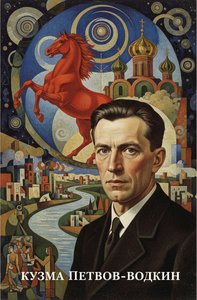
Entdecken Sie das faszinierende Werk von Kuzma Petrov-Vodkin, einem Pionier des russischen Symbolismus und der Avantgarde. Analysen, Schlüsselwerke & sein Vermächtnis – exklusiv auf OriginalUniqueArt.
Explore the profound depth of Russian Realism. From the social truths of the Peredvizhniki to epic folklore, discover the soulful power of masters like Perov and Yaroshenko through our expert art history insights and museum-quality reproductions.
Elevate your home with the soulful beauty of Russian Realism. Discover exquisite hand-painted reproductions of Peredvizhniki masterpieces, from lyrical landscapes to profound portraits, curated to bring historical depth and timeless elegance to your modern interior design.
OStudio-AssistentOnline · antwortet innerhalb einer Minute
Hallo! Ich kann Ihnen dabei helfen, ein Kunstwerk auszuwählen, eine Bestellung zu verfolgen oder Fragen zur Garantie zu beantworten. Wie kann ich Ihnen heute behilflich sein?

 Russian Realism: The Soulful Truth of the Peredvizhniki Masters
 Peredvizhniki
 Nikolai Dubovskoi
 March (painting)
 In the Wild North
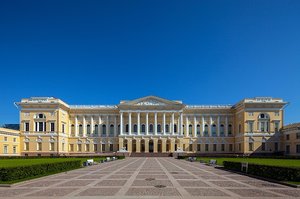 The State Russian Museum