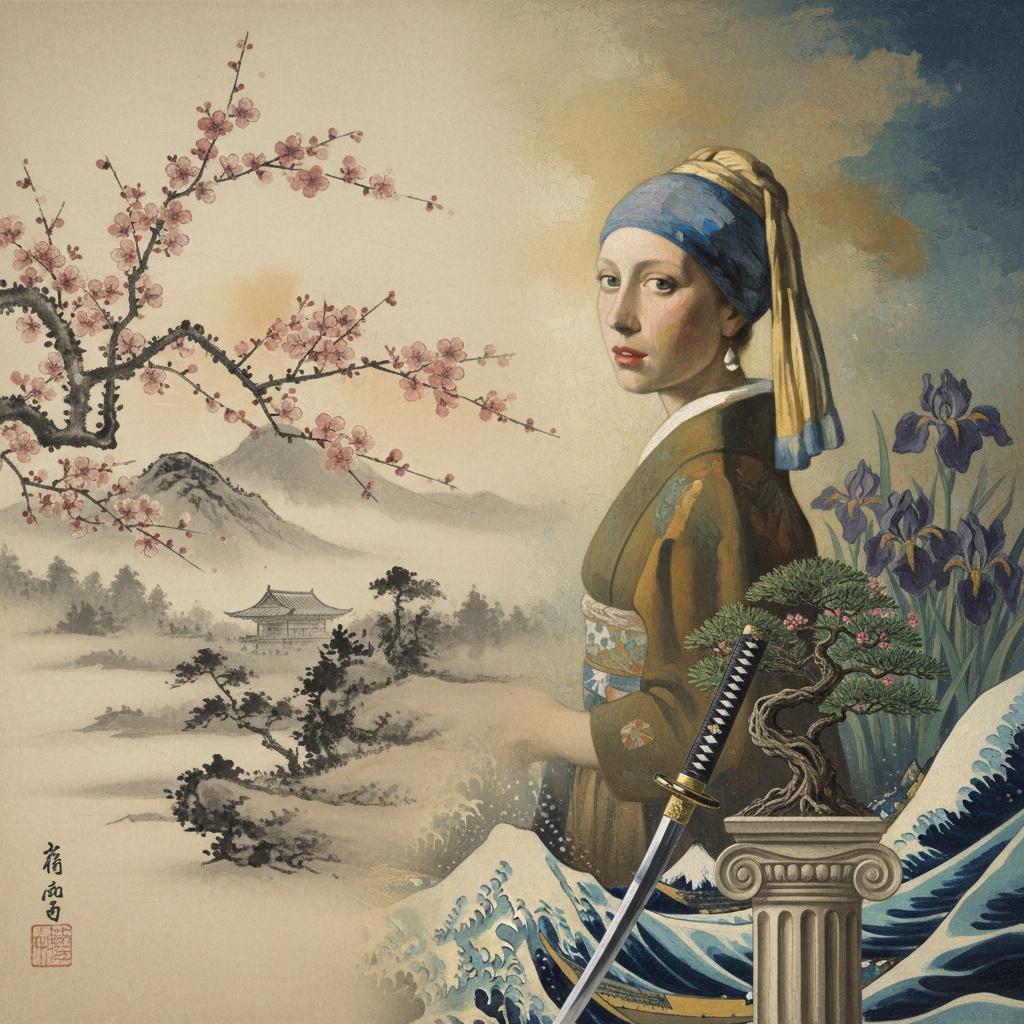
The Floating World: Understanding the Essence of Ukiyo-e
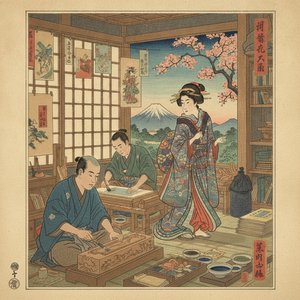
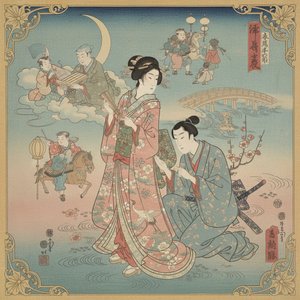
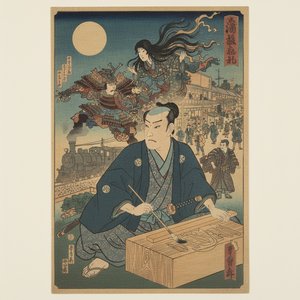
To understand the profound metamorphosis of global art, one must first immerse oneself in the ephemeral beauty of the Ukiyo-e, the "pictures of the floating world." Emerging from the vibrant urban culture of Japan's Edo period, these woodblock prints were never intended to be mere static images; they were rhythmic captures of a transient existence. This era celebrated the fleeting pleasures of life—the theater, the tea houses, and the seasonal blossoms—through a lens of exquisite graphic clarity. The mastery found in works like those of Nishimura Shigenaga or the delicate beni-e prints of Okumura Toshinobu reveals a sophisticated use of color and line that prioritized emotional resonance over anatomical rigidity.
The essence of Ukiyo-e lies in its ability to find the eternal within the momentary. Through the meticulous carving of cherry wood blocks and the careful application of pigments, artists created a visual language of flat planes and bold outlines. This stylistic choice was not a limitation of technique but a deliberate aesthetic pursuit of clarity and grace. As these prints eventually traveled across oceans, they carried with them a revolutionary way of seeing, challenging the heavy shadows of Western traditions with a luminous, light-filled approach to subject matter that would soon ignite a creative revolution in Europe.
Lines of Motion: The Dynamic Influence of Sumo-e on Western Composition
The energy of the human form finds one of its most visceral expressions in Sumo-e, where the power and gravity of the wrestler are translated through decisive, sweeping brushstrokes. In the works of masters such as Utagawa Kunisada II, we observe a profound mastery of tension and release. A single print of a sumo wrestler in a red and gold kimono does more than depict an athlete; it captures the very spirit of strength and ritualistic poise. The way the fabric folds and the muscles strain is rendered with a rhythmic vitality that transcends mere documentation.
When these dynamic compositions encountered the burgeoning movements of Western modernism, the impact was seismic. The European eye, long accustomed to the heavy chiaroscuro of the Renaissance, was startled by the ability of Japanese artists to convey immense weight and movement through silhouette and contour alone. This influence can be traced through the evolution of graphic design and even the early sketches of Impressionist masters, who sought to replicate that same sense of "living line." The legacy of Sumo-ictic energy remains a cornerstone in how we understand the balance between physical mass and artistic fluidity.
Perspective and Presence: How Japanese Spatial Depth Redefined Global Landscapes
Traditional Western landscape painting often relied on linear perspective—a mathematical approach to creating an illusion of depth through vanishing points. However, Japanese artists introduced a radical alternative: the uki-e or "perspective pictures," pioneered by figures like Nishimura Shigenaga. By utilizing unconventional angles and overlapping planes, these artists created a sense of presence that felt immersive rather than observed. They did not merely show a view; they invited the viewer to inhabit a space.
This reimagining of spatial depth allowed for a more poetic interaction with nature. Landscapes became less about the conquest of distance and more about the layered experience of atmosphere, mist, and light. The way a distant mountain peak peeks through a foreground of pine branches creates a psychological depth that resonates with the viewer's own sense of discovery. This subtle manipulation of space provided a blueprint for later landscape innovators who sought to break away from the rigid geometries of classical realism in favor of a more atmospheric, emotive truth.
The Aesthetic of Imperfection: Zen Philosophy in the Evolution of Modern Art
At the heart of Japanese artistry lies the profound philosophy of Wabi-sabi—the celebration of imperfection, impermanence, and the beauty of the weathered. This Zen-infused perspective suggests that there is a deep, soulful elegance in the cracked glaze of a ceramic bowl or the asymmetrical curve of a branch. It is an art of subtraction, where what is left out is just as vital as what is rendered. This concept of "emptiness" or Ma—the intentional use of negative space—transformed the way global artists approached the canvas.
Modernism, in many ways, is a continuation of this pursuit of essentialism. The move toward abstraction can be viewed as an evolution of the Zen desire to strip away the superfluous to reach the core essence of a subject. By embracing the beauty of the unfinished and the irregular, artists learned to communicate complex emotions through simplicity. This philosophical bridge between East and West allowed for a global art language that values the quiet, the understated, and the profoundly authentic over the merely decorative.
A Lasting Legacy: Integrating Eastern Elegance into Contemporary Collections
Today, the dialogue between Japanese artistry and global masterpieces continues to flourish in the most unexpected corners of contemporary design and collecting. The principles of balance, the reverence for natural materials, and the appreciation for graphic clarity are no longer confined to the East; they are foundational elements of a sophisticated, global aesthetic. Collectors now seek out works that embody this "Zen elegance," looking for pieces that offer both visual impact and a sense of meditative calm.
Whether through the acquisition of authentic woodblock prints or the commissioning of modern oil reproductions that echo these historical techniques, the influence of Japan remains a vital force. As we navigate an increasingly complex world, the timeless lessons of Ukiyo-e—to find beauty in the fleeting, strength in the simple, and depth in the void—offer a sanctuary of grace. It is a legacy that invites us all to look closer, to breathe deeper, and to find the extraordinary within the ordinary.
OriginalUniqueArt.com remains dedicated to preserving this rich tapestry of human creativity. From meticulously hand-painted oil reproductions of the Old Masters to custom commissions that reimagine history through a modern lens, we strive to make the profound beauty of art accessible to enthusiasts worldwide. Our mission is to bridge the gap between historical grandeur and contemporary living, ensuring that every brushstroke tells a story of enduring elegance.