
The Geometry of the Silhouette: Tracing the Human Contour
To look at a face from the front is to engage in a direct conversation, a meeting of eyes that demands an immediate response. But to turn the head, to present only the silhouette of the brow, the bridge of the nose, and the line of the jaw, is to invite a different kind of observation. The profile portrait functions as a boundary; it offers much while revealing less, creating a sense of quietude and distance. This view strips away the social performance of the gaze, leaving only the structural truth of the subject's features. In this specific orientation, the artist focuses on the geometry of the human form. There is a certain stillness in a side view that a full-face portrait rarely achieves. It allows the viewer to trace the architecture of the skull and the delicate descent of the neck, focusing on the physical reality of the person rather than their immediate expression. This focus on the structural line finds its earliest echoes in the ancient civilizations of the Fertile Crescent. In Egypt, depictions of rulers were often rendered in profile, a choice that prioritized a specific, recognizable shape over a literal, photographic likeness. These stylized figures were not meant to capture a fleeting moment of emotion, but to present a permanent, unchanging essence of divinity and rule. By stripping away the complexity of a three-quarter view, the Egyptian artist used the profile to create a sense of eternal stability. Today, we see this same appreciation for the clean, decisive line in contemporary minimalist portraiture. The profile remains a way to distill a person down to their most essential, structural components.The Currency of Command: Profile as a Tool of Authority
The impulse to capture a profile is deeply rooted in our oldest traditions of commemoration. Long before the canvas became the primary medium for memory, the profile was the standard for authority and permanence. We see this clearly in the weight of ancient Roman coins, where the sharp, side-on depiction of emperors served as a portable declaration of power and lineage. These small metal discs utilized the profile to create an unmistakable icon that could be recognized across vast distances, emphasizing stability and the continuity of the state. This Roman preference for the profile was often used to convey specific character traits. In the Imperial period, portraiture was frequently used for propaganda purposes, where the pose and accoutrements of the figure carried ideological messages. For instance, the portraits of Caracalla often reflected his military prowess through a frighteningly aggressive expression, using the profile to project a sense of unyielding strength. The Romans understood that a side view could communicate a person's public identity—their civic duty and military ability—more effectively than a soft, frontal gaze. This legacy of using the profile to signal status continues in how we perceive formal portraiture today. A profile view inherently suggests a certain level of dignity and distance, separating the subject from the casual, everyday interactions of a frontal gaze.The Renaissance Revival: Linking the Individual to Antiquity
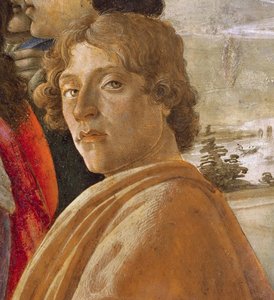 Sandro Botticelli
. Italian Early Renaissance painter of lyrical grace and ethereal figures with flowing contours, known for mythological and religious scenes.
The Quietude of Thought: Chiaroscuro and the Inner Life
 Portrait of a Man in Profile
, Govert Flinck
The Modern Silhouette: From Realism to Essential Form
 Portrait of Jeanne Hébuterne in Profile
, Amedeo Modigliani
Discover the depth of history through our curated collections. At OriginalUniqueArt.com, we offer hand-painted oil reproductions and custom commissions that bring these storied perspectives into your home.



