Neoclassicism
Cupid Bound To A Tree (Thomas Stothard)
Thomas Stothard (1755–1834) schuf Cupid Bound To A Tree. Es gehört zur Neoclassicism-Strömung. Es ist aus Oil On Canvas gefertigt.
- Oil On Canvas

 Vorschau anzeigen

 Handgemaltes Ölgemälde
 Versenden
 Teilen
 Datenblatt


 Herunterladen
 Ähnliche Objekte
 Röntgenaufnahme
 Diashow
 Fragen & Antworten

 Statistiken
Cupid Bound To A Tree im Überblick
- Titel
- Cupid Bound To A Tree
- Künstler
- Thomas Stothard (1755–1834)
- Geburtsjahr des Künstlers
- London, Vereinigtes Königreich
- Medium
- Oil On Canvas
- Bewegung
- Neoclassicism
- Epoche
- 19th Century
- Motiv
- mythological scene, romantic imagery, childhood innocence, forest setting, classical figures, love & devotion
Was stellt Cupid Bound To A Tree dar?
Identification of the Artwork and Artist
We are looking at Cupid Bound To A Tree, an oil painting by Thomas Stothard. This work belongs to a period when the artist was establishing his presence within the London art scene. Stothard, who was born in London in 1755, possessed a particular sensitivity to the nuances of narrative and form that defined much of his output. He remained a significant figure in the British artistic landscape until his death in 1834.
The artist's background as a draughtsman of patterns for brocaded silks is often felt in the way he handles texture and detail. In this specific piece, his ability to translate classical and mythological themes into a structured arrangement is quite apparent. It is a work that reflects the grace and elegance often associated with his hand, focusing on the interplay of light and the human form within a natural setting.
Visual Composition and Subject Matter
The scene unfolds within the quiet seclusion of a dense forest, where the arrangement of figures creates a sense of intimate enclosure. At the heart of this woodland gathering, a central group of cherubic infants draws the eye, surrounded by women, children, and angelic beings. This layered composition provides a palpable sense of depth, drawing the viewer into a private, sheltered space where the natural world and the mythological realm meet. The figures are positioned to suggest a gentle, perhaps even melancholic, assembly, focused on the innocence of the central infants.
The subject matter explores the delicate intersection of love and innocence. Through the presence of these celestial and maternal figures, the work touches upon themes of purity and the soft weight of nostalgia. The color palette remains restrained, relying on muted earth tones that ground the mythological figures within their organic setting. These subtle shades are punctuated by intentional highlights of white and gold, which catch the light and provide a luminous quality to the skin tones and fabrics of the central group.
Artistic Style and Visual Impression
The composition leans toward Neoclassicism, favoring idealized forms and a structured narrative. Rather than sharp edges, the work relies on predominantly soft and flowing lines that guide the eye through the woodland setting. These organic shapes—the curves of the figures, the reach of the trees, and the surrounding foliage—blend together to create a sense of natural enclosure. The perspective is somewhat flattened, a choice that directs our attention toward the emotional weight of the scene rather than a strict, realistic depth.
Lighting is used with a certain dramatic intent. An unseen source positioned above and behind the central group casts deep shadows while highlighting the key figures, creating a sense of atmospheric tension. This interplay of light and shadow contributes to an overall mood of quiet contemplation. There is a palpable sense of gentle sadness within the gathering, a subtle melancholy that permeates the intimate scene.
Technique and Material Details
Executed in oil paints on canvas, this work possesses a certain luminous quality that draws the eye inward. The artist employs a method where the brushstrokes remain visible to the viewer, yet they are carefully blended to achieve a sense of seamlessness. This approach allows for smooth transitions between light and shadow, particularly across the skin tones and the folds of the drapery. Such control over the medium creates a subtle tonal variation that gives the figures a soft, organic presence within the woodland setting.
The application of the paint results in a layered texture that adds a physical depth to the surface. By manipulating the thickness of the oil, the artist has managed to capture a sense of atmosphere, where the light seems to emanate from within the pigment itself. The interplay of these textures and the muted earth tones creates a quiet, steady visual rhythm. It is a delicate balance of precision and softness, where the material itself supports the narrative without drawing undue attention to the hand of the maker.
Related Works by Thomas Stothard
In examining the breadth of Stothard's output, one finds a consistent interest in translating narrative and classical themes into structured, graceful arrangements. His oil pictures are usually small in size, a characteristic that lends an intimate quality to his various compositions. This preference for a more contained scale allows for a focused study of light and human form, a trait evident across his diverse subject matter.
His engagement with dramatic tension is seen in works such as The Return of Othello, created around 1799. This piece utilizes a restrained palette of ochre, brown, and black tones, punctuated by highlights of white and subtle red, to focus the viewer on the central interaction between the figures. Such works reflect his ability to balance small-scale historical subjects with decorative designs, maintaining a steady interest in the interplay of light and the human figure.
Other compositions by the artist include Tam O' Shanter and A gun crew. These works, alongside his various illustrations, demonstrate a versatility in handling different genres, from the sentimental to the historical. His ability to capture the essence of a scene remains a constant thread throughout his various artistic endeavors.
Hochauflösende Bilder von Cupid Bound To A Tree
Gemeinfrei: Der Künstler verstarb im Jahr 1834.
Thomas Stothard, Cupid Bound To A Tree. Gemeinfreiheit
Fragen zu Cupid Bound To A Tree, beantwortet
In welcher Technik wurde "Cupid Bound To A Tree" von Thomas Stothard ausgeführt?
Das Medium von "Cupid Bound To A Tree" von Thomas Stothard ist Oil On Canvas. Die Reproduktionen zielen darauf ab, die Optik dieser Technik wiederzugeben.
Welche Motive sind in "Cupid Bound To A Tree" von Thomas Stothard zu sehen?
"Cupid Bound To A Tree" von Thomas Stothard zeigt: mythological scene, romantic imagery, childhood innocence, forest setting, classical figures, love & devotion, melancholy mood.
Ist "Cupid Bound To A Tree" von Thomas Stothard gemeinfrei?
Die urheberrechtliche Situation für "Cupid Bound To A Tree" von Thomas Stothard: Das Werk ist gemeinfrei – das Urheberrecht ist abgelaufen. Dies bestimmt, ob Reproduktionen des Bildes frei erstellt werden dürfen.
Wer ist der Künstler hinter "Cupid Bound To A Tree"?
"Cupid Bound To A Tree" wurde von Thomas Stothard geschaffen. Die Informationen auf dieser Seite beschreiben das Originalwerk von Thomas Stothard.
Zu welcher Stilrichtung gehört "Cupid Bound To A Tree"?
Die mit "Cupid Bound To A Tree" von Thomas Stothard verbundene Stilrichtung ist Neoclassicism. Diese Klassifizierung ordnet das Werk in den Kontext verwandter Künstler und Kunstwerke ein.
Welcher Phase in der künstlerischen Entwicklung von Thomas Stothard lässt sich "Cupid Bound To A Tree" zuordnen?
"Cupid Bound To A Tree" repräsentiert die Mature Period von Thomas Stothard.
Warum ist der Urheberrechtsstatus von "Cupid Bound To A Tree" so, wie er ist?
Der Urheberrechtsstatus von "Cupid Bound To A Tree" – gemeinfrei – das Urheberrecht ist abgelaufen – ergibt sich aus dem Todesjahr des Künstlers im Jahr 1834.
Wie fügt sich „Cupid Bound To A Tree“ in die Themen und den Stil von Thomas Stothard ein?
"Cupid Bound To A Tree" teilt mit anderen Werken von Thomas Stothard den Stil der Neoclassicism sowie die wiederkehrenden Themen: sentimental narrative, book illustration style, domestic themes, classical mythology, neoclassical tradition, romantic sentimentality, love & family values, moral innocence.
Inwiefern steht das Sujet von „Cupid Bound To A Tree“ in Beziehung zu den üblichen Themen von Thomas Stothard?
"Cupid Bound To A Tree" stellt mythological scene, romantic imagery, childhood innocence, forest setting, classical figures, love & devotion, melancholy mood dar, während die dokumentierten Themen von Thomas Stothard sentimental narrative, book illustration style, domestic themes, classical mythology, neoclassical tradition, romantic sentimentality, love & family values, moral innocence sind. Ein Vergleich der beiden zeigt, wie das Werk mit den üblichen Sujets des Künstlers in Verbindung steht.
Über den Künstler, Thomas Stothard

1755–1834, Vereinigtes Königreich
Thomas Stothard
Thomas Stothard: Ein Meister der Geschichte und des Traums Geboren im Herzen Londons im Jahr 1755, war Thomas Stothards Leben ein facettenreiches Geflecht aus zarter Schönheit, künstlerischer Ausbildung und einer unerschöpflichen Faszination für Geschichten. Seine frühen Jahre waren von einer verwundbaren Gesundheit geprägt – er verbrachte einen Großteil seiner Kindheit abseits des Hauses aufgrund seiner Zerbrechlichkeit, doch diese Zeit förderte in ihm eine tiefe Wertschätzung für die stille Kontemplation, die später seinen Kunstwerken zugrunde lag. Seine künstlerische Reise begann als Zeichner von Webmustern für Brokatseide, eine Fertigkeit, die ihm ein scharfes Auge für Details und ein tiefes Verständnis für Textur und Farbe vermittelte – Qualitäten, die er später in seinen gefeierten Illustrationen übersetzte. Stothards formale Ausbildung begann im Jahr 1778 an der Royal Academy, ein Wendepunkt, der ihn auf eine Karriere widmete, die sich der visuellen Erzählung verschrieben hatte.
Über Thomas Stothard Bemerkenswerte Werke von Thomas Stothard
Ebenfalls von Thomas Stothard
 Das Abendmahl am Brunnen1820
 Porträt von General Francis Marion )1732
 Die Rückkehr des Othello, 'Othello', Akt II, Szene II1799
 Die Schrecken des Krieges, Skizze für das Wandgemälde von Burghley House1800
Essays zu Cupid Bound To A Tree
 Britische romantische MalerErleben Sie die Kraft der britischen Romantik mit Meistern wie Turner und Constable. Entdecken Sie alle Meisterwerke auf OriginalUniqueArt.…
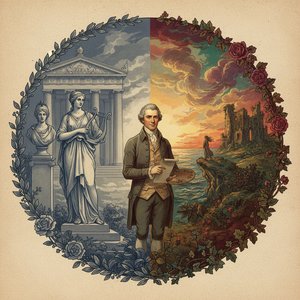 Thomas Stothard: Bridging Neoclassical Ideals with Romantic Sensibility – A ReassessmentExplore the life & art of Thomas Stothard (1755-1834), a pivotal figure bridging Neoclassicism and Romanticism. Discover his exquisite book…
 Piero di Cosimo: 25 faszinierende Bilder zwischen Fabelwelt und NaturrealismusEntdecken Sie 25 Ikonen von Piero di Cosimo aus der Florentiner Renaissance. Jetzt die gesamte Sammlung auf OriginalUniqueArt.com erkunden!