Romanticism
A gun crew (Thomas Stothard)
Thomas Stothard (1755–1834) schuf A gun crew. Es gehört zur Romanticism-Strömung. Es ist aus Oil On Canvas gefertigt.
- Oil On Canvas

 Vorschau anzeigen

 Handgemaltes Ölgemälde
 Versenden
 Teilen
 Datenblatt


 Herunterladen
 Ähnliche Objekte
 Röntgenaufnahme
 Diashow
 Fragen & Antworten

 Statistiken
A gun crew im Überblick
- Titel
- A gun crew
- Künstler
- Thomas Stothard (1755–1834)
- Geburtsjahr des Künstlers
- London, Vereinigtes Königreich
- Medium
- Oil On Canvas
- Bewegung
- Romanticism
- Epoche
- 19th Century
- Motiv
- maritime struggle, shipwreck rescue, human resilience, dramatic coastline, 18th century seafaring, historical labor
Was stellt A gun crew dar?
The Subject and Artist of the Work
In the dramatic scene of A gun crew, the viewer finds themselves amidst a chaotic struggle on a rugged, rocky shore. Sailors strain with every ounce of their strength, their bodies leaning into the heavy weight of a massive object—perhaps a piece of a shipwreck or a heavy fragment of debris—as they attempt to haul it from the sea. The air feels thick with the exertion of these men, caught in a moment of intense physical toil against the unyielding elements. This struggle highlights the sheer hardship and resilience required to survive the unpredictable nature of the ocean.
The artist behind this intense depiction is Thomas Stothard. Born in London, United Kingdom, Stothard brings a sense of narrative urgency to the canvas, focusing on the human cost of maritime life. He moves away from mere stillness to capture the very essence of desperation and the precariousness of existence at sea. Every figure in the composition seems locked in a battle against overwhelming forces, both natural and man-made, as they fight to reclaim something from the waves.
Composition and Visual Elements
The scene unfolds within a tightly packed space that pulls the viewer directly into the heart of the chaos. Figures cluster together in a frantic mass, their bodies overlapping to convey a sense of urgent, shared struggle. Every movement feels compressed, as if the very air is heavy with the effort of the men. Diagonal lines, formed by the straining ropes and the angled limbs of the sailors, cut through the frame to lead the eye toward the central point of action. This arrangement creates a feeling of immediacy, trapping the viewer within the struggle.
A flattened perspective heightens this sense of claustrophobia, making the rocky shore and the wreckage feel as though they are pressing inward. Light does not merely fall upon the scene; it seems to emanate from multiple sources, pouring down from above and glowing from within the wreckage itself. These light sources cast dramatic shadows that define the rugged textures of the environment and the straining muscles of the crew. The interplay of light and shadow emphasizes the desperation of the moment, highlighting the raw power of nature as it clashes against human resilience.
Technique and Artistic Style
The oil paint clings to the canvas with a heavy, impasto-like texture, particularly where the wreckage meets the shore. This thick application of pigment gives the scene a tactile, rugged quality, making the struggle feel physically present. The brushwork is not precise; instead, it is loose and expressive, using energetic strokes to capture the sudden movement and the chaotic energy of the sailors. Every layer of paint contributes to a sense of depth and turmoil, as if the medium itself is caught in the same upheaval as the figures on the rocks.
The style leans heavily into Romanticism, prioritizing raw emotion and the intensity of the moment over clinical realism. This emotional weight is carried by a dark and earthy color palette. Deep browns and blacks dominate the shadows, while strong, sudden bursts of red pull the eye through the darkness. Light emanates from multiple sources, appearing to glow from within the wreckage itself and from above, casting dramatic shadows that heighten the sense of urgency. The result is a scene defined by tension and the visceral power of the elements.
Hochauflösende Bilder von A gun crew
Gemeinfrei: Der Künstler verstarb im Jahr 1834.
Thomas Stothard, A gun crew. Gemeinfreiheit
Fragen zu A gun crew, beantwortet
Welche Technik wurde für "A gun crew" von Thomas Stothard verwendet?
Thomas Stothard verwendete die Technik der Oil On Canvas für „A gun crew“. Die Technik bestimmt die materielle Beschaffenheit des Originalwerks.
Was stellt "A gun crew" von Thomas Stothard dar?
"A gun crew" von Thomas Stothard zeigt: maritime struggle, shipwreck rescue, human resilience, dramatic coastline, 18th century seafaring, historical labor, force of nature.
Ist die Abbildung von "A gun crew" von Thomas Stothard gemeinfrei?
Was das Urheberrecht betrifft, so ist "A gun crew" gemeinfrei – das Urheberrecht ist abgelaufen.
Wer ist der Künstler hinter "A gun crew"?
"A gun crew" wurde von Thomas Stothard geschaffen. Die Informationen auf dieser Seite beschreiben das Originalwerk von Thomas Stothard.
Zu welcher Stilrichtung gehört "A gun crew"?
„A gun crew“ ist ein Werk der Romanticism. Die Stilrichtung gibt die künstlerische Tradition an, der das Werk angehört.
Aus welcher Schaffensperiode von Thomas Stothard stammt "A gun crew"?
„A gun crew“ entstammt der Mature Period von Thomas Stothard. Diese Einordnung setzt das Werk in Bezug zur künstlerischen Entwicklung des Künstlers.
Wie lässt sich der urheberrechtliche Status von "A gun crew" von Thomas Stothard erklären?
"A gun crew" von Thomas Stothard ist gemeinfrei – das Urheberrecht ist abgelaufen. Die Urheberrechtsfristen werden ab dem Todesjahr des Künstlers berechnet, und Thomas Stothard verstarb im Jahr 1834.
Wie lässt sich "A gun crew" in das Gesamtwerk von Thomas Stothard einordnen?
"A gun crew" gehört zu Thomas Stothards Werk der Romanticism-Epoche, dessen dokumentierte Themen unter anderem classical & romantic blend, seafaring hardship depicted, humanity vs. nature's force, british maritime history, stothard's sentimental style, illustrative historical scenes, moralizing narrative art umfassen.
Ist "A gun crew" typisch für das Werk von Thomas Stothard?
Unter den dokumentierten Themen von Thomas Stothard – classical & romantic blend, seafaring hardship depicted, humanity vs. nature's force, british maritime history, stothard's sentimental style, illustrative historical scenes, moralizing narrative art – setzt „A gun crew“ einen ganz eigenen Fokus auf maritime struggle, shipwreck rescue, human resilience, dramatic coastline, 18th century seafaring, historical labor, force of nature.
Über den Künstler, Thomas Stothard

1755–1834, Vereinigtes Königreich
Thomas Stothard
Thomas Stothard: Ein Meister der Geschichte und des Traums Geboren im Herzen Londons im Jahr 1755, war Thomas Stothards Leben ein facettenreiches Geflecht aus zarter Schönheit, künstlerischer Ausbildung und einer unerschöpflichen Faszination für Geschichten. Seine frühen Jahre waren von einer verwundbaren Gesundheit geprägt – er verbrachte einen Großteil seiner Kindheit abseits des Hauses aufgrund seiner Zerbrechlichkeit, doch diese Zeit förderte in ihm eine tiefe Wertschätzung für die stille Kontemplation, die später seinen Kunstwerken zugrunde lag. Seine künstlerische Reise begann als Zeichner von Webmustern für Brokatseide, eine Fertigkeit, die ihm ein scharfes Auge für Details und ein tiefes Verständnis für Textur und Farbe vermittelte – Qualitäten, die er später in seinen gefeierten Illustrationen übersetzte. Stothards formale Ausbildung begann im Jahr 1778 an der Royal Academy, ein Wendepunkt, der ihn auf eine Karriere widmete, die sich der visuellen Erzählung verschrieben hatte.
Über Thomas Stothard Bemerkenswerte Werke von Thomas Stothard
Ebenfalls von Thomas Stothard
 Das Abendmahl am Brunnen1820
 Porträt von General Francis Marion )1732
 Die Rückkehr des Othello, 'Othello', Akt II, Szene II1799
 Die Schrecken des Krieges, Skizze für das Wandgemälde von Burghley House1800
Essays zu A gun crew
 Emotion vs. Beobachtung: Ein Leitfaden zur Romantik und zum RealismusErfahren Sie alles über den Unterschied zwischen Romantik und Realismus. Jetzt die Kunstgeschichte tiefgreifend verstehen.
 Echos des Konflikts: Kunst als Zeugnis von Krieg und menschlicher ResilienzErfahren Sie die Tiefe historischer Kriegskunst und menschlicher Resilienz. Entdecken Sie die Kraft der Geschichte in meisterhaften Werken.
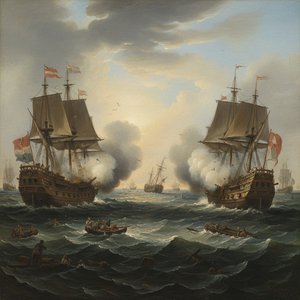 Meisterwerke der Seeschlachten: Die dramatische Kunst historischer SeekriegsführungErfahren Sie alles über die Dynamik historischer Seeschlachten und maritime Meisterwerke. Tauchen Sie jetzt in die Welt der Meeresmalerei e…