- Startseite

- Ölgemälde-Reproduktion
- Raffael
- The Sibyls (Santa Maria della Pace)
 Preview
 Versenden
 Teilen
 Details anzeigen

 Herunterladen
 Ähnliche Objekte
 Röntgenaufnahme
 Diashow anzeigen
The Sibyls (Santa Maria della Pace)


 Weiterlesen
Handgefertigte Öl-Reproduktion
Handgemaltes Ölgemälde auf Leinwand in Ihrer Wunschgröße und mit Rahmen, auf Bestellung von unseren Künstlern angefertigt. ( Switch to Print Switch to Image)




P118B $10

P118H $10

P118W $10

P438Z $10

P508JH $12

P508YH $12

P805H $10

P805Z $10

P919BZ $10

P919G $10

P919XJ $10

P959ZH $10

P968JZ $12

W106C $8

W218G $10

W218JH $8

W218Y $10

W307PJ $10

W316G $10

W316PJ $8

W316Y $10

W398PJ $8

W4111J $10

W500HY $15

W500JH $15

W692G $12

W849H $8

W940BG $15

W953PJ $8




Wählen Sie aus unseren vordefinierten Größen, die den ursprünglichen Proportionen des Kunstwerks entsprechen.

Sie können Ihre eigenen Maße eingeben, um einen bestimmten Rahmen oder Platz auszufüllen. Wenn die gewählte Größe nicht den Proportionen des Originalbildes entspricht, werden wir das Kunstwerk entweder beschneiden oder das Gemälde durch zusätzliche, handgemalte Elemente erweitern. Ein digitales Mockup wird Ihnen zur Genehmigung zugesandt, bevor die Produktion beginnt.
Bitte beachten Sie, dass die Bildschirmvorschau nicht die tatsächliche Beschneidung oder Erweiterung widerspiegelt. Nur das Mockup zeigt die endgültige Komposition exakt an.
Obwohl Sondermaße verfügbar sind, empfehlen wir, eine Größe aus der vordefinierten Liste zu wählen, um die ursprünglichen Proportionen beizubehalten.
Nach der Bestellung wird das OriginalUniqueArt.com-Team dem Kunden Anweisungen per E-Mail zusenden und eine Mockup-Vorschau bereitstellen.
Weltweiter Versand () in nur 3 bis 4 Wochen statt der üblichen 5 Wochen. (30 Juli). Keine Kompromisse bei der Qualität.

Kostenloser weltweiter Expressversand

Hochwertige Leinenleinwand

Umfassender Versicherungsschutz beim Versand

Zollsteuer-Rückerstattungsgarantie

Garantie für echte Farbtreue

60-Tage-Rückgaberecht (nur bei Mängeln)

100% Geld-zurück-Garantie

Mengenrabatt verfügbar
 Die Glasoption ist nur in Größen unter 110 cm verfügbar.

The Sibyls (Santa Maria della Pace)
Art der Reproduktion
Größe der Reproduktion
-


Endpreis aller Optionen
$ 300
Beschreibung des Kunstwerks
The Sibyls at Santa Maria della Pace: A Vision of Prophecy and Renaissance Harmony
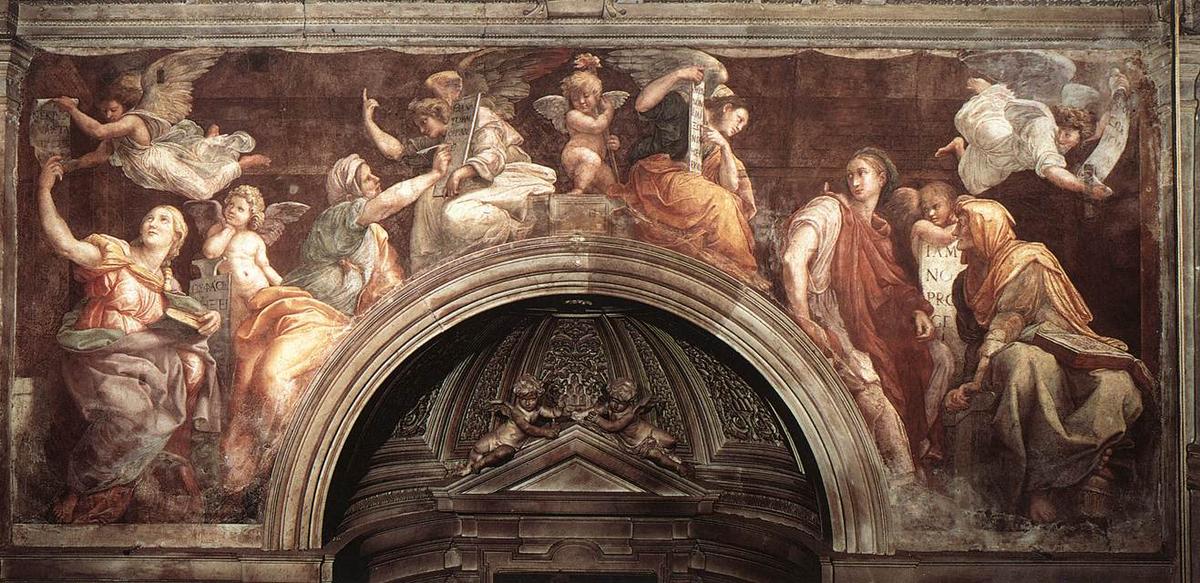
Raphael’s “The Sibyls,” adorning the Chigi Chapel within the Basilica of Santa Maria della Pace in Rome, isn't merely a fresco; it’s an immersive experience—a testament to the artist’s mastery of composition, color, and the enduring power of classical mythology. Painted between 1514 and 1516, this monumental work represents a pivotal moment in Raphael’s artistic development, showcasing his ability to synthesize the elegant restraint of Umbrian tradition with the burgeoning dynamism of High Renaissance Rome. The scene depicts four Sibyls—prophetic women from ancient Greece and Asia Minor—each holding a scroll or book, receiving instruction from radiant angels, creating a layered narrative that speaks to divine guidance and human potential.
The fresco’s genesis is deeply intertwined with the patronage of Agostino Chigi, a wealthy Florentine banker who commissioned Raphael to embellish his family chapel. This commission provided Raphael with an unparalleled opportunity to explore themes of prophecy and wisdom, aligning perfectly with the humanist ideals prevalent in Renaissance Rome. The choice of Sibyls—representing Cumaean, Persian, Phrygian, and Tiburtine oracles—was deliberate, reflecting a fascination with antiquity and a desire to connect with the roots of Western civilization. These women weren’t simply figures from legend; they were embodiments of foresight, their voices carrying messages from the divine to humanity.
A Symphony of Color and Form
Technically, “The Sibyls” exemplifies Raphael's refined approach to fresco painting. He skillfully employed *buon fresco*—a technique involving pigments mixed with lime plaster—to create a remarkably durable and luminous surface. The color palette is restrained yet profoundly evocative, dominated by cool blues, greens, and golds that evoke both the ethereal realm of prophecy and the earthly beauty of Rome. Notice how Raphael masterfully utilizes *chiaroscuro*, the dramatic interplay of light and shadow, to sculpt the figures and create a sense of depth and volume. The angels, bathed in radiant light, contrast sharply with the Sibyls, who are rendered with a subtle softness that emphasizes their contemplative nature.
The composition itself is a marvel of balance and harmony. Raphael arranges the figures in a carefully orchestrated semi-circular formation above an archway, drawing the viewer’s eye towards the central point of instruction. The use of perspective—particularly *foreshortening*—is remarkably sophisticated, creating a convincing illusion of three-dimensionality. The architectural setting, subtly integrated into the scene, further enhances the sense of space and grandeur. It's a testament to Raphael's understanding of both artistic principles and the power of visual storytelling.
Symbolism and Spiritual Resonance
Beyond its technical brilliance, “The Sibyls” is rich in symbolic meaning. The scrolls held by the Sibyls represent their prophetic messages—visions delivered from the divine realm. The angels, with their outstretched wings and serene expressions, symbolize guidance and enlightenment. The overall scene speaks to a broader theological theme: the connection between humanity and the divine. Raphael’s depiction of these ancient oracles aligns with Renaissance ideals that sought to reconcile classical antiquity with Christian faith.
Furthermore, the fresco's placement within the Chigi Chapel—a space dedicated to family piety—suggests a personal significance for Agostino Chigi. The Sibyls, as messengers of divine wisdom, likely served as a reminder of the importance of seeking guidance and cultivating virtue. The choice of these particular figures reflects a desire to connect with the roots of Western thought and spirituality.
A Legacy of Beauty and Inspiration
“The Sibyls” remains one of Raphael’s most celebrated masterpieces, admired for its exquisite beauty, technical mastery, and profound symbolic depth. It stands as a powerful example of High Renaissance art—a synthesis of classical ideals, humanist philosophy, and Christian faith. Today, reproductions of this iconic fresco continue to inspire artists, designers, and collectors alike, offering a glimpse into the artistic genius of one of history’s greatest painters. Its harmonious composition and evocative imagery serve as a timeless reminder of the enduring power of art to illuminate the human spirit.
Biografie des Künstlers
**frühes Leben und Ausbildung**
Raphael (Raffaello Sanzio da Urbino), ein renommierter italienischer Maler und Architekt, wurde zwischen dem 28. März und dem 6. April 1483 in der kleinen, aber kulturell bedeutenden Stadt Urbino geboren. Sein Vater, Giovanni Santi, war Hofmaler des Herzogs und vermittelte Raphael von Anfang an eine frühe Auseinandersetzung mit der künstlerischen Welt. Nach dem Tod seines Vaters im Alter von elf Jahren betrieb Raphael wahrscheinlich die Familienwerkstatt weiter, was seine künstlerische Grundlage festigte.**Künstlerischer Werdegang und Einflüsse**
Raphaels künstlerischer Weg lässt sich in drei verschiedene Phasen einteilen, jede mit einem einzigartigen Stil gekennzeichnet:- Frühe Jahre in Umbrien: Charakterisiert durch den Einfluss seines Vaters und die kulturelle Atmosphäre von Urbino.
- Florentinische Periode (1504-1508): Aufnahme der künstlerischen Traditionen Florenz, die seinen Stil maßgeblich prägte.
- Römische Periode (1508-1520): Arbeitete für zwei Päpste und ihre Mitarbeiter und schuf einige seiner bekanntesten Werke, darunter die Schule der Athene in der Vatikanische Stanza della Segnatura.
**Bekannte Werke und Vermächtnis**
Einige der bekannten Werke von Raphael sind:- Das Urteil des Salomon (ansicht auf OriginalUniqueArt)
- Die Esterházy-Madonna (ansicht auf OriginalUniqueArt)
- Vatikanische Stanzen - Ansicht der Stanza della Segnatura (ansicht auf OriginalUniqueArt)
- St. Sebastian (ansicht auf OriginalUniqueArt)
- La Donna Velata (ansicht auf OriginalUniqueArt)
**Einfluss und Vermächtnis**
Raphaels Einfluss auf die Kunst ist tiefgreifend, wobei sein Werk ein Eckpfeiler der Hochrenaissance darstellt. Sein ruhiger und harmonischer Stil war ein Vorbild für die neoklassische Malerei, wie von Kunsthistoriker Johann Joachim Winckelmann bemerkt. Trotz des späteren Einflusses von Michelangelos Stil bleibt Raphael einer der verehrtesten Künstler in der Geschichte. ansicht des Profils von Raphael auf OriginalUniqueArt
Raffael
1483 - 1520 , Italien
Kurzinfos
- Beeinflusste Künstler:
- Giovanni Santi
- Pietro Perugino
- Bemerkenswerte Werke:
- Das Urteil des Salomon
- Esterházy-Madonna
- Die Schule der Athener
- St. Sebastian
- La Donna Velata
- Einfluss Auf Kunst: Neoklassische Malerei
- Geburtsdatum: 1483
- Geburtsort: Urbino, Italien
- Künstlerischer Stil: Hochrenaissance
- Nationalität: Italienisch
- Todatum: 1520
- Vollständiger Name: Raffaello Sanzio da Urbino
- Von Künstlern Beeinflusst:
- Leonardo da Vinci
- Michelangelo
Ähnliche Artikel
Pietro Perugino: Umbrian Master of Serenity & Precursor to Raphael's High Renaissance
Explore the life & art of Pietro Perugino, a pivotal Renaissance master and Raphael’s influential teacher. Discover his serene compositions, Sistine Chapel frescoes, and lasting legacy with OriginalUniqueArt.

Luca della Robbia: Renaissance Sculpture & the Innovation of Terracotta Glazing
Discover the innovative terracotta glazing techniques of Luca della Robbia, a Renaissance master sculptor. Explore his iconic works, legacy, and collecting tips with OriginalUniqueArt.
Raphael: Die 25 Meisterwerke des Renaissance-Genies – Kunst für Ihr Zuhause
Entdecken Sie die 25 schönsten Meisterwerke von Raphael! Tauchen Sie ein in die Welt der Renaissance-Kunst, erfahren Sie faszinierende Geschichten und lassen Sie sich von den Farben und Kompositionen inspirieren. Hochwertige Reproduktionen auf OriginalUniqueArt.com.
Piero della Francesca: Göttliche Proportion und die Renaissance-Perspektive
Entdecken Sie das faszinierende Werk von Piero della Francesca! Analysen seiner Meisterwerke, Einblicke in die Renaissance-Perspektive und sein Vermächtnis. Expertenwissen für Kunstliebhaber.
Michelangelo Buonarroti: Leben, Werk und bleibendes Erbe eines Renaissance-Titanen
Entdecken Sie das Leben und Werk von Michelangelo Buonarroti – dem Titanen der Renaissance. Erfahren Sie mehr über seine Skulpturen, Gemälde und seinen bleibenden Einfluss auf die Kunstgeschichte. Expertenanalyse & tiefe Einblicke.