In echtem Maßstab anzeigen
 Versenden als Grußkarte
 Teilen
 Details anzeigen
 Leitfaden öffnen

 Herunterladen
 Ähnliche Objekte
 Röntgenaufnahme
 Diashow
 Besucherstatistiken
Passionflower
 Acryl auf Leinwand
- Wandkunst
- Post-Impressionism
 1908
1908- Moderne
 72.0 x 47.0 cm
 Mehr anzeigen
Handgefertigte Ölreproduktion
Handgemaltes Ölgemälde auf Leinwand in Ihrer Wunschgröße und mit Rahmen, auf Bestellung von unseren Künstlern angefertigt. ( Zum Druck wechseln Zum digitalen Bild wechseln)




P118B €10

P118H €10

P118W €10

P438Z €10

P508JH €12

P508YH €12

P805H €10

P805Z €10

P919BZ €10

P919G €10

P919XJ €10

P959ZH €10

P968JZ €12

W106C €8

W218G €10

W218JH €8

W218Y €10

W307PJ €10

W316G €10

W316PJ €8

W316Y €10

W398PJ €8

W4111J €10

W500HY €15

W500JH €15

W692G €12

W849H €8

W940BG €15

W953PJ €8




Wählen Sie aus unseren vordefinierten Formaten, die den ursprünglichen Proportionen des Kunstwerks entsprechen.

Geben Sie die Breite und die Höhe an, die Sie für Ihren Rahmen oder Ihre Wand benötigen. Da dieses Werk handgemalt ist, kann der Künstler bei einer anderen Form etwas mehr um das Bild herum malen oder etwas abschneiden – Sie entscheiden. Wir senden Ihnen ein digitales Mockup zur Freigabe, bevor mit dem Malen begonnen wird. Das auf dieser Seite gezeigte Bild stellt nicht das tatsächliche Ergebnis dar – dies tut nur das Mockup.
Nach der Bestellung wird das OriginalUniqueArt.com-Team dem Kunden Anweisungen per E-Mail zusenden und eine Mockup-Vorschau bereitstellen.
Weltweiter Versand () in nur 3 bis 4 Wochen statt der üblichen 5 Wochen. (21 Oktober). Keine Kompromisse bei der Qualität.

Kostenloser weltweiter Expressversand

Hochwertige Leinenleinwand

Vollständiger Versicherungsschutz beim Versand

Zollgebühren-Rückerstattungsgarantie

Garantie für exakte Farbtreue

100-tägiges Rückgaberecht (nur bei Mängeln)

100% Geld-zurück-Garantie

Angebot für Mengenrabatt
 Die Glasoption ist nur für Größen unter 110 cm verfügbar.

Passionflower
Reproduktionsmedium
Format der Reproduktion
-


Gesamtpreis
€ 262
Passion Flower: Piet Mondrian’s Exploration of Geometric Harmony
Piet Mondrian, a monumental figure in the realm of modern art, gifted us with “Passion Flower,” a painting born from the crucible of 1908 and firmly rooted in the Post-Impressionist movement. To truly appreciate its significance, we must delve beyond mere visual aesthetics into the intellectual currents that shaped Mondrian’s artistic trajectory—a journey marked by an unwavering pursuit of pure abstraction. This artwork isn't simply a depiction of flowers; it’s a manifesto of artistic philosophy, encapsulating the spirit of a transformative era in European art history.The Artistic Context: Post-Impressionism – Beyond Natural Beauty
Post-Impressionism emerged as a defiant reaction against Impressionists’ preoccupation with capturing fleeting moments of light and color. Artists like Cézanne, Gauguin, Van Gogh, and Monet sought to transcend the limitations of optical realism, prioritizing emotional expression and conveying deeper ideas through their canvases. Mondrian's work during this period represents a pivotal step away from representational art toward an exploration of fundamental geometric forms—a precursor to the revolutionary movements that would dominate the subsequent decades. The desire to communicate universal truths superseded the pursuit of accurate visual representation.Artistic Elements in “Passion Flower”: Precision and Harmony
“Passion Flower” exemplifies Mondrian’s meticulous approach to composition and technique. Executed in ink, a medium known for its ability to achieve remarkable detail and tonal subtlety, the painting showcases a vase brimming with flowers—a serene woman adorned with blossoms woven into her hair—against a backdrop of two additional vases. The color palette is deliberately muted, prioritizing form over vibrant hues; Mondrian’s aim was not to dazzle the eye but to create visual harmony through carefully considered proportions and geometric arrangements. Notice how the vase dominates the center, balanced by the woman's posture and the subtle interplay of lines and shapes in the background.Influence from Cézanne and the Genesis of Cubism
Mondrian’s artistic vision was profoundly influenced by Paul Cézanne, whose explorations of sculptural form—particularly his use of interlocking planes—challenged traditional notions of perspective and spatial representation. This influence can be discerned in “Passion Flower,” albeit on a more restrained scale than in Cézanne's monumental canvases. Cézanne’s insistence on simplifying forms into geometric primitives paved the way for Cubism, spearheaded by Picasso and Georges Braque, which further dismantled representational conventions—a movement that would irrevocably alter the landscape of modern art.Relevance to Modern Art Movements: Beyond Representation
“Passion Flower” stands as a cornerstone in understanding the trajectory toward abstract expressionism and minimalism. It embodies the core principles of Neo-Plasticism—the belief that art should transcend the confines of reality, prioritizing universal beauty through the use of pure geometric elements like squares, rectangles, and straight lines. This painting serves as an enduring testament to Mondrian’s unwavering commitment to artistic innovation and his profound contribution to shaping the visual language of the 20th century. Its quiet elegance speaks volumes about the transformative power of abstraction—a legacy that continues to inspire artists and collectors alike.- Artist: Piet Mondrian
- Born Year: 1872
- Death Year: 1944
- Birth City: Amersfoort
- Birth Country: Netherlands
Fragen & Antworten
Ist "Passionflower" von Piët Mondrian ein helles oder ein dunkles Kunstwerk?
Die aufgezeichneten Werte für "Passionflower" von Piët Mondrian sind: hell Helligkeit, Sanfte Leuchtkraft Luminanz.
Welche Farbpalette wird in "Passionflower" von Piët Mondrian verwendet?
Die Farben von "Passionflower" bilden eine Erdig-Palette. Diese Klassifizierung beschreibt die dominierenden Farbfamilien.
Wo kann ich eine handgemalte Reproduktion von "Passionflower" von Piët Mondrian kaufen?
Eine handgemalte Reproduktion von "Passionflower" von Piët Mondrian können Sie direkt auf der entsprechenden Handgemalte Reproduktion-Seite bestellen: eine handgemalte Ölreproduktion auf Leinenleinwand, auf Bestellung angefertigt.
Biografie des Künstlers
**frühes Leben und Karriere in den Niederlanden (1872–1911)**
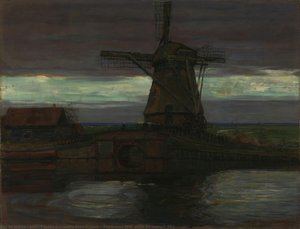
pieter cornelis mondriaan, bekannt ab 1911 als piet mondrian, war ein niederländischer Maler und Kunsttheoretiker, geboren am 7. März 1872 in Amersfoort, Niederlande. Er begann seine Karriere als Lehrer an der Grundschule und betrieb gleichzeitig Malerei, zunächst im Stil der Haag School des niederländischen Impressionismus.- Sein frühes Werk, das von naturalistischen Landschaften geprägt ist, kann in Gemälden wie the red mill und trees in moonrise zu sehen ist, die im kunstmuseum den haag ausgestellt wurden.
- Mondrians Suche nach einem persönlichen Stil führte ihn dazu, verschiedene künstlerische Bewegungen zu erkunden, darunter Pointillismus und Fauvismus.
- Seine erste Ausstellung im Jahr 1893 markierte den Beginn seiner produktiven Karriere.
**Die Entwicklung des Stils von Mondrian**
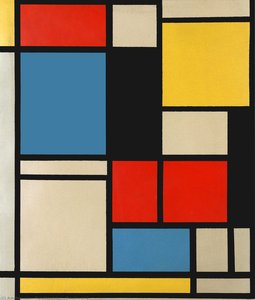
Von figurativ zu abstrakt Mondrians künstlerische Richtung verschob sich hin zu einem zunehmend abstrakten Stil, der in eine nicht-repräsentative Form mündete, die er Neoplasticismus nannte. Diese „reine plastische Kunst“ zielte darauf ab, „universelle Schönheit“ zu schaffen und seinen formalen Wortschatz auf Primärfarben (Rot, Blau und Gelb), Werte (Schwarz, Weiß und Grau) und Richtungen (horizontal und vertikal) zu beschränken.- Beispiele für diesen Stil lassen sich in Gemälden wie composition with yellow patch (46 x 46 cm, Neoplasticismus, Öl auf Leinwand) zu sehen sein.
- Mondrians Werk hatte einen enormen Einfluss auf die Kunst des 20. Jahrhunderts und beeinflusste nicht nur die abstrakte Malerei, sondern auch Design, Architektur und Mode.
**Vermächtnis und Einfluss**
Mondrians Vermächtnis erstreckt sich über sein eigenes Werk hinaus und beeinflusst wichtige Stile und Bewegungen wie Farbflächenmalerei, abstrakten Expressionismus und Minimalismus. Kunsthistoriker stephen bayley stellte fest, dass Mondrian zum Totem für alles geworden ist, was der Modernismus zu sein versuchte.- Entdecken Sie mehr von Mondrians Werk unter OriginalUniqueArt.com.
- Erfahren Sie mehr über die De Stijl-Bewegung und ihren Einfluss auf die moderne Kunst auf wikipedia.
- Entdecken Sie andere einflussreiche Künstler wie vincent van gogh und ihre Auswirkungen auf die Kunstwelt.
**Wichtige Werke und Ausstellungen**
* piet mondrian: apple blossom (Cubismus) (ansicht auf OriginalUniqueArt.com) * piet mondrian: still life with vase of spices ii (Cubismus) (ansicht auf OriginalUniqueArt.com) * piet mondrian: passionflower (73 x 48 cm, Kunstmuseum Den Haag, Postimpressionismus, Aquarell) (ansicht auf OriginalUniqueArt.com)
Piët Mondrian
1872 - 1944 , Niederlande
Eckdaten zum Künstler
- Beeinflusste Künstler:
- Hague School
- Pointillismus
- Fauvismus
- Kubismus
- Bemerkenswerte Werke:
- Komposition mit Rot, Gelb und Blau
- Broadway Boogie Woogie
- Tableau Nr. 2 Komposition V
- Rhythmus der schwarzen Linien
- Geburtsdatum: 7. März 1872
- Geburtsort: Amersfoort, Niederlande
- Künstlerische Bewegung: De Stijl, Neoplasticismus
- Nationalität: Niederländisch
- Sterbedatum: 1944
- Vollständiger Name: Piët Mondriaan
- Von Künstlern Beeinflusst:
- Farbfeldmalerei
- Abstrakter Expressionismus
- Minimalismus
Verwandte Artikel
De Stijl: Mastering the Art of Pure Abstraction and Geometric Harmony for the Modern Collector
Explore the profound elegance of De Stijl. Discover how Piet Mondrian and the masters of Neoplasticism utilized geometric harmony and primary colors to redefine modern abstraction. An authoritative guide for the discerning collector seeking timeless, structured beauty.

Geometrische Abstraktion: Die 10 Meisterwerke, die Kunstgeschichte prägten | OriginalUniqueArt.com
Entdecken Sie die 10 Meisterwerke der geometrischen Abstraktion! Von Kandinsky bis Mondrian – erleben Sie die Geschichte, Farben & Formen dieser revolutionären Kunstrichtung. Hochwertige Kunstreproduktionen auf OriginalUniqueArt.com
Piet Mondrian: Dekonstruktion der Realität – Eine Studie zu Neo-Plastizismus und universeller Harmonie
Entdecken Sie die faszinierende Welt von Piet Mondrian und dem Neo-Plastizismus! Analysieren Sie mit uns Rasterkunst, Farbenlehre & den Einfluss auf moderne Kunst. Expertenwissen für Kunstliebhaber.
Theo van Doesburg: Pionier des De Stijl und die Evolution des Neo-Plastizismus
Entdecken Sie die faszinierende Welt des De Stijl! Erfahren Sie mehr über Theo van Doesburg, Piet Mondrian und die revolutionäre Ästhetik des Neo-Plastizismus. Expertenwissen & historische Einblicke.
Pure Harmony: Discover the Bold Geometry and Spiritual Order of De Stijl Art
Explore the profound beauty of De Stijl art. Discover how masters like Piet Mondrian used bold geometry and primary colors to seek universal harmony through Neoplasticism. A deep dive into the spiritual order behind the world's most iconic abstract movements.