- Startseite

- Ölgemälde-Reproduktion
- El Greco
- Apostle St Paul

 Preview
 Versenden
 Teilen
 Details anzeigen

 Herunterladen
 Ähnliche Objekte
 Röntgenaufnahme
 Diashow anzeigen
Apostle St Paul
 Öl auf Leinwand
- Wandkunst
- Baroque Mannerism
 1610
1610- Renaissance
 97.0 x 77.0 cm
 Museo de El Greco
 Weiterlesen
Handgefertigte Öl-Reproduktion
Handgemaltes Ölgemälde auf Leinwand in Ihrer Wunschgröße und mit Rahmen, auf Bestellung von unseren Künstlern angefertigt. ( Switch to Print Switch to Image)




































Wählen Sie aus unseren vordefinierten Größen, die den ursprünglichen Proportionen des Kunstwerks entsprechen.

Sie können Ihre eigenen Maße eingeben, um einen bestimmten Rahmen oder Platz auszufüllen. Wenn die gewählte Größe nicht den Proportionen des Originalbildes entspricht, werden wir das Kunstwerk entweder beschneiden oder das Gemälde durch zusätzliche, handgemalte Elemente erweitern. Ein digitales Mockup wird Ihnen zur Genehmigung zugesandt, bevor die Produktion beginnt.
Bitte beachten Sie, dass die Bildschirmvorschau nicht die tatsächliche Beschneidung oder Erweiterung widerspiegelt. Nur das Mockup zeigt die endgültige Komposition exakt an.
Obwohl Sondermaße verfügbar sind, empfehlen wir, eine Größe aus der vordefinierten Liste zu wählen, um die ursprünglichen Proportionen beizubehalten.
Nach der Bestellung wird das OriginalUniqueArt.com-Team dem Kunden Anweisungen per E-Mail zusenden und eine Mockup-Vorschau bereitstellen.
Weltweiter Versand () in nur 3 bis 4 Wochen statt der üblichen 5 Wochen. (30 Juli). Keine Kompromisse bei der Qualität.

Kostenloser weltweiter Expressversand

Hochwertige Leinenleinwand

Umfassender Versicherungsschutz beim Versand

Zollsteuer-Rückerstattungsgarantie

Garantie für echte Farbtreue

60-Tage-Rückgaberecht (nur bei Mängeln)

100% Geld-zurück-Garantie

Mengenrabatt verfügbar
 Die Glasoption ist nur in Größen unter 110 cm verfügbar.

Apostle St Paul
Art der Reproduktion
Größe der Reproduktion
-


Endpreis aller Optionen
$ 300
Beschreibung des Kunstwerks
A Portrait of Faith: Exploring El Greco’s Apostle St Paul
Doménikos Theotokópoulos, universally recognized as El Greco – “The Greek” – stands apart from his contemporaries as a painter whose artistic vision transcended conventional boundaries. Born in Crete in 1541, amidst the waning influence of Byzantium and burgeoning Renaissance ideals, he embarked on an extraordinary creative journey that culminated in Toledo, Spain—a city steeped in religious fervor and serving as a crucible for artistic innovation. El Greco’s legacy isn't merely one of stylistic brilliance; it’s a testament to his ability to distill profound spiritual contemplation into visual form, anticipating movements like Expressionism and Cubism centuries ahead of their time. His formative years within the Byzantine tradition instilled in him an unwavering dedication to meticulous detail and a deep understanding of religious iconography—a foundation that would propel him beyond stylistic constraints. He proudly asserted his Cretan heritage by signing his works with Greek lettering alongside “Krḗs,” demonstrating both artistic conviction and cultural pride. The genesis of El Greco’s distinctive style can be traced back to Venice and Rome, where he absorbed the dynamism of Mannerism and the grandeur of the Venetian Renaissance—influences that manifested in dramatic lighting and emotionally charged facial expressions within his oeuvre.- Subject Matter: This monumental oil painting depicts Saint Paul, one of Christendom’s most revered figures, embodying resilience and unwavering devotion. Unlike Judas Iscariot, who replaced him in the apostolic succession, St. Paul occupies a pivotal position in Christian theology as the apostle to the Gentiles—a testament to his transformative impact on spreading Christianity beyond Judea.
- Style: El Greco’s artistic style is instantly recognizable for its elongated figures, vibrant hues, and masterful fusion of Byzantine and Western artistic traditions. The painting exemplifies this characteristic blend, showcasing St. Paul's slender physique and draped robes—elements that hark back to Byzantine ecclesiastical art while simultaneously embracing the expressive dynamism of Mannerism.
- Technique: Employing a technique rooted in layering glazes and impasto—thickly applied paint—El Greco achieved unparalleled luminosity and textural depth. The dark background serves as an anchor for St. Paul’s form, directing the viewer's gaze towards his solemn countenance and emphasizing the painting’s dramatic impact.
- Historical Context: Created in 1610 during El Greco’s residency in Toledo—a city renowned for its Catholic heritage—the artwork reflects the spiritual climate of the period. It aligns with El Greco’s broader “Apostolado” series, furthering his exploration of biblical narratives and portraying saints as beacons of faith and moral fortitude.
- Symbolism: The book held by St. Paul symbolizes knowledge, divine revelation, and the apostle's role as a writer and preacher—a cornerstone of Christian scripture and intellectual tradition. Its placement against the dark backdrop underscores St. Paul’s unwavering commitment to disseminating God’s word amidst adversity.
Museo de El Greco: A Sanctuary for Artistic Genius
The Museo de El Greco, nestled in the historic heart of Toledo, Spain, stands as a pilgrimage site for art aficionados worldwide—a repository of over 150 paintings by El Greco and offering invaluable insight into his life’s work. Founded in 1938, it houses an exceptional collection that chronicles El Greco's artistic evolution from his early Venetian period to his final years in Toledo, showcasing the breadth of his stylistic experimentation and thematic preoccupations. Visitors can immerse themselves in a meticulously curated environment designed to illuminate El Greco’s creative process and celebrate his enduring influence on European art history.- Location: Situated in Toledo’s UNESCO World Heritage Site—a city steeped in medieval grandeur and Christian piety—the Museo de El Greco provides visitors with an unparalleled opportunity to experience El Greco's art within its original context.
- Collection Highlights: Among the museum’s treasures are masterpieces from the “Apostolado” series, including “St. Paul & St. Peter,” “Saint Jerome in Prayer,” and “The Martyrdom of Saint Bartholomew”—each piece embodying El Greco's distinctive style and conveying profound spiritual emotion.
- Educational Programs: The Museo de El Greco actively engages the public through educational initiatives—lectures, workshops, and exhibitions—promoting scholarly understanding of El Greco’s artistic legacy and fostering appreciation for his contribution to European art culture.
Reproductions Available at OriginalUniqueArt.com
For those unable to journey to Toledo, OriginalUniqueArt.com presents a remarkable alternative—high-quality, handcrafted oil painting reproductions of Apostle St Paul that capture the essence of El Greco’s original vision. Produced by skilled artisans using archival pigments and meticulous techniques, these reproductions offer collectors and enthusiasts alike the chance to adorn their homes with a timeless masterpiece—a testament to El Greco's artistic genius and enduring fascination. Explore OriginalUniqueArt.com today and bring El Greco’s evocative artistry into your personal space!Biografie des Künstlers
**frühes Leben und Ausbildung**
El Greco (Doménikos Theotokopoulos), ein renommierter griechischer Maler, Bildhauer und Architekt, wurde 1541 in Kreta geboren, das damals unter venezianischer Herrschaft stand. Sein Geburtsname war Doménikos Theotokopoulos. El Grecos frühe Ausbildung als Ikonenmaler der kreter Schule, einem führenden Zentrum für byzantinische Kunst nach dem Fall des Reiches, legte den Grundstein für seine zukünftigen künstlerischen Bemühungen.**Künstlerische Entwicklung und Einflüsse**
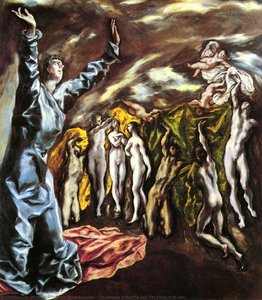
El Gredos künstlerischer Stil wurde durch seine Reisen nach Venedig und Rom geprägt, wo er Manierismus- und Renaissance-Stile aufnahm, insbesondere von Tintoretto und Tizian beeinflusst. Seine Umsiedlung nach Toledo, Spanien, im Jahr 1577 markierte eine Periode fruchtbarer Schaffenskraft, die zu Meisterwerken wie Ansicht von Toledo und das Öffnen des fünften Siegels führte.**Bekannte Werke und Stil**
* Allegorie der Camaldulitenorden (Manierismus, Öl) – ein Zeugnis für El Gredos einzigartige Mischung aus byzantinischen Traditionen und westlichen stilistischen Elementen. * Fabel (Manierismus, Öl) – demonstriert seine Verwendung ungewöhnlicher, lebhafter Farben. * Giacomo Bosio (Manierismus, Öl) – zeigt El Gredos Meisterschaft im Manierismus-Stil.**Vermächtnis und Einfluss**
El Gredos dramatischer und expressiver Stil, der durch verlängerte Figuren und fantastische Pigmentierung gekennzeichnet ist, war eine Quelle der Inspiration für Dichter und Schriftsteller. Er gilt als Vorläufer des Expressionismus und Kubismus. Für mehr Informationen über das Leben und Werk von El Greco besuchen Sie [https://OriginalUniqueArt.com/@/el-greco-(domenikos-theotokopoulos)](https://OriginalUniqueArt.com/@/el-greco-(domenikos-theotokopoulos)).- **Betrachten Sie El Gredos Gemälde** unter [https://OriginalUniqueArt.com/@@/85fr95-el-greco-(domenikos-theotokopoulos)-allegory-of-the-camaldolite-order](https://OriginalUniqueArt.com/@@/85fr95-el-greco-(domenikos-theotokopoulos)-allegory-of-the-camaldolite-order)
- **Erfahren Sie mehr über das Leben und Werk von El Greco** unter [https://en.wikipedia.org/wiki/el_greco](https://en.wikipedia.org/wiki/el_greco)
- **Entdecken Sie das Hellenische Institut für byzantinische und post-byzantinische Studien**, das eine breite Palette von Artefakten umfasst, die das reiche künstlerische Erbe Byzants zu reflektieren, unter [https://OriginalUniqueArt.com/art.nsf/o/a@d3b8bv](https://OriginalUniqueArt.com/art.nsf/o/a@d3b8bv)

El Greco
1541 - 1614 , Griechenland
Kurzinfos
- Beeinflusste Künstler:
- Tintoretto
- Tizian
- Bemerkenswerte Werke:
- Grablegung des Grafen Orgaz
- Blick auf Toledo
- Öffnung des fünften Siegels
- Geburtsdatum: 1541
- Geburtsort: Kreta, Griechenland
- Künstlerische Richtung: Manierismus, Spanische Renaissance
- Nationalität: Griechisch-Spanisch
- Todatum: 1614
- Vollständiger Name: El Greco (Doménikos Theotokópoulos)
- Von Künstlern Beeinflusst: ['Byzantinische Traditionen']
Ähnliche Artikel

El Greco: Die 25 Meisterwerke – Kunst für Ihr Zuhause | OriginalUniqueArt
Entdecken Sie die 25 bedeutendsten Meisterwerke von El Greco! Erleben Sie die spirituelle Tiefe und den dramatischen Stil des griechischen Malers. Hochwertige Kunstdrucke & Inspiration für Ihr Zuhause auf OriginalUniqueArt.com.

Paul Cézanne: Die 25 Meisterwerke des Impressionismus | OriginalUniqueArt
Entdecken Sie die 25 Meisterwerke von Paul Cézanne! Tauchen Sie ein in die Welt des Impressionismus und Postimpressionismus. Erfahren Sie mehr über seine Stillleben, Landschaften & berühmten Gemälde – jetzt hochwertige Kunstdrucke auf OriginalUniqueArt.com.

Paul Klee: Die 25 Meisterwerke des Abstrakten – Kunst für Ihr Zuhause | OriginalUniqueArt
Entdecken Sie die 25 Meisterwerke von Paul Klee! Tauchen Sie ein in seine abstrakte Welt, voller Expressionismus und Bauhaus-Einflüsse. Hochwertige Kunst für Ihr Zuhause – jetzt bei OriginalUniqueArt entdecken!

Claude Monet: Die 25 Meisterwerke des Impressionismus für Ihr Zuhause | OriginalUniqueArt
Entdecken Sie die 25 Meisterwerke von Claude Monet! Tauchen Sie ein in die Welt des Impressionismus, erleben Sie Seerosen, Sonnenaufgänge & Kathedralen. Hochwertige Reproduktionen für Ihr Zuhause – exklusiv auf OriginalUniqueArt.com.
Alte Pinakothek München: Die 25 Meisterwerke für Ihr Zuhause | OriginalUniqueArt
Entdecken Sie die 25 Meisterwerke der Alten Pinakothek München! Von Dürer bis Rembrandt – erleben Sie Kunstgeschichte hautnah. Hochwertige Kunstdrucke & Leinwandbilder für Ihr Zuhause bei OriginalUniqueArt.com.