Contemporary Realism · 1939
Bridle Path (Edward Hopper, 1939)
Bridle Path ist ein Werk von Edward Hopper (1882–1967). Es stammt aus dem Jahr 1939. Es gehört zur Contemporary Realism-Strömung. Es ist aus Acryl auf Leinwand gefertigt. Die Maße sind 72 × 107 cm.
- 1939
- Acryl auf Leinwand
- 72 × 107 cm

 Vorschau anzeigen

 Handgemaltes Ölgemälde
 Versenden
 Teilen
 Leitfaden


 Herunterladen
 Ähnliche Objekte
 Röntgenaufnahme
 Diashow
 Fragen & Antworten

 Statistiken
Bridle Path: the essentials
- Titel
- Bridle Path
- Künstler
- Edward Hopper (1882–1967)
- Geburtsjahr des Künstlers
- Upper Nyack, Vereinigte Staaten von Amerika
- Datum
- 1939
- Medium
- Acryl auf Leinwand
- Maße
- 72 × 107 cm
- Bewegung
- Contemporary Realism
- Epoche
- – 19. Jahrhundert
Looking at Bridle Path
Bridle Path: A Portrait of Quietude in Modern America
Edward Hopper’s “Bridle Path,” painted in 1939, stands as a quintessential emblem of American Realism—a genre that sought to depict the everyday realities of life with unflinching honesty and psychological depth. More than just a depiction of a horse ride through Central Park, it's a masterful exploration of solitude, isolation, and the subtle tensions inherent in urban existence, themes that resonate powerfully even today. The painting captures a moment frozen in time—a late afternoon scene bathed in diffused light—that speaks volumes about the human condition.- Subject Matter: The artwork portrays three riders on horseback traversing a rocky hillside leading to Central Park’s West 72nd Street entrance. A towering building dominates the background, emphasizing the scale of the urban landscape and highlighting the figures' vulnerability against its immensity.
- Style & Technique: Hopper employed his signature style—characterized by precise geometric forms, flattened perspective, and a deliberate use of light—to create an atmosphere of stillness and contemplation. The muted palette contributes to this mood, emphasizing shadows and creating a sense of unease despite the apparent tranquility of the scene.
- Historical Context: Created during the Great Depression, “Bridle Path” reflects the anxieties and uncertainties of the era while simultaneously capturing a moment of seemingly idyllic beauty. Hopper’s work aligns with the broader artistic movement of Realism, which rejected Romantic idealism in favor of portraying life as it truly is—often confronting uncomfortable truths about human experience.
Bridle Path in high resolution

Urheberrechtlich geschützt: Das Bild dient nur zu Referenzzwecken.
More sizes, crops & citation →Edward Hopper, Bridle Path (1939).
Questions about Bridle Path
Welche Stimmung erzeugen die Farben von "Bridle Path" von Edward Hopper?
In "Bridle Path" begleiten Erdig-Farbtöne ein Melancholisch Gefühl.
Welche Form und welche Maße hat "Bridle Path" von Edward Hopper?
"Bridle Path" von Edward Hopper ist eine Komposition im Format Querformat, die im Original die Maße 107 x 72 cm aufweist.
Welche Leuchtkraft weist "Bridle Path" von Edward Hopper auf?
Die Farben von "Bridle Path" weisen eine Mittlere Leuchtkraft Luminanz auf.
Ist "Bridle Path" von Edward Hopper ein bekanntes Kunstwerk?
Die Beliebtheit von "Bridle Path" von Edward Hopper wird mit Ikonisch angegeben.
Wie harmonieren die Farben von "Bridle Path" miteinander?
Die Farbharmonie von „Bridle Path“ wird als Hohe farbliche Harmonie beschrieben.
Wie verbinden sich Kontrast und Harmonie in "Bridle Path"?
Die Farbkomposition von "Bridle Path" von Edward Hopper vereint einen Aussagekraft Kontrast mit einer Hohe farbliche Harmonie Harmonie.
Wie verbinden sich Medium und Bewegung in "Bridle Path"?
In "Bridle Path" trifft die Acryl auf Leinwand-Technik auf die Contemporary Realism-Strömung.
Ist Edward Hopper, der Schöpfer von „Bridle Path“, unter anderen Namen bekannt?
Edward Hopper ist auch unter den Namen Edwin Hopp bekannt.
Welche nationale Herkunft spiegelt sich in der Contemporary Realism von „Bridle Path“ wider?
Das Werk "Bridle Path" aus der Epoche des Contemporary Realism wurde von einem Künstler geschaffen, der in Vereinigte Staaten von Amerika geboren wurde.
About the artist, Edward Hopper
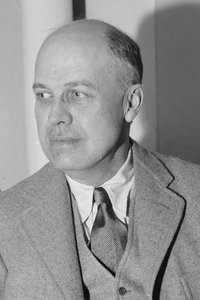
1882–1967, Vereinigte Staaten von Amerika
Edward Hopper
Die Stille der amerikanischen Szenerie Edward Hopper wurde in Upper Nyack, Vereinigte Staaten von Amerika, geboren. Seine frühen Jahre verbrachte er damit, die Welt mit einem wachsamen Auge zu beobachten – eine Gewohnheit, die bereits mit kindlichen Skizzen begann, die er akribisch datierte und signierte. Während seine Eltern ihm einen praktischen Weg in der kommerziellen Illustration nahelegten, blieb sein Fokus unerschütterlich auf der bildenden Kunst. Er studierte an der New York School of Art bei William Merritt Chase und Robert Henri.
Also by Edward Hopper
 Nighthawks, The Art Institute of Chicago, Chica1942
 Automat (klein)
 Haus am Bahnhof1925
 New York Movie1939
Essays around Bridle Path
 Meisterwerke der Einsamkeit: Die 25 besten Kunstwerke von Edward HopperEntdecken Sie die 25 besten Werke von Edward Hopper und den US-Realismus. Erleben Sie Meisterwerke auf OriginalUniqueArt.com.
 Amerikanische zeitgenössische RealistenAmerikanische Realisten wie Edward Hopper prägten die Kunst. Entdecken Sie Meisterwerke und Reproduktionen auf OriginalUniqueArt.com.
 Albert Bierstadt: Lichtmalerei der amerikanischen Landschaft und die Idealisierung des WestensEntdecken Sie die beeindruckende Welt von Albert Bierstadt und der Hudson River School! Erfahren Sie mehr über Lichtmalerei, Idealisierung …