Questions & answers
the guide answersShowing 25 of 25
The story of the painting
Explore the fragmented vision of humanity in Jacques Lipchitz's 1930 Cubist bronze sculpture, a masterful study of form and movement you can own.
A Fragmented Vision of Humanity
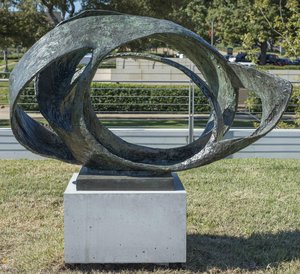
Jacques Lipchitz's "Figure," sculpted in 1930, stands as a profound testament to the transformative power of Cubism and its enduring fascination with exploring the fundamental concepts of form and perception. This bronze masterpiece transcends mere representation; it invites a deep, meditative contemplation on the very essence of human existence through a deliberately abstracted aesthetic. In an era defined by rapid societal shifts, Lipchitz utilized a fragmented language to capture the complexity of the modern soul. The sculpture presents a captivating interplay of geometric precision and organic fluidity, where the human form is not merely depicted but reconstructed through a lens of intellectual rigor and emotional depth.
The composition is a masterclass in the Cubist approach, pioneered by luminaries such as Picasso and Braque. Rather than striving for a realistic or anatomical depiction, Lipchitz dismantles the human figure into interlocking planes, presenting multiple viewpoints simultaneously. The head is rendered with striking simplicity—two oval eyes positioned above a small, triangular nose—which disrupts traditional notions of facial harmony to create a sense of enigmatic presence. Below this stylized visage, undulating vertical forms intersect with curved openings, creating a rhythmic tension between movement and stillness. This structural complexity ensures that the viewer's eye is constantly traveling across the surface, discovering new contours and depths within the bronze.
The Alchemy of Bronze and Form
The materiality of the piece is essential to its enduring impact. The choice of bronze allows for an exquisite level of detail and a rich, tactile quality that stone or wood could not achieve. Through the intricate process of bronze casting, Lipchitz was able to capture subtle variations in surface texture, from the sharp, clean edges of his geometric planes to the softer, more rounded contours of the figure's limbs. The rough, uneven patina resulting from natural oxidation lends the sculpture an ancient, weathered character, suggesting a sense of permanence and historical weight. This textured surface catches the light in a way that emphasizes the sculpture's three-dimensionality, making it a dynamic object that changes appearance depending on the surrounding illumination.
For the discerning collector or interior designer, "Figure" offers an unparalleled opportunity to introduce a piece of art history into a contemporary space. The sculpture’s neutral, earthy tones and sophisticated silhouette allow it to integrate seamlessly into various high-end environments, from minimalist modern galleries to richly textured classical studies. It serves as a powerful focal point, commanding attention through its structural integrity and the quiet strength of its presence. Owning a high-quality reproduction of this work is not merely about acquiring an object; it is about bringing a piece of the avant-garde revolution into one's personal sanctuary, fostering an atmosphere of intellectual curiosity and timeless elegance.
The painting 8
Was stellt "Figure" von Jacques Lipchitz dar?
Die Motive von "Figure" sind sculpture, abstraction, bronze, geometric form, cubism style, human figure, texture, modern art.
Welche Art von Kunstwerk ist "Figure" von Jacques Lipchitz?
"Figure" von Jacques Lipchitz wird als Sculpture klassifiziert. Die Kategorie beschreibt die Art des Kunstwerks, um das es sich beim Original handelt.
Aus welchen Materialien besteht "Figure" und in welchem Stil ist es gehalten?
"Figure" ist in Bronze im Stil der Cubist Abstraction-Epoche gefertigt.
Welche Technik und welches Entstehungsdatum haben "Figure" von Jacques Lipchitz?
"Figure" von Jacques Lipchitz ist eine Bronze, die auf 1930 datiert wird.
Welchem Künstler wird "Figure" zugeschrieben?
Der Künstler hinter „Figure“ ist Jacques Lipchitz. Das Werk ist unter dem Namen von Jacques Lipchitz katalogisiert.
Aus welcher Epoche stammt "Figure" von Jacques Lipchitz?
"Figure" von Jacques Lipchitz stammt aus der Epoche der Modern. Diese Zeitspanne liefert den historischen Kontext des Werkes.
Wer hat "Figure" geschaffen und wann?
Jacques Lipchitz schuf „Figure“ im Jahr 1930.
Zu welcher Stilrichtung gehört "Figure"?
„Figure“ ist ein Werk der Cubist Abstraction. Die Stilrichtung gibt die künstlerische Tradition an, der das Werk angehört.
The painter 1
Aus welchem Land stammt das Cubist Abstraction-Werk „Figure“?
Das Werk "Figure" aus der Epoche des Cubist Abstraction wurde von einem Künstler geschaffen, der in Litauen geboren wurde.
Colours 6
Wie gesättigt ist die Farbpalette von "Figure"?
Die Farbpalette von "Figure" weist eine Sättigung von Muted auf.
Wie lassen sich die Farben von "Figure" von Jacques Lipchitz mit dessen emotionaler Wirkung in Verbindung bringen?
"Figure" von Jacques Lipchitz vereint eine Neutrals Farbpalette mit einem Reflective Ton.
Wie harmonieren die Farben von "Figure" miteinander?
Die Farben von "Figure" von Jacques Lipchitz weisen eine Unified Palette Harmonie auf. Harmonie beschreibt das Zusammenspiel der Farben untereinander.
Wie hoch ist die Leuchtkraft von "Figure" von Jacques Lipchitz?
Die Farben von "Figure" weisen eine Luminous Luminanz auf.
Wie ist die Farbkomposition von "Figure" von Jacques Lipchitz aufgebaut?
Die Farbkomposition von "Figure" von Jacques Lipchitz vereint einen Statement Kontrast mit einer Unified Palette Harmonie.
Welche Farbtönung dominiert in "Figure"?
"Figure" weist einen Green to Violet Spectrum Farbton auf.
Museum & rights 3
Wo kann man "Figure" von Jacques Lipchitz heute besichtigen?
Das Original von "Figure" von Jacques Lipchitz befindet sich im Museum of Modern Art, New York City, United States of America. Eine Reproduktion ermöglicht es, das Werk zu Hause auszustellen.
Warum ist der Urheberrechtsstatus von "Figure" so, wie er ist?
Der Urheberrechtsstatus von "Figure" – noch urheberrechtlich geschützt – ergibt sich aus dem Todesjahr des Künstlers im Jahr 1973.
Ist "Figure" von Jacques Lipchitz gemeinfrei?
Die urheberrechtliche Situation für "Figure" von Jacques Lipchitz: Das Werk ist noch urheberrechtlich geschützt. Dies bestimmt, ob Reproduktionen des Bildes frei erstellt werden dürfen.
At home & gifts 6
Für welche Verwendung wird "Figure" von Jacques Lipchitz empfohlen?
Eine Reproduktion von "Figure" von Jacques Lipchitz wird für Focal empfohlen. Dieser Vorschlag ergibt sich aus dem Motiv, der Stimmung und den Farben des Werkes.
Wie lässt sich "Figure" von Jacques Lipchitz in der Inneneinrichtung verwenden?
Empfohlene Verwendung (Focal) und Raum (Living Room) sind die zwei Empfehlungen für "Figure" von Jacques Lipchitz.
Wo lässt sich eine Reproduktion von "Figure" von Jacques Lipchitz am besten präsentieren?
Das Format Tall von "Figure" von Jacques Lipchitz wird für ein Living Room empfohlen. Format und Raumgestaltung leiten gemeinsam die Platzierung einer Reproduktion.
Für wen ist "Figure" von Jacques Lipchitz als Geschenk empfehlenswert?
"Figure" von Jacques Lipchitz wird als Geschenk für Corporate Gift empfohlen. Eine Reproduktion des Kunstwerks eignet sich hervorragend als Präsent.
Ist "Figure" von Jacques Lipchitz als Geschenk empfehlenswert und für wen eignet es sich?
Die Geschenkempfehlung für "Figure" von Jacques Lipchitz verbindet Corporate Gift mit Focal.
Welcher Raum passt farblich zu "Figure" von Jacques Lipchitz?
Die Neutrals-Farben von "Figure" von Jacques Lipchitz passen perfekt zum empfohlenen Raum: einem Living Room.
On this site 1
Gibt es einen Leitfaden für "Figure" von Jacques Lipchitz?
Die Leitfaden-Seite von "Figure" von Jacques Lipchitz bietet ein druckbares, zweiseitiges Infoblatt: das Kunstwerk mit seiner Identifikationstabelle, eine zeitliche Einordnung in die Lebensspanne des Künstlers, weitere Werke des Künstlers, die gemessene Farbpalette sowie kopierfertige Zitate in vier verschiedenen Stilen.
No written answer matches. Ask the Concierge just below.