Mannerist · 1600
Skeleton (Andreas Vesalius, 1600)
Andreas Vesalius (1514–1564) schuf Skeleton. Es stammt aus dem Jahr 1600. Es gehört zur Mannerist-Strömung. Es ist aus Engraving gefertigt. Es befindet sich im Vilniaus universitetas in Vilnius, Lithuania.
- 1600
- Engraving
- Vilniaus universitetas, Vilnius

 Vorschau anzeigen

 Handgemaltes Ölgemälde
 Versenden
 Teilen
 Datenblatt


 Herunterladen
 Ähnliche Objekte
 Röntgenaufnahme
 Diashow
 Fragen & Antworten

 Statistiken
Skeleton im Überblick
- Titel
- Skeleton
- Künstler
- Andreas Vesalius (1514–1564)
- Geburtsjahr des Künstlers
- Brüssel, Belgien
- Datum
- 1600
- Medium
- Engraving
- Ausstellungsort
- Vilniaus universitetas, Vilnius, Lithuania
- Bewegung
- Mannerist
- Epoche
- Early Modern
- Motiv
- mortality, death, anatomy, skeletal, renaissance, mannerism
Was stellt Skeleton dar?
Identification of the Artwork and Artist
We are looking at Skeleton, a work attributed to Andreas Vesalius. This piece is dated about 1600. It offers a quiet, structural view of the human form, captured through the precise hand of an artist who fundamentally changed how we perceive the internal architecture of the body.
Andreas Vesalius was born in Brussels, Belgium, in 1514. His life and his contributions to anatomical study remained central to his identity until his death in 1564. This specific engraving reflects a period of profound inquiry into the mechanics of life and mortality.
Visual Composition and Subject Matter
In this detailed black and white engraving, we find a skeleton seated upon a pedestal. The figure is captured in a moment of quiet contemplation, looking down at a human skull. The composition is complex, utilizing multiple overlapping planes to create a sense of depth and spatial arrangement. This arrangement directs the eye through a series of structural layers, emphasizing the stillness of the scene.
The style is distinctly Mannerist, characterized by a focus on stylized anatomy and expressive gestures. Through this lens, the subject matter addresses the inevitability of death and the human preoccupation with mortality. It is a meditation on the fragility of life, presented through the stark, structural reality of the bone. The interaction between the seated figure and the skull creates a silent dialogue regarding the fate of the human form.
Artistic Technique and Materials
The work is an engraving executed with a precision that reveals the artist's command over the medium. Using primarily ink and paper, the image is constructed through a series of sharp, meticulously rendered lines. These marks do more than define the edges of the form; they build the very substance of the subject. Through the disciplined application of hatching and cross-hatching, a palpable texture is achieved, simulating the hard, matte surface of bone and the subtle folds of fabric. This technical rigor allows for a sophisticated interplay of light and shadow.
The lighting appears to originate from above and slightly in front of the figure, casting shadows that provide a sense of weight and three-dimensionality. This light works in tandem with a linear perspective to establish a convincing sense of space within the composition. The result is a structural clarity that emphasizes the anatomical details through careful shading. The depth of the scene is achieved by layering these elements, creating a quiet, controlled environment for the subject.
Related Works by Andreas Vesalius
To understand the lineage of this piece, one might look toward the artist's other contributions to anatomical study. In 1543, an engraving titled Anatomy was produced, sharing a temporal connection to the era of the De humani corporis fabrica. This work, much like the one before us, captures the silent architecture of bone and muscle through meticulous line work.
There is also the Dissected human body, dated 1543, which is held within the Bibliothèque nationale de France in Paris. This engraving maps the structural reality of the human frame with a similar precision. Another notable piece is the Portrait of Vesalius from his De humani corporis fabrica, which offers a different perspective on the man behind these detailed observations.
- Dissected human body, 1543
- Anatomy, 1543
Current Location of the Artwork
This engraving is held within the Vilnius University Library, situated in Vilnius, Lithuania. It remains a significant part of a collection that is recognized as the oldest and one of the largest academic libraries in Lithuania. The institution has a long history, having been founded in 1570 by the Jesuits.
The library functions as a sanctuary for many historical documents and engravings. Within its walls, this work exists alongside a vast array of manuscripts and incunabula. It is part of a specialized repository that preserves the intellectual history of the region through its extensive holdings.
In welchem Museum befindet sich Skeleton?
Vilniaus universitetas
Vilnius, Lithuania
Ein Heiligtum aus Tinte und Stein: Die Seele von Vilnius Die Vilnius Universitätsbibliothek zu betreten, bedeutet, eine Schwelle zwischen der flüchtigen Gegenwart und der beständigen Last der Jahrhunderte zu überschreiten. Sie ist nicht bloß ein Depot für das geschriebene Wort, sondern ein lebendiges, atmendes Monument des intellektuellen und künstlerischen Herzschlags Litauens. Während man durch ihre geheiligten Hallen wandert, spürt man eine greifbare Verbindung zu den Geistern vergangener Gelehrter – eine stille, ehrfürchtige Atmosphäre, in der der Duft von altem Pergament auf die Grandiosität neoklassizistischen Ehrgeizes trifft.


Hochauflösende Bilder von Skeleton

Gemeinfrei: Der Künstler verstarb im Jahr 1564.
Andere Formate, Ausschnitte und Zitierhinweise →Andreas Vesalius, Skeleton (1600), Vilniaus universitetas. Gemeinfreiheit
Fragen zu Skeleton, beantwortet
Wo kann man "Skeleton" von Andreas Vesalius heute besichtigen?
Das Originalwerk „Skeleton“ können Sie im Vilniaus universitetas, Vilnius, Lithuania bewundern.
Wann wurde "Skeleton" geschaffen?
"Skeleton" von Andreas Vesalius entstand im Jahr 1600.
Welche Technik wurde für "Skeleton" von Andreas Vesalius verwendet?
Das Medium von "Skeleton" von Andreas Vesalius ist Engraving. Die Reproduktionen zielen darauf ab, die Optik dieser Technik wiederzugeben.
Was stellt "Skeleton" dar?
Die Themen in "Skeleton" von Andreas Vesalius umfassen mortality, death, anatomy, skeletal, renaissance, mannerism, reflection, human form und fassen gemeinsam den Gegenstand des Kunstwerks zusammen.
Ist die Abbildung von "Skeleton" von Andreas Vesalius gemeinfrei?
Die urheberrechtliche Situation für "Skeleton" von Andreas Vesalius: Das Werk ist gemeinfrei – das Urheberrecht ist abgelaufen. Dies bestimmt, ob Reproduktionen des Bildes frei erstellt werden dürfen.
Wer ist der Künstler hinter "Skeleton"?
"Skeleton" wurde von Andreas Vesalius geschaffen. Die Informationen auf dieser Seite beschreiben das Originalwerk von Andreas Vesalius.
Zu welcher Stilrichtung gehört "Skeleton"?
„Skeleton“ ist ein Werk der Mannerist. Die Stilrichtung gibt die künstlerische Tradition an, der das Werk angehört.
In welche Phase von Andreas Vesaliuss Schaffen lässt sich "Skeleton" einordnen?
„Skeleton“ entstammt der Mature Period von Andreas Vesalius. Diese Einordnung setzt das Werk in Bezug zur künstlerischen Entwicklung des Künstlers.
In welchem Alter schuf Andreas Vesalius „Skeleton"?
Andreas Vesalius schuf „Skeleton“ im Alter von 86. Der Künstler wurde 1514 geboren, und das Werk datiert auf 1600.
Über den Künstler, Andreas Vesalius

1514–1564, Belgien
Andreas Vesalius
Andreas Vesalius: Der Vater der modernen Anatomie Andreas Vesalius (1514 – 1564) steht als monumentale Gestalt in der Geschichte von Wissenschaft und Kunst; er veränderte unser Verständnis der menschlichen Anatomie unwiderruflich und schuf ein neues Paradigma für die medizinische Illustration. Geboren in Brüssel, Belgien, war Vesalius’ frühes Leben geprägt von intellektueller Neugier und einer Faszination für die Sektion – Tätigkeiten, die letztlich seine bahnbrechende Karriere definieren sollten. Sein Vater, Gerard Vesalius, war ein Arzt, der ihm die Leidenschaft für die Beobachtung und das akribische anatomische Studium einflößte und so den Weg für Vesalius’ wissenschaftliches Streben ebnete. Frühes Leben & Ausbildung: Akademisches Wirken in Padua: De Humani Corporierung Fabrica: Eine Revolution der Illustration Einfluss und Vermächtnis Die Universität Padua wurde zu Vesalius’ akademischer Heimat, wo er als Medizinstudent unter Alessandro Vesalius (seinem Onkel) glänzte und sein Engagement für die anatomische Untersuchung vertiefte.
Über Andreas Vesalius Bemerkenswerte Werke von Andreas Vesalius
Ebenfalls von Andreas Vesalius
 Anatomie1543
 Dissected human body1543
 Title page1543
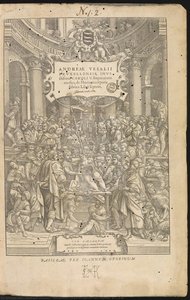 De humani corporis fabrica libri septem, N*.1.1(A)1555

Essays zu Skeleton
 Litauische Maler des 20. JahrhundertsEntdecken Sie Meisterwerke von Čiurlionis bis Lipchitz. Erleben Sie litauische Moderne auf OriginalUniqueArt.com. Jetzt die Kollektion onli…
 Litauische Maler des 19. JahrhundertsEntdecken Sie Meisterwerke von Isaac Levitan und Kanuty Rusiecki. Erleben Sie litauische Kunst des 19. Jhd. auf OriginalUniqueArt.com.
 The Architecture of Flesh: Mastering Anatomical Precision in Classical Figurative ArtMaster the science of classical figure painting through anatomical study and light. Explore the masters of form today.