School of Paris · 1928
Rita van Leer (André Derain, 1928)
André Derain (1880–1954) schuf Rita van Leer. Es stammt aus dem Jahr 1928. Es gehört zur School of Paris-Strömung. Es ist aus Oil On Panel gefertigt. Die Maße sind 41 × 34 cm.
- 1928
- Oil On Panel
- 41 × 34 cm

 Vorschau anzeigen

 Handgemaltes Ölgemälde
 Versenden
 Teilen
 Datenblatt


 Herunterladen
 Ähnliche Objekte
 Röntgenaufnahme
 Diashow
 Fragen & Antworten

 Statistiken
Rita van Leer im Überblick
- Titel
- Rita van Leer
- Künstler
- André Derain (1880–1954)
- Geburtsjahr des Künstlers
- Chatou, Frankreich
- Datum
- 1928
- Medium
- Oil On Panel
- Maße
- 41 × 34 cm
- Bewegung
- School of Paris
- Epoche
- Modern
- Motiv
- woman, portrait, face, shoulders, gray, black
Was stellt Rita van Leer dar?
The Portrait of Rita van Leer
In this intimate portrait, André Derain turns his attention to Rita van Leer. Created about 1928, the work moves away from the loud colorism of his earlier years, focusing instead on the quiet presence of the sitter. There is a certain stillness here, a moment captured in a way that prioritizes her character over a mere photographic likeness. She meets the viewer with a directness that feels both personal and somewhat guarded.
André Derain captures the subject with an expressive likeness, favoring the essence of her personality over rigid, academic precision. The portrait focuses on the head and shoulders, stripping away unnecessary distractions to ensure the viewer's attention remains fixed upon her gaze. It is a study of a person rather than a mere likeness, offering a glimpse into a specific, fleeting moment of her life.
Composition and Visual Elements
The composition is centered entirely upon the woman’s face, which occupies the majority of the frame. Presented in a close-up view, the subject's head and shoulders emerge from a dark, minimalist background. This lack of environmental detail ensures that the viewer's attention remains fixed on the sitter. Her head is slightly tilted, a subtle movement that introduces a sense of dynamism to an otherwise still moment.
There is a directness in her gaze, as she looks straight toward the viewer. This connection is established through the careful placement of her features and the use of tonal variations rather than sharp, photographic lines. Light and shadow work together to define the contours of her face, creating a sense of three-dimensionality through the layering of different shades.
Technique and Artistic Style
The work is characteristic of early modern art, leaning into the expressive possibilities of Fauvism and Expressionism. Rather than seeking photographic accuracy, the artist employs a loose and gestural application of paint to capture the sitter. There is a palpable sense of immediacy here, driven by the visible brushstrokes that define the form. This approach prioritizes the emotional essence of the subject over a strictly realistic representation.
One notices how the artist uses short, choppy strokes to build up the features of the face and the contours of the hair. This method creates a textured, almost rugged surface. The use of thick impasto is particularly evident, providing a physical depth that makes the paint feel sculptural. These heavy applications of pigment allow the light to catch the ridges of the brushwork, adding a sense of movement to the portrait.
Materials and Physical Properties
This work is executed in oil paint, applied with a deliberate and textured hand. The artist has worked upon a surface of either canvas or panel, a choice that supports the heavy impasto visible throughout the piece. Such tactile application allows the paint to hold its form, creating a physical presence that catches the light in subtle ways. The dimensions of the work are 41 x 34 cm, a scale that invites a close, intimate inspection of the surface.
The palette is notably restrained, eschewing the riotous color often associated with the artist's earlier years. Instead, we find a monochromatic arrangement of gray, black, and white. These tones are layered to build depth and define the contours of the subject. The interplay of light and shadow is achieved through these varying shades, providing a sense of volume without the need for chromatic intensity. It is a quiet, disciplined approach to the medium.
Hochauflösende Bilder von Rita van Leer
Gemeinfrei: Der Künstler verstarb im Jahr 1954.
André Derain, Rita van Leer (1928). Gemeinfreiheit
Fragen zu Rita van Leer, beantwortet
In welchem Jahr wurde "Rita van Leer" von André Derain geschaffen?
"Rita van Leer" von André Derain entstand im Jahr 1928.
In welcher Technik wurde "Rita van Leer" von André Derain ausgeführt?
Das Medium von "Rita van Leer" von André Derain ist Oil On Panel. Die Reproduktionen zielen darauf ab, die Optik dieser Technik wiederzugeben.
Welche Maße hat das Originalwerk "Rita van Leer" von André Derain?
Die Maße von "Rita van Leer" von André Derain betragen 41 x 34 cm. Reproduktionen können in anderen Größen bestellt werden, wobei die Proportionen beibehalten werden.
Was stellt "Rita van Leer" von André Derain dar?
Die Motive von "Rita van Leer" sind woman, portrait, face, shoulders, gray, black, white.
Ist "Rita van Leer" gemeinfrei?
Die urheberrechtliche Situation für "Rita van Leer" von André Derain: Das Werk ist gemeinfrei – das Urheberrecht ist abgelaufen. Dies bestimmt, ob Reproduktionen des Bildes frei erstellt werden dürfen.
Wer hat "Rita van Leer" geschaffen?
Der Künstler hinter „Rita van Leer“ ist André Derain. Das Werk ist unter dem Namen von André Derain katalogisiert.
Welcher künstlerischen Strömung ist "Rita van Leer" von André Derain zuzuordnen?
Die mit "Rita van Leer" von André Derain verbundene Stilrichtung ist School of Paris. Diese Klassifizierung ordnet das Werk in den Kontext verwandter Künstler und Kunstwerke ein.
In welche Phase von André Derains Schaffen lässt sich "Rita van Leer" einordnen?
"Rita van Leer" repräsentiert die Late Period von André Derain.
Wie alt war André Derain, als „Rita van Leer“ geschaffen wurde?
André Derain schuf „Rita van Leer“ im Alter von 48. Der Künstler wurde 1880 geboren, und das Werk datiert auf 1928.
Über den Künstler, André Derain
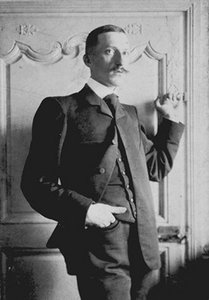
1880–1954, Frankreich
André Derain
Frühe Jahre, Familie und Ausbildung Im Jahr 1880 kam André Derain in Chatou zur Welt, einem malerischen Dorf in der Region Yvelines in Frankreich. Seine frühen Jahre waren geprägt von den stillen Landschaften der Île-de-France, in denen eine natürliche Neugier auf die Umgebung zu keimen begann. Bereits im Jahr 1895 begann er, sich autodidaktisch zu beschäftigen, wobei er versuchte, die visuelle Welt mit seinen eigenen Augen zu begreifen, anstatt sich auf eine formale Ausbildung zu verlassen. Diese Phase der selbstgesteuerten Erkundung ermöglichte es ihm, eine ganz persönliche Sichtweise zu entwickeln, noch bevor die strengen Regeln einer Akademie seinen künstlerischen Ausdruck hätten formen können.
Ebenfalls von André Derain
 Badende1907
 London Bridge1906
 Charing Cross von SW1906
 Landschaft bei L'Estaque1906
Essays zu Rita van Leer
 Fauvismus vs. deutscher Expressionismus: Die Unterscheidung von Farbe und EmotionErfahren Sie den Unterschied zwischen Fauvismus und Expressionismus. Analysieren Sie jetzt die Farben der Moderne.
 Niederländische Kunstwerke der 1860er JahreEntdecken Sie Meisterwerke von Van Gogh und Krieghoff aus den 1860ern. Finden Sie Museal-Reproduktionen auf OriginalUniqueArt.com.
 The Silent Dialogue: Examining Intimacy and Psychological Depth in Classical PortraitureExplore the psychological depth of classical portraiture through masters like Rembrandt and Vermeer. Discover the power of the gaze today.