Porträt von Sidney Richard Percy

Die 50 berühmtesten Gemälde von Sidney Richard Percy, jedes ein Unikat

Aktualisiert im Oktober 2026 · sortiert nach unserem Popularitätsindex (Suchanfragen, Aufrufe und Bestellungen für jedes Werk) · 50 Werke von Sidney Richard Percy in unserem Katalog

Kurz gesagt

Loch Coruisk, Isle of Skye (1874) ist das Gemälde von Sidney Richard Percy, das die meiste Aufmerksamkeit auf sich zieht. Danach wandert der Blick zu A Rest On The Roadside und Path to the Bay, Fairlight Cove (1860). Von den 50 Werken von Sidney Richard Percy in unserem Katalog sind diese 50 die bekanntesten – jedes ein einzigartiges Original, präsentiert mit seinem Entstehungsjahr, dem Museum und dem Grund für seine zeitlose Bedeutung.

1821 – 1886, London Romanticism Meiste Werke: Royal Collection

Die 10 besten Gemälde von Sidney Richard Percy, aus der Sicht der Galerie

1
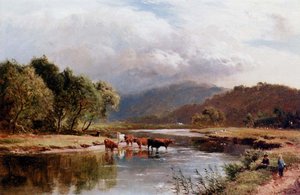
Loch Coruisk, Isle of Skye (1874) von Sidney Richard Percy

Loch Coruisk, Isle of Skye

1874 · Öl auf Leinwand

Das Gemälde präsentiert eine majestätische Szenerie mit einem See im Vordergrund, der von hoch aufragenden Bergen umgeben ist. Eine Herde von Kühen steht am Ufer des Wassers und verleiht der Landschaft ein Gefühl von Ruhe und Leben. Die Tiere sind über die gesamte Szene verteilt, wodurch ein Eindruck von Tiefe und Dreidimensionalität entsteht.

Berühmte Gemälde von Sidney Richard Percy, Nummer 11 bis 50

Die Motive, die Sidney Richard Percy faszinierten

Die vier Motive, die in diesen Originalen am häufigsten vorkommen, jeweils mit ihrem herausragendsten Beispiel.

Die Museen, die die Originale von Sidney Richard Percy beherbergen

Die 2 Museen, in denen sich die meisten der auf dieser Seite aufgeführten Gemälde befinden.

Museum Stadt Werke von Sidney Richard Percy Gemälde aus dieser Liste
Royal Collection, LondonRoyal Collection London 1 A view of Llyn Dulyn
Dordrechts Museum, DordrechtDordrechts Museum Dordrecht 1 River Landscape Pair Part 2

Sidney Richard Percy über die Jahrzehnte hinweg: ein einzigartiges Original für jedes

Werke nach Jahrzehnten

Wählen Sie ein Jahrzehnt aus, um das Original zu sehen, das es definiert.

Gemälde von Sidney Richard Percy: Fragen an die Galerie

Was ist das bekannteste Werk von Sidney Richard Percy?Die Antwort enthüllen

Loch Coruisk, Isle of Skye (1874). Als Nächstes folgen A Rest On The Roadside und Path to the Bay, Fairlight Cove (1860).

In welchem Alter hat Sidney Richard Percy Loch Coruisk, Isle of Skye geschaffen?Die Antwort enthüllen

53 Jahre alt: Loch Coruisk, Isle of Skye stammt aus dem Jahr 1874, und Sidney Richard Percy wurde in 1821 geboren.

Welche zehn Gemälde von Sidney Richard Percy sind die bekanntesten?Die Antwort enthüllen

Loch Coruisk, Isle of Skye, A Rest On The Roadside, Path to the Bay, Fairlight Cove, Kilchum Castle Loch Awe, Lock Coruisk, In Snowdonia, A view of Llyn Dulyn, The Angler's Corner, Homeward Bound und Snowdon. Die obige Rangliste gibt das jeweilige Jahr und das Museum an.

Wie viele Werke von Sidney Richard Percy sind bekannt?Die Antwort enthüllen

Unser Katalog umfasst 50 Werke von Sidney Richard Percy, datiert von 1851 bis 1883.

Wo kann man die berühmtesten Originale von Sidney Richard Percy sehen?Die Antwort enthüllen

Meistens in Royal Collection (London) und Dordrechts Museum (Dordrecht). Die obige Museumstabelle listet alle auf.

In welcher Zeitspanne schuf Sidney Richard Percy seine bekanntesten Gemälde?Die Antwort enthüllen

In 1850s: 5 der 50 Werke auf dieser Seite wurden damals geschaffen, darunter In Snowdonia.

Welches berühmte Gemälde von Sidney Richard Percy ist das früheste und welches das jüngste?Die Antwort enthüllen

Auf dieser Seite ist das früheste Werk aus The Angler's Corner (1851) und das neueste aus Grizedale, Westmorland (1883).

Welche Motive bevorzugte Sidney Richard Percy?Die Antwort enthüllen

Roads (5), Lakes (4) und Landscape (4), verteilt auf die 50 Werke auf dieser Seite.

Welcher Stilrichtung gehört das Werk von Sidney Richard Percy an?Die Antwort enthüllen

Romanticism, wenn man die Originale auf dieser Seite beurteilt.

Sidney Richard Percy: ein Porträt des Künstlers

Sidney Richard Percy (1821 - 1886): The Quintessential Barnes School Painter

Sidney Richard Percy (1821 – 1886) stands as a cornerstone of the “Barnes School” of landscape painting, an artistic movement that flourished in London’s southwest during the Victorian era. Born into a family steeped in artistic tradition—his father, Edward Williams, was himself a celebrated painter—Percy inherited not only talent but also a profound connection to the rural landscapes of Britain, shaping his oeuvre with meticulous observation and a distinctive aesthetic.

His early life was marked by familial influence; Edward Williams instilled in him a passion for painting from a young age, recognizing the importance of formal instruction alongside practical experience. The siblings—Henry John Boddington, Arthur Gilbert, Edward Charles and William—all pursued careers as artists, establishing a remarkable familial tradition that would define their collective output.

Percy’s artistic development was largely self-directed. He apprenticed under Thomas Hilliard, a respected gilder and engraver based in Carnaby Street, gaining invaluable insight into the craft of painting and honing his technical skills. This formative experience profoundly influenced his approach to composition and execution.

The Barnes School & Landscape Inspiration

Percy’s relocation to Barnes—a tranquil village bordering the Thames River—marked a pivotal moment in his artistic life. Situated amidst marshes, farms, and rolling hills, Barnes provided an unparalleled source of inspiration for Percy's paintings. He embraced the Romantic tradition championed by artists like James Ward and George Morland, prioritizing atmospheric perspective and capturing the sublime beauty of the British countryside.

He meticulously studied the effects of light and shadow on the landscape, striving to convey not merely what he saw but also how it felt—the stillness of dawn, the grandeur of distant mountains, the misty charm of twilight. Percy’s canvases are populated by figures—often shepherds or children—who serve as focal points against which the immensity of nature is emphasized.

Notable Paintings & Artistic Style

Percy’s artistic style is characterized by a remarkable attention to detail—particularly in rendering rocks and stones—demonstrating a dedication to scientific accuracy alongside aesthetic sensibility. His canvases depict idyllic scenes of grazing cattle against backgrounds of distant mountains and cloudy skies, bathed in soft pastel hues.

Works such as “A Rest on the Roadside” exemplify his masterful technique and unwavering commitment to portraying the grandeur of nature. He achieved considerable acclaim during his lifetime, securing commissions from prominent patrons and exhibiting extensively at prestigious venues like the Royal Academy and the British Institution. His paintings continue to resonate with audiences today, embodying the spirit of Victorian landscape art and cementing his place as one of the most influential figures within the Barnes School.

Recognition & Legacy

Museums across Britain—including London’s Tate Gallery and Cardiff’s National Museum of Wales—house significant collections of Percy's works, ensuring that his artistic vision endures for generations to come. His enduring influence stems from his ability to translate scientific observation into emotive visual expression – a hallmark of the Barnes School’s ethos.

Percy’s legacy resides not merely in his paintings themselves but also in their contribution to shaping perceptions of British landscape and fostering an appreciation for the sublime beauty of the natural world. He remains a testament to the power of artistic dedication and the transformative potential of immersing oneself in the wonders of the outdoors.