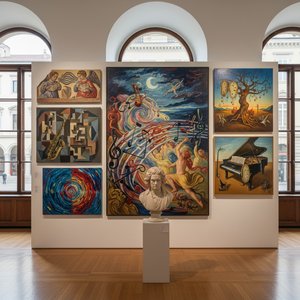
A Symphony of Wood and Gold: The Soul of Portuguese Sound
To step into the Museu Nacional da Música is to surrender oneself to a profound sensory journey, where the silent weight of history is felt through the very grain of aged wood and the shimmer of polished brass. Nestled within the majestic Palácio Nacional Ajuda in Lisbon, this institution serves much more than a mere repository for artifacts; it is a living, breathing chronicle of Portugal’s cultural heartbeat. As one wanders through its halls, the air seems to vibrate with the echoes of centuries past, from the solemnity of Gregorian chants to the rhythmic vitality of folk traditions. The museum offers an intimate encounter with the evolution of human expression, presenting a collection that transcends simple observation to become a deeply emotional experience for any lover of fine craftsmanship and historical narrative.
The heart of the museum beats most vibrantly within its extraordinary collection of over five hundred musical instruments, each a masterpiece of acoustic engineering and artistic design. Among these treasures, few possess the magnetic pull of the 1725 Stradivarius cello . Once graced by the touch of King Luís I, this instrument stands as a breathtaking testament to Antonio Stradivari’s legendary genius and the era of royal patronage that once flourished in Portugal. To stand before such a relic is to witness the intersection of art and science, where the meticulous carving of spruce and maple meets the ethereal beauty of sound. The collection further unfolds into a rich tapestry of eras, featuring the delicate, intricate mechanisms of Baroque harpsichords and clavichords, alongside the stately presence of Victorian-era pianos that arrived in Lisbon as symbols of a changing, modernizing world.
Architectural Grandeur and Timeless Sophistication
The architectural setting of the museum provides a grand, Neo-Classical stage that elevates the collection from a mere display to an immersive art installation. The Palácio Nacional Ajuda , commissioned by Ferdinand II in the mid-19th century, offers an environment of unparalleled elegance. Its sweeping halls and refined proportions do not merely house the instruments; they converse with them. For the interior designer or the collector of fine aesthetics, the museum serves as an ultimate inspiration, demonstrating how historical splendor and curated objects can coalesce to create an atmosphere of timeless sophistication.
What truly distinguishes the Museu Nacional da Música is its holistic approach to heritage, acting as a bridge between the silent past and the vibrant present. It is not a static monument but a dynamic center for artistic inquiry, frequently hosting workshops and concerts that breathe new life into these historical voices. Through collaborations with scholars and performers alike, the museum ensures that the legacy of Portuguese music remains an active part of the contemporary cultural landscape. Whether one is drawn by the technical brilliance of a period instrument or the romantic allure of its royal history, the museum offers a singular destination where the soul of a nation is preserved in every string, key, and reed.