

A Monumental Echo of Royal Faith
In the heart of Toledo, where the ancient stones of Spain whisper secrets of conquest and devotion, stands the Monasterio de San Juan de los Reyes. More than a mere edifice of stone and mortar, this Franciscan masterpiece serves as a tangible chronicle of a pivotal era in European history. Commissioned by the Catholic Monarchs, Ferdinand II of Aragon and Isabella I of and Castile, the monastery was conceived as a dual celebration: to commemorate the birth of their son, Prince John, and to immortalize their decisive victory at the Battle of Toro. As one approaches its imposing structure, the air seems to thicken with the weight of 1477, an era when the fusion of political triumph and spiritual fervor began to reshape the destiny of the Iberian Peninsula.
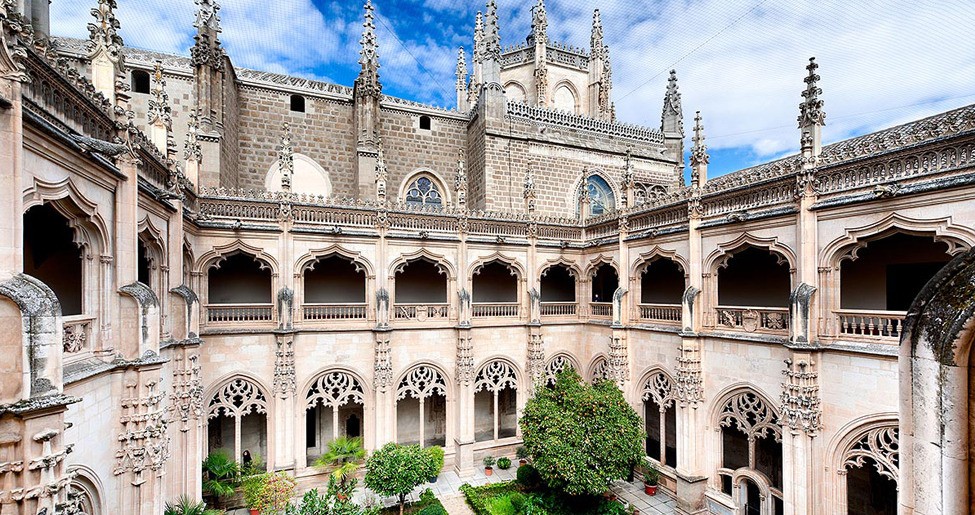
The architecture itself is a breathtaking dialogue between eras, embodying the Isabelline Gothic style—a daring and ornamental evolution that bridges late Gothic grandeur with the burgeoning ideals of the Renaissance. Under the visionary guidance of architects like Juan Guas, the monastery emerged as a triumph of complexity and grace. The church, stretching fifty meters in length, commands the skyline with an authoritative presence, while its façade serves as a heraldic tapestry. Here, eagle sculptures bearing royal coats of an arms stand as eternal sentinels of power and piety, reminding every passerby of the divine right and earthly dominion of the monarchs who laid these foundations.
A Tapestry of Art and Ornamentation
To step inside the Monasterio de San Juan de los Reyes is to enter a sanctuary where craftsmanship transcends the physical. The interior is a treasure trove for the discerning eye, offering a profound journey through various artistic movements. One cannot help but be moved by the chancel altar, a masterful creation by Felipe Bigarny and Francisco de Comontes, which breathes life into the sacred narratives of the Passion and Resurrection through intricate sculptural detail. This spiritual intensity is mirrored in the monastery's collection of paintings, where the dramatic flair of Juan de Valdés Leal meets the ethereal grace of Fra Angelico. Each brushstroke within these walls contributes to a larger narrative of faith, inviting collectors and art lovers to contemplate the intersection of human skill and divine inspiration.
The cloisters offer perhaps the most intimate encounter with the monastery's unique cultural identity. As one wanders beneath the German cross vaults, the eye is drawn upward to the Mudéjar ceilings—a stunning display of Islamic-influenced artistry. These ceilings feature breathtaking floral motifs and geometric patterns that showcase the resilience of traditional techniques. The presence of the motto “Tanto monta, monta tanto” etched into the very soul of the architecture serves as a poignant reminder of the union between Castile and Aragon. For the interior designer or lover of historical aesthetics, these spaces provide an unparalleled study in how light, shadow, and intricate ornamentation can create an atmosphere of timeless transcendence.
Symbolism and the Spirit of Toledo
What truly distinguishes San Juan de los Reyes is its profound layer of symbolic storytelling. The monastery does not merely house art; it embodies the very struggle for identity and freedom that defined the Reconquista. This is most evocatively captured in the exterior details, where manacles and shackles are integrated into the stonework to represent the liberation of Christian prisoners. It is a somber yet triumphant architectural metaphor for religious freedom and the overcoming of adversity. Recent scholarly exhibitions have only deepened this appreciation, shedding light on the monastery's historical role as a vibrant center for humanist scholarship and royal patronage.
For those seeking inspiration, the monastery offers an unforgettable encounter with the enduring spirit of Spanish civilization. It is a place where the architectural innovation of the Isabelline style meets the soulful depth of Mudéjar craftsmanship, creating a space that feels both grounded in the earth of Toledo and reaching toward the heavens. Whether one is drawn by the historical gravity of the Catholic Monarchs or the exquisite beauty of its Renaissance-infused Gothic halls, San Juan de los Reyes remains an essential pilgrimage for anyone captivated by the profound power of art to preserve the memory of a nation.