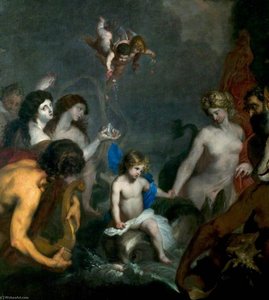
Portræt af William Hilton

De 55 mest berømte William Hilton-malerier, hver og en unik

Opdateret november 2026 · rangeret efter vores popularitetsscore (søgninger, besøg og ordrer for hvert værk) · 55 værker af William Hilton i vores katalog

Kort sagt

The Search for Michael Dwyer (1803) er det maleri af William Hilton, der vækker mest opsigt; originalen findes på National Gallery of Ireland, Dublin. Derefter falder blikket på The French in Killala Bay (1810) og Christ Restoring Sight to the Blind (1812). Blandt de 55 værker af William Hilton i vores katalog er disse 55 de mest berømte, hver især et unikt originalværk præsenteret med sit årstal, sit museum og årsagen til dets tidløse betydning.

1786 – 1839, Lincoln Romanticism Flest værker: Usher Gallery

Top 10 malerier af William Hilton, set gennem galleriets øjne

1
The Search for Michael Dwyer (1803) af William Hilton

The Search for Michael Dwyer

1803 · Oil · National Gallery of Ireland, Dublin

A large, dark tree anchors the left side of the frame, its leafy weight casting a shadow over a small cottage. The scene is a quiet intersection of earth and sky. A path cuts through the rugged terrain, leading the eye toward a distant, hazy mountain range. Under a vast, pale blue and yellowish sky, the light emanates from the center-right, touching the ground and the figures with a soft,…

2
The French in Killala Bay (1810) af William Hilton

The French in Killala Bay

1810 · Oil On Canvas · National Gallery of Ireland, Dublin

In "The French in Killala Bay" by William Hilton, the landscape is split by a sharp tension between light and shadow. On the left, a dark landmass of deep browns, dark greens, and ochre anchors the foreground. This heavy earth meets a bright, expansive sea and sky on the right. The composition follows the principles of Romanticism, using the movement of the choppy water and the tilt of a sailboat's…

3
Christ Restoring Sight to the Blind (1812) af William Hilton

Christ Restoring Sight to the Blind

1812 · Oil On Canvas · Walker Art Gallery, Liverpool

The air feels heavy with anticipation as the crowd presses inward, a sea of faces caught in a singular, breathless instant. At the center of this human tide, light breaks through the shadows to find the figure of Christ. His hand reaches out, an instrument of salvation, cutting through the darkness to touch the eyes of the blind. The scene is a dense, pyramidal arrangement of bodies, where every limb…

4
The Triumph of the Duke of Wellington (1817) af William Hilton

The Triumph of the Duke of Wellington

1817 · Oil On Canvas · Rhode Island School of Design Museum of Art, Providence

The Triumph of the Duke of Wellington is an oil painting by the British artist William Hilton. Executed about 1817, the work captures a moment of significant political or military victory through a large-scale, dynamic composition. The scene centers on a figure mounted upon a white horse, positioned amidst a dense and chaotic throng of figures moving through a landscape.

5
Christ at the Column (after Sodoma) (1819) af William Hilton

Christ at the Column (after Sodoma)

1819 · Oil On Canvas

This oil on canvas, titled Christ at the Column (after Sodoma), was executed by the British painter William Hilton. Dating to about 1819, the work emerged during a period of significant development in the artist's career. Hilton, a figure known for his skill in both portraiture and history painting, brought a specific sensitivity to the religious narratives he chose to interpret.

6
The Rape of Europa (1818) af William Hilton

The Rape of Europa

1818 · Oil On Canvas · Petworth House, Petworth

is an oil on canvas painting by the British artist William Hilton. Executed between 1818 and 1821, this work represents the first secular commission for the artist. The composition depicts a scene taken from the Roman poet Ovid’s Metamorphoses, illustrating the moment the god Jupiter, in the form of a bull, carries Europa away.

7
Diana at the Bath (1820) af William Hilton

Diana at the Bath

1820 · Oil

is a mythological oil painting by the British artist William Hilton. Executed about 1820, the work presents a group of female figures, likely nymphs or deities, within a natural woodland setting. The scene focuses on several women in various states of bathing or lounging near water.

8
Nature Blowing Bubbles for her Children (1821) af William Hilton

Nature Blowing Bubbles for her Children

1821 · Oil

In this large-scale oil painting from 1821, a central female figure reclines amidst a dense arrangement of natural elements. She is surrounded by several semi-nude infants, or putti, who cluster around her form. The scene is set beneath the sweeping, leafy branches of an overhanging tree, with foliage appearing in the upper right corner. Light enters from the upper left through a break in the clouds, casting highlights onto the…

9
John Clare (1820) af William Hilton

John Clare

1820 · Oil On Canvas · National Portrait Gallery, London

William Hilton presents a formal portrait of John Clare, executed in 1820. The subject, an English poet, is rendered with a quiet intensity that reflects his contemplative nature. Born the son of a farm labourer, Clare’s presence in this work carries a sense of dignity and gravity.

10
Cupid and Nymph (1828) af William Hilton

Cupid and Nymph

1828 · Oil On Canvas

In Cupid and Nymph, William Hilton centers the viewer's gaze upon a private, quiet intimacy. The composition is tightly focused on the two figures, pulling the eye away from the world and into their immediate proximity. Positioned within the lower two-thirds of the frame, the child and the woman occupy a space of shared breath and gentle contact. A close-up, eye-level view brings the observer into this narrow, private circle,…

William Hiltons berømte malerier, nummer 11 til 55

11Rebecca and Abraham’s Servant at the Well (1833) af William HiltonRebecca and Abraham’s Servant at the Well1833 12Editha and the Monks Searching for the Body of Harold (1834) af William HiltonEditha and the Monks Searching for the Body of Harold1834 13Study of a Monk’s Head for ‘Editha and the Monks’ (1834) af William HiltonStudy of a Monk’s Head for ‘Editha and the Monks’1834 14Cupid Armed (1833) af William HiltonCupid Armed1833 · Yale Center for British Art 15Marc Antony Reading the Will of Caesar (1834) af William HiltonMarc Antony Reading the Will of Caesar1834 · Sir John Soane's Museum 16Harriet Hilton (1791–1866) and Child (Helen Hilton, 1811–1873) (sketch) (1812) af William HiltonHarriet Hilton (1791–1866) and Child (Helen Hilton, 1811–1873) (sketch)1812 · Usher Gallery 17Phaeton (1820) af William HiltonPhaeton1820 18Sir Calepine Rescuing Serena (1831) af William HiltonSir Calepine Rescuing Serena1831 19The Crucifixion (triptych, left wing) (1827) af William HiltonThe Crucifixion (triptych, left wing)1827 · Walker Art Gallery 20The Crucifixion (triptych, right wing) (1827) af William HiltonThe Crucifixion (triptych, right wing)1827 · Walker Art Gallery 21The Crucifixion (triptych, centre panel) (1827) af William HiltonThe Crucifixion (triptych, centre panel)1827 · Walker Art Gallery 22James Augustus Hessey (1785–1870), Bookseller and Printer (1825) af William HiltonJames Augustus Hessey (1785–1870), Bookseller and Printer1825 · Guildhall Art Gallery 23Samson and Delilah (after Peter Paul Rubens) (1830) af William HiltonSamson and Delilah (after Peter Paul Rubens)1830 24The Miracle of Saint Mark (after Jacopo Tintoretto) (1823) af William HiltonThe Miracle of Saint Mark (after Jacopo Tintoretto)1823 · Usher Gallery 25The Burning of the Arcade in College Green, Dublin (1837) af William HiltonThe Burning of the Arcade in College Green, Dublin1837 · National Gallery of Ireland 26Jonathan and Mary Walker of Ferham af William HiltonJonathan and Mary Walker of Ferham 27The Mermaid of Galloway af William HiltonThe Mermaid of Galloway 28Una and the Satyrs af William HiltonUna and the SatyrsUsher Gallery 29Revenue Raid af William HiltonRevenue RaidNational Gallery of Ireland 30An Inn Scene in a Landscape af William HiltonAn Inn Scene in a LandscapeNational Gallery of Ireland 31A View of Howth Abbey af William HiltonA View of Howth AbbeyNational Gallery of Ireland 32A View of the Salmon Leap, Leixlip af William HiltonA View of the Salmon Leap, LeixlipNational Gallery of Ireland 33A View of the Inn, Baldoyle af William HiltonA View of the Inn, BaldoyleNational Gallery of Ireland 34A View of the Inn, Laytown, County Meath af William HiltonA View of the Inn, Laytown, County MeathNational Gallery of Ireland 35A View of the Four Courts, Dublin af William HiltonA View of the Four Courts, DublinNational Gallery of Ireland 36A view of the Four Courts and Richmond Bridge af William HiltonA view of the Four Courts and Richmond BridgeNational Gallery of Ireland 37A View of the South Wall and the Pigeon House af William HiltonA View of the South Wall and the Pigeon HouseNational Gallery of Ireland 38A View of Poolbeg Lighthouse af William HiltonA View of Poolbeg LighthouseNational Gallery of Ireland 39A View of the Custom House af William HiltonA View of the Custom HouseNational Gallery of Ireland 40A Thunderstorm af William HiltonA Thunderstorm 41Saint Peter, Martyr (after Titian) af William HiltonSaint Peter, Martyr (after Titian)Usher Gallery 42The Elopement af William HiltonThe ElopementUsher Gallery 43Cupid Disarmed af William HiltonCupid DisarmedLaing Art Gallery 44Reverend la Tour af William HiltonReverend la TourUsher Gallery 45Harriet Hilton (1791–1866) af William HiltonHarriet Hilton (1791–1866)Usher Gallery 46The Birth of Triton af William HiltonThe Birth of TritonUsher Gallery 47Cupid Armed af William HiltonCupid ArmedUsher Gallery 48Portrait of the Artist's Father af William HiltonPortrait of the Artist's FatherUsher Gallery 49Self Portrait af William HiltonSelf PortraitUsher Gallery 50Portrait of an Unknown Man af William HiltonPortrait of an Unknown ManUsher Gallery 51Harriet Hilton (1791–1866) and Child (Helen Hilton, 1811–1873) af William HiltonHarriet Hilton (1791–1866) and Child (Helen Hilton, 1811–1873)Usher Gallery 52Study of a Classical Subject af William HiltonStudy of a Classical SubjectUsher Gallery 53The Holy Family (after Jacopo Palma il vecchio) af William HiltonThe Holy Family (after Jacopo Palma il vecchio)Usher Gallery 54The Crucifixion af William HiltonThe CrucifixionUsher Gallery 55Venus in Search of Cupid Surprises Diana (1820) af William HiltonVenus in Search of Cupid Surprises Diana1820 · Wallace Collection

Motiverne, der fangede William Hiltons blik

De fire motiver, der optræder hyppigst i disse originaler, hver med sit fineste eksempel.

De museer, der udstiller William Hiltons originalværker

De 8 museer, der rummer flest af malerierne på denne side.

Museum By Værker af William Hilton Malerier fra denne liste
Usher Gallery, LincolnUsher Gallery Lincoln 16 Harriet Hilton (1791–1866) and Child (Helen Hilton, 1811–1873) (sketch), The Miracle of Saint Mark (after Jacopo Tintoretto), Una and the Satyrs
National Gallery of Ireland, DublinNational Gallery of Ireland Dublin 14 The Search for Michael Dwyer, The French in Killala Bay, The Burning of the Arcade in College Green, Dublin
Walker Art Gallery, LiverpoolWalker Art Gallery Liverpool 4 Christ Restoring Sight to the Blind, The Crucifixion (triptych, left wing), The Crucifixion (triptych, right wing)
Rhode Island School of Design Museum of Art, ProvidenceRhode Island School of Design Museum of Art Providence 1 The Triumph of the Duke of Wellington
Petworth House, PetworthPetworth House Petworth 1 The Rape of Europa
National Portrait Gallery, LondonNational Portrait Gallery London 1 John Clare
Yale Center for British Art, New HavenYale Center for British Art New Haven 1 Cupid Armed
Sir John Soane's Museum, LondonSir John Soane's Museum London 1 Marc Antony Reading the Will of Caesar

William Hilton gennem årtierne: ét unikt originalværk til hver

Værker per årti

Vælg et årti for at se det originale værk, der definerer det.

William Hiltons malerier: spørgsmål til galleriet

Hvad er det mest berømte værk af William Hilton?Vis svaret

The Search for Michael Dwyer (1803), National Gallery of Ireland, Dublin. Derefter følger The French in Killala Bay (1810) og Christ Restoring Sight to the Blind (1812).

Hvilken alder havde William Hilton, da The Search for Michael Dwyer blev skabt?Vis svaret

17 år gammel: The Search for Michael Dwyer er fra 1803, og William Hilton blev født i 1786.

Hvilke ti malerier af William Hilton er de mest berømte?Vis svaret

The Search for Michael Dwyer, The French in Killala Bay, Christ Restoring Sight to the Blind, The Triumph of the Duke of Wellington, Christ at the Column (after Sodoma), The Rape of Europa, Diana at the Bath, Nature Blowing Bubbles for her Children, John Clare og Cupid and Nymph. Ranglisten ovenfor viser det enkelte værks årstal og museum.

Hvor mange værker af William Hilton er kendt?Vis svaret

Vores katalog indeholder 55 værker af William Hilton, dateret fra 1803 til 1837.

Hvor kan de mest berømte originaler af William Hilton ses?Vis svaret

Primært i Usher Gallery (Lincoln), National Gallery of Ireland (Dublin) og Walker Art Gallery (Liverpool). Museumslisten ovenfor viser dem alle.

I hvilken periode skabte William Hilton sine mest kendte malerier?Vis svaret

I 1820s: 11 af de 55 værker på denne side blev skabt dengang, herunder Diana at the Bath.

Hvilket berømt maleri af William Hilton er det tidligste, og hvilket er det seneste?Vis svaret

På denne side er det tidligste The Search for Michael Dwyer (1803) og det seneste The Burning of the Arcade in College Green, Dublin (1837).

Hvilke motiver foretrak William Hilton?Vis svaret

Woman (7), Man (5) og Sky (4), fordelt på de 55 værker på denne side.

Hvilke materialer brugte William Hilton mest til sine malerier?Vis svaret

Oil On Canvas, for 11 af de 55 værker på denne side.

Hvilken stilart tilhører værkerne fra William Hilton?Vis svaret

Romanticism, baseret på originalerne på denne side.

Hvilke originalværker af William Hilton kan jeg se på Usher Gallery?Vis svaret

Harriet Hilton (1791–1866) and Child (Helen Hilton, 1811–1873) (sketch), The Miracle of Saint Mark (after Jacopo Tintoretto) og Una and the Satyrs: Usher Gallery, Lincoln har 16 af værkerne på denne side.

William Hilton: et portræt af kunstneren

William Hilton II (1786–1839): A Pioneer of Romantic Religious Painting

William Hilton II (1786–1839) stands as a singular figure in British art history, recognized primarily for his monumental canvases depicting biblical narratives with profound emotional depth and masterful execution. Born in Oxford, England, Hilton’s artistic journey unfolded against the backdrop of the burgeoning Romantic movement, where he absorbed the stylistic innovations championed by Rubens and Tintoretto—artists who profoundly impacted his approach to composition, color palettes, and dramatic lighting. His legacy resides not merely in individual artworks but in establishing Lincoln College as a bastion of British art and fostering a generation of artists dedicated to exploring spiritual themes through visual representation.
  • Early Life & Education: Hilton’s formative years were marked by rigorous academic training at Eton College, equipping him with the intellectual grounding necessary for his artistic pursuits. He subsequently studied at Lincoln College Oxford, where he excelled in theology alongside honing his artistic skills—a dual commitment that would characterize his entire career.
  • The Influence of Rubens & Tintoretto: Hilton’s artistic sensibilities were decisively shaped by the stylistic grandeur of Peter Paul Rubens and Giovanni Battista Tiepolo. He meticulously studied their techniques, particularly their use of chiaroscuro (contrast between light and dark) to convey emotion and heighten dramatic impact. This influence is palpable in his paintings—most notably “Christ Restoring Sight”—where he skillfully employs tenebrism to create a sense of awe and spiritual contemplation.
  • Notable Works: Hilton’s oeuvre comprises approximately 150 paintings, predominantly religious subjects executed with exceptional detail and sensitivity. Among his most celebrated works are “Christ Restoring Sight,” depicting Lazarus' resurrection; “The Descent from Calvary”; and “Saint George and the Dragon,” a heroic allegory imbued with symbolic resonance.
  • Lincoln College & Artistic Patronage: Hilton’s unwavering dedication to Lincoln College extended beyond mere academic affiliation. He served as Warden of Lincoln College for over 30 years, fostering an environment conducive to artistic creativity and establishing it as a prominent center for British art education. His patronage supported numerous artists—including Sir William Rothenstein—who would become influential figures in the advancement of Modernism.
  • Legacy & Historical Significance: Hilton II’s contribution to British Romantic painting is undeniable. He championed a humanist aesthetic that prioritized emotional expression and psychological realism, aligning him with the broader intellectual currents of his time. His paintings continue to inspire admiration for their technical brilliance and profound spiritual contemplation—a testament to his enduring artistic vision.

Christ Restoring Sight: A Masterpiece of Dramatic Composition & Color

“Christ Restoring Sight” (1812), arguably Hilton II’s most iconic work, exemplifies the Romantic ideal of portraying biblical narratives with visceral emotion and meticulous realism. The painting depicts Lazarus' miraculous resurrection—a pivotal episode in Christian theology—and captures the scene with breathtaking grandeur. Hilton skillfully employs tenebrism—a technique popularized by Caravaggio—to sculpt dramatic light and shadow, emphasizing the central figure of Christ and conveying a palpable sense of spiritual transformation. The rich color palette—dominated by warm reds and golds—further amplifies the painting’s emotive power, mirroring the radiant glory associated with divine intervention.
  • Composition & Lighting: Hilton's masterful compositional choices contribute significantly to the painting's impact. He arranges the figures in a pyramidal structure, directing the viewer's gaze towards Christ—the focal point of the scene—while simultaneously creating depth and dynamism through carefully positioned shadows.
  • Color Palette & Symbolism: Hilton’s use of color is deliberate and symbolic. The dominant reds represent divine compassion and sacrifice, while golds symbolize resurrection and eternal life. These hues are juxtaposed against darker tones to heighten dramatic tension and underscore the spiritual significance of the depicted event.
  • Detail & Texture: Hilton II's meticulous attention to detail—evident in the rendering of drapery folds, facial expressions, and anatomical accuracy—underscores his commitment to portraying biblical narratives with uncompromising realism. The textured surface of the canvas enhances visual richness and contributes to the painting’s immersive quality.

Lincoln College: Shaping Artistic Tradition & Promoting Humanist Values

Hilton II's tenure as Warden of Lincoln College Oxford profoundly shaped the college’s artistic identity and fostered a tradition of humanist scholarship. Recognizing the importance of cultivating intellectual curiosity alongside artistic creativity, he championed innovative pedagogical approaches—encouraging students to engage critically with art history and fostering an environment conducive to experimentation.
  • Establishing Artistic Excellence: Hilton II’s unwavering commitment to Lincoln College ensured that it remained a beacon of British art education. He attracted talented artists—including Sir William Rothenstein—who would become influential figures in the advancement of Modernism, cementing Lincoln College's reputation as a center for artistic innovation.
  • Promoting Intellectual Discourse: Hilton II fostered an atmosphere of intellectual debate and critical inquiry—challenging students to question conventional wisdom and explore diverse perspectives. This ethos resonated throughout Lincoln College’s history—inspiring generations of scholars and artists to pursue excellence in both disciplines.

Concluding Reflections: An Enduring Artistic Vision

William Hilton II's legacy transcends the confines of his artistic output; it resides in his unwavering dedication to Lincoln College and his profound influence on British art history. His paintings—characterized by dramatic composition, luminous color palettes, and meticulous realism—continue to captivate audiences worldwide—a testament to his enduring artistic vision and his commitment to portraying biblical narratives with spiritual depth.