Victoria Eugenia Pérez Nebreda: Weaver of Stone and Memory
The Andalusian landscape, a tapestry woven from sun-baked earth, ancient stone, and the echoes of millennia, is inextricably linked to the work of Victoria Eugenia Pérez Nebreda. Born in Spain, her artistic journey began not with paint or canvas, but with an intimate understanding of megalithic monuments – colossal stones erected by Neolithic peoples, silent witnesses to a forgotten world. Her fascination isn’t merely archaeological; it's profoundly personal, rooted in a deep respect for the enduring power of these structures and their connection to human memory. Pérez Nebreda doesn’t simply document these sites; she seeks to translate their essence into evocative representations, bridging the gap between the past and the present.
Pérez Nebreda's early training laid a crucial foundation for her unique approach. Initially drawn to communication sciences and graphic design, she later pursued fine arts at MEEBA in Buenos Aires, honing her skills in sculpture, drawing, and painting. This diverse background—combining analytical observation with artistic expression—is evident throughout her oeuvre. Crucially, her studies with renowned sculptors Jorge Bianchi and Claudio Azzatto instilled a deep appreciation for form, texture, and the tactile qualities of materials. Moving to Mallorca, she further refined her skills in graphic design and website design, demonstrating an adaptability and willingness to embrace new technologies while retaining a core commitment to artistic exploration.
The Menga Dolmen: A Central Focus
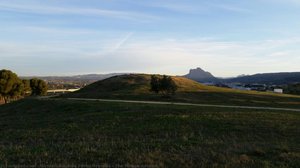
Perhaps the most defining element of Pérez Nebreda’s work is her sustained engagement with the Menga dolmen in Antequera, Spain. This monumental structure, dating back over six thousand years, represents a pivotal point in Iberian prehistory and has captivated archaeologists and artists alike for decades. Pérez Nebreda's research at the Menga isn’t limited to academic documentation; she meticulously studies its construction, its alignment with celestial events, and its potential symbolic significance. Her detailed photographic work, combined with her artistic interpretations, offers a compelling glimpse into the minds of those who erected this imposing monument – a testament to their ingenuity, spirituality, and connection to the cosmos.
Her most celebrated project, “Sirenas de Mallorca,” further solidified her reputation as an artist deeply attuned to the spirit of the landscape. This series of sculptures, inspired by the mythical sirens of Greek mythology, transformed the rugged coastline of Mallorca into a realm of evocative beauty and ancient mystery. The figures, crafted from stone and imbued with a sense of both vulnerability and strength, resonated powerfully with audiences, reflecting Pérez Nebreda’s ability to seamlessly blend archaeological research with artistic vision.
Technique and Materiality
Pérez Nebreda's artistic process is characterized by a deliberate engagement with the materials themselves. She frequently works with stone – a material that inherently carries within it the weight of history and geological time. Her approach isn’t simply about carving or sculpting; it’s about coaxing forth the inherent qualities of the stone, revealing its textures, colors, and patterns. She often employs techniques that emphasize the raw beauty of the unworked stone, allowing its natural imperfections to contribute to the overall aesthetic impact of her work.
Beyond stone, she has also explored other materials, including textiles and digital media, demonstrating a willingness to experiment with different approaches while maintaining a consistent focus on themes of memory, landscape, and human connection. Her use of photography is particularly noteworthy, capturing the stark beauty of the megalithic sites and providing valuable documentation for her research.
Legacy and Significance
Victoria Eugenia Pérez Nebreda’s work transcends mere artistic representation; it serves as a vital bridge between the past and the present. Her meticulous research, combined with her evocative artistic interpretations, offers new insights into the lives of Neolithic peoples and their enduring connection to the landscape. She has become a leading voice in the field of megalithic archaeology, contributing significantly to our understanding of these enigmatic monuments and their cultural significance.
Furthermore, Pérez Nebreda’s work highlights the importance of interdisciplinary approaches to art and scholarship. Her background in communication sciences, graphic design, and fine arts allows her to seamlessly integrate research, documentation, and artistic expression – creating a holistic vision that is both intellectually stimulating and emotionally resonant. Her ongoing commitment to preserving and interpreting these ancient sites ensures that their stories will continue to be told for generations to come.