Portræt af Théodore Géricault

The 100 Most Famous Théodore Géricault Paintings, Each One of a Kind

Opdateret oktober 2026 · rangeret efter vores popularitetsscore (søgninger, besøg og ordrer for hvert værk) · 183 værker af Théodore Géricault i vores katalog

In short

Raftet af Médusa (1818) is the Théodore Géricault painting that draws the most eyes; the original belongs to the Louvre, Paris. After it, the eye goes to Nymph and Satyr (Jupiter and Antiope) (1820) and The Oath of Brutus after the Death of Lucretia (1815). Among the 183 works of Théodore Géricault in our catalog, these 100 are the most famous, each a unique original presented with its year, its museum and the reason it endures.

1791 – 1824, Rouen Romanticisme dramatique Flest værker: Louvre

Top 10 paintings by Théodore Géricault, through the gallery's eye

1
Raftet af Médusa (1818) af Théodore Géricault

Raftet af Médusa

1818 · Olie på lærred · Louvre, Paris

Jean-Louis André Théodore Géricaults monumentale mesterværk er mere end blot en gengivelse af en søkatastrofe; det er en visceral udforskning af menneskelig desperation, politisk skandale og naturens sublime styrke. Dette over-livsstørrelse lærred (491 x 716 cm), som blev færdiggjort i 1819, foreviger de rædselsvækkende eftervirkninger af det franske fregatskib Méduses forlis i 1816 – en tragedie født af inkompetence og korruption, der chokerede Frankrig.

2
Nymph and Satyr (Jupiter and Antiope) (1820) af Théodore Géricault

Nymph and Satyr (Jupiter and Antiope)

1820 · Acrylic On Canvas · Musée des Beaux-Arts et de la Céramique, Rouen

The Allure of the Divine Encounter: Géricault’s *Nymph and Satyr* Jean-Louis André Théodore Géricault's *Nymph and Satyr*, painted in 1819, isn’t merely a depiction of a mythological scene; it’s a profound exploration of desire, transgression, and the inherent tension between innocence and primal instinct. Born amidst the tumultuous backdrop of post-revolutionary France, Géricault, already recognized for his dramatic intensity, sought to capture not just a narrative but an emotional truth—a…

4
Lions in a Mountainous Landscape (1818) af Théodore Géricault

Lions in a Mountainous Landscape

1818 · Acrylic On Canvas · Metropolitan Museum of Art, New York

This vigorous painting of six lions in a remote, spectrally illuminated lair—possibly intended to evoke the Atlas Mountains of Morocco—is an extraordinary example of Gericault’s spontaneous handling of paint. Rather than applying finishing touches to make a polished cabinet picture, the artist left the painting in a state known as an esquisse, or sketch, a work prized by fellow artists for its strength of directly capturing a subject or effect.…

5
The Kiss (1822) af Théodore Géricault

The Kiss

1822 · Acrylic On Canvas · Thyssen-Bornemisza Museum, Madrid

Théodore Géricault's "The Kiss," painted in 1816, isn’t merely a depiction of lovers entwined; it’s a visceral embodiment of the burgeoning Romantic movement’s fascination with raw emotion, dramatic intensity, and the sublime. This arresting work, housed within the Thyssen-Bornemisza Museum in Madrid, transcends simple representation to become a profound meditation on passion, vulnerability, and the very essence of human connection. Géricault, already a figure known for his unflinching portrayals of…

6
Wounded Soldiers Retrating from Russia (1814) af Théodore Géricault

Wounded Soldiers Retrating from Russia

1814 · Acrylic On Canvas · Musée des Beaux-Arts, Rouen

A Symphony of Suffering: Géricault’s “Wounded Soldiers Retrating from Russia” Jean-Louis André Théodore Géricault's "Wounded Soldiers Retrating from Russia" is not merely a painting; it’s a visceral embodiment of the horrors and human cost of war, rendered with an unprecedented level of realism and emotional intensity for its time. Completed in 1814, this monumental canvas—measuring a commanding 250 x 206 cm—captures a pivotal moment during Napoleon's disastrous invasion of Russia,…

7
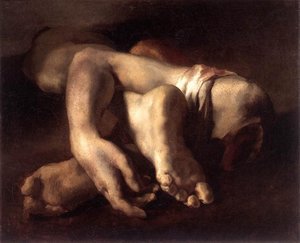
Study of Feet and Hands (1818) af Théodore Géricault

Study of Feet and Hands

1818 · Oil On Canvas · Musée Fabre, Montpellier

Jean-Louis André Théodore Géricault's "Study of Feet and Hands," painted in 1818, isn’t a grand statement of Romantic drama like his monumental “The Raft of the Medusa.” Instead, it offers a profoundly intimate glimpse into the artist’s meticulous process and a poignant meditation on the human form. This unassuming oil painting—measuring a modest 52 x 64 cm—is far more than just a preparatory sketch; it's a concentrated distillation of Géricault’s…

8
The Raft of the Medusa (detail) (1818) af Théodore Géricault

The Raft of the Medusa (detail)

1818 · Oil On Canvas · Louvre, Paris

Jean-Louis André Théodore Géricault's "The Raft of the Medusa," a monumental detail from his 1818 painting, isn’t merely a depiction of shipwreck; it’s a visceral plunge into the depths of human suffering and political indictment. The scene, rendered with a dramatic intensity characteristic of Romanticism, captures the harrowing aftermath of the French frigate *Medusa*'s wreck off the coast of Mauritania in 1816. This disaster, largely attributed to the incompetence and…

10
The Wreck (1821) af Théodore Géricault

The Wreck

1821 · Oil On Canvas · Louvre, Paris

Théodore Géricault's "The Wreck," painted in 1821, isn’t merely a seascape; it’s a visceral confrontation with the sublime—a raw depiction of humanity’s vulnerability against the overwhelming force of nature. Born amidst the turbulent currents of post-revolutionary France, Géricault, a figure both lauded and controversial within the burgeoning Romantic movement, channeled his own anxieties and the era's fascination with dramatic events into this monumental canvas. The painting immediately commands attention not…

Théodore Géricault's famous paintings, numbers 11 to 100

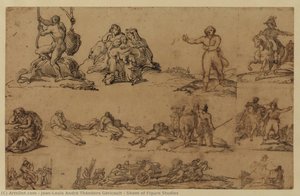
11The Horse Race (1816) af Théodore GéricaultThe Horse Race1816 · Thyssen-Bornemisza Museum 12Swiss Guard and Wounded Veteran (1819) af Théodore GéricaultSwiss Guard and Wounded Veteran1819 · Louvre 13Mazeppa (1823) af Théodore GéricaultMazeppa1823 · Château de Chantilly 14Two Horses (1809) af Théodore GéricaultTwo Horses1809 · The Phillips Collection 15A Turk (Mustapha) (1820) af Théodore GéricaultA Turk (Mustapha)1820 · Louvre 16A Carabinier with his Horse (1814) af Théodore GéricaultA Carabinier with his Horse1814 · Musée des Beaux-Arts 17Riderless Horse Races (detail) (1817) af Théodore GéricaultRiderless Horse Races (detail)1817 · Louvre 18Boxers (1818) af Théodore GéricaultBoxers1818 · Château de Chantilly 19Horse Market: Five Horses at the Stake (1816) af Théodore GéricaultHorse Market: Five Horses at the Stake1816 · Louvre 20The Epsom Derby (1821) af Théodore GéricaultThe Epsom Derby1821 · Louvre 21Mounted Trumpeters of Napoleon's Imperial Guard (1813) af Théodore GéricaultMounted Trumpeters of Napoleon's Imperial Guard1813 · National Gallery of Art 22Three Lovers (1817) af Théodore GéricaultThree Lovers1817 · J. Paul Getty Museum 23Portrait of Simon Bonnesoeur-Bourginire (1812) af Théodore GéricaultPortrait of Simon Bonnesoeur-Bourginire1812 · Minneapolis Institute of Art 24Equestrian portrait of Wincenty Krasiński. (1814) af Théodore GéricaultEquestrian portrait of Wincenty Krasiński.1814 · Nationalmuseet i Warszawa 25The Wounded Cuirassier, study (1814) af Théodore GéricaultThe Wounded Cuirassier, study1814 · Brooklyn Museum 26Lion devouring a horse af Théodore GéricaultLion devouring a horseChâteau de Chantilly 27Français Étude de bras et de main realisé par Géricault por son oeuvre Le Radeau de la Méduse (1819) af Théodore GéricaultFrançais Étude de bras et de main realisé par Géricault por son oeuvre Le Radeau de la Méduse1819 28Untitled (ARJCHM) af Théodore GéricaultUntitled (ARJCHM)Louvre 29Scene from the Epidemic of Yellow Fever in Cadiz (1819) af Théodore GéricaultScene from the Epidemic of Yellow Fever in Cadiz1819 · Virginia Museum of Fine Arts 30The Raft of the Medusa, Louvre (1819) af Théodore GéricaultThe Raft of the Medusa, Louvre1819 31Head of a Drowned Man (1819) af Théodore GéricaultHead of a Drowned Man1819 32Portrait of a Young Man (1818) af Théodore GéricaultPortrait of a Young Man1818 · Minneapolis Institute of Art 33A study for a nude. (1801) af Théodore GéricaultA study for a nude.1801 · Nationalmuseet i Warszawa 34Study of a Model (1818) af Théodore GéricaultStudy of a Model1818 · J. Paul Getty Museum 35The Martyrdom of Saint Peter (1814) af Théodore GéricaultThe Martyrdom of Saint Peter1814 · Kunstmuseum Basel 36The Wreck (1824) af Théodore GéricaultThe Wreck1824 · Louvre 37The Scotsman (1801) af Théodore GéricaultThe Scotsman1801 · Petit Palais 38Mater dolorosa, Copy after Ribera (1811) af Théodore GéricaultMater dolorosa, Copy after Ribera1811 · Kunstmuseum Basel 39Lion in Repose af Théodore GéricaultLion in ReposeWalters Art Museum 40Equestrian Portrait of Jérôme Bonaparte, after Antoine-Jean GROS (1813) af Théodore GéricaultEquestrian Portrait of Jérôme Bonaparte, after Antoine-Jean GROS1813 · Musée Eugène Delacroix 41Justice and Divine Vengeance Pursuing Crime (1811) af Théodore GéricaultJustice and Divine Vengeance Pursuing Crime1811 42Lying Lions (1812) af Théodore GéricaultLying Lions1812 43The Trumpeter of the Orleans Hussars (1813) af Théodore GéricaultThe Trumpeter of the Orleans Hussars1813 44The Trumpeter of the Lancers of the Guard (1813) af Théodore GéricaultThe Trumpeter of the Lancers of the Guard1813 · Burrell Collection 45The horse is out of the stable (1810) af Théodore GéricaultThe horse is out of the stable1810 · Musée Condé 46Un carabinier, vu à mi-corps (1814) af Théodore GéricaultUn carabinier, vu à mi-corps1814 47Portrait of Louise Vernet (1812) af Théodore GéricaultPortrait of Louise Vernet1812 48Head of a woundet Man (1814) af Théodore GéricaultHead of a woundet Man1814 · Wallraf-Richartz-Museum 49Untitled (ARJCJD) (1814) af Théodore GéricaultUntitled (ARJCJD)1814 50The Monomaniac of Child Abduction (1822) af Théodore GéricaultThe Monomaniac of Child Abduction1822 51Horse Race, Moving to the Right (1820) af Théodore GéricaultHorse Race, Moving to the Right1820 · Musée des Beaux-Arts de Caen 52The Raft of the Medusa (1818) af Théodore GéricaultThe Raft of the Medusa1818 53Etude d'un homme nu (Study of a Nude Man) (1817) af Théodore GéricaultEtude d'un homme nu (Study of a Nude Man)1817 · The New Art Gallery Walsall 54Mounted Jockey (1821) af Théodore GéricaultMounted Jockey1821 · Virginia Museum of Fine Arts 55Portrait of a Negro (1822) af Théodore GéricaultPortrait of a Negro1822 · Buffalo AKG Art Museum 56Portrait Study of a Youth (1819) af Théodore GéricaultPortrait Study of a Youth1819 · Kimbell Art Museum 57The White Horse Tavern (1821) af Théodore GéricaultThe White Horse Tavern1821 · Fogg Museum 58Cattle Market (1817) af Théodore GéricaultCattle Market1817 · Fogg Museum 59Fighting Horses (1820) af Théodore GéricaultFighting Horses1820 · Cleveland Museum of Art 60Wounded Soldiers in a Cart (1815) af Théodore GéricaultWounded Soldiers in a Cart1815 · Fitzwilliam Museum 61Shipwrecked on a Beach (The Tempest) (1822) af Théodore GéricaultShipwrecked on a Beach (The Tempest)1822 · Yale University Art Gallery 62Alexandre Colin (1815) af Théodore GéricaultAlexandre Colin1815 63The Raft of the Medusa (1818) af Théodore GéricaultThe Raft of the Medusa1818 64Course de Chevaux montés allant à gauche, au moment du départ (1822) af Théodore GéricaultCourse de Chevaux montés allant à gauche, au moment du départ1822 65Francisco de Moncada Marqués d'Aytona (1815) af Théodore GéricaultFrancisco de Moncada Marqués d'Aytona1815 · Amsterdam Museum 66Riderless Racers at Rome (1817) af Théodore GéricaultRiderless Racers at Rome1817 · Walters Art Museum 67Trumpeter of the Hussars (1817) af Théodore GéricaultTrumpeter of the Hussars1817 68Nude Warrior with a Spear (1816) af Théodore GéricaultNude Warrior with a Spear1816 · National Gallery of Art 69The Wild Horse Race at Rome (1817) af Théodore GéricaultThe Wild Horse Race at Rome1817 70The Raft of the Medusa, Detalj, (1819) af Théodore GéricaultThe Raft of the Medusa, Detalj,1819 71Portrait of a Negro (1800) af Théodore GéricaultPortrait of a Negro1800 · Palácio Nacional da Ajuda 72Head of a Youth (1824) af Théodore GéricaultHead of a Youth1824 · Art Gallery of South Australia 73Portrait d'homme (1825) af Théodore GéricaultPortrait d'homme1825 · Musée Fabre 74Equestrian Portrait of Charles V (1814) af Théodore GéricaultEquestrian Portrait of Charles V1814 · Fine Arts Museums of San Francisco 75Chestnut horse in a stable (1814) af Théodore GéricaultChestnut horse in a stable1814 · Cantor Arts Center at Stanford University 76Horses of the Auvergne (1822) af Théodore GéricaultHorses of the Auvergne1822 · University of Michigan Museum of Art 77A Prancing Grey Horse (1812) af Théodore GéricaultA Prancing Grey Horse1812 · Burrell Collection 78Sheet of Figure Studies (1818) af Théodore GéricaultSheet of Figure Studies1818 · Courtauld Gallery 79Portrait of an Artist in His Studio (1820) af Théodore GéricaultPortrait of an Artist in His Studio1820 · Louvre 80An Officer of the Chasseurs Commanding a Charge (1812) af Théodore GéricaultAn Officer of the Chasseurs Commanding a Charge1812 · Louvre 81Study of a nude man af Théodore GéricaultStudy of a nude manNationalmuseet i Warszawa 82The Plaster Kiln (1823) af Théodore GéricaultThe Plaster Kiln1823 · Louvre 83Officer of Chasseurs à Cheval of the Imperial Guard Charging (1812) af Théodore GéricaultOfficer of Chasseurs à Cheval of the Imperial Guard Charging1812 84Dogs Fighting Bears (1814) af Théodore GéricaultDogs Fighting Bears1814 · Foundation E.G. Bührle Collection 85Cheval gris au râtelier (1811) af Théodore GéricaultCheval gris au râtelier1811 86Untitled (ARJCGT) (1814) af Théodore GéricaultUntitled (ARJCGT)1814 87The Woman with Gambling Mania, ca (1822) af Théodore GéricaultThe Woman with Gambling Mania, ca1822 88Deutsch Firmenschild für einen Hufschmied, Detail (1814) af Théodore GéricaultDeutsch Firmenschild für einen Hufschmied, Detail1814 89Italian Landscape with Tomb (1818) af Théodore GéricaultItalian Landscape with Tomb1818 · Petit Palais 90A Cart Loaded with Kegs (1822) af Théodore GéricaultA Cart Loaded with Kegs1822 · Rhode Island School of Design Museum of Art 91Cinq chevaux vus par la croupe (1821) af Théodore GéricaultCinq chevaux vus par la croupe1821 92The Race of the Riderless Horses (1817) af Théodore GéricaultThe Race of the Riderless Horses1817 · J. Paul Getty Museum 93Dervish in His Stall (1820) af Théodore GéricaultDervish in His Stall1820 94Untitled (ARJCHB) (1819) af Théodore GéricaultUntitled (ARJCHB)1819 95Untitled (ARJCJF) (1818) af Théodore GéricaultUntitled (ARJCJF)1818 96Untitled (ARJCHV) (1817) af Théodore GéricaultUntitled (ARJCHV)1817 · Palais des Beaux-Arts de Lille 97German Der Page Mazeppa (1820) af Théodore GéricaultGerman Der Page Mazeppa1820 98English Anatomical Pieces (1819) af Théodore GéricaultEnglish Anatomical Pieces1819 · Musée des Beaux-Arts de Rouen 99A Shipwreck (1817) af Théodore GéricaultA Shipwreck1817 100Français Têtes coupées English Cut heads Português Cabeças cortadas (1818) af Théodore GéricaultFrançais Têtes coupées English Cut heads Português Cabeças cortadas1818

Théodore Géricault's famous paintings, period by period

The subjects that held Théodore Géricault's eye

The four subjects that come back most often in these originals, each with its finest example.

The museums that keep Théodore Géricault's originals

De 8 museer, der rummer flest af malerierne på denne side.

Museum By Værker af Théodore Géricault Malerier fra denne liste
Louvre, ParisLouvre Paris 20 Raftet af Médusa, The Raft of the Medusa (detail), Leda and the Swan
Château de Chantilly, ChantillyChâteau de Chantilly Chantilly 6 Mazeppa, Boxers, Lion devouring a horse
J. Paul Getty Museum, Los AngelesJ. Paul Getty Museum Los Angeles 3 Three Lovers, Study of a Model, The Race of the Riderless Horses
Nationalmuseet i Warszawa, WarszawaNationalmuseet i Warszawa Warszawa 3 Equestrian portrait of Wincenty Krasiński., A study for a nude., Study of a nude man
Burrell Collection, GlasgowBurrell Collection Glasgow 8 The Trumpeter of the Lancers of the Guard, A Prancing Grey Horse
Musée Fabre, MontpellierMusée Fabre Montpellier 4 Study of Feet and Hands, Portrait d'homme
Petit Palais, ParisPetit Palais Paris 3 The Scotsman, Italian Landscape with Tomb
Thyssen-Bornemisza Museum, MadridThyssen-Bornemisza Museum Madrid 2 The Kiss, The Horse Race

Théodore Géricault across the decades: one unique original for each

Værker per årti

Pick a decade to see the original that defines it.

Théodore Géricault's paintings: questions for the gallery

What is the single most famous work of Théodore Géricault?Reveal the answer

Raftet af Médusa (1818), Louvre, Paris. Nymph and Satyr (Jupiter and Antiope) (1820) and The Oath of Brutus after the Death of Lucretia (1815) come next.

At what age did Théodore Géricault create Raftet af Médusa?Reveal the answer

27 years old: Raftet af Médusa dates from 1818, and Théodore Géricault was born in 1791.

Which ten paintings by Théodore Géricault are the most famous?Reveal the answer

Raftet af Médusa, Nymph and Satyr (Jupiter and Antiope), The Oath of Brutus after the Death of Lucretia, Lions in a Mountainous Landscape, The Kiss, Wounded Soldiers Retrating from Russia, Study of Feet and Hands, The Raft of the Medusa (detail), Leda and the Swan og The Wreck. The ranking above gives each one's year and museum.

How many works by Théodore Géricault are known?Reveal the answer

Our catalog holds 183 works by Théodore Géricault, dated from 1800 to 1824.

Where can the most famous Théodore Géricault originals be seen?Reveal the answer

Mostly in Louvre (Paris), Château de Chantilly (Chantilly) og J. Paul Getty Museum (Los Angeles). The museum table above lists them all.

During which period did Théodore Géricault create the best-known paintings?Reveal the answer

In 1810s: 67 of the 100 works on this page were made then, Raftet af Médusa among them.

Which famous Théodore Géricault painting is the earliest, and which the latest?Reveal the answer

On this page, the earliest is Portrait of a Negro (1800) and the latest The Wreck (1824).

What subjects did Théodore Géricault favour?Reveal the answer

Man (12), Portrait (9) og Horse (8), across the 100 works on this page.

What materials did Théodore Géricault paint with most?Reveal the answer

Oil On Canvas, for 25 of the 100 works on this page.

Which movement does the work of Théodore Géricault belong to?Reveal the answer

Romanticisme dramatique, judging by the originals on this page.

What Théodore Géricault originals can I see at the Louvre?Reveal the answer

Raftet af Médusa, The Raft of the Medusa (detail) og Leda and the Swan: the Louvre, Paris holds 14 of the works on this page.

Where can I order a hand-painted Théodore Géricault reproduction?Reveal the answer

Yes, as a reproduction: the original stays in its museum, but any painting on this page can be painted by hand for you, made to order one at a time, from the painting's own page.

Théodore Géricault: a portrait of the artist

Jean-Louis André Théodore Géricault: En Pioner af Romantikken

Jean-Louis André Théodore Géricault, et navn der runger med ånden i den spirende franske romantik, blev født ind i en verden på randen af dramatiske forandringer. Han ankom til Rouen, Frankrig, i 1791, og hans tidlige liv udspillede sig midt imellem revolutionens ekkoer og Napoleons stigende ambitioner. Selvom han arvede en komfortabel eksistens gennem sin families juridiske og kommercielle virksomheder – herunder et tobaksfirma – lå Géricaults skæbne ikke i lov eller handel, men i kunstnerisk udtryk. Hans tidlige uddannelse under Carle Vernet, en mester inden for engelsk sportslitteratur, indgav ham en skarp øje for anatomi og bevægelse, hvilket tydeligt ses i hans fremstillinger af heste. Men det var hans efterfølgende studier med Pierre-Narcisse Guérin, der gav et fundament i klassisk komposition, omend Géricaults rastløse ånd hurtigt førte ham til at søge viden uafhængigt inden for Louvre’s hellige sale.

Louvre som Akademi: En Dialog med Mestre

Fra 1810 til 1815 blev Louvre Géricaults sande akademi. Han fordypede sig i værkerne fra de gamle mestre – Rubens, Tizian, Velázquez og Rembrandt – ikke blot ved at kopiere deres teknikker, men ved at engagere sig i en dybdegående dialog med deres kunstneriske filosofier. Denne periode var afgørende for at forme hans distinkte stil, karakteriseret ved dramatisk chiaroscuro, dynamiske kompositioner og en intens følelsesmæssighed, der adskilte ham fra sine samtidige. Han kopierede ikke blot; han absorberede essensen af disse mestre, internaliserede deres tilgange til lys, skygge og menneskelig form. Denne selvstyrede uddannelse fremmede en unik kunstnerisk stemme, som snart ville udfordre de herskende Neoklassiske konventioner. Hans tidlige værker, såsom *The Charging Chasseur* (1812), antydede allerede denne spirende sansibilitet, og viste en modighed i udførelsen og en fascination over bevægelse, der mindede om Rubens’ energiske lærred. Han fortsatte med at udforske hestesport, finpudsede sine færdigheder i at fremstille magt og grænserne for hesten – et emne, der ville blive et tilbagevendende motiv gennem hans karriere.

Raftet af Médusa: Et Monument over Menneskelig Lidelse

Géricaults navn er uadskilleligt forbundet med *Raftet af Médusa* (1818-1819), et monumentalt lærred, der transcenderer blot historisk repræsentation og bliver en brændende anklage mod menneskelig fejlbarlighed og samfundsmæssig uretfærdighed. Inspireret af den hjerteskærende sandfærd om skibet Méduse’s forlis i 1816, hvor forsømmelse og inkompetence førte til utænkelige lidelser for dets passagerer, er maleriet en visceral fremstilling af desperation, håb og fortvivlelse. Géricault foretog omhyggelig research, interviewede overlevende, studerede lig på hospitaler og endda konstruerede en skemamodel af flåden selv for at sikre nøjagtighed og følelsesmæssig indvirkning. Det resulterende værk er ikke blot en repræsentation af tragedie; det er en fordybende oplevelse, der konfronterer betragterne med den rå virkelighed af menneskelig lidelse. Kompositionen, bygget omkring to pyramideformer – den ene repræsenterer fortvivlelse og død, den anden indgyder håb og potentiale for redning – skaber en dynamisk spænding, der trækker øjet hen over lærredet. *Raftet af Médusa* var kontroversielt ved sin udstilling i Salonen 1819, og udløste politiske debatter og fastslog Géricaults ry som en dristig og ukonventionel kunstner. Maleriets indflydelse spredte sig ud over kunstverdenen og blev et symbol på statslige inkompetencer og menneskelig modstandskraft i mødet med utænkelige vanskeligheder.

Udover tragedien: Militære temaer og kunstnerisk arv

Selvom *Raftet af Médusa* forbliver hans mest berømte præstation, udvidede Géricaults kunstneriske output sig ud over dette enkelt mesterværk. Han fortsatte med at udforske militære temaer, som det ses i værker som *Wounded Cuirassier* (1814) og *The Derby of Epsom* (1821), der demonstrerede hans fortsatte udforskning af menneskelig følelse under pres. Disse malerier afslører hans vedvarende interesse for drama og udtryksevne i kampens hede. Han ventured også ind i portrætter og litografi, hvilket yderligere udvidede sit kunstneriske repertoire. Desværre blev Géricaults liv afbrudt af sygdom på 32-årsalderen efter års lidelse som følge af ridning og en kronisk tuberkuløs infektion. Hans tidlige død fratog kunstverdenen en stor talent, men hans indflydelse på efterfølgende generationer af kunstnere – især Eugène Delacroix – var dybtgående. Han blev husket som en pioner inden for romantik, en kunstner, der dristigt konfronterede vanskelige sandheder og indgydede sit værk med en kraftfuld følelsesmæssig resonans, der fortsat fanger publikums opmærksomhed i dag. Hans bronze figur hvilende på sin grav ved Père Lachaise Kirkegård i Paris, over et lavrelieffpanel, der viser den hjerteskærende scene fra *Raftet af Médusa*, er en passende hyldest til en kunstner, der dedikerede sit liv til at fange menneskelighedens kompleksiteter og modsætninger.

Nøglekarakteristika & Indflydelser

  • Romantik: Géricault betragtes som en af de første franske romantiske malere, der bevæger sig væk fra Neoklassiske idealer mod følelsesmæssig intensitet og dramatisk udtryk.
  • Dramatisk komposition: Hans malerier er kendt for deres dynamiske kompositioner, ofte ved hjælp af diagonale linjer og modsætningsfyldte lys- og skyggeeffekter for at skabe en følelse af bevægelse og spænding.
  • Realisme & Research: Géricault var forpligtet til realisme, der omfattede omhyggelig research – herunder studier af lig og interviews med overlevende – for at sikre nøjagtighed og følelsesmæssig indvirkning i sit arbejde.
  • Indflydelse fra gamle mestre: Han trak inspiration fra barokmalere som Rubens, Tizian og Velázquez, der adopterede deres teknikker til dramatisk belysning og udtryksfulde penselstrøg.
  • Fokus på menneskelig lidelse: Hans kunst fremstiller ofte scener af tragedie, fortvivlelse og de mørkere aspekter af menneskelige erfaringer, der afspejler en romantisk fascination over intense følelser.

Alle 183 værker af Théodore Géricault →