Portræt af John Ruskin

De 95 mest berømte John Ruskin-malerier, en galleriselektion

Opdateret oktober 2026 · rangeret efter vores popularitetsscore (søgninger, besøg og ordrer for hvert værk) · 95 værker af John Ruskin i vores katalog

Kort sagt

Af alle de originale værker, som John Ruskin efterlod, er det mest berømte Trevi Fountain (1841). Lige efter følger Ravine at Maglans, Valley of Cluse (1849) og Aiguille Charmoz, Chamounix (1849). Vores katalog indeholder 95 værker af John Ruskin; galleriet har bevaret de 95 værker, som verden beundrer mest, hver vist med sin dato, sit museum og sin historie.

1819 – 1900, London Romanticism Flest værker: Birmingham Museum and Art Gallery

John Ruskins top 10 malerier: galleriets udvalg

1
Trevi Fountain (1841) af John Ruskin

Trevi Fountain

1841 · Drawing

In this evocative depiction of the Trevi Fountain, we are transported to the heart of Rome during a pivotal moment in the nineteenth century. The painting captures the monumental Baroque masterpiece not merely as a static architectural feat, but as a living, breathing entity. Through John Ruskin’s observant eye, the fountain emerges from its stone surroundings with a sense of profound vitality. The composition is anchored by the majestic presence…

2
Ravine at Maglans, Valley of Cluse (1849) af John Ruskin

Ravine at Maglans, Valley of Cluse

1849 · Painting

The painting Ravine at Maglans, Valley of Cluse presents a dramatic mountainous landscape characterized by rugged, rocky terrain. The composition is defined by a sense of movement and dynamism, guiding the viewer's eye through the expansive scenery. Within this natural setting, a large bird is depicted in the foreground, appearing to fly over the mountains, while several smaller birds are scattered throughout the scene, providing a sense of depth.

3
Aiguille Charmoz, Chamounix (1849) af John Ruskin

Aiguille Charmoz, Chamounix

1849 · Watercolor

The watercolor depicts the rugged terrain of the Aiguille Charmoz in the Chamounix region. Snow-capped mountain peaks rise into a pale sky, their jagged edges defined by varying shades of white and grey. Below these summits, the slopes are populated by numerous figures, at least thirteen in total, scattered across the incline. These individuals appear in various positions, some situated in the foreground and others positioned further up the mountain…

5
Architectural Notebook ‘Door Book’ (p21) (1850) af John Ruskin

Architectural Notebook ‘Door Book’ (p21)

1850

During the visits of 1849-50 and 1851-52 Ruskin spent two winters collecting material for The Stones of Venice, a work which proved to be very influential within the development of Victorian architecture.This architectural notebook, known as the ‘Door Book,’ is one of the series of ten which Ruskin used to record details and measurements of aspects of architectural features, carefully cross referencing them with worksheets and drawings. The smaller notebooks…

8
North West Porch of St Mark (1877) af John Ruskin

North West Porch of St Mark

1877

Ruskin’s largest and most famous architectural watercolour, this was the most important product of his stay in Venice over the winter of 1876-77. If the Ducal Palace was to him “the central building of the world,” then the basilica of St Mark came as close as it stands in reality, “the most magical and most mysterious of churches.” It provided the subject for dozens of drawings in connection with The…

9
The Walls of Lucerne (1866) af John Ruskin

The Walls of Lucerne

1866 · Watercolor · Nationalmuseet i Warszawa, Warszawa

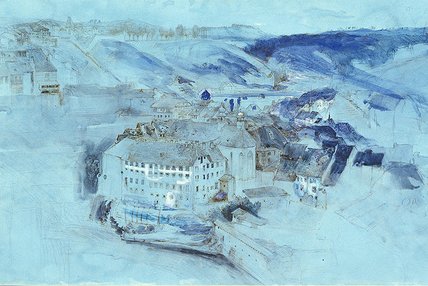
In the delicate interplay of light and pigment that defines The Walls of Lucerne, we encounter the profound mastery of John Ruskin at the height of his creative powers. Created in 1866, this watercolor serves as a breathtaking window into the heart of Switzerland, capturing not merely a landscape, but a fleeting moment of atmospheric perfection. The composition centers on the imposing architectural grandeur of the town walls, where the…

10
Ca d (1845) af John Ruskin

Ca d

1845 · Drawing

In the delicate, precise lines of John Ruskin’s 1845 work, Ca d'Oro, we find more than just a depiction of Venetian architecture; we encounter a poignant eulogy for a fading era. Created during a transformative and turbulent period in Venice, this piece captures the Casa d’Oro at a moment of profound vulnerability. As Ruskin traversed the canals in 1845, he was not merely an observer of beauty but a witness…

John Ruskin-udvalget fortsætter, fra 11 til 95

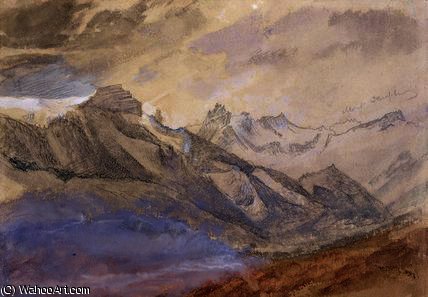
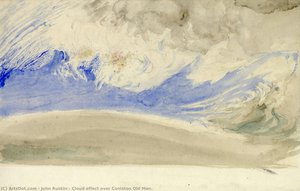
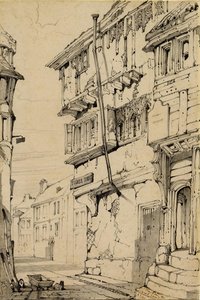
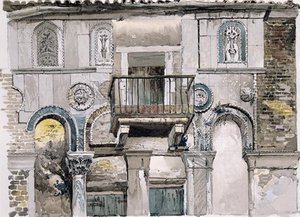
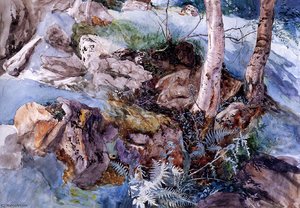
11St. Sauveur (1848) af John RuskinSt. Sauveur1848 12Dumbarton Castle (1838) af John RuskinDumbarton Castle1838 · Birmingham Museum and Art Gallery 13Coal Merchant's House in Market Street, Croydon (1835) af John RuskinCoal Merchant's House in Market Street, Croydon1835 · Birmingham Museum and Art Gallery 14Merton College and Magpie Lane (1838) af John RuskinMerton College and Magpie Lane1838 15View on the upper reach of the Grand Canal, Venice, with the Palazi Tron and Duodo (1876) af John RuskinView on the upper reach of the Grand Canal, Venice, with the Palazi Tron and Duodo1876 16View of the Bay of Naples and Vesuvius (1840) af John RuskinView of the Bay of Naples and Vesuvius1840 · Birmingham Museum and Art Gallery 17Studies of Alpine Peaks - High Elevation View Of Alpine Mountains, Annotated With Names Of Corresponding Peaks. (1845) af John RuskinStudies of Alpine Peaks - High Elevation View Of Alpine Mountains, Annotated With Names Of Corresponding Peaks.1845 · Birmingham Museum and Art Gallery 18Vevey, Lake Geneva (1846) af John RuskinVevey, Lake Geneva1846 · Birmingham Museum and Art Gallery 19An Alpine Valley, the Matterhorn in the Distance (1846) af John RuskinAn Alpine Valley, the Matterhorn in the Distance1846 · Birmingham Museum and Art Gallery 20Alpine Scene (1846) af John RuskinAlpine Scene1846 · Birmingham Museum and Art Gallery 21Old Bridge over a Mountain Torrent (1846) af John RuskinOld Bridge over a Mountain Torrent1846 · Birmingham Museum and Art Gallery 22Coast Scene near Dunbar (1847) af John RuskinCoast Scene near Dunbar1847 · Birmingham Museum and Art Gallery 23Tower of the Cathedral at Sens c. (1845) af John RuskinTower of the Cathedral at Sens c.1845 24The Garden of San Miniato near Florence (1845) af John RuskinThe Garden of San Miniato near Florence1845 25Part of the Facade of San Miniato al Monte, Florence (1846) af John RuskinPart of the Facade of San Miniato al Monte, Florence1846 26Vevay (1846) af John RuskinVevay1846 27Entrance to the Domodossola Valley (2) (1845) af John RuskinEntrance to the Domodossola Valley (2)1845 28Street scene Naples (1841) af John RuskinStreet scene Naples1841 29Houses in Naples (1841) af John RuskinHouses in Naples1841 30Pompeii (1841) af John RuskinPompeii1841 31Tomb of Ilaria del Caretto, Lucca Cathedral: Head of Ilaria (1874) af John RuskinTomb of Ilaria del Caretto, Lucca Cathedral: Head of Ilaria1874 32Church Tower of Courmayeur, with the Heights of the Mont Blanc Range beyond / Church and Buildings - In The Foreground, On The Left, Is A Church Tower ... (1849) af John RuskinChurch Tower of Courmayeur, with the Heights of the Mont Blanc Range beyond / Church and Buildings - In The Foreground, On The Left, Is A Church Tower ...1849 · Birmingham Museum and Art Gallery 33Folkstone, Hillside and Church from Pavilion Hotel (1849) af John RuskinFolkstone, Hillside and Church from Pavilion Hotel1849 · Birmingham Museum and Art Gallery 34Aiguilles of Chamonix (1849) af John RuskinAiguilles of Chamonix1849 · Birmingham Museum and Art Gallery 35Cascade de la Folie, Chamonix (1849) af John RuskinCascade de la Folie, Chamonix1849 · Birmingham Museum and Art Gallery 36Venice, Byzantine Capitals, Concave Group. (1853) af John RuskinVenice, Byzantine Capitals, Concave Group.1853 37Architectural Notebook - ‘N Book’ (p. 45) (1850) af John RuskinArchitectural Notebook - ‘N Book’ (p. 45)1850 38The Stones of Venice worksheet: Upper arcade of Doge’s Palace, November 1849 (1849) af John RuskinThe Stones of Venice worksheet: Upper arcade of Doge’s Palace, November 18491849 39Old Houses on the Rhône Island, Geneva (1862) af John RuskinOld Houses on the Rhône Island, Geneva1862 · Birmingham Museum and Art Gallery 40Lauffenburg on the Rhine (1863) af John RuskinLauffenburg on the Rhine1863 · Birmingham Museum and Art Gallery 41Sketch by a Clerk of the Works (2) (1860) af John RuskinSketch by a Clerk of the Works (2)1860 42Storm Clouds, Mont Cenis (1857) af John RuskinStorm Clouds, Mont Cenis1857 43Bernese Oberland (1866) af John RuskinBernese Oberland1866 · Indianapolis Kunstmuseum 44Panoramic of the Jura (1866) af John RuskinPanoramic of the Jura1866 45Self Portrait (1874) af John RuskinSelf Portrait1874 46Detail of Carved Pillar from East Door, Baptistery, Pisa (1882) af John RuskinDetail of Carved Pillar from East Door, Baptistery, Pisa1882 · Birmingham Museum and Art Gallery 47Cloud Study over Coniston Water (1880) af John RuskinCloud Study over Coniston Water1880 48Cloud effect over Coniston Old Man. (1880) af John RuskinCloud effect over Coniston Old Man.1880 49The Pope And The Emperor af John RuskinThe Pope And The Emperor 50Rosslyn Chapel (1838) af John RuskinRosslyn Chapel1838 51Salerno (1841) af John RuskinSalerno1841 52John Ruskin (1850) af John RuskinJohn Ruskin1850 53Doge (1852) af John RuskinDoge1852 54St. Wulfran, Abbeville, from the River (1868) af John RuskinSt. Wulfran, Abbeville, from the River1868 55Fisher Street, Carlisle. (1837) af John RuskinFisher Street, Carlisle.1837 56Mount Pilatus, Lake of Lucerne (2) (1846) af John RuskinMount Pilatus, Lake of Lucerne (2)1846 57View on the upper reach of the Grand Canal, Venice with the Palazzi Corner and Pesaro (1876) af John RuskinView on the upper reach of the Grand Canal, Venice with the Palazzi Corner and Pesaro1876 58Exterior Of Ducal Palace, Venice af John RuskinExterior Of Ducal Palace, Venice 59Fondaco Dei Turchi, Venice af John RuskinFondaco Dei Turchi, Venice 60Mountainous landscape af John RuskinMountainous landscape 61Champagnole af John RuskinChampagnole 62The Rocky Bank Of A River af John RuskinThe Rocky Bank Of A River 63Stilted archivolts af John RuskinStilted archivolts 64Garden At San Miniato af John RuskinGarden At San Miniato 65Aiguilles de Chamonix af John RuskinAiguilles de Chamonix 66A Gothic Stairway In Chester Cathedral af John RuskinA Gothic Stairway In Chester Cathedral 67Study Of Gneiss Rock af John RuskinStudy Of Gneiss Rock 68Study of Oak Leaves af John RuskinStudy of Oak Leaves 69Lpine Valley af John RuskinLpine Valley 70St. Mark's, Southern Portico af John RuskinSt. Mark's, Southern Portico 71Palazzo Agostini, Pisa af John RuskinPalazzo Agostini, Pisa 72Arabian Windows af John RuskinArabian Windows 73Velvet crab af John RuskinVelvet crab 74Torcello, Capital of Nave Pillar and St. Mark's af John RuskinTorcello, Capital of Nave Pillar and St. Mark's 75Sunset At Herne Hill Through The Smoke Of London af John RuskinSunset At Herne Hill Through The Smoke Of London 76Study of foliage af John RuskinStudy of foliage 77The Ducal Palace af John RuskinThe Ducal Palace 78The Ducal Palace, Twentieth Capital af John RuskinThe Ducal Palace, Twentieth Capital 79Chestnut leaves af John RuskinChestnut leaves 80Study of Two Shells af John RuskinStudy of Two Shells 81Kapelbrucke, lucerne af John RuskinKapelbrucke, lucerne 82Mountain Landscape, Macugnaga af John RuskinMountain Landscape, Macugnaga 83View of Fribourg, Switzerland af John RuskinView of Fribourg, Switzerland 84Head of Lake Geneva af John RuskinHead of Lake Geneva 85Lake lugano af John RuskinLake lugano 86Moonlight, chamonix af John RuskinMoonlight, chamonix 87The Dream Of St. Ursula af John RuskinThe Dream Of St. Ursula 88Study of the Rocks and Ferns Crossmouth af John RuskinStudy of the Rocks and Ferns Crossmouth 89View From Bonneville af John RuskinView From Bonneville 90Shell Study af John RuskinShell Study 91Dawn, Coniston af John RuskinDawn, ConistonAbbot Hall Art Gallery 92Palazzo Dario (1846) af John RuskinPalazzo Dario1846 93The af John RuskinThe 94Spiral Relief, North Transept Door, Rouen Cathedral (1882) af John RuskinSpiral Relief, North Transept Door, Rouen Cathedral1882 95Chamouni, Rocks and Vegetation af John RuskinChamouni, Rocks and VegetationAbbot Hall Art Gallery

John Ruskins berømte malerier, periode for periode

Motiverne, der fangede John Ruskins blik

De fire motiver, der optræder hyppigst i disse originaler, hver med sit fineste eksempel.

De museer, der udstiller John Ruskins originalværker

De 5 museer, der rummer flest af malerierne på denne side.

Museum By Værker af John Ruskin Malerier fra denne liste
Birmingham Museum and Art Gallery, BirminghamBirmingham Museum and Art Gallery Birmingham 16 Dumbarton Castle, Coal Merchant's House in Market Street, Croydon, View of the Bay of Naples and Vesuvius
Abbot Hall Art Gallery, KendallAbbot Hall Art Gallery Kendall 2 Dawn, Coniston, Chamouni, Rocks and Vegetation
Isabella Stewart Gardner Museum, BostonIsabella Stewart Gardner Museum Boston 1 The Casa Loredan, Venice
Nationalmuseet i Warszawa, WarszawaNationalmuseet i Warszawa Warszawa 1 The Walls of Lucerne
Indianapolis Kunstmuseum, IndianapolisIndianapolis Kunstmuseum Indianapolis 1 Bernese Oberland

John Ruskin årti for årti: det originale værk, der definerer hvert enkelt

Værker per årti

Vælg et årti for at se det originale værk, der definerer det.

Samleres spørgsmål om John Ruskins malerier

Hvilket værk er John Ruskin mest kendt for?Vis svaret

Trevi Fountain (1841). Derefter følger Ravine at Maglans, Valley of Cluse (1849) og Aiguille Charmoz, Chamounix (1849).

Hvor gammel var John Ruskin, da Trevi Fountain blev skabt?Vis svaret

22 år gammel: Trevi Fountain er fra 1841, og John Ruskin blev født i 1819.

Hvad er de ti mest berømte John Ruskin malerier?Vis svaret

Trevi Fountain, Ravine at Maglans, Valley of Cluse, Aiguille Charmoz, Chamounix, The Casa Loredan, Venice, Architectural Notebook ‘Door Book’ (p21), Mont Dauphiny, near Chartreuse, Fribourg, North West Porch of St Mark, The Walls of Lucerne og Ca d. Ranglisten ovenfor viser det enkelte værks årstal og museum.

Hvor mange malerier efterlod John Ruskin?Vis svaret

Vores katalog indeholder 95 værker af John Ruskin, dateret fra 1835 til 1882.

I hvilke museer udstilles John Ruskin's mesterværker?Vis svaret

Primært i Birmingham Museum and Art Gallery (Birmingham), Abbot Hall Art Gallery (Kendall) og Isabella Stewart Gardner Museum (Boston). Museumslisten ovenfor viser dem alle.

I hvilke år malede John Ruskin sine mest berømte værker?Vis svaret

I 1840s: 28 af de 95 værker på denne side blev skabt dengang, herunder Trevi Fountain.

Hvad er de første og de sidste berømte originaler af John Ruskin?Vis svaret

På denne side er det tidligste Coal Merchant's House in Market Street, Croydon (1835) og det seneste Detail of Carved Pillar from East Door, Baptistery, Pisa (1882).

Hvilke motiver valgte John Ruskin oftest?Vis svaret

Landscape (7), Mountains (5) og People (4), fordelt på de 95 værker på denne side.

Hvilken teknik brugte John Ruskin mest?Vis svaret

Drawing, for 3 af de 95 værker på denne side.

Hvilken kunstretning tilhører John Ruskin?Vis svaret

Romanticism, baseret på originalerne på denne side.

Hvilke værker af John Ruskin udstilles på Birmingham Museum and Art Gallery?Vis svaret

Dumbarton Castle, Coal Merchant's House in Market Street, Croydon og View of the Bay of Naples and Vesuvius: Birmingham Museum and Art Gallery, Birmingham har 16 af værkerne på denne side.

Kan jeg bestille en reproduktion af et maleri af John Ruskin?Vis svaret

Ja, som reproduktion: det originale værk bliver i sit museum, men ethvert maleri på denne side kan males i hånden til dig, bestilt efter behov og malet ét ad gangen, direkte fra maleriets egen side.

John Ruskin: liv og værk

A Polymath of Vision: The Life and Legacy of John Ruskin

John Ruskin, født i London den 8. februar 1819, var langt mere end blot en kunstkritiker; han var en viktoriansk polymat, hvis indflydelse gennemtrængte områderne æstetik, social reform, økonomi og miljøaktivisme. Hans liv blev præget af en fascinerende dualitet – den pragmatiske kommercielle verden af hans far, John James Ruskin, en succesfuld sherryhandler, og den fervente evangelisk pietet af hans mor, Margaret Cock. Denne kontrastfyldte opvækst indså i ham både et skarpt observationsøjeblik for detaljer og en dybt moralsk følelse, der skulle definere hele hans værk. Fra en tidlig alder var Ruskins uddannelse omhyggeligt kurateret hjemmefra, præget af bibelsk studie og eksponering for romantisk litteratur, især værkerne af Byron og Walter Scott. Disse formative indflydelser lagde grundlaget for et sind, der konstant søgte forbindelser mellem skønhed, sandhed og etik i livet. Hans akademiske rejse fortsatte ved Christ Church, Oxford, hvor han begyndte at udtrykke sine spirende ideer om kunst og dets forhold til samfundet.

The Dawn of an Art Historian: Early Writings and Influences

Ruskins fremkomst som en betydelig stemme i kunstverdenen begyndte med *Modern Painters* (1843-1860), et monumentalt fembinds værk oprindeligt koncepteret som en forsvar af J.M.W. Turner mod hvad Ruskin betragtede som uretfærdig kritik. Dog udviklede *Modern Painters* sig hurtigt til noget langt mere dybtgående – en omfattende traktat om kunstens natur selv. Han argumenterede passioneret for “sandhed til naturen,” hvorved han fremhævede, at stor kunst ikke blot handlede om dygtig repræsentation, men om kunstnerens ærlige og empatiske engagement med den naturlige verden. Dette koncept var revolutionerende på tiden, udfordrende dominerende akademiske standarder og banebrydende vej for nye kunstneriske sansninger. Ruskin analyserede ikke kun teknik; han dykkede ned i kunstens åndelige og moralske kvaliteter, hvorved han mente, at ægte skønhed afspejlede en dydig sjæl. Hans præcise beskrivelser af landskaber, klippeformationer og botaniske detaljer afslører ikke kun hans skarpe observationsfærdigheder, men også hans dybe ærbødighed for naturen som et udtryk for guddommelig skabelse. Denne tidlige værk fastslog Ruskin som en formidable kritiker og satte scenen for hans senere udforskninger indenfor arkitektur og sociale spørgsmål. Han var dybt påvirket af Pre-Raphaelittenes Broderskab, hvorved han støttede deres engagement i detaljeret observation og afvisning af akademiske konventioner.

Beyond Aesthetics: Social Commentary and The Guild of St. George

Efter Ruskins modenhed udvidede hans interesser sig ud over kunstens rene æstetik. Dybt bekymret for de sociale uligheder han vidste under den industrielle revolution begyndte han at anvende sin kritiske linse på de økonomiske og politiske strukturer af viktoriansk England. *Unto This Last* (1860), en serie af essays oprindeligt udgivet i *The Cornhill Magazine*, markerede et vendepunkt i hans karriere. I dette værk kritiserede Ruskin vehementt utilitaristisk økonomi og argumenterede for en mere human og retfærdig social orden baseret på principper om fællesskab og håndværk. Han hævdede, at arbejdsghedens ære var essentiel til et blomstrende samfund og at ægte rigdom lå ikke i materielle ejendomme, men i kvaliteten af menneskelige relationer. Denne overbevisning førte ham til at grundlægge *Fors Clavigera* (1871-1884), en månedlig serie af breve adresseret “Til arbejderne og arbejdsløserne i Storbritannien,” hvor han udtrykte sine sociale og politiske ideer med karakteristisk entusiasme. Fra disse breve opstod Guild of St. George, grundlagt i 1871, en organisation dedikeret til fremme af håndværk, landbrugsindustrier og uddannelse blandt arbejdergrupper. Guilden havde til hensigt at skabe et modelsamfund baseret på Ruskins idealer, hvorved han fremmede kunstnerisk færdighed, etik i arbejde og en harmonisk relation til naturen.

A Lasting Impression: Ruskin's Enduring Legacy

John Ruskin døde i Coniston, Lancashire, den 20. januar 1900, efterladende sig et enormt værk, der fortsætter med at resonere i dag. Hans indflydelse udvides langt ud over kunsthistorien og kritikken. Han forudså mange af de bekymringer, der definerer nutidens tanker – miljøaktivisme, bæredygtigt levevis og vigtigheden af håndværk. Hans skrivninger om arkitektur havde dybtgående effekt på Arts and Crafts bevægelsen, hvorved han inspirerede arkitekter som William Morris til at afvise industriel masseproduktion til fordel for håndlavede designs rodfæstet i traditionelle teknikker. Ruskins fokus på kunstens forbindelse til natur og menneskelige relationer forbliver bemærkelsesværdigt relevant i en alder, der kæmper med miljøkriser og sociale uligheder. Han var en visionær, der modtog sig konventionel visdom og argumenterede for et samfund, hvor både kunstnerisk udtryk og menneskelig værdighed værdsættes.

Alle 95 værker af John Ruskin →