Kort sagt
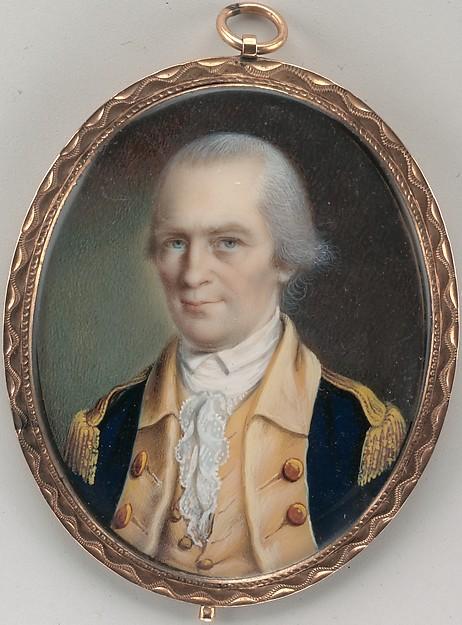
I galleriets øjne er John Ramages mest berømte maleri Portrait of a Gentleman (1780), hvis original hænger på Metropolitan Museum of Art i New York. Major Greene, B.A (1777) og Gilbert Van Cortlandt (1785) fuldender trioen, som ethvert øje genkender. Ud af de 23 værker af John Ramage i vores katalog præsenterer galleriet herunder de 23 mest berømte, hver som et originalværk med årstal, museum og det, der gør det unikt.
Galleriets top 10 John Ramage malerier
Theophylact Bache
Theophylact Bache was the father of Elizabeth (2002.476.2) and Sarah (2002.476.1).
John Ramages malerier, rangeret fra 11 til 23
Motiverne, der fangede John Ramages blik
De fire motiver, der optræder hyppigst i disse originaler, hver med sit fineste eksempel.
18th century 4 værker
Historical figure 4 værker
Portraiture 3 værker
Miniature art 3 værker
De museer, der udstiller John Ramages originalværker
De 5 museer, der rummer flest af malerierne på denne side.
| Museum | By | Værker af John Ramage | Malerier fra denne liste |
|---|---|---|---|
| New York | 17 | Portrait of a Gentleman, Major Greene, B.A, Gilbert Van Cortlandt | |
| Stockholm | 1 | Mrs. James Bleecker (Sarah Bache) | |
| Sankt Petersborg | 1 | George Washington | |

| Washington, D.C. | 1 | Col. Josiah Parker | |
| Chicago | 1 | Portrait of Augustine Taylor |
John Ramage, ét signaturmaleri per årti
Værker per årti
Vælg et årti for at se det originale værk, der definerer det.
John Ramage's malerier: galleriets svar
Hvilket maleri af John Ramage er det mest berømte af alle?Vis svaret
Portrait of a Gentleman (1780), Metropolitan Museum of Art, New York. Derefter følger Major Greene, B.A (1777) og Gilbert Van Cortlandt (1785).
Hvor gammel var John Ramage, da Portrait of a Gentleman blev færdiggjort?Vis svaret
32 år gammel: Portrait of a Gentleman er fra 1780, og John Ramage blev født i 1748.
Hvilke er John Ramages top 10 malerier?Vis svaret
Portrait of a Gentleman, Major Greene, B.A, Gilbert Van Cortlandt, Governor George Clinton, Mrs. James Bleecker (Sarah Bache), Portrait of a Gentleman, Mrs. William Few (Catherine Nicholson), Mrs. Gulian Ludlow (Maria Ludlow), Thomas Witter og Theophylact Bache. Ranglisten ovenfor viser det enkelte værks årstal og museum.
Hvor mange værker skabte John Ramage?Vis svaret
Vores katalog indeholder 23 værker af John Ramage, dateret fra 1777 til 1795.
Hvor hænger John Ramages mest berømte originaler?Vis svaret
Primært i Metropolitan Museum of Art (New York), Nationalmuseum (Stockholm) og Hermitage Museum (Sankt Petersborg). Museumslisten ovenfor viser dem alle.
Hvornår skabte John Ramage sine mest berømte malerier?Vis svaret
I 1780s: 13 af de 23 værker på denne side blev skabt dengang, herunder Portrait of a Gentleman.
Hvilke er John Ramages tidligste og seneste berømte værker?Vis svaret
På denne side er det tidligste Major Greene, B.A (1777) og det seneste Mrs. James Bleecker (Sarah Bache) (1795).
Hvilke motiver vendte John Ramage oftest tilbage til?Vis svaret
18th century (4), Historical figure (4) og Portraiture (3), fordelt på de 23 værker på denne side.
Hvilken stilart er John Ramage associeret med?Vis svaret
Neoclassicism, baseret på originalerne på denne side.
Hvilke originalværker af John Ramage findes i Metropolitan Museum of Art?Vis svaret
Portrait of a Gentleman, Major Greene, B.A og Gilbert Van Cortlandt: Metropolitan Museum of Art, New York har 17 af værkerne på denne side.
Kan jeg få et maleri af John Ramage reproduceret i hånden?Vis svaret
Ja, som reproduktion: det originale værk bliver i sit museum, men ethvert maleri på denne side kan males i hånden til dig, bestilt efter behov og malet ét ad gangen, direkte fra maleriets egen side.
John Ramage: kunstneren
A Life Bridging Worlds: The Story of John Ramage
John Ramage’s life unfolded as a remarkable confluence of artistic passion and historical circumstance, transporting him from the refined elegance of Dublin goldsmithing to the burgeoning dynamism of colonial America. Details concerning his early familial origins remain shrouded in obscurity—however, it is established that he received formal instruction at the Dublin Society of Artists in 1763, establishing a foundational understanding of drawing and painting techniques destined to shape his future endeavors. Ramage’s initial vocation proved remarkably versatile; he seamlessly blended the precision demanded by goldsmithing with the delicate artistry inherent in miniaturist pursuits—a reflection of his innate aptitude for meticulous detail and decorative arts. This formative period instilled within him not merely technical proficiency but also a profound appreciation for craftsmanship that would characterize his artistic output throughout his life.Loyalty, Love, and Revolution: Navigating Turbulent Times
Ramage’s arrival in North America coincided with an era defined by palpable political tension—the American Revolution. A staunch Loyalist, his allegiance steadfastly adhered to the British Crown, propelling him into membership of “the Loyal Irish Volunteers” in Boston—a military unit dedicated to safeguarding the city against rebel aggression. This unwavering devotion to the monarchy profoundly impacted his personal life; in 1776, he married Victoria Ball, yet this union swiftly complicated by another marriage to a woman known solely as “Mrs. Taylor” whilst stationed in Halifax. The ensuing legal disputes and eventual divorce granted to Ball illuminated the complexities of Ramage’s existence during wartime—a period underscored not merely by political upheaval but also by personal turmoil. Forced to evacuate Boston with British forces under General William Howe, he embarked upon a journey back to Halifax before ultimately relocating by June 1777 to New York City, seeking refuge amidst the ongoing conflict and continuing his artistic practice within a landscape dominated by British occupation. His commitment extended beyond mere artistic creation; Ramage served as a second lieutenant in the City Militia of New York, demonstrating an active engagement with defending the city he had come to consider home.The Miniature Master: A Portraitist of an Emerging Nation
Despite the pervasive anxieties engendered by revolution and political division, Ramage flourished as an artist, swiftly gaining renown for his exquisite portrait miniatures on ivory—a particularly fashionable art form at the time, prized for its intimacy and portability. His skill resided in the masterful application of delicately shaded cross-hatching and fine linear strokes to sculpt faces with astonishing realism and sensitivity. He didn’t merely replicate likenesses; he captured character, social standing, and a palpable sense of individual presence within each miniature—a testament to his artistic vision. Ramage’s clientele rapidly expanded to encompass prominent figures from New York society—the Pintards, Gerrys, Ludlows, Van Rensselaers, and Van Cortlands all sought his services—reflecting the prestige he achieved as a miniaturist during this formative period. Beyond his painting prowess, Ramage’s goldsmithing skills were equally valued; he crafted elegant cases for his miniatures, demonstrating a holistic artistic sensibility that harmonized artistry with meticulous craftsmanship. Contemporaries recognized his exceptional talent, proclaiming him “the best artist in his branch in America,” as documented by William R. Dunlap—a judgment reflecting the enduring significance of Ramage’s contribution to the art world.Notable Works
- Portrait of George Washington (1789): This iconic miniature portrait, commissioned by Martha Washington and authenticated by George Washington's diary, stands as Ramage’s most celebrated achievement—marking him as the inaugural artist tasked with formally portraying the President upon his inauguration. Sold at auction in 2001 for $1.2 million, it represents the highest price ever paid for an American miniature.
- John Maunsell (1785): A rare and elegantly rendered miniature depicting John Maunsell—a distinguished gentleman adorned in a russet coat and gold vest embellished with stripes—demonstrates Ramage’s mastery of capturing character and conveying subtle nuances of expression.
- Miniature Portraits of Prominent New York Families: Ramage produced numerous portraits commemorating influential families residing in New York City during the revolutionary era, including commissions from figures such as Pintards, Gerrys, Ludlows, Van Rensselaers, and Van Cortlands—providing invaluable insights into colonial society’s artistic tastes and social dynamics.