Portræt af Jean Clouet

The 37 Most Famous Jean Clouet Paintings, a Gallery Selection

Opdateret oktober 2026 · rangeret efter vores popularitetsscore (søgninger, besøg og ordrer for hvert værk) · 37 værker af Jean Clouet i vores katalog

In short

Of all the originals Jean Clouet left, the most famous is Francis I of France (1494-1547), king of France (1515), in the collection of the Musée Condé, Chantilly. Close behind it come Unknown Lady (1525) and Unknown Lady (1530). Our catalog holds 37 works by Jean Clouet; the gallery has kept the 37 the world admires most, each shown with its date, its museum and its story.

1480 – 1541, Bruxelles Renaissance portraiture Flest værker: Château de Chantilly

Jean Clouet's top 10 paintings: the gallery's choice

1
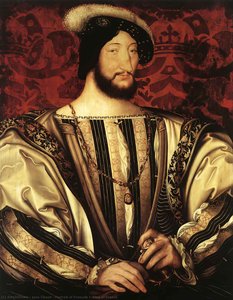
Francis I of France (1494-1547), king of France (1515) af Jean Clouet

Francis I of France (1494-1547), king of France

1515 · Oil On Panel · Musée Condé, Chantilly

The subject is positioned in a bust-length composition, facing toward the right of the frame while his gaze remains directed forward. He wears a black hat and a cloak that covers his shoulders. A cream-colored collar with a ribbed texture sits at his neck, contrasting with the dark fabric of his attire. The skin on his face appears smooth, with light coming from the upper left to define the bridge…

2
Unknown Lady (1525) af Jean Clouet

Unknown Lady

1525 · Oil On Canvas · Château de Chantilly, Chantilly

The painting "Unknown Lady," attributed to the masterful French Renaissance artist Jean Clouet, is not merely a portrait; it's an invitation into a world of subtle observation and carefully constructed mystery. Completed around 1525, this captivating drawing—a testament to Clouet’s meticulous technique and psychological acuity—holds within its delicate lines a profound sense of contained emotion. It resides in the heart of the WahooArt collection, offering a glimpse into the courtly…

3
Unknown Lady (1530) af Jean Clouet

Unknown Lady

1530 · Acrylic On Canvas · Château de Chantilly, Chantilly

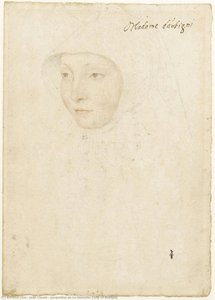
The world of 16th-century French portraiture is often associated with opulent courts and meticulously rendered depictions of royalty, yet within this grand tradition lies a captivating vein of quiet introspection—exemplified perfectly by Jean Clouet’s “Unknown Lady.” Painted around 1525, this drawing, now housed in a stunning reproduction, offers far more than a simple likeness; it's an invitation to contemplate the veiled emotions and subtle power dynamics inherent in Renaissance society.…

4
Portrait of Francis I (1525) af Jean Clouet

Portrait of Francis I

1525 · Oil On Panel · Louvre, Paris

Jean Clouet's 1525-30 “Portrait of Francis I” is more than just a royal likeness; it’s a meticulously crafted embodiment of the French Renaissance at its zenith. Housed within the hallowed halls of the Louvre, this oil on panel painting transcends mere portraiture, offering a profound glimpse into the character and ambitions of King Francis I himself. Clouet, a master of courtly art, doesn't simply depict a monarch; he constructs an…

5
Guillaume Budé (1536) af Jean Clouet

Guillaume Budé

1536 · Oil On Panel · Metropolitan Museum of Art, New York

Jean Clouet’s depiction of Guillaume Budé, completed around 1536, stands as a quintessential emblem of the Florentine Renaissance's fascination with intellectual pursuits and humanist ideals. More than just a likeness of a prominent scholar—Budé being the librarian to King Francis I—the painting embodies a carefully constructed visual narrative that speaks volumes about the era’s preoccupation with reason, virtue, and classical learning.

6
Portrait of Beatrix Pacheco, Countess of Montbel und Entremonts (1550) af Jean Clouet

Portrait of Beatrix Pacheco, Countess of Montbel und Entremonts

1550 · Oil On Panel · Städel Museum, Frankfurt

The Countess Beatrix Pacheco sits in a quiet, poised stillness, her presence filling the space with a sense of noble composure. She turns her head slightly toward the left, her eyes meeting the viewer with a steady, penetrating look that bridges the centuries. A soft, gentle smile rests upon her lips, suggesting a woman of profound character and inner life. The light, descending from the upper left, brushes against the…

8
Portrait of a Banker (1522) af Jean Clouet

Portrait of a Banker

1522 · Oil On Panel · Saint Louis Art Museum, Saint Louis

The portrait presents a middle-aged man in a half-length composition, positioned slightly off-center. He gazes toward the left of the frame with a steady, calm expression. The subject is dressed in dark, somber clothing, featuring a black hat with sharp folds and sleeves of a warm pinkish-red hue. His pale skin tones contrast against the deep navy and black of his attire and the dark background. In his hands, he…

9
Portrait of Louis de Cleves (1530) af Jean Clouet

Portrait of Louis de Cleves

1530 · Oil On Panel · Accademia Carrara, Bergamo

In the Portrait of Louis de Cleves by Jean Clouet, a single male figure emerges from a dark forest green background. The composition is a medium close-up, capturing the man from the chest up. He is positioned slightly off-center, his gaze directed toward the left of the frame. This orientation creates a sense of quiet gravity within the space. The subject's presence is anchored by a palette of deep, saturated…

10
Madame de Canaples (Marie d'Assigny, 1502 - 58) (1525) af Jean Clouet

Madame de Canaples (Marie d'Assigny, 1502 - 58)

1525 · Oil On Panel · Scottish National Gallery, Edinburgh

The artwork titled Madame de Canaples (Marie d'Assigny, 1502 - 58) is a portrait executed by the artist Jean Clouet. This oil on panel work depicts Marie d’Acigné, who is also identified as Madame de Canaples. The sitter was a lady of the court, specifically serving as a maid of honour to Queen Claude of France. The portrait was likely produced in 1525, coinciding with the year Marie d’Acigné married…

The Jean Clouet selection continues, 11 to 37

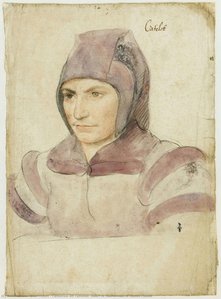
11Portrait of an unknown man (1515) af Jean ClouetPortrait of an unknown man1515 · Bavarian State Painting Collections 12Francis I (1494-1547), King of France. (1525) af Jean ClouetFrancis I (1494-1547), King of France.1525 13Portrait of Madeleine of France (1520–1537), 3rd Daughter of François I (1494–1537) and Claude of France (1499–1524) (1522) af Jean ClouetPortrait of Madeleine of France (1520–1537), 3rd Daughter of François I (1494–1537) and Claude of France (1499–1524)1522 14Bemberg Fondation Toulouse - Jean Bertrand, archevêque et cardinal de Sens - Capitoul - Jean CLOUET (1520) af Jean ClouetBemberg Fondation Toulouse - Jean Bertrand, archevêque et cardinal de Sens - Capitoul - Jean CLOUET1520 · Collection Bemberg 15Charles de Cossé (1506–1563), Count of Brissac (1535) af Jean ClouetCharles de Cossé (1506–1563), Count of Brissac1535 · Metropolitan Museum of Art 16Portrait of a Lady (1530) af Jean ClouetPortrait of a Lady1530 · Yale Center for British Art 17Doña Leonor Zapata (1531) af Jean ClouetDoña Leonor Zapata1531 · Château de Chantilly 18Portrait of Jean de Dinteville, Seigneur de Polisy (1533) af Jean ClouetPortrait of Jean de Dinteville, Seigneur de Polisy1533 · Musée Condé 19Renée de France, Duchess of Ferrara and Chartres (1519) af Jean ClouetRenée de France, Duchess of Ferrara and Chartres1519 · Château de Chantilly 20Jacqueline de La Queuille, Lady of Aubigny (1535) af Jean ClouetJacqueline de La Queuille, Lady of Aubigny1535 · Château de Chantilly 21Catherine dit Cathelot, dwarf or madwoman of Queen Claude (1540) af Jean ClouetCatherine dit Cathelot, dwarf or madwoman of Queen Claude1540 · Château de Chantilly 22Unknown Lady (1525) af Jean ClouetUnknown Lady1525 · Château de Chantilly 23Marguerite of France, Duchess of Berry and Savoy (1527) af Jean ClouetMarguerite of France, Duchess of Berry and Savoy1527 · Château de Chantilly 24Madeleine of France, Queen of Scotland (1524) af Jean ClouetMadeleine of France, Queen of Scotland1524 · Château de Chantilly 25Portrait of Claude of Lorraine, Duke of Guise (1528) af Jean ClouetPortrait of Claude of Lorraine, Duke of Guise1528 · Galleria Palatina 26Portrait of Marguerite of Navarre (1527) af Jean ClouetPortrait of Marguerite of Navarre1527 · Walker Art Gallery 27Gabrielle d'Estrées (1620) af Jean ClouetGabrielle d'Estrées1620 · National Trust 28Beatrice Pacheco de Silva, Countess of Entremont (1531) af Jean ClouetBeatrice Pacheco de Silva, Countess of Entremont1531 · Château de Chantilly 29Guillame Gouffier af Jean ClouetGuillame GouffierSaint Louis Art Museum 30Portrait of a Man Holding a Volume of Petrarch af Jean ClouetPortrait of a Man Holding a Volume of PetrarchRoyal Collection 31Portrait of an Unknown Man af Jean ClouetPortrait of an Unknown ManMusée Condé 32The Dauphin François, Son of François I af Jean ClouetThe Dauphin François, Son of François IKoninklijk Museum voor Schone Kunsten 33Jean de la Barre (1520) af Jean ClouetJean de la Barre1520 · Musée Condé 34Elisabeth of Austria in hunting costume af Jean ClouetElisabeth of Austria in hunting costume 35Marie d (1525) af Jean ClouetMarie d1525 · Château de Chantilly 36Portrait of François I, King of France (1525) af Jean ClouetPortrait of François I, King of France1525 · Louvre 37Portrait of François I as St John the Baptist (1518) af Jean ClouetPortrait of François I as St John the Baptist1518

Jean Clouet's famous paintings, period by period

The subjects that held Jean Clouet's eye

The four subjects that come back most often in these originals, each with its finest example.

The museums that keep Jean Clouet's originals

De 8 museer, der rummer flest af malerierne på denne side.

Museum By Værker af Jean Clouet Malerier fra denne liste
Château de Chantilly, ChantillyChâteau de Chantilly Chantilly 11 Unknown Lady, Unknown Lady, Doña Leonor Zapata
Musée Condé, ChantillyMusée Condé Chantilly 4 Francis I of France (1494-1547), king of France, Portrait of Jean de Dinteville, Seigneur de Polisy, Portrait of an Unknown Man
Louvre, ParisLouvre Paris 2 Portrait of Francis I, Portrait of François I, King of France
Metropolitan Museum of Art, New YorkMetropolitan Museum of Art New York 2 Guillaume Budé, Charles de Cossé (1506–1563), Count of Brissac
Saint Louis Art Museum, Saint LouisSaint Louis Art Museum Saint Louis 2 Portrait of a Banker, Guillame Gouffier
Städel Museum, FrankfurtStädel Museum Frankfurt 1 Portrait of Beatrix Pacheco, Countess of Montbel und Entremonts
Minneapolis Institute of Art, MinneapolisMinneapolis Institute of Art Minneapolis 1 Portrait of Charlotte of France
Accademia Carrara, BergamoAccademia Carrara Bergamo 1 Portrait of Louis de Cleves

Jean Clouet decade by decade: the original that defines each

Værker per årti

Pick a decade to see the original that defines it.

Collectors' questions about Jean Clouet's paintings

Which work is Jean Clouet most famous for?Reveal the answer

Francis I of France (1494-1547), king of France (1515), Musée Condé, Chantilly. Unknown Lady (1525) and Unknown Lady (1530) come next.

What age was Jean Clouet when Francis I of France (1494-1547), king of France was made?Reveal the answer

35 years old: Francis I of France (1494-1547), king of France dates from 1515, and Jean Clouet was born in 1480.

What are the ten most famous Jean Clouet paintings?Reveal the answer

Francis I of France (1494-1547), king of France, Unknown Lady, Unknown Lady, Portrait of Francis I, Guillaume Budé, Portrait of Beatrix Pacheco, Countess of Montbel und Entremonts, Portrait of Charlotte of France, Portrait of a Banker, Portrait of Louis de Cleves og Madame de Canaples (Marie d'Assigny, 1502 - 58). The ranking above gives each one's year and museum.

How many paintings did Jean Clouet leave?Reveal the answer

Our catalog holds 37 works by Jean Clouet, dated from 1515 to 1540.

In which museums do Jean Clouet's masterpieces hang?Reveal the answer

Mostly in Château de Chantilly (Chantilly), Musée Condé (Chantilly) og Louvre (Paris). The museum table above lists them all.

In which years did Jean Clouet paint the most famous works?Reveal the answer

In 1520s: 16 of the 37 works on this page were made then, Unknown Lady among them.

What are the first and the last famous originals of Jean Clouet?Reveal the answer

On this page, the earliest is Francis I of France (1494-1547), king of France (1515) and the latest Catherine dit Cathelot, dwarf or madwoman of Queen Claude (1540).

Which subjects did Jean Clouet choose most often?Reveal the answer

Portrait (9), Woman (9) og Detail (7), across the 37 works on this page.

Which technique did Jean Clouet use most?Reveal the answer

Oil On Panel, for 9 of the 37 works on this page.

To which art movement does Jean Clouet belong?Reveal the answer

Renaissance portraiture og Renaissance, judging by the originals on this page.

Which Jean Clouet works hang at the Château de Chantilly?Reveal the answer

Unknown Lady, Unknown Lady og Doña Leonor Zapata: the Château de Chantilly, Chantilly holds 11 of the works on this page.

Can I commission a reproduction of a Jean Clouet painting?Reveal the answer

Yes, as a reproduction: the original stays in its museum, but any painting on this page can be painted by hand for you, made to order one at a time, from the painting's own page.

Jean Clouet: life and work

En hoflig hånd: Livet og kunsten hos Jean Clouet

Jean Clouet, et navn der hviskes med ærefrygt blandt kenderne af den franske renæssance, forbliver en gådefuld skikkelse på trods af hans dybe indvirkning på portrætkunsten. Han blev født omkring 1480, sandsynligvis i Bruxelles i de lave lande – selvom definitive optegnelser er sparsomme – og Clouets kunstneriske rejse førte ham til at blive en af de mest eftertragtede malere ved hoffet hos Frans 1. Hans oprindelse er indhyllet i mystik; selvom ”Clouet” måske ikke var hans fødenavn, blev det synonymt med en distinkket stil, der indfangede essensen af en æra defineret af elegance og spirende humanisme. De tidlige indflydelser, der formede Clouets kunstneriske vision, forbliver noget spekulative, men kendetegnene ved den flamske træning – en metodisk opmærksomhed på detaljen, subtil modellering og en raffineret sans for realisme – er ubestrideligt til stede i hans værk. Det antages, at han kan have været forbundet med en familie af kunstnere, der allerede var etableret i Bruxelles, hvilket yderligere styrkede fundamentet for hans tekniske kunnen.

Opstigning ved det franske hof

Clouets ankomst til det franske hof omkring 1516 markerede et vendepunkt, ikke blot i hans karriere, men også i udviklingen af det kongelige portrætmaleri. Frans 1., en passioneret mæcen for kunsten og en monark besluttet på at efterligne de italienske renæssancehoffer, anerkendte straks Clouets ekstraordinære talent. I modsætning til tidligere hofmalere, der ofte fokuserede på store historiske fortællinger eller religiøse scener, specialiserede Clouet sig i at indfange ligheden hos dem i kongens inderste cirkel – adelige, hoffolk og medlemmer af den kongelige familie. Han nøjedes ikke blot med at registrere ansigtstræk; han dykkede ned i karakteren og formidlede personlighed gennem subtile nuancer i udtryk og holdning. Dette skift mod psykologisk indsigt adskilte hans arbejde fra mængden. Udnævnt som maler og garderobevalet, og senere med progression til mere prestigefyldte stillinger, nød Clouet en grad af gunst, der sjældent blev givet kunstnere på den tid; han modtog en løn, der kunne sammenlignes med de ansete kirurgers – et vidnesbyrd om Frans 1.s høje aktelse for hans evner. Han etablerede sig oprindeligt i Tours, før han flyttede med hoffet til Fontainebleau og blev en integreret del af den levende kunstneriske atmosfære, som kongen fremmede.

Ligheden som kunst: Teknik og stil

Jean Clouets mesterskab lå ikke i prangende farvevisninger eller dramatiske kompositioner, men i en stille, underspillet elegance. Han foretrak tegningen som sit primære medie, især ved brug af sort og rød kridt på papir. Disse tegninger var ikke blot forberedende skitser; de var ofte færdige værker i sig selv, værdsat for deres delikate linjer, subtile skyggelægning og den bemærkelsesværdige evne til at indfange den portrætteredes individuelle karakter. Hans teknik indebar en omhyggelig lagdeling af strøg, hvor formen blev opbygget med utrolig præcision. Når han arbejdede med maling – ofte olie på træpanel – bevarede han samme niveau af forfinelse og skabte portrætter, der var både realistiske og idealiserede. Han besad en nærmest overnaturlig evne til at formidle tekstur – silkens glans, velurets tyngde, hudens fine blødhed – hvilket tilføjede endnu et lag af virkelighedstro til hans arbejde. Selvom han var påvirket af de italienske renæssancemestre, hvis værker Frans 1. ivrigt indsamlede, forblev Clouets stil distinkt fransk, karakteriseret ved en vis tilbageholdenhed og en vægtning af at indfange det indre liv frem for den ydre storhed.

Eftermæle og vedvarende indflydelse

Selvom Jean Clouet døde omkring 1541 i Paris, strakte hans kunstneriske arv sig langt ud over hans levetid. Hans søn, François Clouet, førte familietraditionen videre og arvede både sin fars dygtighed og hans position ved hoffet. Sammen etablerede de en dynasti af portrætmalere, der formede det visuelle billede af den franske renæssance i generationer. Genopdagelsen af Clouets omfattende tegningstsamling i det 19. århundrede – hvoraf mange findes i samlingerne på Musée Condé i Chantilly – vakte fornyet interesse for hans værk og cementerede hans plads som en central skikkelse i kunsthistorien. Hans indflydelse kan ses i værkerne af senere portrætister, der søgte at efterligne hans evne til ikke blot at fange den fysiske lighed, men også motivets indre essens. Portrætterne, der tilskrives Clouet, tilbyder et unikt vindue til det franske hofs verden og giver uvurderlig indsigt i tidens personligheder og magtdynamikker. Hans tegninger forbliver dyrebare besiddelser på museer verden over og fortsætter med at fange beskuerne med deres skønhed, subtilitet og vedvarende psykologiske dybde. Jean Clouets kunst er et vidnesbyrd om observationens kraft, tegnekunstens færdighed og den tidløse appel i at indfange den menneskelige ånd på papir og lærred.

Alle 37 værker af Jean Clouet →