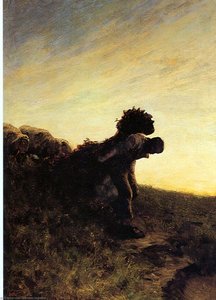
Portræt af Giovanni Segantini

Giovanni Segantini malerier: De 100 mest berømte, set gennem et galleris øjne

Opdateret november 2026 · rangeret efter vores popularitetsscore (søgninger, besøg og ordrer for hvert værk) · 101 værker af Giovanni Segantini i vores katalog

Kort sagt

I galleriets øjne er Giovanni Segantinis mest berømte maleri De to mødre (også kendt som Le due Madri) (1899). Midday in the Alps (1891) og Life (La Vita) (1898) fuldender trioen, som ethvert øje genkender. Ud af de 101 værker af Giovanni Segantini i vores katalog præsenterer galleriet herunder de 100 mest berømte, hver som et originalværk med årstal, museum og det, der gør det unikt.

1858 – 1899, Arco Symbolism Flest værker: Szépművészeti Múzeum

Galleriets top 10 Giovanni Segantini malerier

1
De to mødre (også kendt som Le due Madri) (1899) af Giovanni Segantini

De to mødre (også kendt som Le due Madri)

1899 · Olie på lærred

I dette værk fra 1889 finder vi os selv i et højdemæssigt landskab, hvor grænsen mellem den menneskelige ånd og den naturlige verden begynder at opløses. Scenen er sat på en skråning, hvor to kvinder er placeret midt i et barskt terræn af sten og klippeblokke. Den ene kvinde er optaget af sine får, hendes opmærksomhed er forankret i de levende væsner, der deler hendes rum, mens den anden står…

2
Midday in the Alps (1891) af Giovanni Segantini

Midday in the Alps

1891 · Oil On Canvas

The sun reaches its zenith in Midday in the Alps, a work by Giovanni Segantini. Created in 1891, this oil on canvas captures a moment where the light of the high altitudes makes the entire landscape shimmer. The scene breathes with the energy of a specific atmosphere, known by its original title, Giornata Ventosa, or Windy Day. One can almost feel the air moving through the mountain passes as the…

3
Life (La Vita) (1898) af Giovanni Segantini

Life (La Vita)

1898

Introduction to Giovanni Segantini and the Post-Impressionism Movement Giovanni Segantini, an Italian painter, was a prominent figure in the Post-Impressionism movement. His later works became more Divisionist with symbolist images of nature, which he referred to as "Naturalist Symbolism." He is renowned for his portrayal of pastoral life and people's connection with nature. Life (La Vita): A Visual Symphony of Nature and Humanity In Life (La Vita), Segantini masterfully captures…

4
Vacche aggiogate (1888) af Giovanni Segantini

Vacche aggiogate

1888 · Oil

The mountain air feels heavy with the scent of earth and hay as two horses strain against their harness. They stand side by side, muscles taut, pulling a wooden cart through a rugged landscape where the peaks reach toward a soft sky. Around them, the world breathes in a quiet, rhythmic pulse. People move through the scene, some gathered near the animals and others drifting toward the distance, their presence…

5
Il ritorno al paese natio (1895) af Giovanni Segantini

Il ritorno al paese natio

1895 · Oil On Canvas · Alte Nationalgalerie, Berlin

In this 1895 oil on canvas, we find ourselves amidst the rugged, high-altitude terrain of the Alps. The scene captures a group of travelers moving through a mountainous landscape, their progress marked by the steady gait of horses and the presence of carts laden with belongings. There is a quiet sense of movement here, a collective migration through the peaks. Two horses occupy the foreground, their forms rendered with a…

6
A messa prima (1885) af Giovanni Segantini

A messa prima

1885 · Oil

In the quiet, silvered depths of Giovanni Segantini’s 1885 masterpiece, A messa prima, we are invited into a world where the boundaries between reality and dream begin to dissolve. This post-impressionist gem captures a profound moment of human connection—or perhaps, more poignantly, a moment of departure. At the heart of the composition stands a woman perched upon a staircase, her silhouette marked by an elegant ponytail, gazing downward with an…

7
A cow drinking water af Giovanni Segantini

A cow drinking water

Oil On Canvas

The painting titled A cow drinking water is a work by the Italian artist Giovanni Segantini. This piece, also known as At the watering place (cows in yoke), captures a quiet moment of rural existence. It was created about 1888.

8
L'aratura (1890) af Giovanni Segantini

L'aratura

1890 · Olie på lærred · Neue Pinakothek, München

Giovanni Segantini og Landskabet i Alpene – En Pionerers Kunstneriske Eftertragtning Giovanni Segantini var en italiensk maler, hvis navn er synonymt med majestætiske alpine landskaber. Hans livshistorie fortæller om en rejse præget af vanskeligheder og en endelig kunstnerisk triumf, hvor han udviklede en unik stil der blandede Divisionisme med Symbolistiske billeder – et samarbejde mellem teknik og følelser, der stadig fascinerer kunstnere og kunsthistorikere i dag. **Barndommens Vanskeligheder og Tidlige…

9
Cow at a Water Trough (1892) af Giovanni Segantini

Cow at a Water Trough

1892 · Oil On Canvas

A brown cow bows its head toward a wooden trough. The animal is anchored in the grass, its heavy form a quiet weight against the earth. Nearby, other cattle graze or rest in the stillness of the field. People move through the scene, some close to the foreground and others drifting into the distance, observing the simple necessity of the herd. Above, a cloudy sky hangs over the open landscape,…

10
Return to the homeland (1895) af Giovanni Segantini

Return to the homeland

1895 · Oil On Canvas

The oil on canvas painting titled Return to the homeland was created by the artist Giovanni Segantini. This work is dated 1895. The composition focuses on a migration through mountains, depicting a group of travelers navigating a high-altitude landscape.

Giovanni Segantinis malerier, rangeret fra 11 til 100

11La vanita (1897) af Giovanni SegantiniLa vanita1897 12Coro di St.Antonio (1879) af Giovanni SegantiniCoro di St.Antonio1879 13Costume Grigionese (also known as Bündnerin am Brunnen) (1887) af Giovanni SegantiniCostume Grigionese (also known as Bündnerin am Brunnen)1887 14Mountain Landscape (1898) af Giovanni SegantiniMountain Landscape1898 15Springtime in the Alps (1897) af Giovanni SegantiniSpringtime in the Alps1897 16Dead hero (1878) af Giovanni SegantiniDead hero1878 17The Sheepshearing (1883) af Giovanni SegantiniThe Sheepshearing1883 · National Museum of Western Art 18Bagpipers of Brianza (1883) af Giovanni SegantiniBagpipers of Brianza1883 · National Museum of Western Art 19The blackcaps (1884) af Giovanni SegantiniThe blackcaps1884 20Pastorello con agnellino (1885) af Giovanni SegantiniPastorello con agnellino1885 21Self portrait (1882) af Giovanni SegantiniSelf portrait1882 22High Noon in the Alps (1892) af Giovanni SegantiniHigh Noon in the Alps1892 · Ohara Museum of Art 23The worker of the field (1886) af Giovanni SegantiniThe worker of the field1886 24The Pumpkin Harvest (1897) af Giovanni SegantiniThe Pumpkin Harvest1897 · Minneapolis Institute of Art 25Self portrait (1893) af Giovanni SegantiniSelf portrait1893 26Barbara Uffer Im Profil (1899) af Giovanni SegantiniBarbara Uffer Im Profil1899 27L. ultima fatica del giorno (1884) af Giovanni SegantiniL. ultima fatica del giorno1884 · Szépművészeti Múzeum 28The Angel of Life (1895) af Giovanni SegantiniThe Angel of Life1895 · Szépművészeti Múzeum 29La Spina af Giovanni SegantiniLa Spina 30Still Life with White Goose af Giovanni SegantiniStill Life with White Goose 31The Angel of Life (1895) af Giovanni SegantiniThe Angel of Life1895 · Szépművészeti Múzeum 32Lago di Lecco (1875) af Giovanni SegantiniLago di Lecco1875 33The Choir of the Chiesa di Abate in Milano (1879) af Giovanni SegantiniThe Choir of the Chiesa di Abate in Milano1879 · Gallerie d'Italia – Milano 34Portrait of Signora Torelli (1885) af Giovanni SegantiniPortrait of Signora Torelli1885 35Paesaggio con donna su un albero (1881) af Giovanni SegantiniPaesaggio con donna su un albero1881 36Still life with carrots (1884) af Giovanni SegantiniStill life with carrots1884 37Self portrait (1879) af Giovanni SegantiniSelf portrait1879 38La benedizione delle pecore (1884) af Giovanni SegantiniLa benedizione delle pecore1884 39Sundown at Pusian (1883) af Giovanni SegantiniSundown at Pusian1883 40La falconiera (1880) af Giovanni SegantiniLa falconiera1880 41Pantura sull.imbrunire (1885) af Giovanni SegantiniPantura sull.imbrunire1885 42Spinning (1891) af Giovanni SegantiniSpinning1891 · Art Gallery of South Australia 43Goats against landscape (1891) af Giovanni SegantiniGoats against landscape1891 · Nationalmuseet i Warszawa 44La portatrice d.aqua (1886) af Giovanni SegantiniLa portatrice d.aqua1886 45Il bagno del bambino (1886) af Giovanni SegantiniIl bagno del bambino1886 46Il frutto dell'amore (1889) af Giovanni SegantiniIl frutto dell'amore1889 47Still life (1886) af Giovanni SegantiniStill life1886 48Vittore Grubicy (1887) af Giovanni SegantiniVittore Grubicy1887 49La tosatura delle pecore (1886) af Giovanni SegantiniLa tosatura delle pecore1886 50Pesci (1886) af Giovanni SegantiniPesci1886 51Capriolo morto (1892) af Giovanni SegantiniCapriolo morto1892 52Riposo all.ombra (1892) af Giovanni SegantiniRiposo all.ombra1892 53Ragazza che fa la calza (1888) af Giovanni SegantiniRagazza che fa la calza1888 54Sul balcone (1892) af Giovanni SegantiniSul balcone1892 55La raccolta del fieno (1890) af Giovanni SegantiniLa raccolta del fieno1890 56I miei modelli (1888) af Giovanni SegantiniI miei modelli1888 57The Snowmelt in Savognin (1888) af Giovanni SegantiniThe Snowmelt in Savognin1888 58Le due madri (1889) af Giovanni SegantiniLe due madri1889 59Alpine Landscape at Sunset (1896) af Giovanni SegantiniAlpine Landscape at Sunset1896 · Städel Museum 60Death (1898) af Giovanni SegantiniDeath1898 61La Natura (1898) af Giovanni SegantiniLa Natura1898 62Landscape (1896) af Giovanni SegantiniLandscape1896 63Pascoli alpini (1895) af Giovanni SegantiniPascoli alpini1895 64L.angelo della vita (1894) af Giovanni SegantiniL.angelo della vita1894 65L.amore alla fonte della vita (1896) af Giovanni SegantiniL.amore alla fonte della vita1896 66The pain of mourning (also known as Il dolore confortato dalla fede) (1895) af Giovanni SegantiniThe pain of mourning (also known as Il dolore confortato dalla fede)1895 67Landscape with two figures (1897) af Giovanni SegantiniLandscape with two figures1897 68La signora Gaetana Casiraghi Oriani (1894) af Giovanni SegantiniLa signora Gaetana Casiraghi Oriani1894 69L.angelo della vita (1894) af Giovanni SegantiniL.angelo della vita1894 70Pascoli di primavera (also known as Spring Pastures) (1896) af Giovanni SegantiniPascoli di primavera (also known as Spring Pastures)1896 71Goddess of love (1894) af Giovanni SegantiniGoddess of love1894 72Lavandaia af Giovanni SegantiniLavandaia 73Donna alla fonte (also known as Alpenlandschaft mit Frau am Brunnen) (1893) af Giovanni SegantiniDonna alla fonte (also known as Alpenlandschaft mit Frau am Brunnen)1893 74Il camoscio morto af Giovanni SegantiniIl camoscio mortoGalleria d'Arte Moderna 75Basket of figs (1882) af Giovanni SegantiniBasket of figs1882 · Collezione Fondazione Cariparma 76Natura morta con fiori e pesce (1882) af Giovanni SegantiniNatura morta con fiori e pesce1882 77Still Life with Turkey af Giovanni SegantiniStill Life with Turkey 78Swiss Stone Pine af Giovanni SegantiniSwiss Stone PineCleveland Museum of Art 79Still life with S. Cecilia af Giovanni SegantiniStill life with S. Cecilia 80The Sad Hour af Giovanni SegantiniThe Sad Hour 81Prosciutto af Giovanni SegantiniProsciutto 82Idyll af Giovanni SegantiniIdyll 83Gli orfani af Giovanni SegantiniGli orfani 84Picture of Carlo Rotta af Giovanni SegantiniPicture of Carlo Rotta 85Dopo il temporale af Giovanni SegantiniDopo il temporale 86Funghi af Giovanni SegantiniFunghi 87Il castigo delle lussuriose af Giovanni SegantiniIl castigo delle lussuriose 88Canal Naviglio with Two Fishing Boys af Giovanni SegantiniCanal Naviglio with Two Fishing Boys 89Still Life with Vegetables af Giovanni SegantiniStill Life with Vegetables 90Contrasto di luce af Giovanni SegantiniContrasto di luce 91Mountain Pasture in May af Giovanni SegantiniMountain Pasture in MayRijksmuseum 92Taking a Drink af Giovanni SegantiniTaking a Drink 93Cavallo al galoppo (also known as Running Horse) af Giovanni SegantiniCavallo al galoppo (also known as Running Horse) 94The Source af Giovanni SegantiniThe Source 95Hedengående gudinde af Giovanni SegantiniHedengående gudindeGalleria d'Arte Moderna 96The Evil Mothers (1894) af Giovanni SegantiniThe Evil Mothers1894 97Love at the Fountain of Life (1896) af Giovanni SegantiniLove at the Fountain of Life1896 98Return of the Wood (1890) af Giovanni SegantiniReturn of the Wood1890 99The Punishment of the Voluptuaries (also known as Il castigo delle lussuriose) (1891) af Giovanni SegantiniThe Punishment of the Voluptuaries (also known as Il castigo delle lussuriose)1891 · Walker Art Gallery 100Savognin winter af Giovanni SegantiniSavognin winter

Giovanni Segantinis berømte malerier, periode for periode

Motiverne, der fangede Giovanni Segantinis blik

De fire motiver, der optræder hyppigst i disse originaler, hver med sit fineste eksempel.

De museer, der udstiller Giovanni Segantinis originalværker

De 8 museer, der rummer flest af malerierne på denne side.

Museum By Værker af Giovanni Segantini Malerier fra denne liste
Szépművészeti Múzeum, BudapestSzépművészeti Múzeum Budapest 3 L. ultima fatica del giorno, The Angel of Life, The Angel of Life
National Museum of Western Art, TokyoNational Museum of Western Art Tokyo 2 The Sheepshearing, Bagpipers of Brianza
Galleria d'Arte Moderna, MilanoGalleria d'Arte Moderna Milano 2 Il camoscio morto, Hedengående gudinde
Alte Nationalgalerie, BerlinAlte Nationalgalerie Berlin 1 Il ritorno al paese natio
Neue Pinakothek, MünchenNeue Pinakothek München 1 L'aratura
Ohara Museum of Art, KurashikiOhara Museum of Art Kurashiki 1 High Noon in the Alps
Minneapolis Institute of Art, MinneapolisMinneapolis Institute of Art Minneapolis 1 The Pumpkin Harvest
Gallerie d'Italia – Milano, MilanGallerie d'Italia – Milano Milan 1 The Choir of the Chiesa di Abate in Milano

Giovanni Segantini, ét signaturmaleri per årti

Værker per årti

Vælg et årti for at se det originale værk, der definerer det.

Giovanni Segantini's malerier: galleriets svar

Hvilket maleri af Giovanni Segantini er det mest berømte af alle?Vis svaret

De to mødre (også kendt som Le due Madri) (1899). Derefter følger Midday in the Alps (1891) og Life (La Vita) (1898).

Hvor gammel var Giovanni Segantini, da De to mødre (også kendt som Le due Madri) blev færdiggjort?Vis svaret

41 år gammel: De to mødre (også kendt som Le due Madri) er fra 1899, og Giovanni Segantini blev født i 1858.

Hvilke er Giovanni Segantinis top 10 malerier?Vis svaret

De to mødre (også kendt som Le due Madri), Midday in the Alps, Life (La Vita), Vacche aggiogate, Il ritorno al paese natio, A messa prima, A cow drinking water, L'aratura, Cow at a Water Trough og Return to the homeland. Ranglisten ovenfor viser det enkelte værks årstal og museum.

Hvor mange værker skabte Giovanni Segantini?Vis svaret

Vores katalog indeholder 101 værker af Giovanni Segantini, dateret fra 1875 til 1899.

Hvor hænger Giovanni Segantinis mest berømte originaler?Vis svaret

Primært i Szépművészeti Múzeum (Budapest), National Museum of Western Art (Tokyo) og Galleria d'Arte Moderna (Milano). Museumslisten ovenfor viser dem alle.

Hvornår skabte Giovanni Segantini sine mest berømte malerier?Vis svaret

I 1890s: 40 af de 100 værker på denne side blev skabt dengang, herunder De to mødre (også kendt som Le due Madri).

Hvilke er Giovanni Segantinis tidligste og seneste berømte værker?Vis svaret

På denne side er det tidligste Lago di Lecco (1875) og det seneste De to mødre (også kendt som Le due Madri) (1899).

Hvilke motiver vendte Giovanni Segantini oftest tilbage til?Vis svaret

Alpine landscape (8), Landscape (8) og Mountains (7), fordelt på de 100 værker på denne side.

Hvilket medie arbejdede Giovanni Segantini mest med?Vis svaret

Oil On Canvas, for 15 af de 100 værker på denne side.

Hvilken stilart er Giovanni Segantini associeret med?Vis svaret

Symbolism og Post-impressionism, baseret på originalerne på denne side.

Hvilke originalværker af Giovanni Segantini findes i Szépművészeti Múzeum?Vis svaret

L. ultima fatica del giorno, The Angel of Life og The Angel of Life: Szépművészeti Múzeum, Budapest har 3 af værkerne på denne side.

Giovanni Segantini: kunstneren

Giovanni Segantini: En Pioner Af Alpejernes Skønhed og Ånd

Giovanni Segantini, en italiensk maler født i 1858, er et navn der stadig vækker beundring for hans unikke og stærkt udtrykkende landskabsbilleder af Alperne. Hans livshistorie er en fortælling om hårdt arbejde, personlige kampe og en dyb forbindelse til naturen – en forbindelse han formåede at fange på et usædvanligt effektivt vis. Segantinis kunst er ikke blot billeder af bjerge; det er portrætter af åndelighed, længsel og den menneskelige tilstand i mødet med det sublime.

Barndom og Tidlige Udfordringer

Segantinis barndom var præget af fattigdom og usikkerhed. Han blev født i Arco, en lille by i provinsen Trentino, som dengang var en del af Østrig-Ungarn. Hans far, en handelsmand, rejste ofte, hvilket efterlod hans mor alene med at forsørge dem. Efter hendes død flygtede Giovanni til Milano og endte i et reformatorium, hvor han blev mødt af en kapellan, der så potentiale i hans kunstneriske evner. Denne tidlige opmuntring var afgørende for hans udvikling – det var her, han begyndte at lære at læse og skrive, en indsats der demonstrerede hans utrolige viljestyrke. Han startede sin karriere som fotografassistent, men drømte om at blive maler, og han fandt hurtigt vej til Brera Akademiet i Milano, hvor han blev introduceret til de store italienske kunstnere fra den tidlige periode.

Indflydelser og Kunstnerisk Udvikling

Segantinis kunst var dybt påvirket af flere nøglefigurer. Han studerede Anton Mauve og Jean-François Millet, som han lærte om gennem Vittorio Grubicy de Dragon, hans vejleder og galleriejer. Disse kunstnere understregede realismen i deres billeder og fokuserede på at skildre livet i det landlige miljø. En særlig vigtig indflydelse var Divisionismen – en teknik, hvor farverne blev anvendt som små punkter eller striber, hvilket skabte et optisk miks i betragterens øje og gav billederne en levende og lysende kvalitet. Samtidig integrerede Segantini Symbolistiske elementer i sine værker, hvilket tilføjede dybde og symbolik til hans landskaber – han forsøgte at fange mere end blot den fysiske skønhed; han søgte at udtrykke Alpernes åndelige essens.

Alpejernes Maler

Segantinis mest kendte værker er hans billeder af Alperne, hvor han formåede at indfange deres majestæt og ro. Han var ikke blot interesseret i den fysiske skønhed, men også i den åndelige forbindelse mellem mennesket og naturen. Hans farvepaletter var ofte mørke og dæmpede, hvilket bidrog til en følelse af mystik og ærefrygt. I 1886 flyttede familien til Savognin, hvor Segantini begyndte at eksperimentere med Divisionismen og skabte nogle af sine mest berømte værker, herunder "Lavandaia" (vaskeren) og "Il castigo delle lussuriose" (Straffen for luksus). Senere flyttede han til Maloja i Engadin, hvor han fortsatte med at udvikle sin stil og skabte nogle af sine mest kraftfulde og symbolsk ladede værker.

Vigtige Billeder og Temaer

Segantinis kunst er kendetegnet ved en række bemærkelsesværdige billeder, der repræsenterer forskellige aspekter af hans liv og kunstneriske vision: * "The Two Mothers (Le due Madri)" – Et rørende billede, der skildrer moderlig kærlighed og livet i det landlige miljø. * “Life (La Vita)” - En hyldest til Alpernes skønhed og den menneskelige forbindelse til naturen. * "Donna alla fonte (Alpenlandschaft mit Frau am Brunnen)" – Et fredfyldt billede af en kvinde ved en kilde i Alperne, der fanger essensen af ro og harmoni. * “Ragazza che fa la calza” - En smuk Symbolistisk skildring af en kvinde, der laver strømpe, der udtrykker et øjebliks af hverdagslykke. * "Capriolo morto (Dead Roe Deer)" – Et dybt og bevægende billede, der symboliserer dødeligheden og den flygtige natur af livet.

Et Arv af Åndelighed og Skønhed

Giovanni Segantinis kunst er mere end blot landskaber; det er et udtryk for hans personlige oplevelser, hans åndelige søgen og hans dybe respekt for naturen. Hans unikke kombination af Divisionisme og Symbolisme gjorde ham til en pioner inden for sin tid, og hans billeder fortsætter med at inspirere kunstnere og betragtere over hele verden. Han efterlod sig et betydeligt kunstnerisk arv, der er vidnesbyrd om Alpernes skønhed og den menneskelige ånds evige længsel efter mening og forbindelse.