Portræt af Gentile Bellini

The 48 Most Famous Gentile Bellini Paintings, Each One of a Kind

Opdateret oktober 2026 · rangeret efter vores popularitetsscore (søgninger, besøg og ordrer for hvert værk) · 48 værker af Gentile Bellini i vores katalog

In short

Miraklet ved korset på Sankt Lorenzos bro (1500) is the Gentile Bellini painting that draws the most eyes; the original belongs to the Gallerie dell'Accademia di Venezia, Venedig. After it, the eye goes to Miracle of the Cross at the Bridge of San Lorenzo (1500) and Cardinal Bessarion with the Bessarion Reliquary (1472). Among the 48 works of Gentile Bellini in our catalog, these 48 are the most famous, each a unique original presented with its year, its museum and the reason it endures.

1429 – 1507, Venedig Renaissance Flest værker: Gallerie dell'Accademia di Venezia

Top 10 paintings by Gentile Bellini, through the gallery's eye

1
Miraklet ved korset på Sankt Lorenzos bro (1500) af Gentile Bellini

Miraklet ved korset på Sankt Lorenzos bro

1500 · Olie på lærred · Gallerie dell'Accademia di Venezia, Venedig

Gentile Bellini’s “Miracle of the Cross at the Bridge of S. Lorenzo” stands as an emblem of Venetian Renaissance artistry—a monumental oil painting that captures not merely a historical event but also the very soul of its time. Commissioned for the Scuola Grande di San Giovanni Evangelista, one of Venice's most influential confraternities dedicated to the veneration of St. Mark and the Holy Cross, this artwork embodies the spirit of…

2
Miracle of the Cross at the Bridge of San Lorenzo (1500) af Gentile Bellini

Miracle of the Cross at the Bridge of San Lorenzo

1500 · Oil On Canvas · Gallerie dell'Accademia di Venezia, Venedig

Gentile Bellini's "Miracle of the Cross at the Bridge of S. Lorenzo," painted around 1500, isn’t merely a depiction of an event; it’s a vibrant snapshot of Venetian life, steeped in religious fervor and artistic innovation. Housed within the Gallerie dell’Accademia in Venice, this tempera-on-canvas work transports us to a bustling canal scene, where a miraculous recovery of the relic of the Holy Cross unfolds amidst the everyday rhythms of…

3
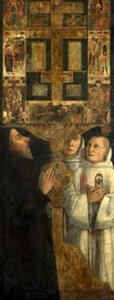
Cardinal Bessarion with the Bessarion Reliquary (1472) af Gentile Bellini

Cardinal Bessarion with the Bessarion Reliquary

1472 · Oil On Panel · National Gallery, London

To stand before Gentile Bellini's Cardinal Bessarion with the Bessarion Reliquary is to step directly into the luminous, devout atmosphere of the Italian Renaissance. This masterpiece from 1472 transcends mere portraiture; it is a profound meditation on faith, cultural exchange, and enduring piety. The scene captures Cardinal Bessarion, a distinguished Greek cleric elevated to archbishop within the Orthodox Church, kneeling in an attitude of deep reverence before a sacred object—the…

4
A Man with a Pair of Dividers (1500) af Gentile Bellini

A Man with a Pair of Dividers

1500 · Oil On Canvas · National Gallery, London

To stand before A Man with a Pair of Dividers is to encounter a moment suspended in time—a quiet meditation on knowledge itself. The portrait captures the subject not merely as an individual, but as an embodiment of scholarly pursuit. Against a background so deep it verges on absolute blackness, the figure emerges with a palpable sense of dignity. His gaze, directed outward toward the viewer, is direct and intelligent,…

5
Sultan Mehmet II (1480) af Gentile Bellini

Sultan Mehmet II

1480 · Oil On Canvas · National Gallery, London

In the quiet, hallowed halls of the National Gallery in London, there exists a window into a vanished world of diplomacy and grandeur. Gentile Bellini’s Portrait of Sultan Mehmet II is far more than a mere likeness of a monarch; it is a profound historical document that captures the precise moment when the Renaissance met the Ottoman Empire. Painted in 1480, this masterpiece emerged from a period of intense geopolitical…

6
Procession in Piazza San Marco (detail) (1496) af Gentile Bellini

Procession in Piazza San Marco (detail)

1496 · Acrylic On Canvas · Gallerie dell'Accademia di Venezia, Venedig

Gentile Bellini’s “Procession in Piazza San Marco,” completed around 1496, stands as a cornerstone of Venetian Renaissance art—a monumental tempera-on-canvas painting that transcends mere depiction to embody the spirit of its era. Commissioned for the Grand Hall of the Scuola Grande di San Giovanni Evangelista, the painting captures a pivotal moment in Venetian history: the veneration of a fragment of the True Cross brought into Piazza San Marco by a…

7
Procession in Piazza San Marco (1496) af Gentile Bellini

Procession in Piazza San Marco

1496 · Tempera · Gallerie dell'Accademia di Venezia, Venedig

To step before Gentile Bellini’s “Procession in Piazza San Marco” is to be transported across the centuries, leaving the modern world behind for the golden, sun-drenched splendor of 1496 Venice. This monumental masterpiece, a cornerstone of the Venetian Renaissance, does far more than merely document a public event; it serves as an immersive portal into a time when spiritual fervor and civic pride were inextricably woven into the very fabric…

8
Recognition of the Ambassador Domenico Trevisano at Alicatre (1479) af Gentile Bellini

Recognition of the Ambassador Domenico Trevisano at Alicatre

1479 · Oil On Canvas · Louvre, Paris

The air in 1479 feels heavy with the scent of salt and trade. In this scene, the Venetian ambassador Domenico Trevisano arrives at Alicante, met by a crowd that carries the weight of the Ottoman court. Figures dressed in traditional Eastern attire gather, their garments patterned with intricate details that catch the light. Some sit upon a bench while others stand, caught in the middle of a quiet exchange. A…

9
Procession in Piazza San Marco (detail) (1496) af Gentile Bellini

Procession in Piazza San Marco (detail)

1496 · Oil On Canvas · Gallerie dell'Accademia di Venezia, Venedig

Gentile Bellini's “Procession in Piazza San Marco” – a captivating detail from his larger work – offers a vibrant glimpse into the heart of 15th-century Venice. More than just a depiction of a public event, it’s a meticulously crafted tableau brimming with symbolism and reflecting the city’s immense power, religious fervor, and artistic prowess. The painting captures a pivotal moment: an elaborate procession winding through St. Mark's Square, a space…

10
A Turkish Woman (1480) af Gentile Bellini

A Turkish Woman

1480 · Graphite Pencil · British Museum, London

A seated woman occupies the center of this monochromatic pencil drawing. She faces the viewer directly, her gaze fixed and steady. Her hands rest in her lap, holding a small object that appears to be needlework or embroidery. She wears an elaborate headdress and layered clothing that suggests a specific cultural origin. The background remains simple and indistinct, ensuring the focus remains entirely on the figure. Light falls evenly across…

Gentile Bellini's famous paintings, numbers 11 to 48

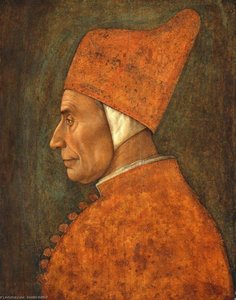
11Portrait of Catharina Cornaro, Queen of Cyprus (1500) af Gentile BelliniPortrait of Catharina Cornaro, Queen of Cyprus1500 · Szépművészeti Múzeum 12Miracle of the Cross at the Bridge of San Lorenzo (detail) (1500) af Gentile BelliniMiracle of the Cross at the Bridge of San Lorenzo (detail)1500 · Gallerie dell'Accademia di Venezia 13Procession in Piazza San Marco (detail) (1496) af Gentile BelliniProcession in Piazza San Marco (detail)1496 · Gallerie dell'Accademia di Venezia 14Miracle of the Cross at the Bridge of San Lorenzo (detail) (1500) af Gentile BelliniMiracle of the Cross at the Bridge of San Lorenzo (detail)1500 · Gallerie dell'Accademia di Venezia 15Annunciation (1465) af Gentile BelliniAnnunciation1465 · Thyssen-Bornemisza Museum 16Self-portrait (1496) af Gentile BelliniSelf-portrait1496 17Portrait of Lorenzo Giustiniani (1465) af Gentile BelliniPortrait of Lorenzo Giustiniani1465 · Nationalmuseet i Warszawa 18Portrait of Sultan Mehmed II (Fatih Sultan Mehmet) (1480) af Gentile BelliniPortrait of Sultan Mehmed II (Fatih Sultan Mehmet)1480 19Doge Giovanni Mocenigo (1478) af Gentile BelliniDoge Giovanni Mocenigo1478 · The Frick Collection 20Portrait of Doge Giovanni Mocenigo (1480) af Gentile BelliniPortrait of Doge Giovanni Mocenigo1480 · Museo Correr 21Portrait of a Man (1500) af Gentile BelliniPortrait of a Man1500 22Portrait of Lorenzo Giustiniani (1465) af Gentile BelliniPortrait of Lorenzo Giustiniani1465 · Nationalmuseet i Warszawa 23Portrait of a Doge af Gentile BelliniPortrait of a DogeMuseum of Fine Arts 24Beato Lorenzo Giustiniani (1465) af Gentile BelliniBeato Lorenzo Giustiniani1465 25Pietà (1472) af Gentile BelliniPietà1472 · Dogepaladset 26Portrait of a Young Man (1480) af Gentile BelliniPortrait of a Young Man1480 27The Blessed Lorenzo Giustiniani (1465) af Gentile BelliniThe Blessed Lorenzo Giustiniani1465 · Gallerie dell'Accademia di Venezia 28The Virgin and Child Enthroned (1470) af Gentile BelliniThe Virgin and Child Enthroned1470 · National Gallery 29Tulko or Antonio Lombardo (1500) af Gentile BelliniTulko or Antonio Lombardo1500 30Procession in Piazza S. Marco (1496) af Gentile BelliniProcession in Piazza S. Marco1496 31A Turkish Janissary af Gentile BelliniA Turkish JanissaryBritish Museum 32The Doge Leonardo Loredano af Gentile BelliniThe Doge Leonardo Loredano 33Doge Niccolo Marcello af Gentile BelliniDoge Niccolo MarcelloNational Gallery 34Ritratto Di Agostino Barbarigo af Gentile BelliniRitratto Di Agostino Barbarigo 35Predicacion de San Marcos en Alejandria af Gentile BelliniPredicacion de San Marcos en Alejandria 36Portrait of a Patrician af Gentile BelliniPortrait of a Patrician 37Andrea Vendramin, Doge of Venice, His Secretary, and a Papal Nuncio af Gentile BelliniAndrea Vendramin, Doge of Venice, His Secretary, and a Papal Nuncio 38Portrait of an Old Man af Gentile BelliniPortrait of an Old Man 39The Healing of Pietro dei Ludovici (1501) af Gentile BelliniThe Healing of Pietro dei Ludovici1501 · Gallerie dell'Accademia di Venezia 40Procession in Piazza S. Marco [detail] (1496) af Gentile BelliniProcession in Piazza S. Marco [detail]1496 41Self-Portrait(?) af Gentile BelliniSelf-Portrait(?)Kupferstichkabinett 42Madonna and Child with Donors (1460) af Gentile BelliniMadonna and Child with Donors1460 · Staatliche Museen zu Berlin 43Standing Woman af Gentile BelliniStanding WomanFogg Art Museum 44Mahomet II af Gentile BelliniMahomet II 45Portrait of Doge Leonardo Loredano af Gentile BelliniPortrait of Doge Leonardo Loredano 46The Sultan Mehmet II af Gentile BelliniThe Sultan Mehmet IIVictoria and Albert Museum 47Portrait of Caterina Cornaro, Queen of Cyprus (1500) af Gentile BelliniPortrait of Caterina Cornaro, Queen of Cyprus1500 · Szépművészeti Múzeum 48Portrait of Doge Giovanni Mocenigo (1478) af Gentile BelliniPortrait of Doge Giovanni Mocenigo1478 · Museo Correr

Gentile Bellini's famous paintings, period by period

The subjects that held Gentile Bellini's eye

The four subjects that come back most often in these originals, each with its finest example.

The museums that keep Gentile Bellini's originals

De 8 museer, der rummer flest af malerierne på denne side.

Museum By Værker af Gentile Bellini Malerier fra denne liste
Gallerie dell'Accademia di Venezia, VenedigGallerie dell'Accademia di Venezia Venedig 10 Miraklet ved korset på Sankt Lorenzos bro, Miracle of the Cross at the Bridge of San Lorenzo, Procession in Piazza San Marco (detail)
National Gallery, LondonNational Gallery London 5 Cardinal Bessarion with the Bessarion Reliquary, A Man with a Pair of Dividers, Sultan Mehmet II
British Museum, LondonBritish Museum London 2 A Turkish Woman, A Turkish Janissary
Szépművészeti Múzeum, BudapestSzépművészeti Múzeum Budapest 2 Portrait of Catharina Cornaro, Queen of Cyprus, Portrait of Caterina Cornaro, Queen of Cyprus
Nationalmuseet i Warszawa, WarszawaNationalmuseet i Warszawa Warszawa 2 Portrait of Lorenzo Giustiniani, Portrait of Lorenzo Giustiniani
Museo Correr, VenedigMuseo Correr Venedig 2 Portrait of Doge Giovanni Mocenigo, Portrait of Doge Giovanni Mocenigo
Louvre, ParisLouvre Paris 1 Recognition of the Ambassador Domenico Trevisano at Alicatre
Thyssen-Bornemisza Museum, MadridThyssen-Bornemisza Museum Madrid 1 Annunciation

Gentile Bellini across the decades: one unique original for each

Værker per årti

Pick a decade to see the original that defines it.

Gentile Bellini's paintings: questions for the gallery

What is the single most famous work of Gentile Bellini?Reveal the answer

Miraklet ved korset på Sankt Lorenzos bro (1500), Gallerie dell'Accademia di Venezia, Venedig. Miracle of the Cross at the Bridge of San Lorenzo (1500) and Cardinal Bessarion with the Bessarion Reliquary (1472) come next.

At what age did Gentile Bellini create Miraklet ved korset på Sankt Lorenzos bro?Reveal the answer

71 years old: Miraklet ved korset på Sankt Lorenzos bro dates from 1500, and Gentile Bellini was born in 1429.

Which ten paintings by Gentile Bellini are the most famous?Reveal the answer

Miraklet ved korset på Sankt Lorenzos bro, Miracle of the Cross at the Bridge of San Lorenzo, Cardinal Bessarion with the Bessarion Reliquary, A Man with a Pair of Dividers, Sultan Mehmet II, Procession in Piazza San Marco (detail), Procession in Piazza San Marco, Recognition of the Ambassador Domenico Trevisano at Alicatre, Procession in Piazza San Marco (detail) og A Turkish Woman. The ranking above gives each one's year and museum.

How many works by Gentile Bellini are known?Reveal the answer

Our catalog holds 48 works by Gentile Bellini, dated from 1460 to 1501.

Where can the most famous Gentile Bellini originals be seen?Reveal the answer

Mostly in Gallerie dell'Accademia di Venezia (Venedig), National Gallery (London) og British Museum (London). The museum table above lists them all.

During which period did Gentile Bellini create the best-known paintings?Reveal the answer

In 1500s: 10 of the 48 works on this page were made then, Miraklet ved korset på Sankt Lorenzos bro among them.

Which famous Gentile Bellini painting is the earliest, and which the latest?Reveal the answer

On this page, the earliest is Madonna and Child with Donors (1460) and the latest The Healing of Pietro dei Ludovici (1501).

What subjects did Gentile Bellini favour?Reveal the answer

Portraiture (8), Venetian art (8) og Venice (7), across the 48 works on this page.

What materials did Gentile Bellini paint with most?Reveal the answer

Oil On Canvas, for 13 of the 48 works on this page.

Which movement does the work of Gentile Bellini belong to?Reveal the answer

Renaissance, judging by the originals on this page.

What Gentile Bellini originals can I see at the Gallerie dell'Accademia di Venezia?Reveal the answer

Miraklet ved korset på Sankt Lorenzos bro, Miracle of the Cross at the Bridge of San Lorenzo og Procession in Piazza San Marco (detail): the Gallerie dell'Accademia di Venezia, Venedig holds 10 of the works on this page.

Where can I order a hand-painted Gentile Bellini reproduction?Reveal the answer

Yes, as a reproduction: the original stays in its museum, but any painting on this page can be painted by hand for you, made to order one at a time, from the painting's own page.

Gentile Bellini: a portrait of the artist

En mester fra den venetianske renæssance

Gentile Bellini, født i Venedig i 1429, trådte frem fra en familie, der var dybt forankret i byens kunstneriske hjerte. Hans far, Jacopo Bellini, var en pioner, der omfavnede det relativt nye medie oliemaling, og hans yngre bror, Giovanni, ville senere opnå berømmelse som en af Venedigs mest fejrede mestre. Gentiles indledende uddannelse udfoldede sig i sin fars værksted, hvor han mestrede de teknikker, der skulle definere hans karriere. Et af Venedigs ældste overlevende oliemalerier, Den velsignede Lorenzo Giustinian (1445), står som et vidnesbyrd om denne tidlige dygtighed og er i dag indkvarteret på Accademia Museum. Fra disse begyndelser udmærkede Gentile sig hurtigt og opnåede anerkendelse for sit bemærkelsesværdige talent for portrætkunst, hvilket sikrede ham positionen som den officielle maler for dogerne – Venedigs herskere. Denne prestigefyldte rolle ville få en gennemgribende betydning for hans kunstneriske bane og placere ham i centrum for den venetianske magt og det sociale liv.

Indflydelser og kunstnerisk udvikling

Gentile Bellinis stil var en fascinerende syntese af mangfoldige indflydelser. Det Byzantinske Riges rige traditioner kastede en lang skygge over venetiansk kunst og gav den en særpræget æstetik, som genlød i Gentiles værker gennem stiliserede figurer og overdådige farvepaletter. Hans kunstneriske horisont blev dog dramatisk udvidet efter en ekstraordinær rejse til Konstantinopel i 1479. Efter personlig invitation fra sultan Mehmed II tilbragte Bellini tid ved det osmanniske hof, en oplevelse der viste sig at være afgørende for formgivningen af hans senere kreationer. Dette møde med en fremmed kultur, arkitektur og livsstil indgydede hans malerier med et unikt perspektiv. Hans portræt af Mehmed II, som nu befinder sig i National Gallery i London, er et slående eksempel på denne indflydelse – en fængslende skildring af magt og personlighed baseret på direkte observation. Gentiles kompositioner præsenterer ofte storslåede scener befolket med utallige figurer, hvilket afspejler kravene fra bestillinger fra Venedigs mægtige Scuole Grandi, de store broderskaber, der spillede en vital rolle i det borgerlige liv.

Mesterværker og kunstnerisk eftermæle

Blandt Gentile Bellinis mest fejrede værker finder man to monumentale malerier: Processionen af det sande kors på Markuspladsen (1496) og Miraklet med det sande kors ved S. Lorenzo-broen (ca. 1500). Det førstnævnte er et åndeløst panorama over det venetianske liv, der indfanger energien og spektaklet i en religiøs procession med minutiøse detaljer. Det fremviser hans evne til at skildre store menneskemængder og komplekse arkitektoniske omgivelser med bemærkelsesværdig præcision. Miraklet med det sande kors ved S. Lorenzo-broen er særligt bemærkelsesværdigt for inklusionen af selvportrætter – både Gentiles eget ansigtstræk og hans bror, Giovanni Bellinis. Dette subtile kunstneriske samarbejde tilbyder et fascinerende indblik i deres forhold og kreative dialog. Udover de enkelte malerier indtager Gentile Bellini en vigtig plads i kunsthistorien som en af grundlæggerne af orientalisme – en bevægelse karakteriseret ved skildringer af østlige kulturer og miljøer.

Historisk betydning

Gentile Bellinis eftermæle hviler på flere centrale bedrifter. Hans pionerarbejde med oliemaling cementerede mediets position som det dominerende element i venetiansk maleri, hvilket muliggjorde større detaljerigdom, lysstyrke og realisme. Desuden etablerede hans eksponering for den osmanniske kultur og den efterfølgende integration af østlige motiver i hans arbejde ham som en betydningsfuld skikkelse i udviklingen af orientalistisk kunst – en tendens, der ville fange europæiske kunstnere i århundreder. Selvom han ofte er blevet overskygget af sin bror Giovannis berømmelse, anerkendes Gentile Bellinis bidrag i dag som essentielle for forståelsen af den vestlige malerkunsts evolution. Han formåede dygtigt at forene venetianske kunsttraditioner med indflydelser fra både det Byzantinske Rige og den osmanniske kultur, hvilket skabende en unik og dragende stil, der resonerede i hele Europa. Hans værk står som et vidnesbyrd, ikke blot om hans ekstraordinære færdigheder og talent, men også om kulturelt udvekslings kraft til at forme kunstnerisk innovation.

Alle 48 værker af Gentile Bellini →